
Scene 1: The Mysterious Artifact

- Alice: I can’t believe Professor Hall let us study this artifact after hours. It’s so ancient—do you think it’s real?
- Emma: I’ve read about objects like this in old manuscripts. Some say they have the power to transcend time, but that’s just myth… right?
- Alice: Who knows? But look at these engravings. They’re nothing like we’ve ever seen. Should we try to decipher them?
- Emma: Let’s do it. But carefully—this thing gives me chills.

(As they carefully examine the artifact, a sudden, bright light envelops the room. The air crackles with energy, and the next thing they know, they’re standing inside a grand hall at Charles University, but everything around them is different—the room is filled with medieval furnishings, and they’re dressed in the attire of maids from the 15th century.)
場景一: 神秘的文物
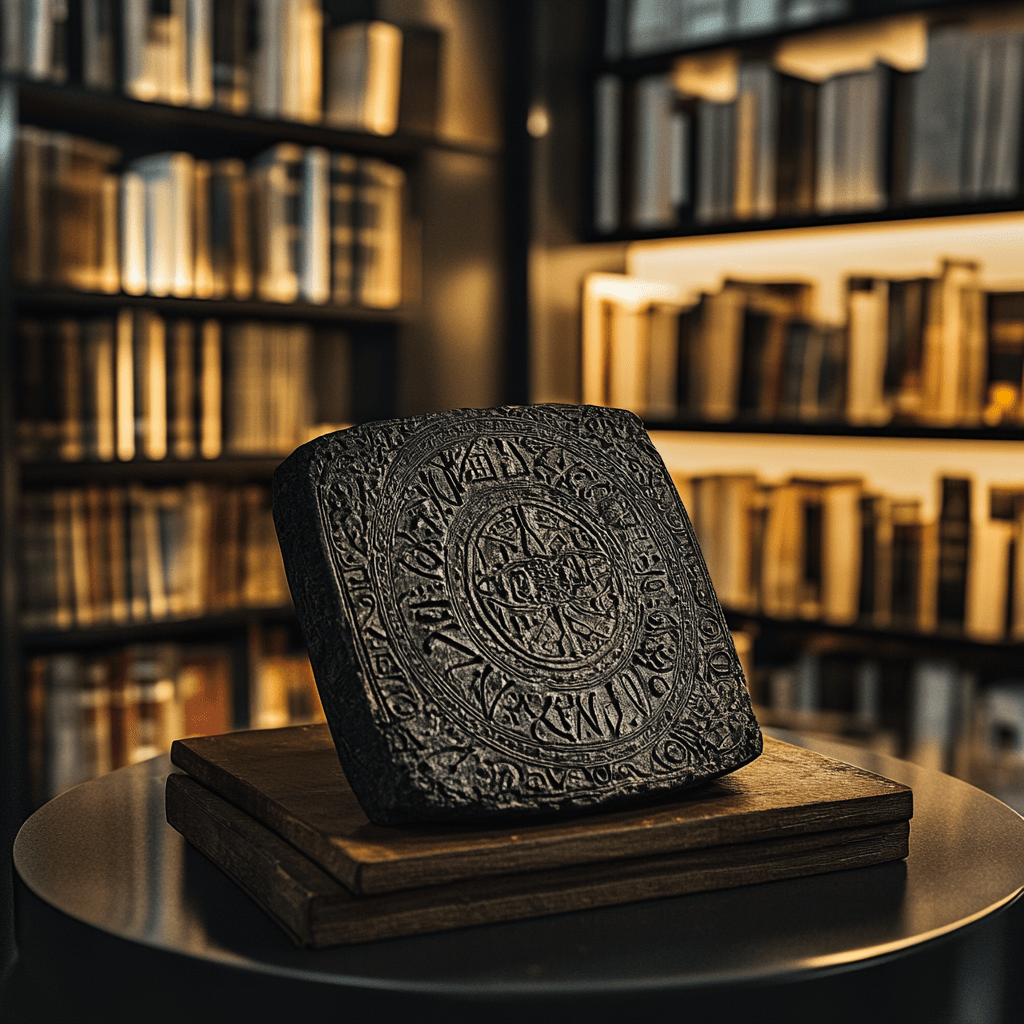
- 愛麗絲: 我真不敢相信霍爾教授竟然允許我們在下班後研究這件文物。這太古老了——你覺得它是真的嗎?
- 艾瑪: 我在古老的手稿中讀到過這樣的物件。有些人說它們有穿越時間的能力,但那只是傳說……對吧?
- 愛麗絲: 誰知道呢?但是看看這些雕刻。它們和我們見過的完全不一樣。我們要不要試著解讀它們?
- 艾瑪: 我們試試看吧。但要小心——這東西讓我有點不寒而慄。
(當她們仔細檢查這件文物時,突然,一道明亮的光芒籠罩了整個房間。空氣中充滿了能量的波動,接下來她們發現自己正站在查理大學的一個大廳裡,但周圍的一切都不同了——房間裡擺滿了中世紀的家具,而她們穿著的是15世紀女僕的服裝。)
Scene 2: Realizing They’re in the Past

- Alice: This… this can’t be real. Are we dreaming?
- Emma: I don’t think so. Look at those furnishings—the architecture—it’s all medieval. We’ve really traveled back in time.
- Alice: The artifact… it must have triggered something. But how do we get back? And why did it bring us here?
- Emma: Maybe we’re here for a reason. The history we study… what if we’re meant to witness it firsthand?
場景二 發現回到過去

- 愛麗絲: 這……這不可能是真的。我們是在做夢嗎?
- 艾瑪: 我不這麼認為。看看那些家具——這些建築——這全都是中世紀的。我們真的回到了過去。
- 愛麗絲: 那件文物……它一定引發了什麼。但是我們怎麼回去呢?為什麼它會帶我們來到這裡?
- 艾瑪: 也許我們來這裡是有原因的。我們學的歷史……如果我們是注定要親眼見證這一切呢?

Scene 3: Discovering Their New Roles at Charles University
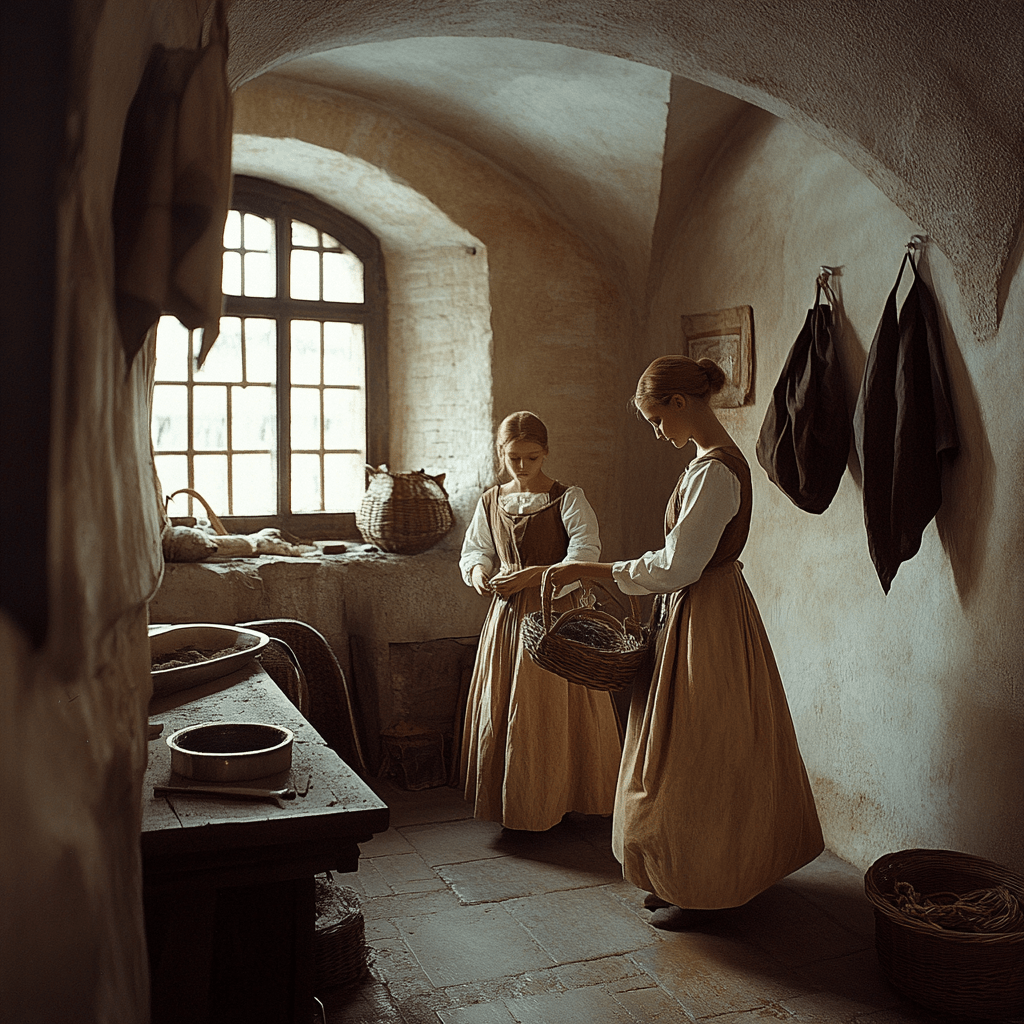
- Alice: Emma, look at our clothes! How did we end up in these outfits?
- Emma: I have no idea. One minute we were in the artifact room, and now we’re… dressed as maids? This can’t be happening.
- Alice: And we’re inside Charles University! But why are we dressed like this? Shouldn’t this place be full of male students and scholars?
- Emma: Exactly. Women weren’t allowed to study here back then. Maybe we’ve somehow blended into this time period… as servants?
- Alice: This is insane. But if we’re here, maybe we can learn something valuable. We should try to stay calm and figure out what’s going on.
場景三:發現自己在查理大學的新角色
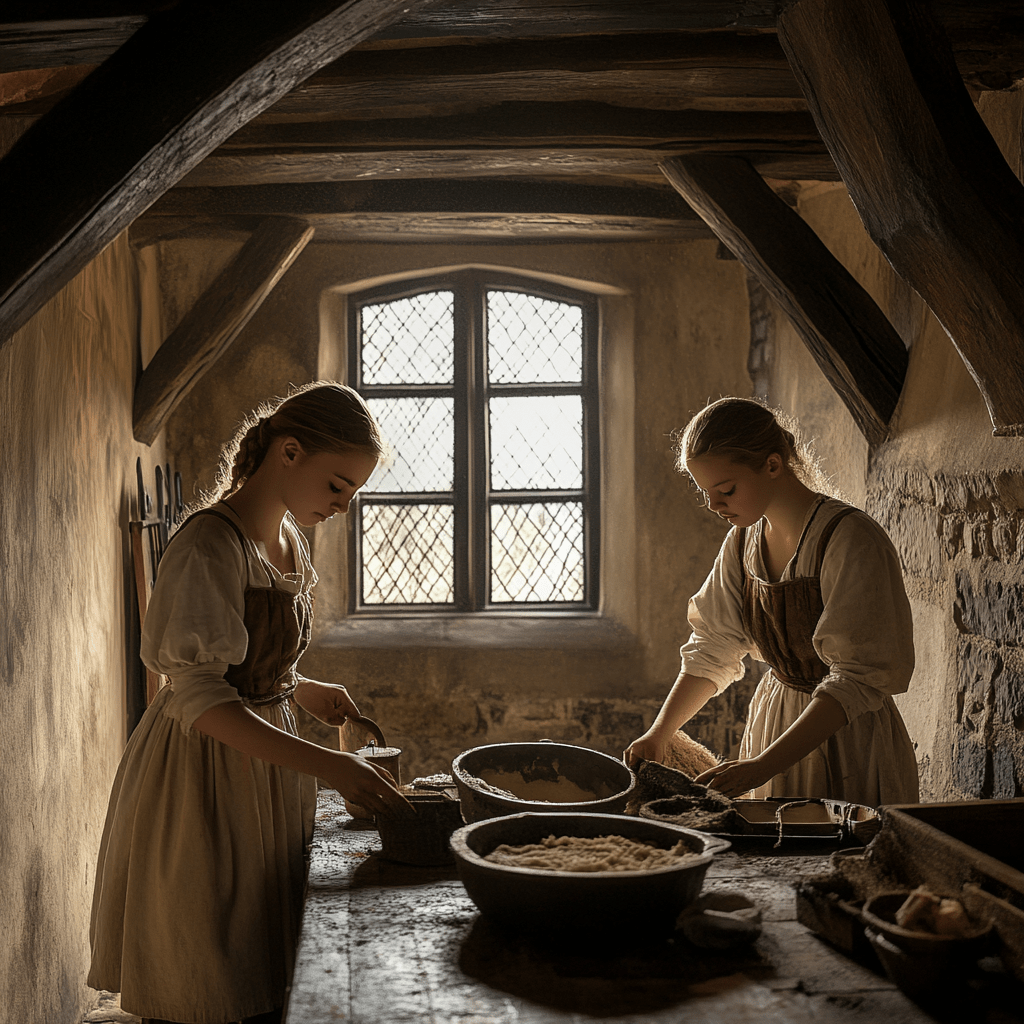
- 愛麗絲: 艾瑪,看看我們的衣服!我們怎麼會穿成這樣?
- 艾瑪: 我也不知道。剛才我們還在那間放著文物的房間裡,現在竟然……變成女僕了?這不可能是真的。
- 愛麗絲: 而且我們還在查理大學!但為什麼我們穿成這樣?這裡不是應該全是男學生和學者嗎?
- 艾瑪: 正是如此。當時女性是不能在這裡學習的。也許我們不知怎的融入了這個時代……成為了僕人?
- 愛麗絲: 這太瘋狂了。但如果我們在這裡,也許可以學到一些有價值的東西。我們應該試著保持冷靜,弄清楚發生了什麼。
Scene 3: Overhearing a Scholarly Discussion
The two girls are quietly arranging some books and cleaning a study room at Charles University when a group of scholars and students enter, deeply engaged in a heated discussion.
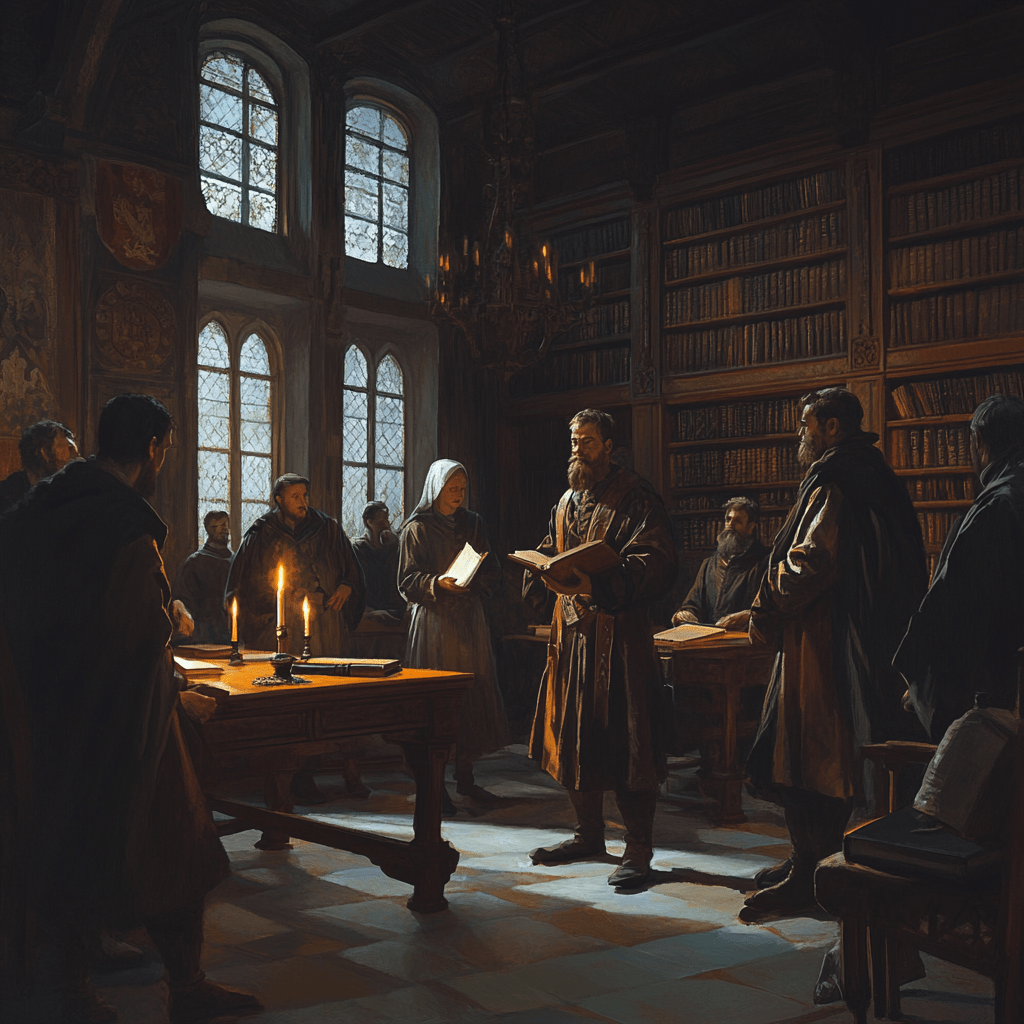
- Scholar 1: The situation is becoming untenable. The king’s indecision is only fueling the flames of discontent. The people are restless, and the nobles are divided.
- Student 1: And all because of this man, Jan Hus. His teachings have spread like wildfire. The common folk see him as a hero, but the Church sees him as a heretic.
- Scholar 2: Heretic or not, his calls for reform resonate with many. The corruption in the Church is undeniable, and Hus’s arguments are compelling. But the consequences… they could be catastrophic.
- Student 2: I heard that the Church is already moving to silence him. They can’t allow his ideas to continue spreading. But what if the people rise up in his defense? We could be on the brink of a civil war.
- Scholar 1: Indeed, and the university is caught in the middle. Our discussions, our debates—they’re no longer just academic exercises. They have real, dangerous implications.
(As the scholars and students continue to debate, Alice and Emma exchange glances, their expressions a mix of curiosity and concern.)
- Alice (whispering): They’re talking about Jan Hus. We learned about him in our history classes. He’s going to be martyred soon, isn’t he?
- Emma (whispering): Yes, and his death will spark the Hussite Wars. These men don’t realize it yet, but they’re standing on the edge of a historical revolution.
- Alice: It’s incredible to hear them discuss it in real-time, like we’re living inside our textbooks. But it’s also terrifying… knowing what’s about to happen and not being able to do anything about it.
場景三 偷聽到學者的討論
(兩位女孩正在查理大學的一間書房裡整理書籍和打掃房間,這時一群學者和學生走了進來,正熱烈地討論著。)
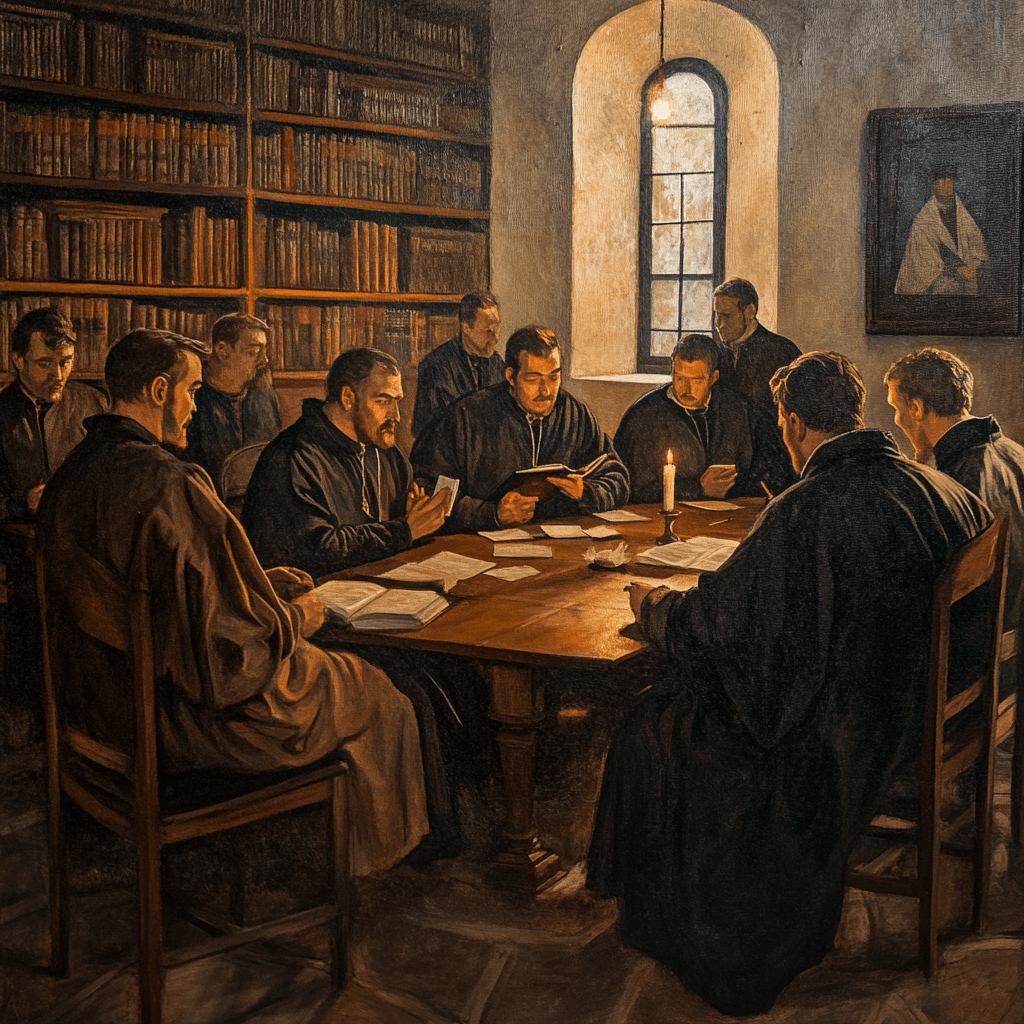
- 學者1: 局勢已經變得難以控制。國王的優柔寡斷只會助長不滿情緒。百姓不安,貴族們也意見不一。
- 學生1: 而這一切都是因為那個人——揚·胡斯。他的教義像野火一樣迅速蔓延。普通百姓把他當成英雄,但教會卻視他為異端。
- 學者2: 不管他是不是異端,他的改革呼聲確實打動了許多人。教會內的腐敗是無可否認的,而胡斯的論點也很有說服力。但後果……可能會是災難性的。
- 學生2: 我聽說教會已經在採取行動,試圖讓他閉嘴。他們不能讓他的思想繼續傳播下去。但如果人民起來捍衛他呢?我們可能正在瀕臨內戰的邊緣。
- 學者1: 的確如此,現在我們大學也被捲入其中。我們的討論、辯論——不再只是學術活動。它們現在具有真實且危險的意涵。
(當學者和學生們繼續辯論時,愛麗絲和艾瑪互相對視,表情既好奇又擔憂。)
- 愛麗絲(低聲): 他們在討論揚·胡斯。我們在歷史課上學過他。他很快就要殉道了,不是嗎?
- 艾瑪(低聲): 是的,而且他的死將引發胡斯戰爭。這些人還不知道,他們正站在一場歷史革命的邊緣。
- 愛麗絲: 聽到他們實時討論這些事情,感覺就像我們生活在歷史課本裡一樣。但這也很可怕……知道即將發生的事情,卻無能為力。
Scene 4: The Weight of History
(The girls have just witnessed Jan Hus being led to his execution. They are standing in a quiet corner of the city, overwhelmed by the gravity of what they have just seen.)

- Alice: (With a heavy sigh) We knew this was going to happen, but actually seeing it… it’s unbearable. How could something so wrong be allowed to happen?
- Emma: (Tears in her eyes) I feel so helpless, Alice. We’re trapped in this time, watching history unfold, and we can’t do anything to stop it. It feels like we’ve failed.
(Alice leans against a wall, staring at the ground, lost in thought.) - Alice: What’s the point of being here if we can’t change anything? Maybe we were sent here just to suffer—to watch, powerless, as people we know will die.
- Emma: Or maybe… maybe we’re here to understand. To witness, and carry these stories back with us. History isn’t just about the big events, it’s about the people, the choices they made, and the consequences they faced.
(Alice looks up, a flicker of determination in her eyes.) - Alice: You’re right. We can’t change the past, but we can learn from it. And maybe we can still make a difference, even in small ways. We can help the people around us, understand their struggles, and preserve their stories.
場景四:歷史的重量

(兩個女孩剛剛目睹了揚·胡斯被帶去處決的場景。她們站在城市的一個安靜角落裡,對剛剛看到的事情感到不知所措。)
- 愛麗絲: (重重嘆息)我們知道這將會發生,但真正看到的時候……實在太令人難以忍受了。怎麼會允許這樣錯誤的事情發生?
- 艾瑪: (眼含淚水)我感到如此無助,愛麗絲。我們被困在這個時代,看著歷史展開,卻無法阻止任何事。感覺就像我們失敗了一樣。
(愛麗絲靠在牆上,低頭凝視地面,陷入沉思。) - 愛麗絲: 如果我們什麼也改變不了,那我們在這裡的意義是什麼?也許我們被送到這裡只是為了受苦——眼睜睜看著我們知道會死去的人。
- 艾瑪: 或許……或許我們來這裡是為了理解。為了見證,並將這些故事帶回現代。歷史不僅僅是那些大事件,它還關乎人們、他們做出的選擇,以及他們所面臨的後果。
(愛麗絲抬起頭,眼中閃過一絲決心。) - 愛麗絲: 你說得對。我們無法改變過去,但我們可以從中學習。或許我們仍然能有所作為,即使是從小處著手。我們可以幫助周圍的人,理解他們的掙扎,並保存他們的故事。
Scene 5: Finding Purpose
(The girls decide to focus on smaller actions that can make a difference in the lives of those around them.)
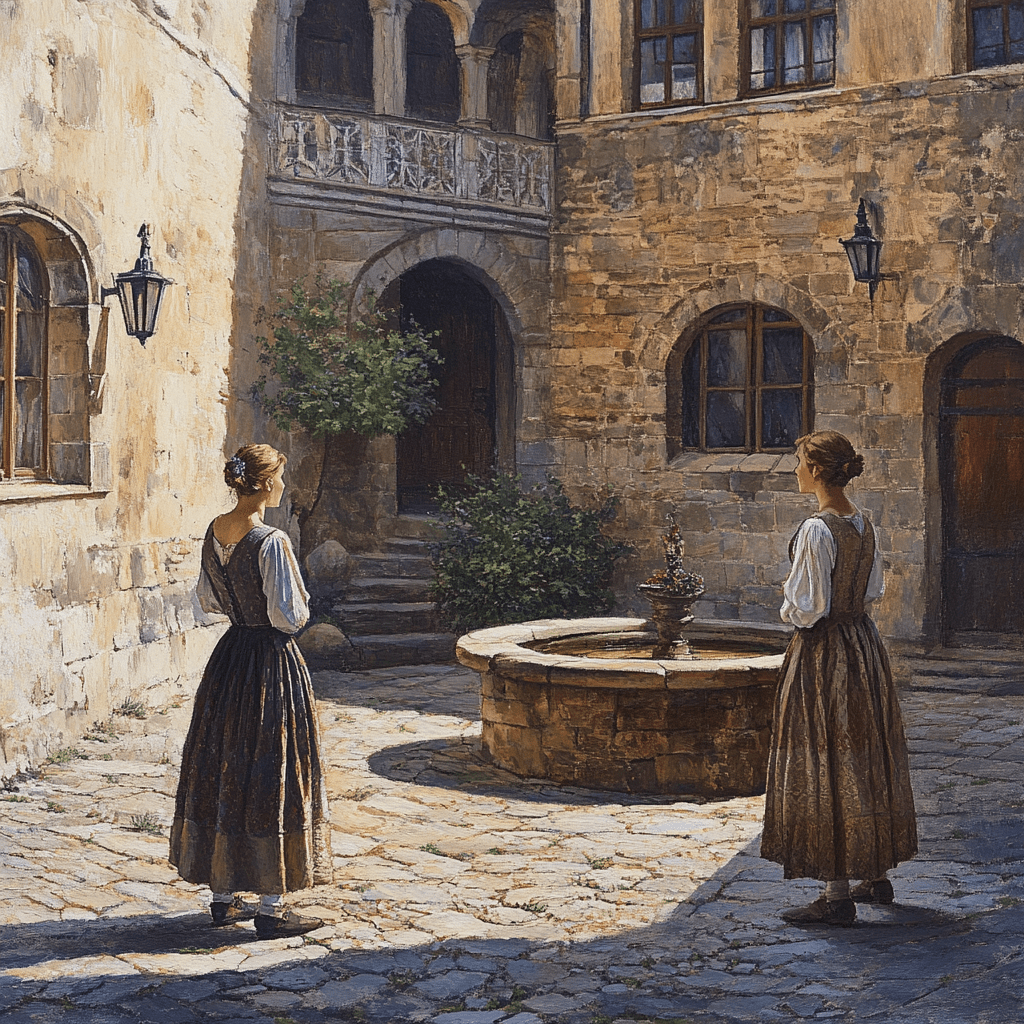
- Emma: I heard there’s a family struggling because their son was accused of following Hus’s teachings. Maybe we can help them somehow, even if it’s just offering support.
- Alice: Yes, and we can write down everything we see and hear. When we get back—if we get back—people need to know what really happened here. Not just the facts, but the emotions, the human side of history.
- Emma: Let’s do it. We might not be able to save Jan Hus, but we can honor his memory by making sure his story—and the story of everyone we meet—lives on.
(Alice nods, and they start planning their next steps, feeling a renewed sense of purpose despite the challenges ahead.)
場景五:尋找意義
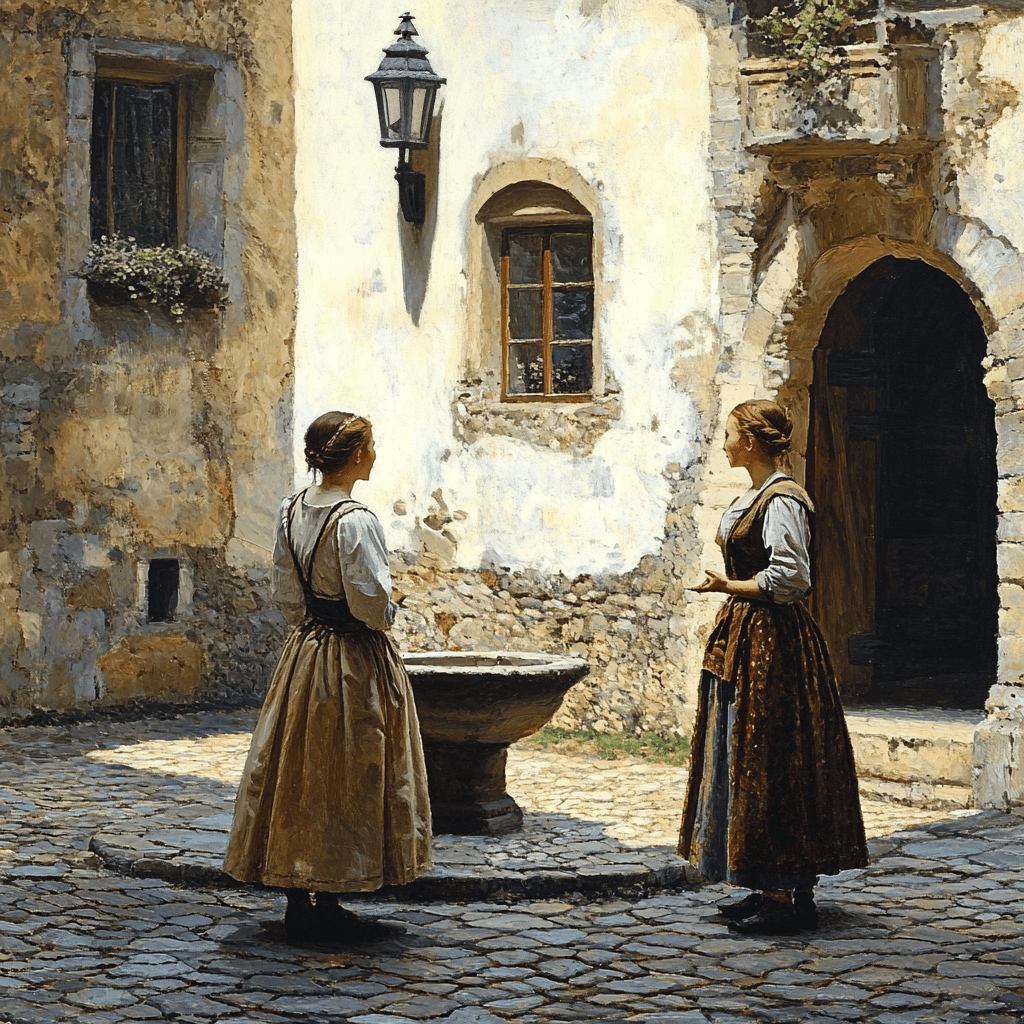
- 艾瑪: 我聽說有一家人因為他們的兒子被指控支持胡斯的教義而陷入困境。也許我們可以幫助他們,即使只是提供一些支持。
- 愛麗絲: 沒錯,而且我們可以記錄下我們看到和聽到的一切。如果我們能回到現代,人們需要知道這裡真正發生的事情。不僅僅是事實,還有情感,歷史中人性的一面。
- 艾瑪: 我們就這麼做吧。我們可能無法拯救揚·胡斯,但我們可以通過確保他的故事——以及我們遇到的每一個人的故事——得以延續來紀念他。
(愛麗絲點頭,她們開始計劃下一步行動,儘管前路充滿挑戰,但她們感受到了新的使命感。)
Scene 6: Offering Support to a Family
(The girls have found a small, modest home on the outskirts of Prague. They know this is where the family they heard about lives—those who have been affected by the accusations against their son. The girls approach the door and knock gently.)

- Alice: I hope we can help them. Even if it’s just offering a listening ear.
- Emma: (Nervously) Me too. It feels strange, stepping into people’s lives like this, but… it’s the right thing to do.
(The door opens slightly, revealing a cautious woman. She looks tired, and there’s a deep sadness in her eyes.)
- Mother: Who are you? What do you want?
- Alice: We’re here to help. We’ve heard about your son, and we… we wanted to see if there’s anything we can do.
- Mother: (Suspiciously) Help? How can you help? My son is accused of heresy, and the Church… they won’t stop until they’ve ruined us.
(Emma steps forward, speaking gently.)
- Emma: We can’t change what’s happening, but we can stand by you. Sometimes, just having someone to talk to, to share the burden, can make a difference. Please, let us help.
(The woman hesitates, then opens the door wider, allowing them inside.)
- Mother: (Sighs) I don’t know what you can do, but… if you really want to help, then come in. My son… he’s frightened, and I don’t know how to comfort him.
場景六:為一個家庭提供支持

(兩個女孩找到了布拉格郊區的一個小而簡陋的家。他們知道這就是他們聽說過的那個家庭——那個因為兒子被指控異端而受到影響的家庭。女孩們輕輕地敲門。)
- 愛麗絲: 我希望我們能幫助他們。即使只是提供一個傾訴的機會。
- 艾瑪: (緊張地)我也是。這樣介入別人的生活感覺有點奇怪,但……這是正確的事情。
(門輕輕打開了一點,露出一位謹慎的婦女。她看起來很疲憊,眼中有著深深的悲傷。)
- 母親: 你們是誰?你們想要什麼?
- 愛麗絲: 我們來是想幫助您。我們聽說了您兒子的事情,我們……我們想看看是否有什麼我們可以做的。
- 母親: (懷疑地)幫助?你們怎麼能幫助?我的兒子被指控為異端,而教會……他們不會停手,直到毀了我們。
(艾瑪走上前,溫柔地說。)
- 艾瑪: 我們無法改變正在發生的事情,但我們可以支持您。有時候,只是有人可以傾訴、分擔,這就能帶來不同。請讓我們幫助您。
(這位婦女猶豫了一下,然後把門開得更大,讓她們進來。)
- 母親: (嘆氣)我不知道你們能做什麼,但……如果你們真的想幫忙,那就進來吧。我的兒子……他很害怕,我不知道該怎麼安慰他。
Scene 7: Providing Comfort and Understanding

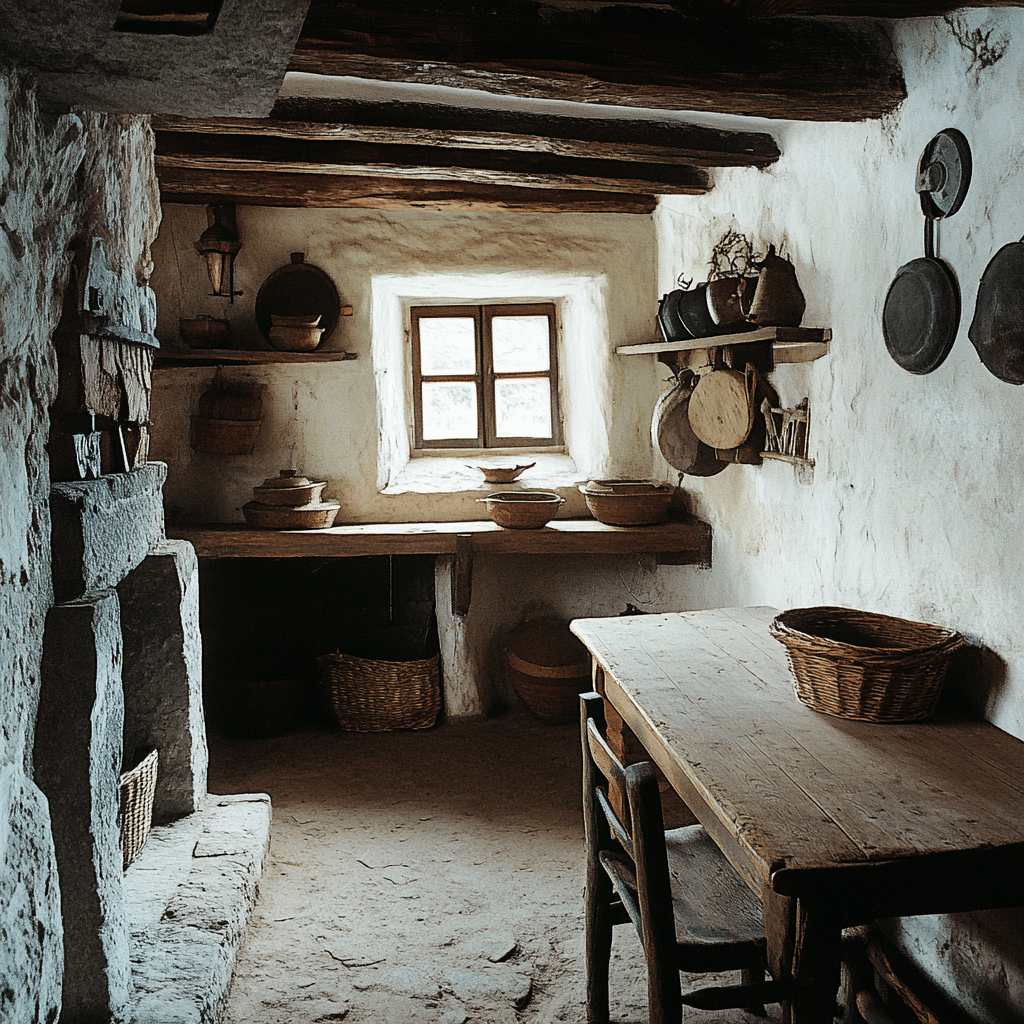
(The girls enter the humble home, finding it sparse but clean. The mother leads them to a small room where a young man, the son, is sitting by a window, looking out with a troubled expression. He turns as they enter.)
- Son: Who are they, mother?
- Mother: They say they want to help. I don’t know why, but… maybe we should listen.
(Alice and Emma approach the young man cautiously, sensing his fear.)
- Emma: We’ve come to talk. We know what you’re going through… we’ve studied the teachings of Jan Hus too. We know how dangerous these times are for those who speak out.
(The son looks surprised but intrigued.)
- Son: You… you understand? But why would you risk coming here? The Church will find out eventually, and they’ll come after anyone associated with me.
- Alice: (Softly) We’re not afraid of the risks. We believe in what you stand for. And we believe that your voice, your story, matters. Even if the world seems against you, you’re not alone.
(The young man, visibly moved, nods slowly.)
- Son: It’s been so lonely… knowing that speaking the truth could destroy everything. But if there are others who understand, maybe… maybe it’s worth it.
場景七:提供安慰與理解
(女孩們走進這個簡樸的家,發現裡面雖然簡單但很乾淨。母親帶她們進入一間小房間,房間裡坐著一位年輕男子,也就是她的兒子,他坐在窗邊,神情憂鬱地看著外面。他們進來時,他轉過頭來。)
- 兒子: 母親,他們是誰?
- 母親: 他們說他們想幫忙。我不知道為什麼,但……也許我們應該聽聽看。
(愛麗絲和艾瑪小心地靠近這位年輕人,感覺到他的恐懼。)
- 艾瑪: 我們來是想談談。我們知道你正在經歷什麼……我們也研究過揚·胡斯的教義。我們知道,對於那些敢於發聲的人來說,這是多麼危險的時代。
(年輕人驚訝地看著她們,但也顯得很感興趣。)
- 兒子: 你們……你們理解?但你們為什麼要冒險來這裡?教會最終會發現,然後追捕與我有關的任何人。
- 愛麗絲: (輕聲地)我們不害怕風險。我們相信你所堅持的信念。我們相信你的聲音,你的故事是重要的。即使全世界似乎都與你為敵,你也不孤單。
(年輕人明顯感動了,慢慢地點了點頭。)
- 兒子: 知道講真話可能會摧毀一切,這種感覺真是太孤獨了。但如果還有其他人能理解,也許……也許這一切都是值得的。
Scene 8: Planning the Escape
(The girls are sitting in the modest home of the family they are helping, discussing the dangers that are coming. The mother and son listen intently as the girls explain what they know.)

- Alice: We’ve seen the signs. The tension in the city, the growing unrest… it’s only a matter of time before things turn violent.
- Emma: (With concern) There’s going to be a war. The followers of Jan Hus won’t stand idly by after what’s happened. The situation is going to escalate, and it won’t be safe here.
(The mother looks frightened, clutching her hands together.)
- Mother: A war? But… what should we do? We have no way to leave, no place to go.
- Son: (Determined) We can’t just sit here and wait for the worst. If there’s a chance to escape, we should take it. But where would we go?
(Alice and Emma exchange a glance, then Alice speaks with resolve.)
- Alice: We’ve thought about that. There’s a village to the north, near the mountains. It’s remote, and there are fewer chances of being caught up in the conflict. If you leave now, you might reach it before things get worse.
- Emma: We’ll help you prepare. Gather what you need, but travel light. The key is to move quickly and avoid drawing attention. We’ll make sure you have enough food and supplies for the journey.
(The mother looks relieved but still worried.)
- Mother: But what if we’re caught? The Church… they’re everywhere.
- Emma: (Reassuringly) We’ll help you create a cover story. If anyone asks, you’re just traveling to visit relatives. And we’ll give you some advice on how to avoid suspicion.
(女孩們坐在這個家庭簡陋的家中,討論即將到來的危險。母親和兒子認真地聽著女孩們的解釋。)
場景八: 計畫逃亡

- 愛麗絲: 我們已經看到了徵兆。城市裡的緊張氣氛,日益增長的不安……事情很快就會變得暴力化,這只是時間問題。
- 艾瑪: (憂心忡忡)將要爆發一場戰爭。揚·胡斯的追隨者不會在這樣的情況下袖手旁觀。局勢會升級,這裡將不再安全。
(母親顯得很害怕,緊緊握著雙手。)
- 母親: 戰爭?但是……我們該怎麼辦?我們無法離開,也沒有地方可以去。
- 兒子: (堅定地)我們不能坐以待斃。如果有機會逃跑,我們應該抓住它。但是我們去哪裡呢?
(愛麗絲和艾瑪交換了一下眼神,然後愛麗絲堅定地說。)
- 愛麗絲: 我們已經想過了。在北邊有一個村莊,靠近山區。那裡偏僻,捲入衝突的機會較少。如果你們現在離開,也許能在局勢惡化之前抵達那裡。
- 艾瑪: 我們會幫助你們準備。收集你們需要的東西,但一定要輕裝上路。關鍵是要快速行動,不引起注意。我們會確保你們有足夠的食物和用品。
(母親顯得鬆了一口氣,但仍然很擔心。)
- 母親: 但是如果我們被抓住了怎麼辦?教會……他們無處不在。
- 艾瑪: (安慰地)我們會幫助你們編造一個掩護故事。如果有人問起,你們就說是去探親。我們還會給你們一些避免懷疑的建議。
Background of Jan Hus and the Early Reformation
Jan Hus (c. 1372–1415) was a Czech theologian and reformer who became one of the key figures in the early movement towards religious reformation in Europe. As a rector at Charles University in Prague, Hus was influenced by the writings of John Wycliffe, an English reformer who criticized the Catholic Church’s corruption and the sale of indulgences.
Hus’s sermons and teachings quickly gained a following in Bohemia, where he called for a return to the teachings of the Bible and criticized the moral failings of the clergy. His ideas challenged the authority of the Catholic Church and sparked widespread debate.
In 1415, Hus was summoned to the Council of Constance to defend his views. Despite being promised safe conduct, he was arrested, tried for heresy, and burned at the stake. His death led to the Hussite Wars, a series of conflicts in Bohemia between his followers and Catholic forces.
Although Jan Hus was martyred, his teachings lived on and significantly influenced later reformers, most notably Martin Luther, who cited Hus as a precursor to his own efforts to reform the Church. The movement that Hus helped to ignite laid the groundwork for the broader Protestant Reformation that would sweep across Europe in the 16th century.
揚·胡斯與早期宗教改革的背景
揚·胡斯(約1372–1415)是捷克的一位神學家和改革者,他成為歐洲宗教改革早期運動中的關鍵人物之一。作為布拉格查理大學的校長,胡斯深受英國改革者約翰·威克里夫著作的影響,威克里夫批評天主教會的腐敗以及贖罪券的販售。
胡斯的講道和教義在波希米亞迅速吸引了大批追隨者,他呼籲回歸聖經的教義,並批評神職人員的道德失敗。他的思想挑戰了天主教會的權威,引發了廣泛的辯論。
1415年,胡斯被召喚至康斯坦茨大公會議為自己的觀點辯護。儘管他獲得了安全通行的承諾,但最終他還是被逮捕、以異端罪受審,並被火刑處死。他的死亡引發了胡斯戰爭,這是一系列在波希米亞發生的胡斯追隨者與天主教勢力之間的衝突。
儘管揚·胡斯殉道了,但他的教義繼續傳播,並深刻影響了後來的改革者,特別是馬丁·路德,路德將胡斯視為他自己改革努力的先驅。胡斯所激發的運動為16世紀席捲歐洲的更廣泛的新教改革奠定了基礎。

 Virtual Travel | 虛擬旅行沉浸式英語學習
發表留言