Exploring Bavaria: A Journey Through Tradition and Countryside | 探索巴伐利亞:傳統與鄉村之旅
Scene 1: Leaving Munich
Background: Anna, who is from northern Germany, is taking her friend Claire, who is visiting from abroad, on a road trip through Bavaria. They have just left Munich, and the journey ahead is long, but the destination is well worth it.
As they drove out of Munich, Anna adjusted her sunglasses and glanced over at Claire. “So, what do you think of Munich so far?"
Claire leaned back in her seat, thinking. “It’s definitely different from what I’m used to. There’s a certain… vibrancy here that feels unique."
Anna nodded. “Yeah, Munich has a lot going on. But wait until we get out into the countryside. Bavaria is a whole other experience."
Claire smiled. “I’m curious to see how it compares to the north. You’ve mentioned a few times that it’s pretty different."
“It is," Anna said, her tone more reflective. “In the north, people are a bit more reserved, you know? Everything’s a bit more straightforward. Here in the south, it’s more about tradition, family, and enjoying life at a slower pace. You’ll see."
“That sounds nice," Claire replied. “I’ve always thought of Bavaria as this picture-perfect place, with all the cultural richness you see in movies."
“Well, the movies do get some things right," Anna chuckled. “But there’s a lot more to it than just pretty landscapes and beer festivals. The culture here runs deep. People are proud of their history and the way they live."
Claire nodded thoughtfully. “I like that. There’s something grounding about places that hold on to their traditions."
Anna smiled. “Exactly. And we’ll see plenty of that on this trip. First stop—a small village that hasn’t changed much in a hundred years. It’ll be a nice contrast to Munich."
“Looking forward to it," Claire said, settling into the journey.
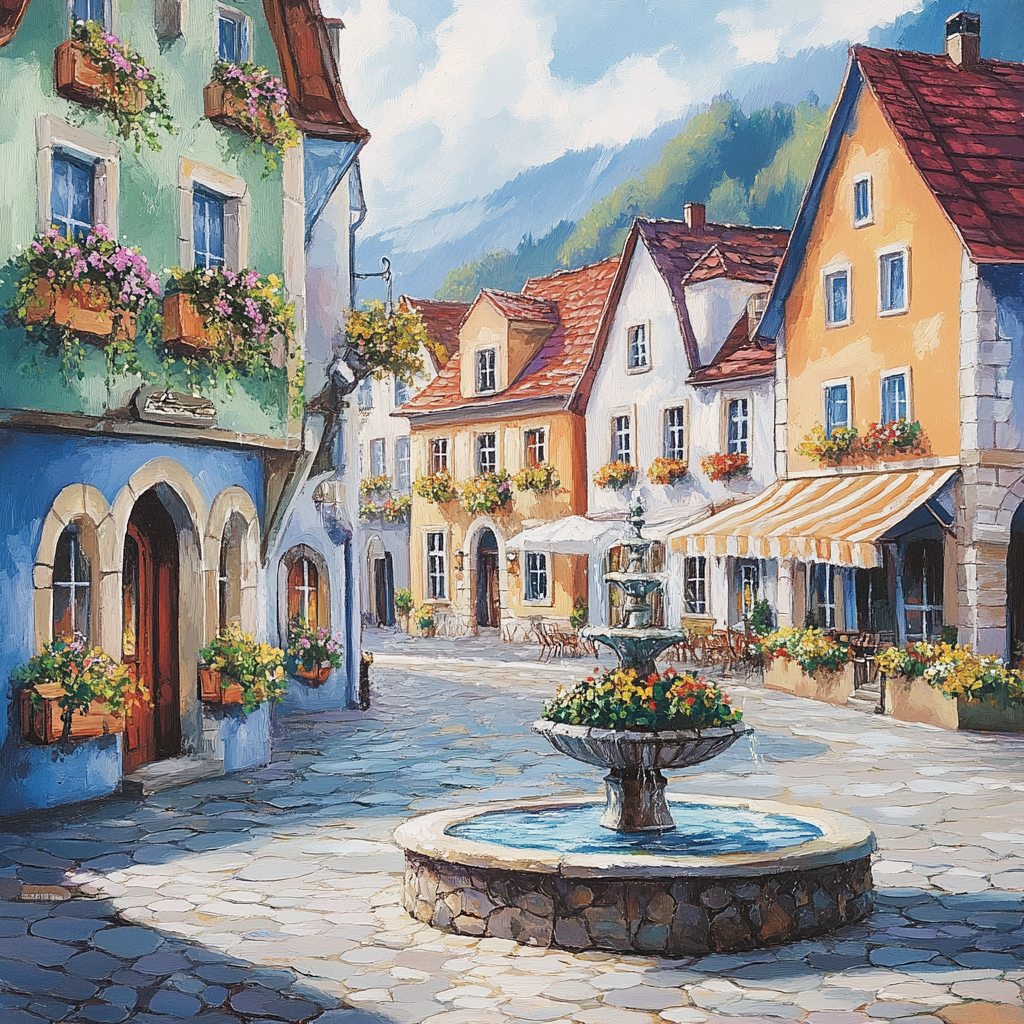
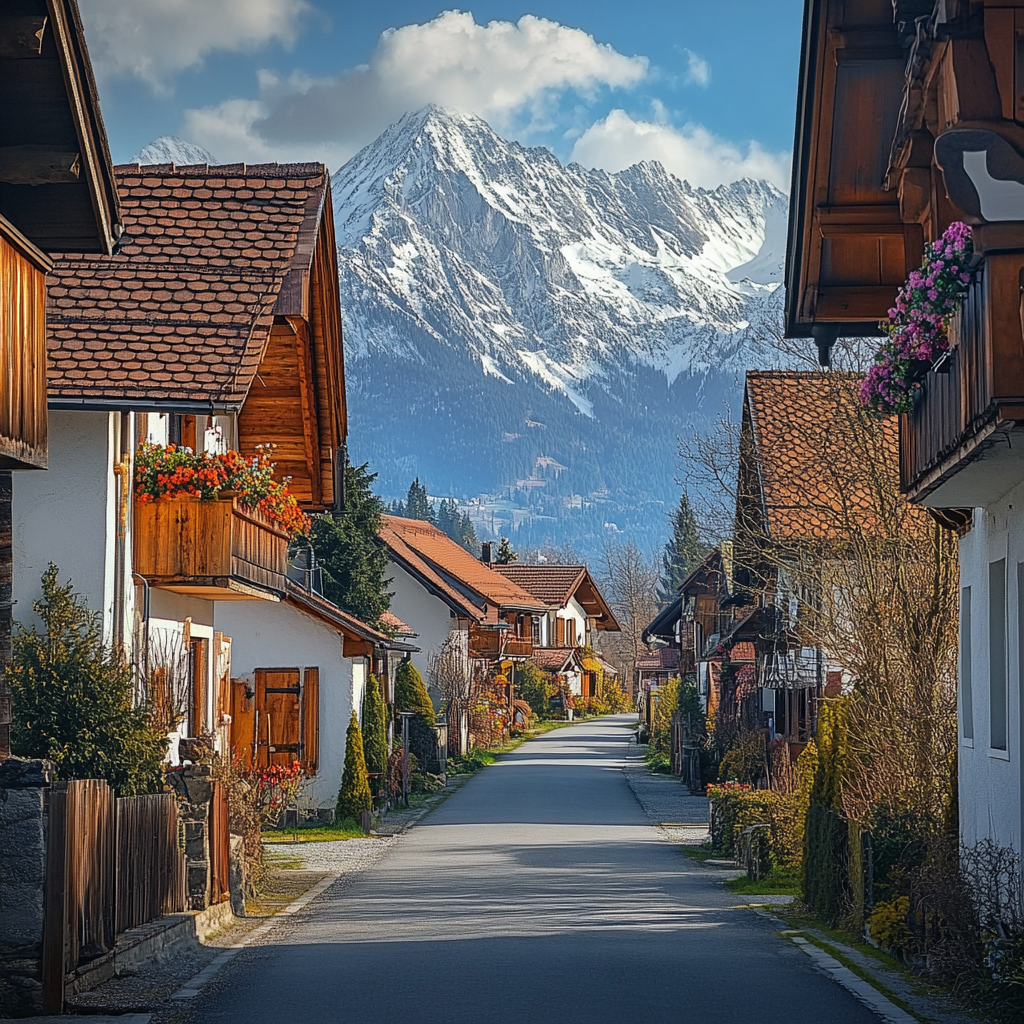
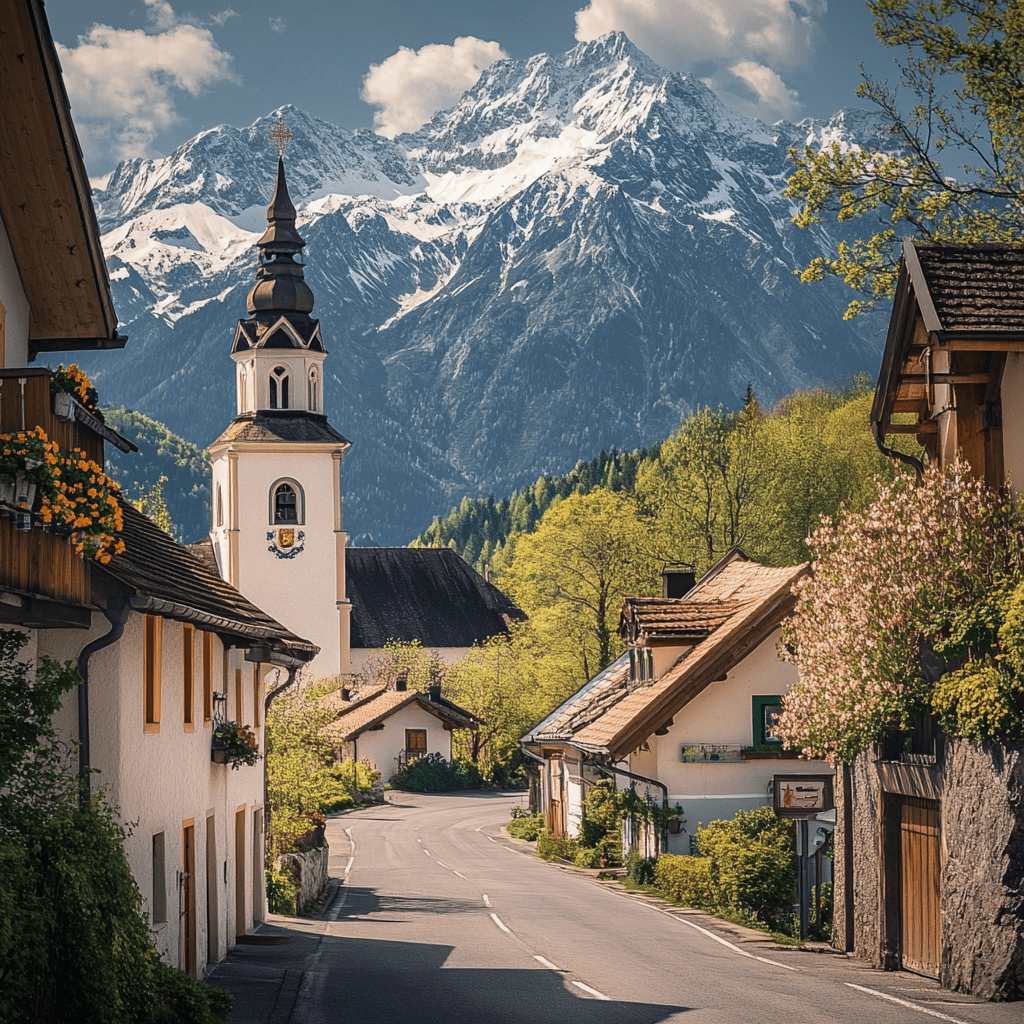
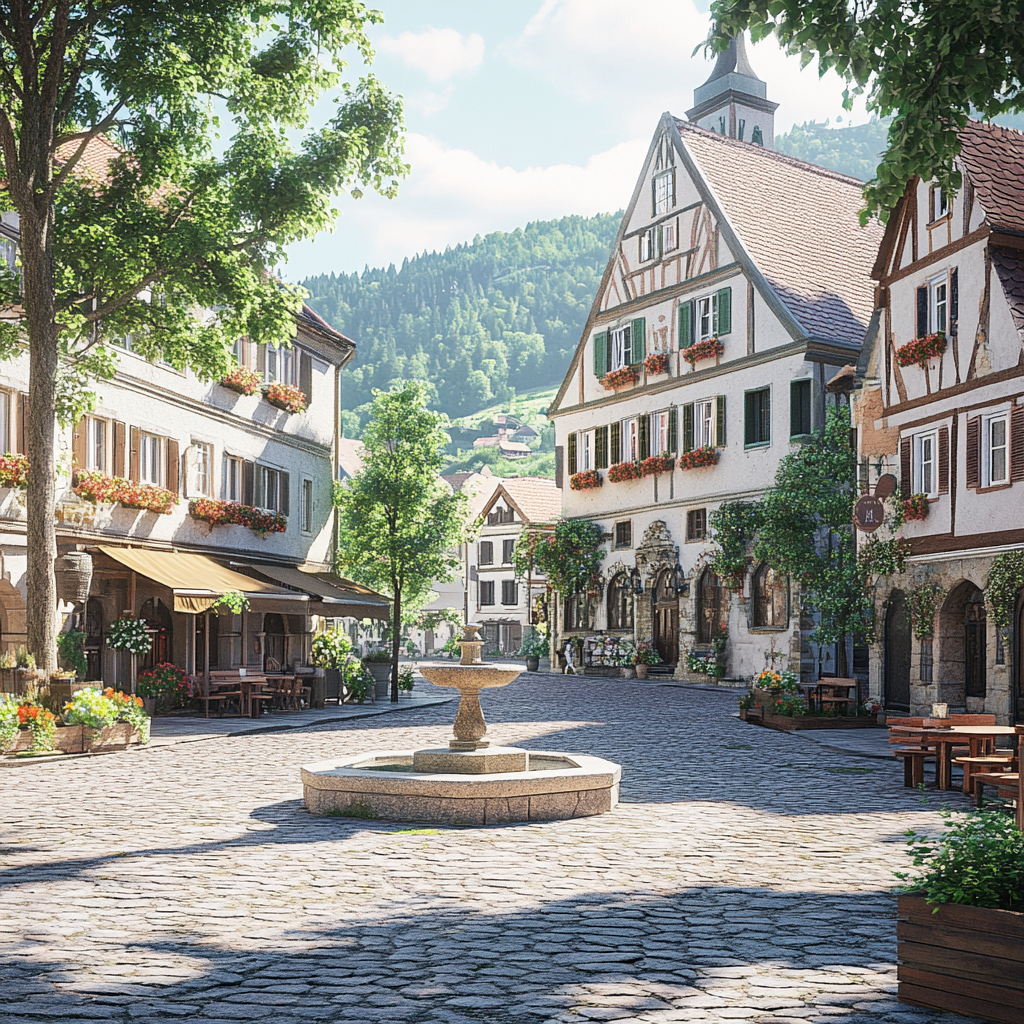
After a scenic drive, Anna and Claire arrive at a small village nestled between rolling hills. The village is quiet and picturesque, a stark contrast to the bustling city they just left.
They pulled into a small village, and Anna parked the car near a fountain in the town square. “Here we are," she said, opening the door. “This is one of those places where time feels like it’s stood still."
Claire stepped out of the car and took a deep breath, smiling at the sight of the traditional Bavarian houses. “It’s beautiful. It feels so peaceful here, almost like the village is in its own little world."
“That’s what I love about these places," Anna said as they began walking. “Everyone knows everyone else. It’s all about community here. In the north, life is more about efficiency and getting things done. Here, it’s about taking your time, enjoying a coffee, and catching up with neighbors."
“Sounds like a nice change of pace," Claire said. “Do people in the north ever find it hard to adjust when they visit?"
“Sometimes," Anna admitted. “But most people appreciate the slower pace, especially when they’re here on holiday. It’s hard not to relax when you’re surrounded by this kind of scenery."
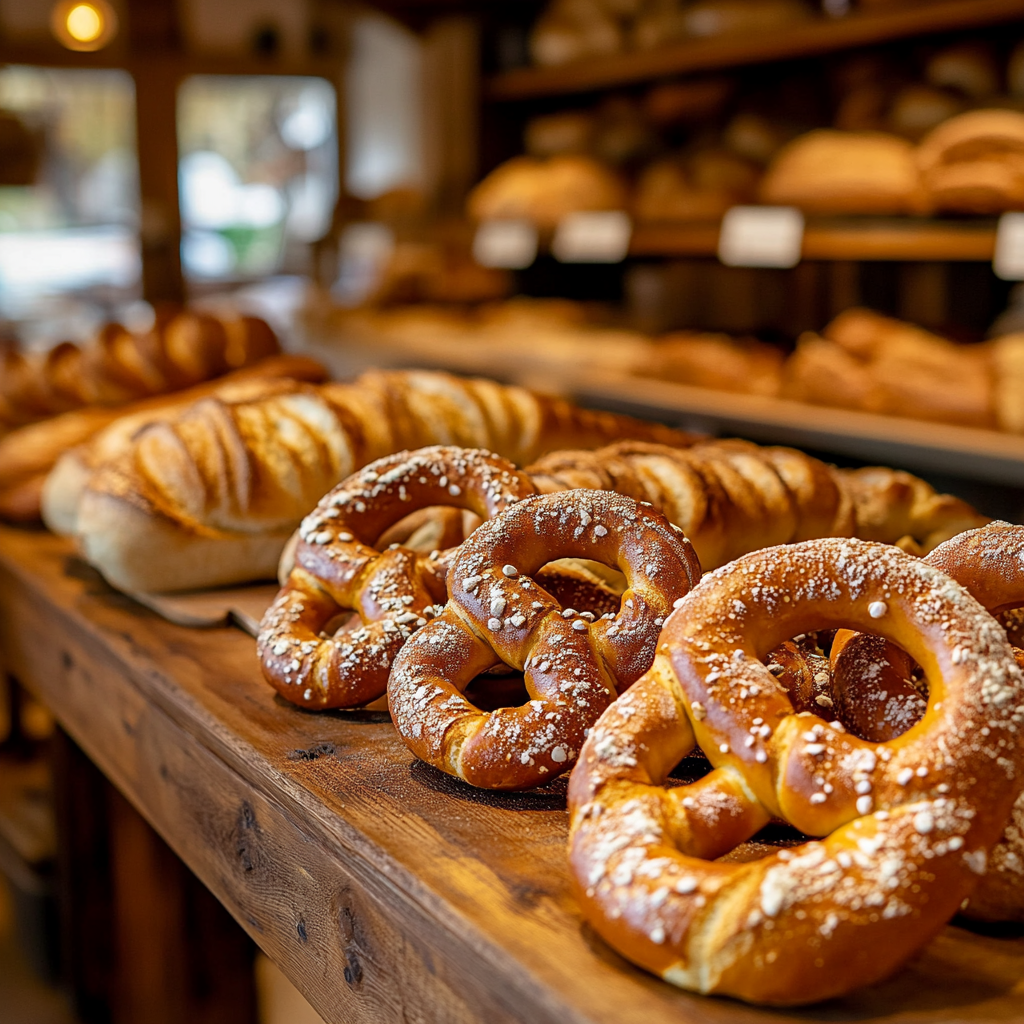
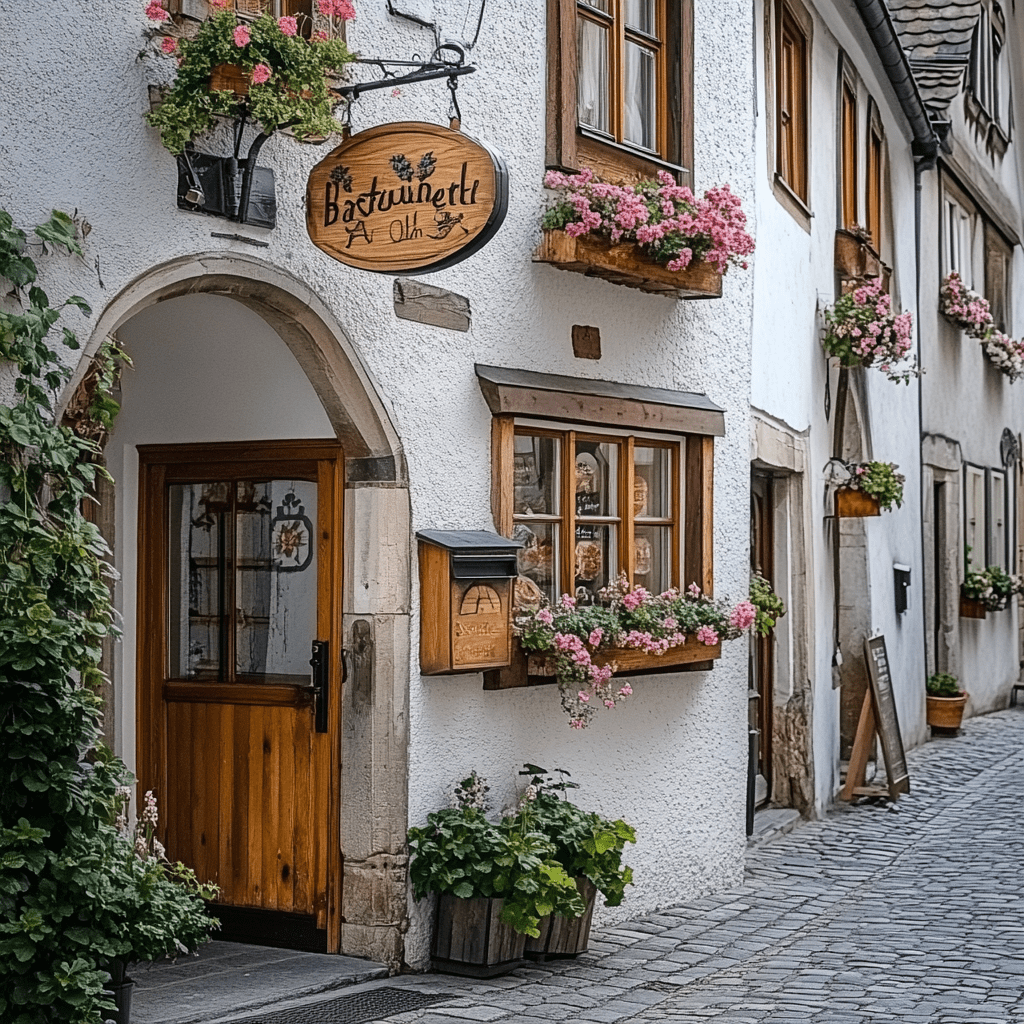
They passed by a small bakery, and Anna pointed it out. “That’s the local bakery. They’ve been making bread and pastries the same way for generations. We should definitely stop in and try something."
Claire nodded eagerly. “I’m always up for some fresh bread."
As they entered the bakery, the smell of freshly baked goods filled the air. The baker, an elderly man with a friendly smile, greeted them warmly. “Guten Tag! What can I get for you?"
Anna smiled back. “We’ll have two of your fresh pretzels, please."
While the baker prepared their order, Claire looked around at the quaint interior. “This place is charming. You can feel the history in every corner."
Anna nodded. “Places like this are becoming rare, but they’re treasured here. It’s a big part of why people love Bavaria."
As they left the bakery, pretzels in hand, Claire took a bite and sighed contentedly. “I can see why. This is delicious."
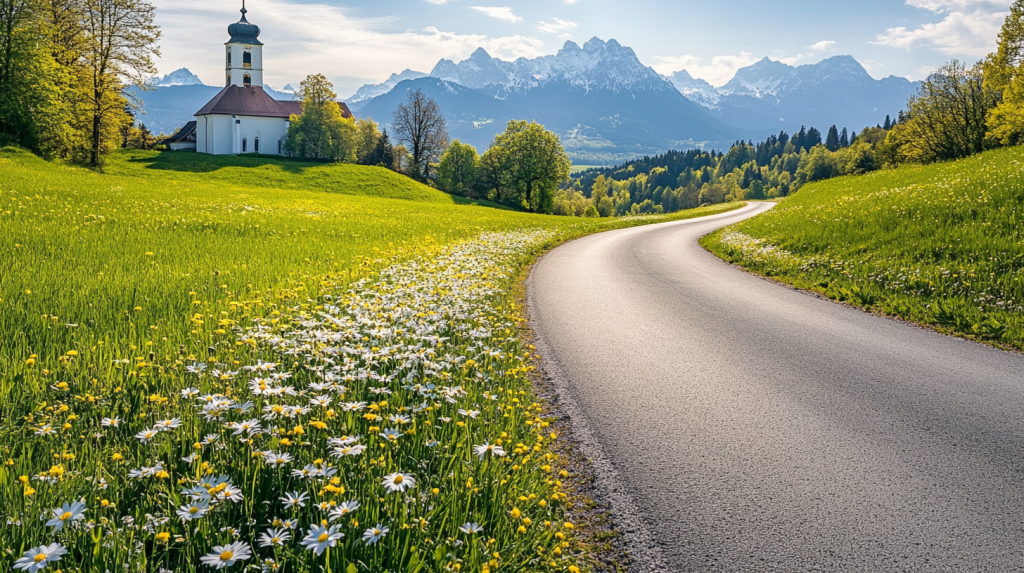
After a peaceful stop in the village, Anna and Claire continue their journey deeper into Bavaria, with the Alps now looming larger on the horizon. The landscape becomes more rugged, with the rolling hills giving way to towering peaks
As they drove further south, the mountains began to dominate the skyline. Claire stared at the peaks in awe. “They’re even more impressive in person. Pictures just don’t do them justice."
Anna nodded, her eyes on the road. “Yeah, they have a way of making you feel small, don’t they? It’s one thing to see them from a distance, but once you’re up close, it’s like they’re almost alive."
Claire smiled. “I can see why people are so connected to the land here. It’s hard not to feel something when you’re surrounded by this kind of beauty."
“It’s true," Anna agreed. “In Bavaria, the mountains aren’t just scenery—they’re part of the culture, part of daily life. They shape everything, from the food to the festivals. You’ll notice a lot of the traditions here are about working with nature, not against it."
“Like what?" Claire asked, genuinely interested.
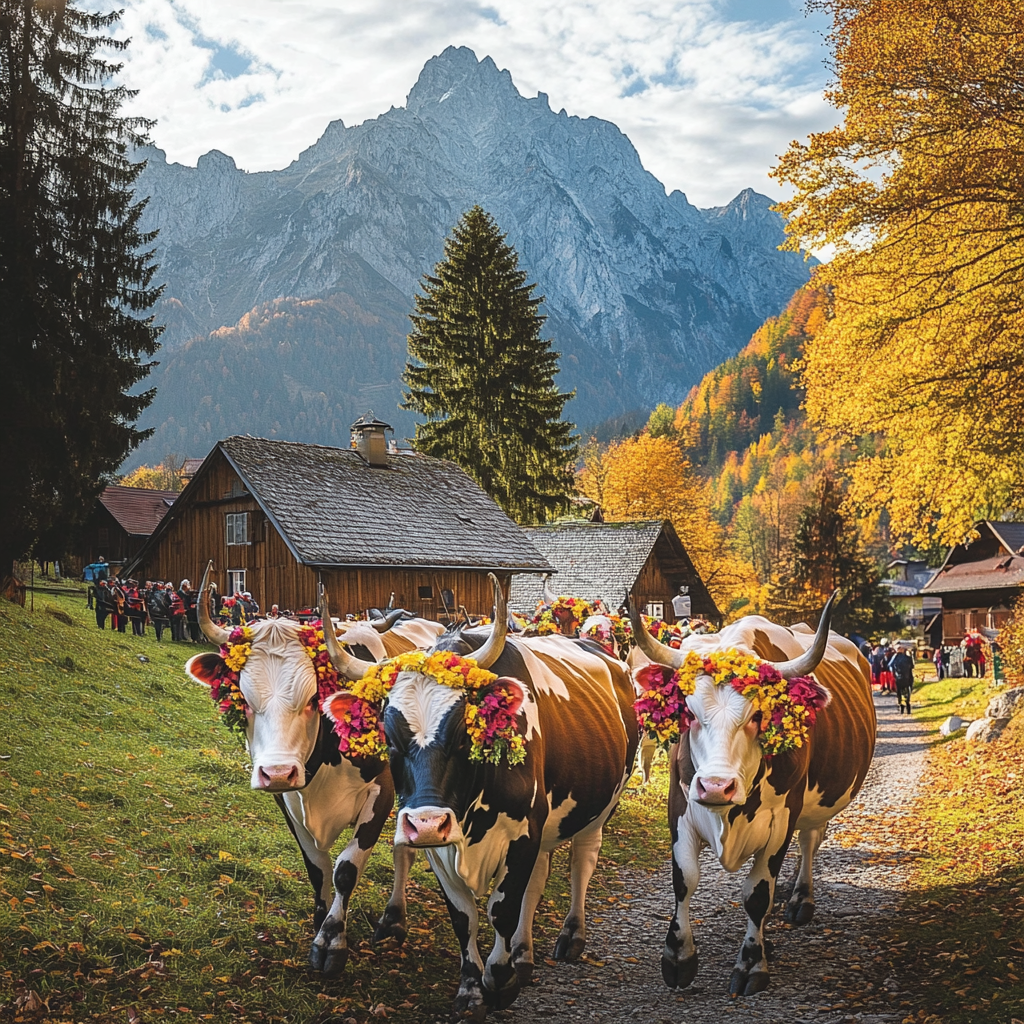
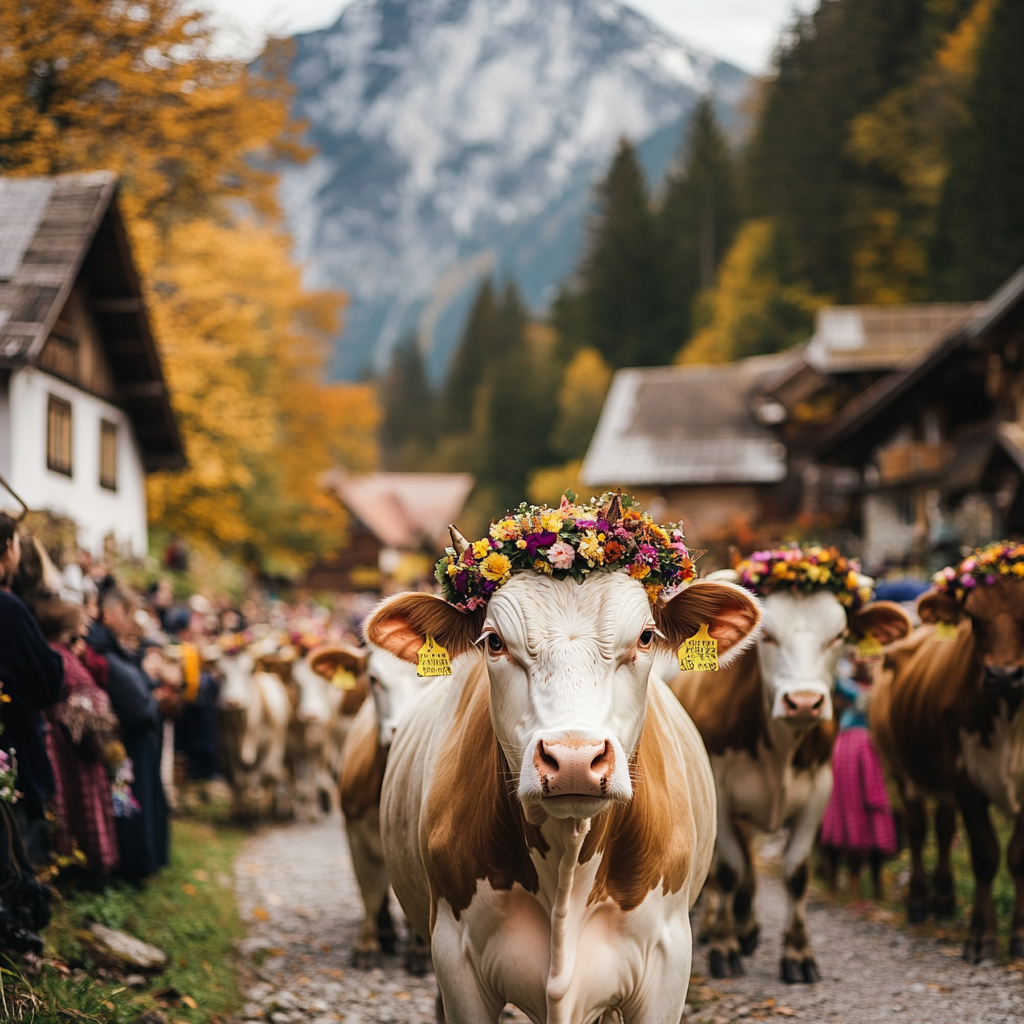
“Well," Anna said, thinking, “there’s the Almabtrieb, for instance. It’s when the cows are brought down from the mountain pastures in autumn. It’s a big event, with parades and decorations. It’s not just about farming—it’s a celebration of the change in seasons, of the connection between people and the land."
“That sounds amazing," Claire said, imagining the scene. “Do you think we’ll get to see something like that?"
“Maybe," Anna said with a smile. “We’re here at the right time of year. But even if we don’t, there’s plenty of other things to experience. The way people live here, so close to nature… it’s different from the city life in the north. Less hustle, more flow."
Claire nodded. “I think I’m starting to understand. It’s like life here has its own rhythm, dictated by the seasons and the landscape."
“Exactly," Anna said, pleased. “It’s a different kind of pace, one that’s slower, but richer in its own way. You’ll see more of it when we get to the Alps. The villages up there are even more traditional, and the people… they’ve held onto their ways of life for centuries."
Claire looked out at the mountains, feeling a sense of anticipation. “I’m really looking forward to it."
Anna glanced at her with a smile. “And I’m looking forward to showing you. Let’s find a good spot to pull over soon. The views are only going to get better from here."
Scene 4: Discussing Religion in a Bavarian Restaurant
After a day of exploring, Anna and Claire decide to have dinner at a cozy restaurant in a small Bavarian town. The restaurant is warm and inviting, with wooden beams on the ceiling and traditional Bavarian décor. They’re seated at a corner table, enjoying a hearty meal as they talk about the differences between northern and southern Germany, particularly in terms of religion.
As they waited for their meal, Claire looked around the restaurant. “This place feels so… rooted in tradition. You can tell it’s been here for ages."
Anna nodded, sipping her beer. “That’s the thing about Bavaria. Tradition is everywhere, especially when it comes to religion."
Claire raised an eyebrow. “Religion? How so?"
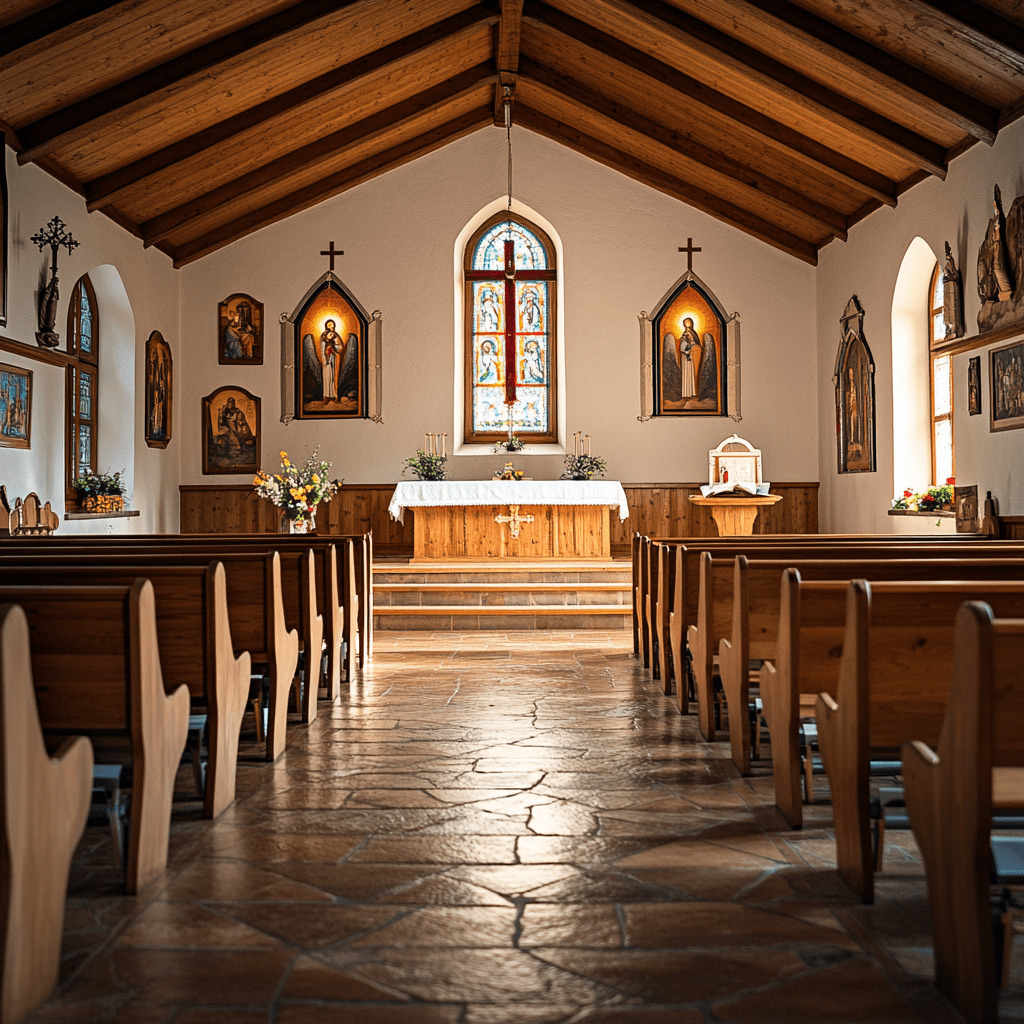
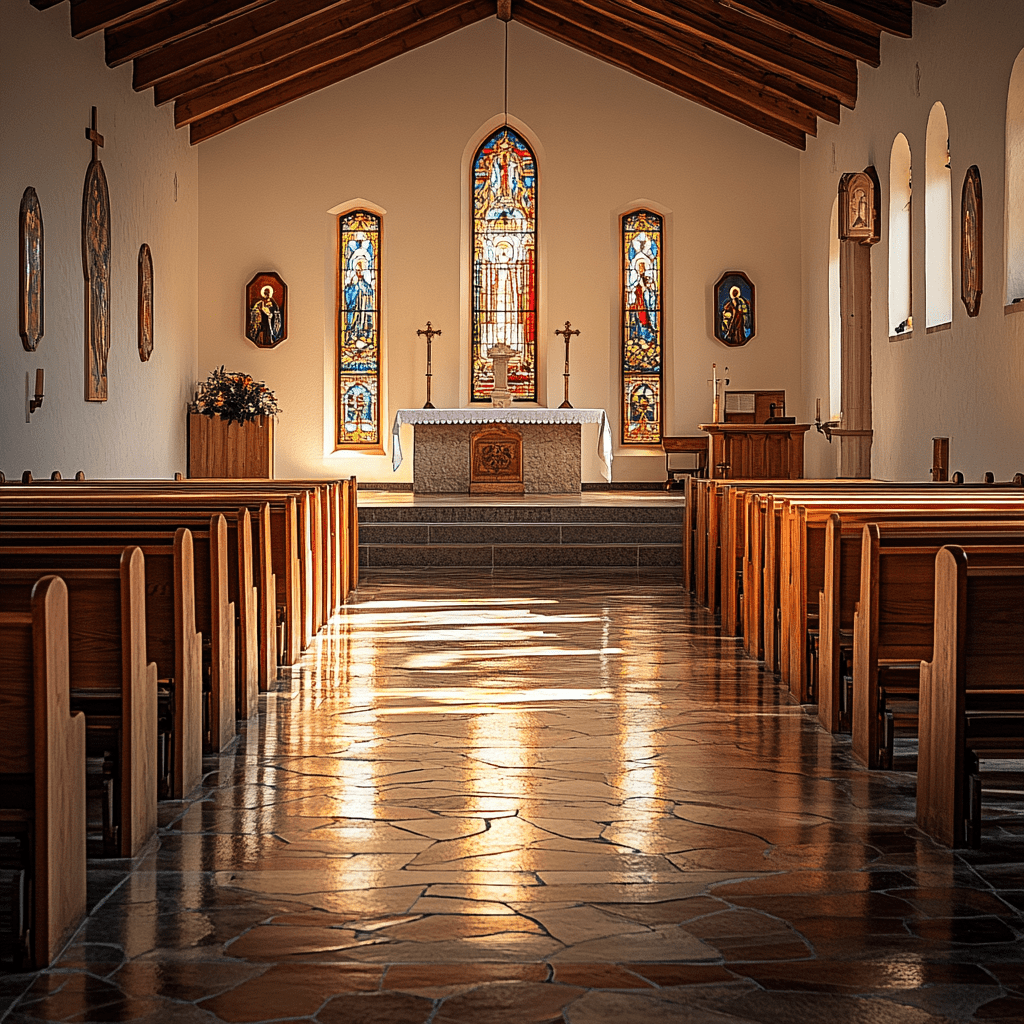
“Well," Anna began, setting down her glass, “Bavaria is predominantly Catholic, and you can feel that influence almost everywhere—whether it’s in the architecture, the festivals, or even the daily life of the people."
“Really?" Claire asked. “I didn’t realize religion played such a big role here."
“Oh, it does," Anna confirmed. “In fact, some of the biggest celebrations in Bavaria are tied to the Catholic calendar. Things like Easter, Christmas, and even local saints’ days are huge events. The churches here are always full, especially on Sundays."
“That’s interesting," Claire said. “And how does that compare to the north?"
“It’s quite different up north," Anna explained. “The north is mostly Protestant, and while religion is still important, it’s not as… visible, if that makes sense. The churches there are simpler, the celebrations less elaborate. There’s a more private approach to faith in the north."
“So, would you say religion shapes the culture here more than in the north?" Claire asked.
“I’d say so," Anna replied thoughtfully. “In Bavaria, religion and culture are deeply intertwined. You see it in the way people live their lives, the way they celebrate, even in the way they build their towns. In the north, religion is more of a personal thing—important, but less of a public display."
Claire nodded, taking it all in. “It’s fascinating how the same country can have such different approaches to something as fundamental as faith."
“It really is," Anna agreed. “But that’s part of what makes Germany so interesting. The regional differences are strong, and they add so much variety to the culture. Whether it’s religion, food, or even just the way people interact, there’s always something new to discover."
Their conversation paused as the waiter brought over their meals—plates filled with traditional Bavarian dishes. Anna smiled as she picked up her fork. “And speaking of tradition, I hope you’re ready for some real Bavarian food."
After a long day of sightseeing, Anna and Claire are enjoying a relaxed dinner in a traditional Bavarian restaurant. The cozy atmosphere, with its wooden tables and warm lighting, invites deeper conversation. As they finish their main courses, the topic of Germany’s history comes up, particularly focusing on the medieval period and the formation of modern Germany.
As they sipped their drinks, Claire looked thoughtful. “You know, one thing I’ve always been curious about is how Germany became the country it is today. I mean, it’s such a big part of European history, especially in the Middle Ages."
Anna nodded, setting her glass down. “Yeah, Germany’s history is pretty complex, especially when you go back to the Middle Ages. Back then, what we now call Germany was actually a collection of hundreds of small states, duchies, and principalities. It wasn’t a unified country at all."
Claire raised an eyebrow. “So, how did it all come together?"
“Well," Anna began, “It’s a long story. In the Middle Ages, the area that is now Germany was part of the Holy Roman Empire, which was neither holy, Roman, nor much of an empire," she added with a smile. “It was more of a loose confederation of states, each with its own ruler. The Emperor had some power, but it was mostly symbolic. The real power lay with the local princes and dukes."
“That sounds chaotic," Claire said, intrigued.
“It was," Anna agreed. “There were constant power struggles between the Emperor and the local rulers. And because the empire was so fragmented, it made it difficult for any one ruler to control the entire territory effectively. That’s why Germany remained a collection of states for so long."
“And when did things start to change?" Claire asked, leaning forward slightly.
“Things began to change in the 19th century," Anna explained. “After the Napoleonic Wars, there was a growing sense of nationalism across Europe, and many people in these German-speaking states began to want a unified nation. The idea of a single German identity started to take hold."
“So, was it just about identity, or were there other factors?" Claire asked.
“Identity was a big part of it, but there were also political and economic reasons," Anna continued. “The Industrial Revolution was making it clear that a unified Germany would be more economically powerful. Plus, having a single, strong state could provide more stability and security in a Europe that was increasingly competitive and militarized."
“And how did they finally unify?" Claire asked.
“The unification was largely driven by Prussia, the most powerful of the German states," Anna said. “In the 1860s, Otto von Bismarck, who was the Prime Minister of Prussia, used a series of wars—first against Denmark, then Austria, and finally France—to unify the German states under Prussian leadership. In 1871, after the Franco-Prussian War, the German Empire was proclaimed, with the Prussian king as the first German Emperor."
Claire nodded, impressed. “So it wasn’t just a cultural thing—it was also about power and politics."
“Exactly," Anna said. “Germany’s unification was as much about strategy and power as it was about bringing people together under a shared identity. And the effects of that unification are still felt today."
“It’s fascinating to think about how all those different pieces came together to form the country we know now," Claire said. “Especially considering how complex and fragmented it used to be."
“That’s what makes German history so interesting," Anna replied. “It’s full of twists and turns, and it’s shaped by so many different forces—cultural, political, and economic. And Bavaria, in particular, has its own unique place in that history."
“I’d love to learn more about Bavaria’s role," Claire said, finishing her drink.
“We can definitely dive into that tomorrow," Anna said with a smile. “There’s so much more to explore."
Scene 6: Exploring Bavaria’s Role in German Unification
The next morning, after a hearty Bavarian breakfast, Anna and Claire decide to take a walk through the historic town they’re staying in. As they stroll through the narrow streets, with centuries-old buildings surrounding them, their conversation naturally turns to the history of Bavaria and its role in the unification of Germany.
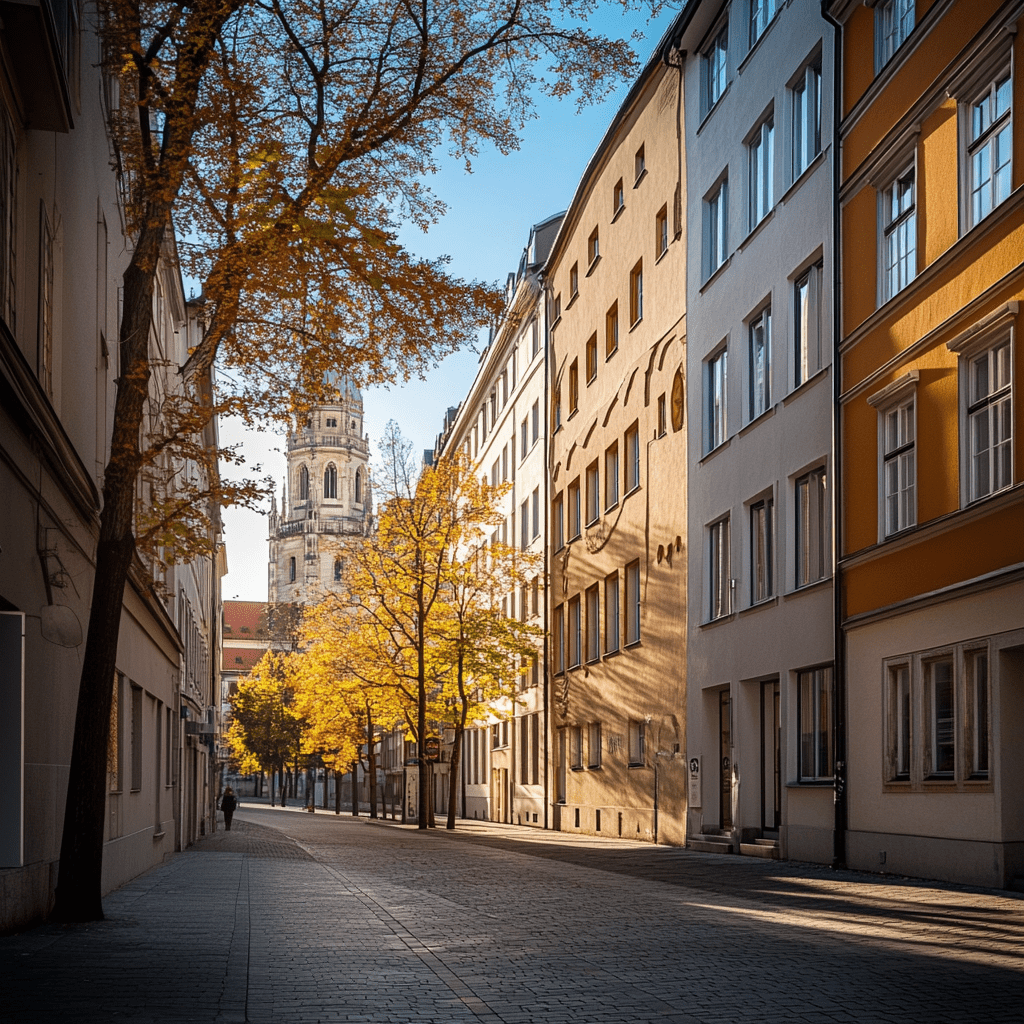
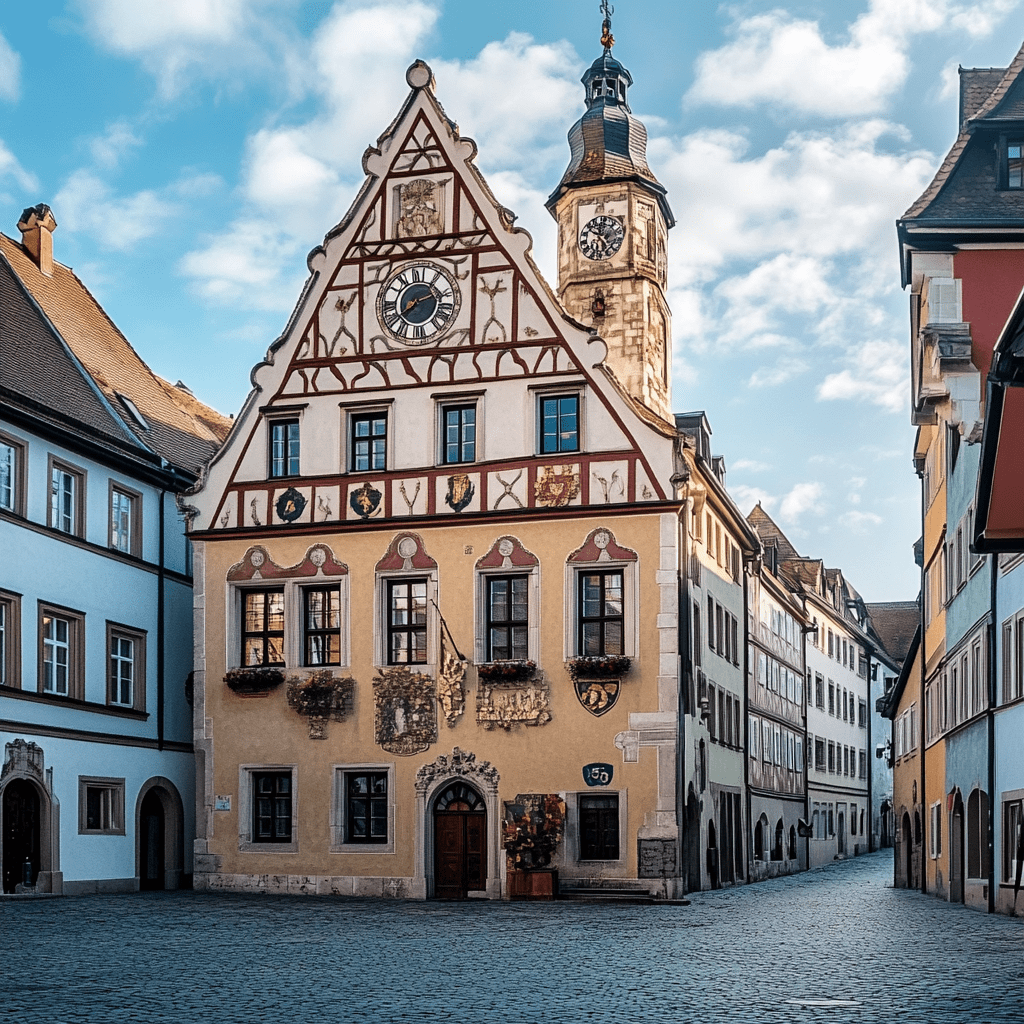
As they walked along the cobblestone streets, Anna pointed out a large building with intricate carvings on the facade. “That’s the old town hall. It’s been here since the 16th century. Can you imagine the history this place has seen?"
Claire looked up at the building, admiring the architecture. “It’s incredible. So, yesterday we talked about how Germany unified, but what was Bavaria’s role in all of that?"
Anna smiled, clearly pleased with the question. “Bavaria’s role in German history is quite significant, especially when it comes to unification. You see, Bavaria was one of the largest and most powerful states within the Holy Roman Empire, and even after the empire’s dissolution, it remained an influential kingdom."
“So, Bavaria wasn’t just another small state," Claire commented.
“Exactly," Anna said. “Bavaria had a strong sense of identity and autonomy. When the idea of unifying Germany under Prussian leadership began to gain traction, Bavaria was one of the states that was initially resistant. They valued their independence and had a different cultural and religious background compared to Prussia."
“Right, because Bavaria is Catholic and Prussia was Protestant," Claire added, remembering their previous conversation.
“Yes, and that religious difference was one of the reasons Bavaria was cautious about unification," Anna continued. “Bavaria didn’t want to be dominated by a Protestant Prussia. But the political landscape was changing, and the growing nationalist movement made unification seem inevitable."
“So, what made Bavaria eventually agree to join?" Claire asked.
“There were a few factors," Anna explained. “One of the key moments was the Austro-Prussian War in 1866. Bavaria sided with Austria, but Prussia won the war and gained significant influence over the German states. After that, Bavaria realized that resisting unification might not be in its best interest."
“But they didn’t just give up their independence without a fight, did they?" Claire asked.
“No, they didn’t," Anna said. “When the German Empire was finally formed in 1871, Bavaria negotiated special terms. They retained certain rights, such as having their own army during peacetime, their own postal service, and even control over their own railways. Bavaria also maintained its Catholic traditions and had a significant degree of autonomy compared to other German states."
“That’s interesting," Claire said thoughtfully. “So, even though they joined the empire, they kept a lot of their own identity."
“Exactly," Anna nodded. “Bavaria has always been proud of its unique culture and history. Even today, you’ll see that Bavarians consider themselves Bavarians first, and Germans second. It’s a regional pride that’s deeply ingrained in the people here."
Claire smiled, looking around at the town. “I can see why. There’s something very distinct about this place—something that feels different from other parts of Germany."
“There is," Anna agreed. “And that’s why Bavaria continues to have a special place in German history and culture. It’s a region that’s held onto its traditions while also adapting to the changes around it. That balance between tradition and progress is what makes Bavaria so fascinating."
As they continued their walk, Claire glanced at Anna. “I’m really glad we’re doing this trip. It’s giving me such a deeper understanding of Germany, beyond just the typical tourist spots."
Anna smiled warmly. “I’m glad too. There’s so much more to Germany than just Berlin or Munich. Each region has its own story, its own contributions to the bigger picture. And Bavaria’s story is one of resilience, adaptation, and a strong sense of identity."
They paused at a small café, deciding to take a break. As they sat down, Claire looked at Anna. “So, what’s next on our historical journey?"
Anna laughed softly. “How about we dive into the local legends and folklore? Bavaria has no shortage of those, and they’re a big part of what makes this region so unique."
Scene 7: Discussing Dialects and Accents in Bavaria
After their break at the café, Anna and Claire continue their walk through the town. The conversation turns to language as Claire notices the distinct way people in the town are speaking. Curious about the differences in dialects across Germany, she asks Anna about it.
As they walked through the bustling town square, Claire couldn’t help but notice the conversations happening around them.
“The way people speak here—it sounds different from what I’ve heard in other parts of Germany. Is that just me, or is there really a difference?"
Anna smiled, knowing exactly what Claire was referring to. “You’re not imagining it. The people here are speaking Bavarian dialect, or ‘Bairisch’ as it’s called in German. It’s quite different from Standard German, which is what you’ve likely heard in Berlin or other northern cities."
Claire looked intrigued. “How different are we talking? Like, would a German speaker from the north have trouble understanding someone here?"
“It depends," Anna said thoughtfully. “Bavarian dialects can be very different from Standard German, especially in rural areas. In cities like Munich, people often switch between Standard German and Bavarian, depending on the situation. But in smaller towns and villages, you’ll hear more of the pure dialect."
“So, could you give me an example?" Claire asked.
“Sure," Anna replied. “For example, in Standard German, you’d say ‘Guten Morgen’ for ‘Good morning,’ but in Bavarian, you might hear ‘Grüß Gott’ instead, which literally means ‘Greet God.’ It’s a common greeting here."
Claire tried to repeat the phrase, smiling as she did. “Grüß Gott. That’s interesting. It feels more… traditional, I guess."
“It is," Anna agreed. “And there are other differences too. Bavarian has its own vocabulary and even some different grammar rules. It can be confusing if you’re not used to it. For instance, instead of saying ‘Ich habe,’ which means ‘I have’ in Standard German, you might hear ‘I hob’ in Bavarian."
Claire laughed softly. “I can see how that would be confusing. Do people from the north struggle with it?"
“Sometimes," Anna admitted. “Especially if they’ve never been exposed to it before. But most Germans are used to hearing different dialects, even if they don’t speak them. It’s part of the charm of traveling across Germany—you get to experience all these linguistic variations."
“That’s fascinating," Claire said. “So, is it just Bavaria that has its own dialect, or are there other regions with their own versions of German?"
“Oh, there are plenty of regional dialects," Anna explained. “In the north, you have Plattdeutsch, which is quite different from what you hear in Berlin. In the southwest, around Stuttgart, they speak Swabian, and in the east, there’s Saxon. Each region has its own way of speaking, and the dialects can sometimes be so distinct that it’s almost like a different language."
“Wow," Claire said, impressed. “I didn’t realize it was that diverse. So, do people switch between dialect and Standard German easily?"
“Most people do," Anna said. “It’s pretty common for Germans to speak their regional dialect at home or with friends and then switch to Standard German in more formal settings, like at work or school. It’s a bit like being bilingual, but within the same language."
“That’s so cool," Claire said, clearly fascinated. “It must be a bit challenging though, especially for someone learning German as a second language."
“It can be," Anna agreed. “But it’s also one of the things that makes learning German interesting. You get to experience the culture of each region through its language."
Claire smiled. “I think I’d love to learn a few phrases in Bavarian while I’m here. It sounds like a fun challenge."
Anna laughed. “I can teach you some basics. By the time you leave, you’ll be greeting everyone with ‘Grüß Gott’ like a local."
Scene 8: Discussing Climate and Cuisine Differences Between Northern and Southern Germany
After a day of exploring the Bavarian countryside, Anna and Claire decide to have dinner at a local restaurant that specializes in traditional Bavarian cuisine. As they sit down to enjoy their meal, their conversation naturally turns to how the climate differences between northern and southern Germany have influenced the food cultures in each region.
As they waited for their meal, Claire looked around at the cozy, wood-paneled restaurant. “You know, I’ve noticed that the food here in Bavaria is quite hearty. Lots of meat, bread, and potatoes. Is that typical for the region?"
Anna nodded, taking a sip of her drink. “Yes, Bavarian food is definitely on the hearty side. It’s partly due to the climate here. The winters in Bavaria can be quite harsh, especially in the mountainous areas, so the food developed to be filling and warming."
“That makes sense," Claire said. “So, how does that compare to the food up north?"
“Well," Anna began, “the climate in northern Germany is milder, especially along the coast. The winters aren’t as cold, but it’s often rainy and windy. This has influenced the cuisine there in a different way. In the north, you’ll find a lot of fish, especially herring, because of the proximity to the North Sea and the Baltic Sea."
“Fish isn’t as common here, I’ve noticed," Claire said, thinking back on the meals they’ve had so far.
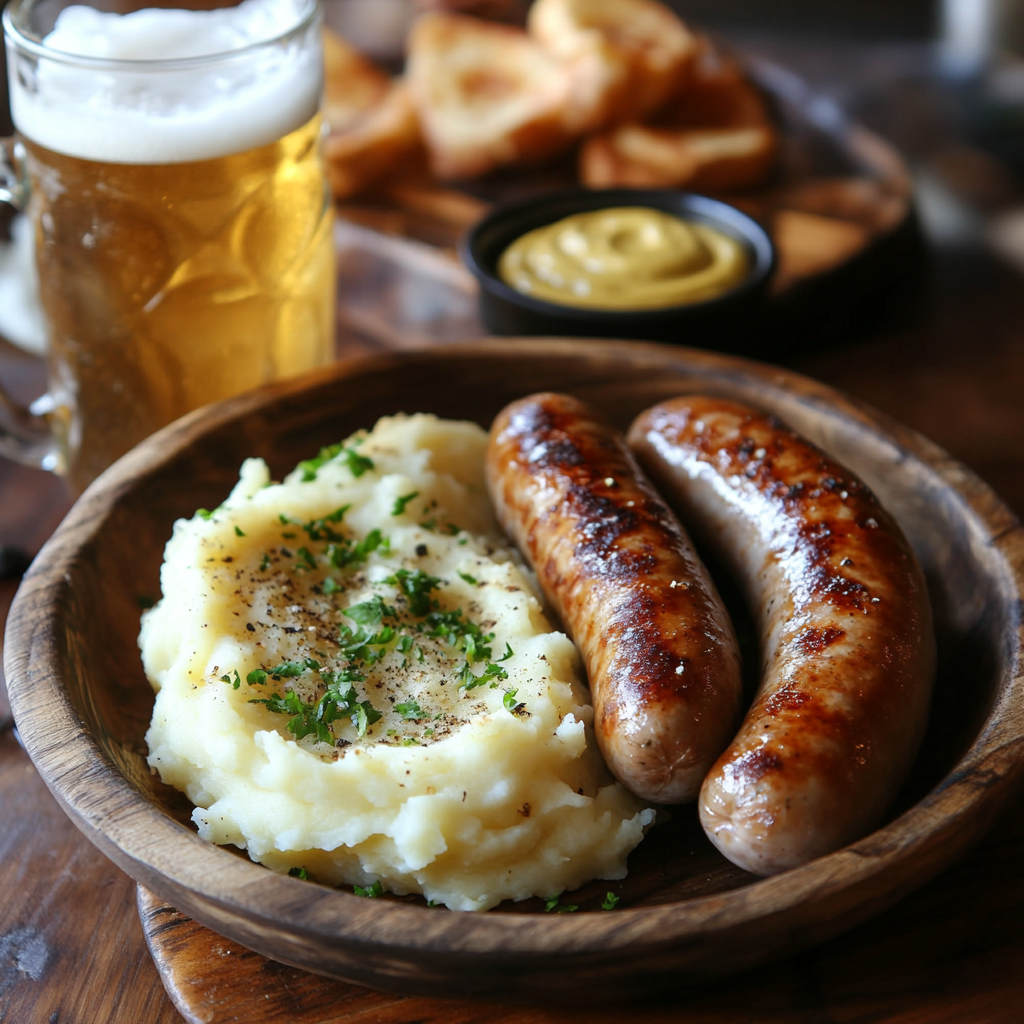
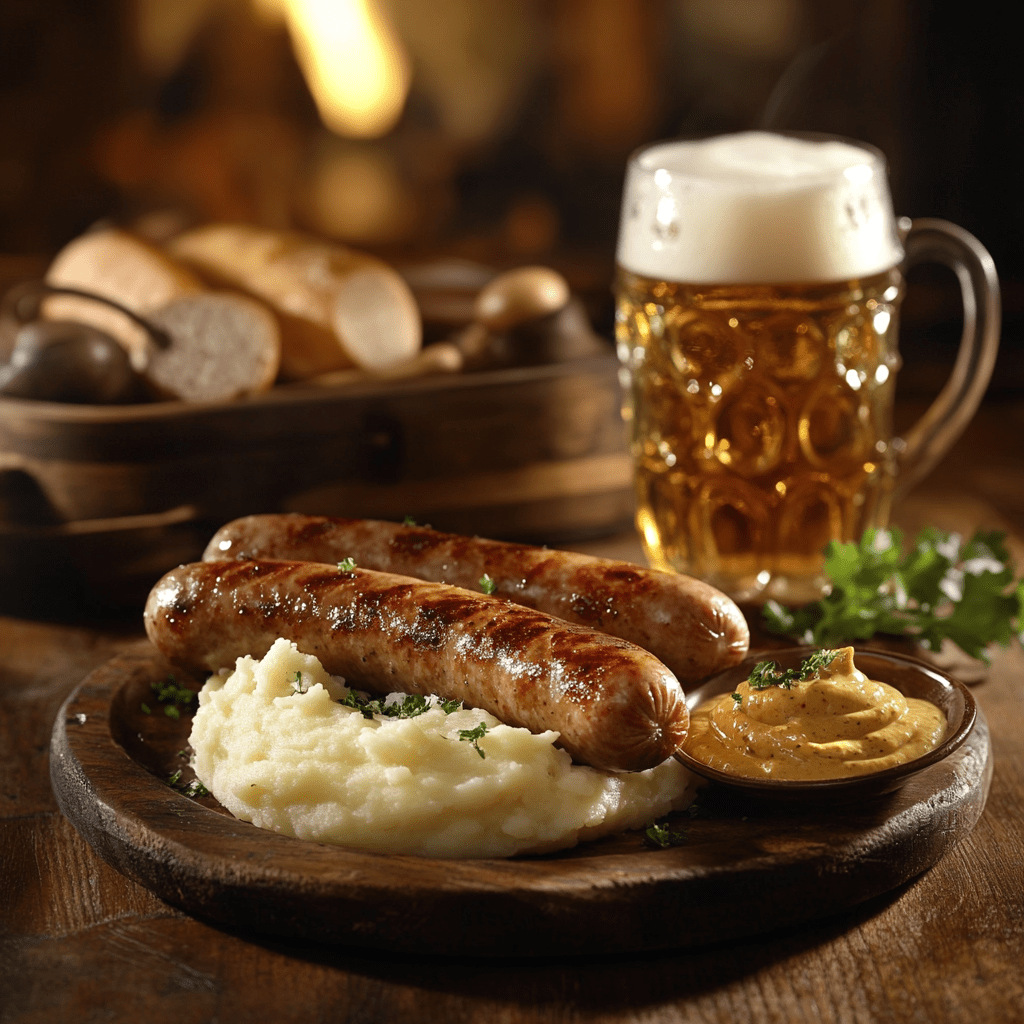
“Right," Anna agreed. “Here in the south, especially in Bavaria, you’re more likely to find dishes centered around pork, beef, and game. Sausages are a big deal here—things like Weisswurst, which is a traditional Bavarian sausage, and of course, Schweinshaxe, which is roasted pork knuckle."
“And what about vegetables?" Claire asked. “Do they play a big role in Bavarian cuisine?"
“Potatoes are a staple here," Anna explained. “You’ll see them in all sorts of dishes—mashed, roasted, or as dumplings called ‘Knödel.’ And cabbage, especially sauerkraut, is also very common. It’s the kind of food that sticks to your ribs and keeps you warm during the cold months."
“So, in the north, is it more about light and fresh ingredients?" Claire inquired.
“Exactly," Anna said. “In the north, you’ll find more dishes with lighter, fresher ingredients. For example, you have ‘Labskaus,’ which is a dish made with corned beef, potatoes, and beetroot, often served with pickled herring and fried eggs. And because of the cooler, wetter climate, you also get a lot of stews and soups, but they tend to be less rich than what you’d find here in Bavaria."
Claire nodded, understanding the connection. “It’s interesting how the climate really shapes what people eat. It’s like the food is designed to suit the environment."
“Absolutely," Anna agreed. “And it’s not just the ingredients that differ, but also the way the food is prepared. In the south, slow-cooking methods are popular because they bring out the flavors in tougher cuts of meat. In the north, with more access to fresh fish, you’ll find a lot of pickling and smoking to preserve the catch."
Claire smiled. “I love learning about these regional differences. It really gives you a deeper appreciation for the culture."
Anna returned the smile. “I’m glad you find it interesting. Each region of Germany has its own unique culinary traditions, and they’re all tied to the land and climate in one way or another."
Their conversation paused as the waiter brought over their meals—plates filled with rich, hearty Bavarian dishes. Claire looked down at her plate, which held a generous portion of Schweinshaxe with a side of Knödel and sauerkraut.
“This looks amazing," Claire said, picking up her fork. “And now I understand why the food is the way it is. It’s perfect for a place with cold winters."
“Exactly," Anna said. “It’s comfort food at its best. And when you’re in Bavaria, this is exactly what you want to eat."
As they started their meal, Claire glanced at Anna. “Do you have a favorite dish from the north?"
Anna thought for a moment before replying. “I do love a good ‘Grünkohl und Pinkel.’ It’s a northern dish—kale cooked with sausages and bacon. It’s another hearty dish, but with a different flavor profile than what you get here."
Claire nodded. “I’ll have to try that when I visit the north."
Anna smiled. “I’ll make sure you do. And you’ll see, just like in Bavaria, the food up north is perfectly suited to its climate and way of life."
現實生活中,親臨其境往往並非易事。然而透過對話以及沉浸在相關環境中,對吸收知識與學習語言卻非常有效。透過 AI 生成的圖像、文字和影片中的音樂,希望能為探索與學習的旅程帶來啟發與幫助。
雖然 AI 可能會出現錯誤,或生成的對話有時不夠自然,但這項新技術提供了一個簡單且有效的方法,
可以快速擴展詞彙量,並讓人對陌生的環境有基本的了解。
In real life, it’s often challenging to experience everything firsthand. However, engaging in conversations and immersing oneself in relevant environments are highly effective methods for absorbing knowledge and learning languages. With AI-generated images, text, and music in videos, I hope to bring inspiration and support to your journey of exploration and learning. While AI may sometimes make mistakes or produce dialogues that are less than natural, this new technology offers a simple and effective way to rapidly expand vocabulary and gain a basic understanding of unfamiliar environments.














 Virtual Travel | 虛擬旅行沉浸式英語學習
發表留言