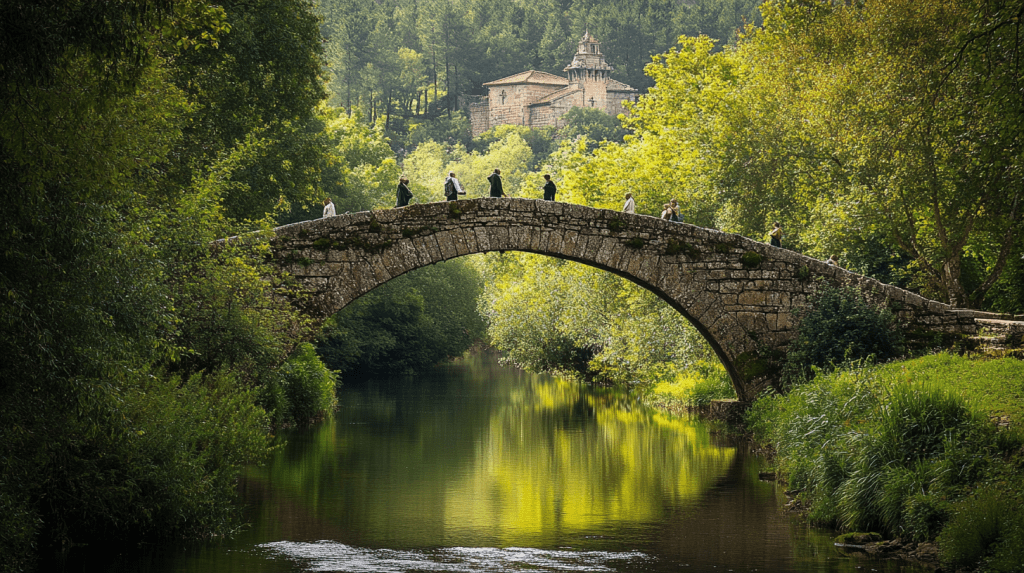
Scene 1: Heading to a New Mountain Lodge for the Night
Clara and Isabel decided to continue their journey deeper into the Cantabrian Mountains. The day had been filled with hikes through lush valleys, spotting wildlife, and taking in the breathtaking scenery. Now, with the evening approaching, they made their way toward a new mountain lodge, tucked away in a quieter, more remote part of the range.
Clara: “I didn’t expect the park to be so vast. We’ve seen so much today, but it feels like there’s still so much more to explore."
Isabel: “It’s true. Every corner of these mountains has its own character. I’m glad we decided to stay another night in the area. This next lodge is even more remote, so we’ll get a different perspective of life in the mountains."
As they drove, the road became narrower and steeper, winding between dense forests and rocky outcrops. The scenery was changing once again—this part of the mountain range felt even more rugged and isolated than where they had been before.

Clara: “I can already feel the difference. The further we go, the more it feels like we’re stepping back in time. These villages must have stayed the same for centuries."
Isabel: “Yes, many of these mountain communities are very self-sufficient. The isolation means they’ve preserved a lot of their traditions. They still rely heavily on agriculture, herding, and small-scale crafts."
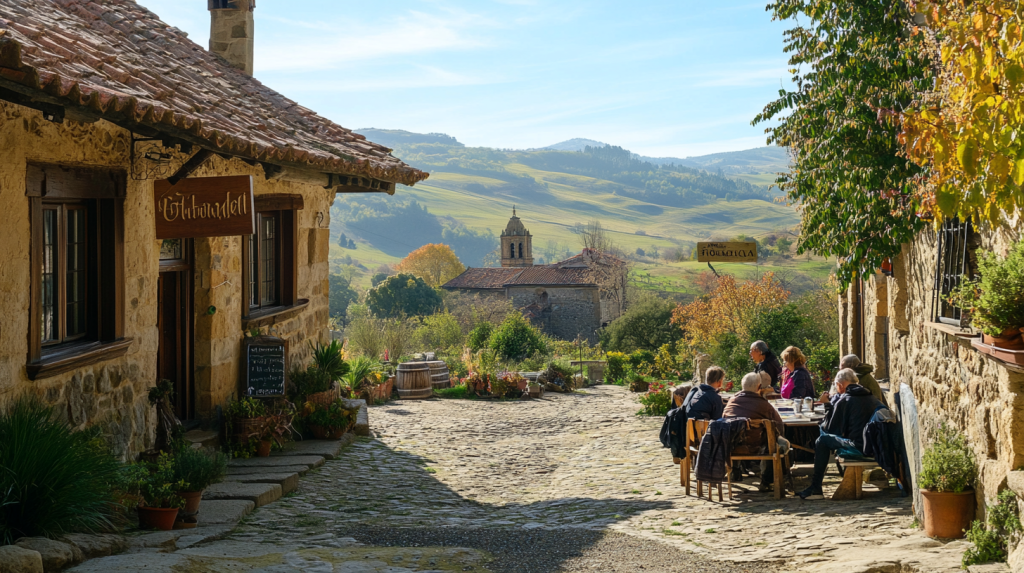
As they climbed higher, the sun began to set behind the mountains, casting long shadows over the landscape. The cool evening air was refreshing after the warm day spent hiking. Soon, they arrived at the mountain lodge, a simple stone building nestled into the hillside, with a panoramic view of the surrounding peaks and valleys.
Clara: “This place is perfect. It’s so quiet and peaceful—completely different from the lodge we stayed at last night."
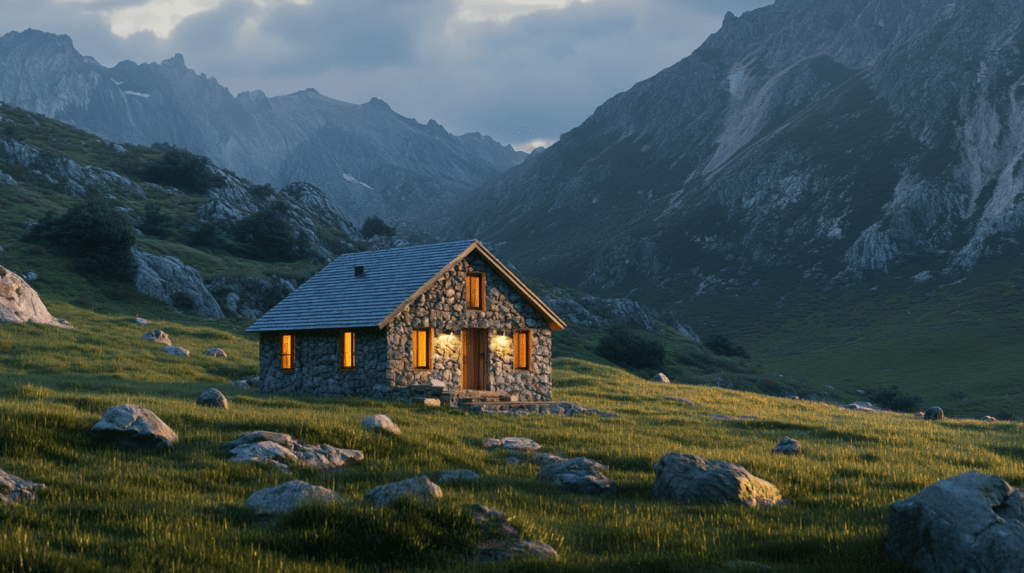
Isabel: “It’s exactly what we need after a full day of exploring. The owner told me they serve traditional mountain dishes for dinner—lots of hearty stews and fresh local produce."
As they settled into their room, Clara looked out the window, where the last light of the day bathed the mountains in a golden hue.
Clara: “I love how each place we visit feels like it has its own story. This lodge, the park, the villages—it all feels connected, but every place is unique."
Isabel: “That’s the beauty of traveling through regions like this. The landscape shapes the culture, and in return, the people shape the land. These mountains have witnessed so much history, and yet, life here continues at its own pace, unaffected by the outside world."
The sound of a bell from a nearby flock of sheep carried on the wind, adding to the tranquil atmosphere of the evening. As they prepared for dinner, both women felt a deep sense of connection to the land and the journey they were on.

場景 1: 前往另一個山區山莊過夜
克拉拉和伊莎貝爾決定繼續她們的旅程,深入坎塔布連山脈。這一天充滿了徒步穿越茂密的山谷、觀察野生動植物,以及欣賞壯麗的景色。隨著夜幕降臨,她們前往另一個更安靜、更偏遠的山區山莊過夜。
克拉拉:「我沒想到這座國家公園這麼大。我們今天看到了很多東西,但感覺還有更多等待我們去探索。」
伊莎貝爾:「確實如此。這些山脈的每一個角落都有自己獨特的面貌。我很高興我們決定再多住一晚。接下來的這個山莊更加偏遠,能讓我們更好地感受這裡的生活。」
她們駕車前行,路越來越窄,越來越陡峭,蜿蜒穿過茂密的森林和岩石地形。景色再度發生變化——這一部分的山脈顯得更加險峻與孤立,與之前的地區截然不同。
克拉拉:「我已經感受到差異了。越往裡走,越覺得我們像是在穿越時光回到過去。這些村莊好像幾個世紀都沒變過。」

伊莎貝爾:「是的,這些山區社區非常自給自足。由於與外界隔離,他們保留了許多傳統。這裡的人依然依賴農業、牧羊和小規模手工藝來維持生計。」
隨著她們爬得越來越高,太陽開始隱沒在山峰後方,長長的陰影籠罩著整片景色。經過白天的徒步之後,這涼爽的傍晚空氣讓人倍感清新。不久,她們到達了今晚的目的地——一座簡樸的石頭建築,依山而建,擁有壯麗的山谷和群山景觀。
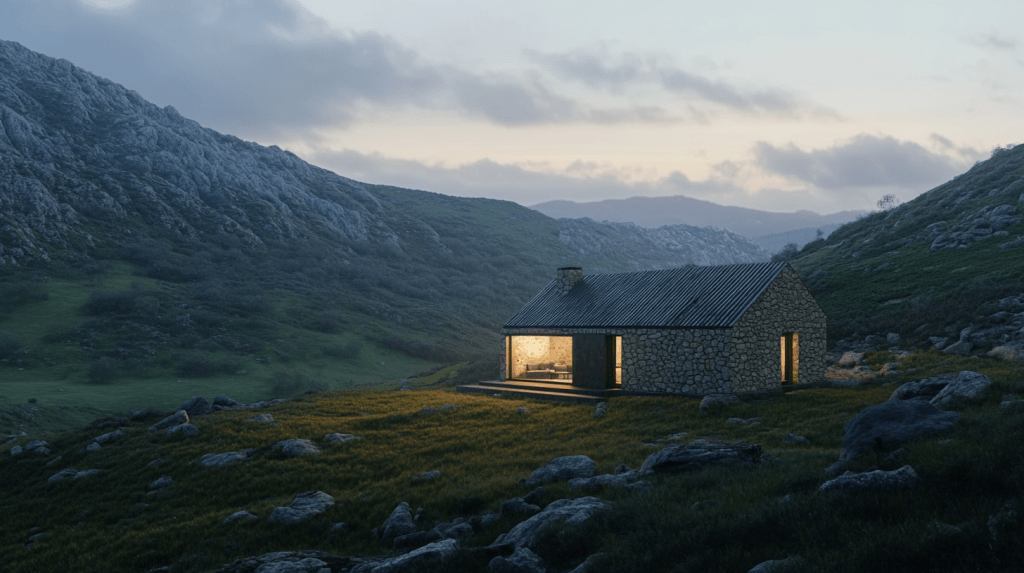
克拉拉:「這個地方太棒了。這裡安靜而平和,和昨晚我們住的那家山莊完全不同。」
伊莎貝爾:「這正是我們需要的,經過一整天的探索後,這裡再合適不過了。老闆告訴我,他們會提供傳統的山區菜餚作晚餐——很多豐富的燉菜和當地新鮮的食材。」
當她們安頓下來後,克拉拉望向窗外,最後一抹夕陽將山脈染上了金色的光芒。
克拉拉:「我喜歡每一個我們拜訪的地方都有自己的故事。這座山莊、這個公園、那些村莊——它們看似相連,但每個地方都有其獨特性。」
伊莎貝爾:「這就是像這樣旅行的美妙之處。景觀塑造了文化,而人們反過來也影響了這片土地。這些山脈見證了許多歷史,然而,這裡的生活依然按照自己的節奏平靜地進行,仿佛外界的一切都不曾影響到它。」
附近一群羊的鈴鐺聲隨風傳來,為這寧靜的夜晚增添了更多的鄉村氣息。當她們準備晚餐時,兩人都感受到了與這片土地和旅程的深厚聯繫。
Scene 2: Leaving the Mountain Lodge and Planning the Next Destination

Clara: “That lodge was cozy, but I’m ready to move on. I’ve been thinking about our next stop—what’s special about the next region?"
Emily: “I was looking at the map last night, and I think we should head towards Liebana Valley. It’s located within the Picos de Europa National Park, and what’s interesting is how the geography isolates it from the surrounding areas. This isolation has preserved its unique traditions and way of life."
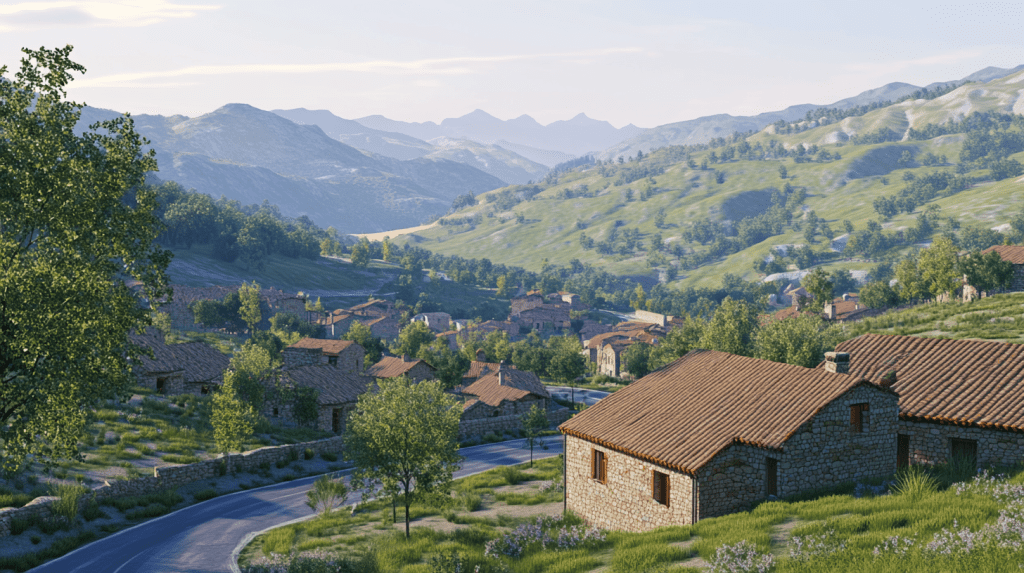
Clara: “Geographical isolation often leads to the preservation of older customs. What kind of traditions are we talking about here?"
Emily: “For one, the local architecture. The stone houses and mountain farms have remained largely unchanged for centuries. And there’s also the Monastery of Santo Toribio de Liébana, which holds one of the most important relics in Christianity—the Lignum Crucis, a fragment of the True Cross."
Clara: “That sounds fascinating. So we’ll be diving into both nature and history on this leg of the trip. I’ve heard that the Liébana Valley is also famous for its mountain festivals."
Emily: “Yes, and the valley itself has a deep historical connection to Spain’s early Christian history. In the 8th century, it was a refuge during the Muslim occupation of the Iberian Peninsula, and it played a role in the Reconquista. The mountains protected it from invasion, and over time it became a center for religious pilgrimage."
Clara: “I love how the geography shaped the history here. Mountains as a natural barrier influencing the culture and even the architecture. It sounds like we’ll have a lot to explore."
Emily: “Definitely. Plus, we’ll eventually be making our way to Basque Country after this, so we’ll get to experience another dramatic shift in culture and landscape."
Clara: “Good plan. We’ll get a mix of everything—mountains, history, and then the unique culture of the Basques."
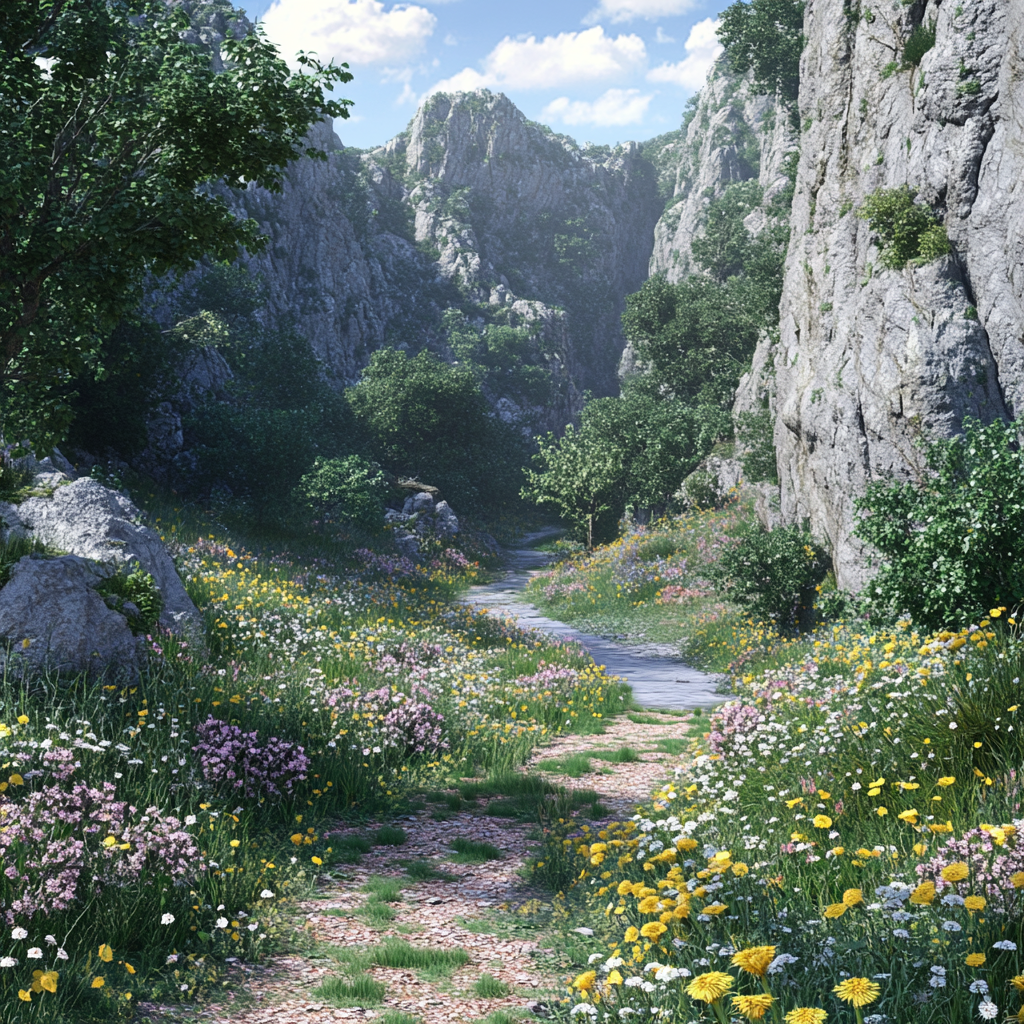
場景 2:離開山莊並計劃下一站
克拉拉:「這個山莊很舒服,但我已經準備好繼續前行了。我一直在想我們的下一站,這個地區有什麼特別之處嗎?」

艾米麗:「昨晚我看了一下地圖,我覺得我們應該前往利耶瓦納山谷,這個山谷位於歐洲之巔國家公園內。這裡的地理環境使它與外界隔絕,這種隔離保留了該地區獨特的傳統和生活方式。」

克拉拉:「地理隔絕通常有助於保留古老的習俗。這裡有什麼樣的傳統?」
艾米麗:「首先是當地的建築。這裡的石屋和山間農場幾個世紀來基本沒有改變。此外,這裡還有利耶瓦納的聖托里比奧修道院,它擁有基督教中最重要的聖物之一——聖十字架碎片,也就是傳說中的真十字架的一部分。」
克拉拉:「聽起來很有意思。這次旅行將會探索自然和歷史。我聽說利耶瓦納山谷還以它的山地節日聞名。」
艾米麗:「是的,而且這個山谷與西班牙早期的基督教歷史有著深厚的聯繫。在8世紀,這裡曾是伊比利半島穆斯林佔領期間的避難所,並且在收復失地運動中發揮了作用。這些山脈保護了它免受入侵,隨著時間的推移,它成為了一個宗教朝聖中心。」
克拉拉:「我喜歡這裡的地理如何塑造了歷史。山脈作為天然屏障,不僅影響了文化,甚至還影響了建築。看來我們會有很多值得探索的地方。」
艾米麗:「當然,而且在這之後我們最終會前往巴斯克地區,那裡的文化和景觀又會有一個劇烈的變化。」
克拉拉:「好主意。我們這趟旅行將會看到山脈、歷史,然後體驗巴斯克獨特的文化。」
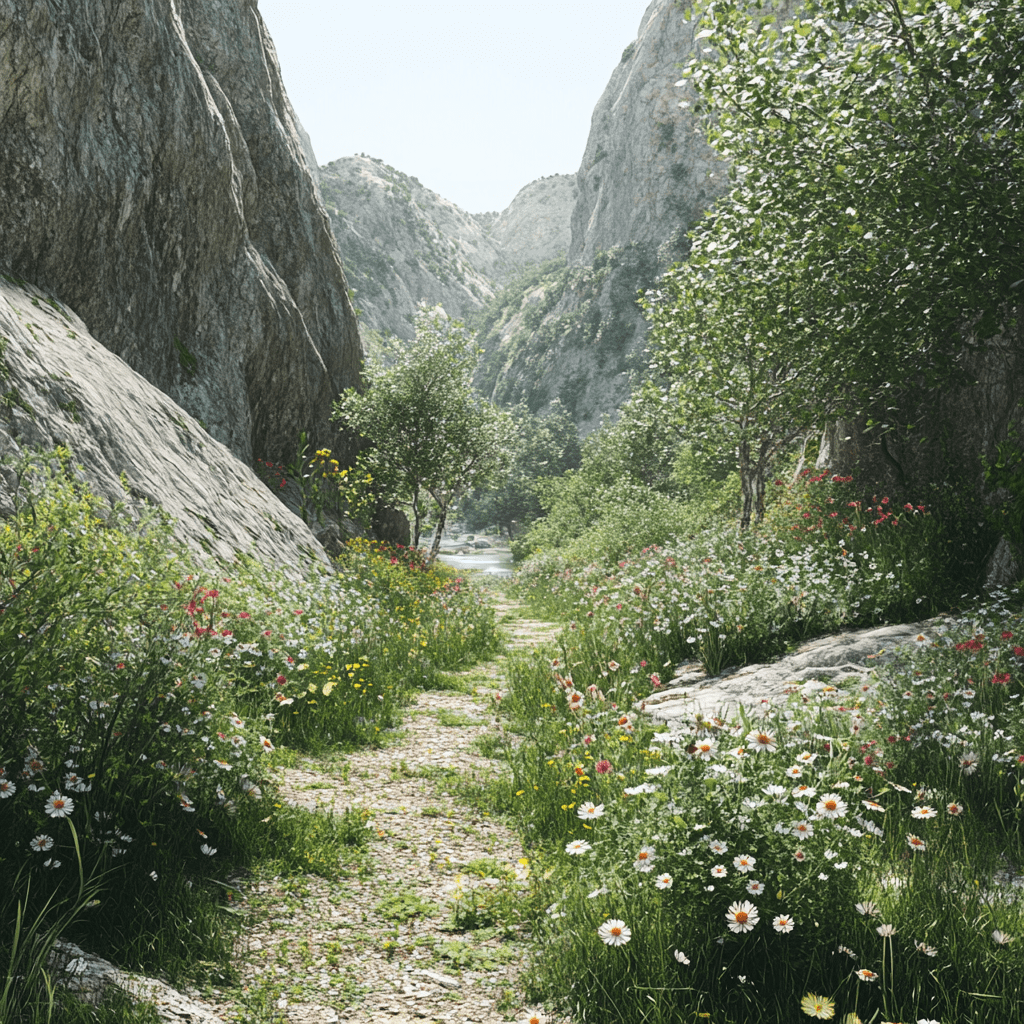
Scene 2: Discussing Pilgrimages, Spanish Unification, and Catalonian Independence
Clara: “I’ve heard that a lot of people still come to these regions on pilgrimages. What’s the significance of this in modern times?"
Emily: “Absolutely, pilgrimages remain a big part of the cultural and religious identity in Spain. The most famous pilgrimage is obviously the Camino de Santiago to Santiago de Compostela, but there are other important routes, like the ones that pass through Liébana on the way to the Monastery of Santo Toribio."
Clara: “Why do people still make these journeys? Is it mostly for religious reasons, or has it taken on a broader significance?"
Emily: “It’s both. For many, the journey is still deeply spiritual—connecting with the land, the history, and the traditions of the region. But for others, it’s also about self-discovery, the challenge of the physical journey, and the connection to the past. Walking these ancient routes is like stepping back in time. The landscape, with its rugged mountains and quiet villages, hasn’t changed much over the centuries."
Clara: “That’s fascinating. And the geography of this region—so isolated by the mountains—must have played a role in shaping its history, right?"
Emily: “Definitely. These mountains created natural borders that kept many regions separate for centuries. Spain wasn’t unified until much later compared to other European countries. In fact, Spain was more of a collection of different kingdoms, each with its own language, culture, and traditions. The Reconquista gradually brought them together, but even today, there’s a strong sense of regional identity in places like Catalonia and the Basque Country."
Clara: “That’s something I’ve always wondered about—why do regions like Catalonia keep pushing for independence? I know they have their own language and culture, but isn’t there more to it?"
Emily: “You’re right, there’s a lot more to it. Catalonia was once its own principality, and for centuries, it had significant autonomy. Even after Spain was officially unified in the late 15th century, Catalonia maintained its own laws and institutions. But over time, especially in the 18th century, Madrid centralized power and tried to impose uniformity across the country. This didn’t sit well with Catalans, who felt their culture and language were being suppressed."
Clara: “So, it’s not just a cultural issue, but also a political one?"
Emily: “Exactly. Catalonia has always been an economically strong region, and they feel like they contribute more to Spain than they get in return. During the 20th century, under Franco’s dictatorship, Catalan culture and language were heavily suppressed, which deepened the resentment. Even after Franco’s death, when Spain became a democracy again, Catalonia was granted autonomy, but the desire for full independence has never really gone away."
Clara: “I see. So, it’s a mix of historical grievances, economic issues, and a strong regional identity."
Emily: “Yes, and something similar can be said about the Basque Country, though their independence movement has been even more intense at times. Like the Catalans, the Basques have their own unique language and culture, and they’ve also felt historically marginalized by Madrid. But it’s interesting how both regions are geographically distinct—mountainous and somewhat isolated—which has helped them maintain their distinct identities over centuries."
Clara: “It’s amazing how geography and history are so intertwined. The mountains create these isolated pockets of culture, and over time, those differences become political."
Emily: “Exactly. That’s why when you travel through Spain, it often feels like you’re visiting several different countries at once. The north, with its mountains and coastlines, is so different from the central plateau or the south with its Moorish influence."
Clara: “This trip has made me appreciate how much history can be seen in the landscape. Every region we’ve visited so far has told its own unique story."
場景 2: 討論朝聖與政治議題
克拉拉:「我聽說很多人現在還會來這些地方進行朝聖之旅。這在現代還有什麼意義嗎?」
艾米麗:「當然,朝聖之旅仍然是西班牙文化和宗教身份的重要組成部分。最著名的朝聖路線當然是前往聖地亞哥-德孔波斯特拉的聖雅各之路,但也有其他重要的路線,比如通過利耶瓦納的路線,前往聖托里比奧修道院。」
克拉拉:「為什麼人們現在還會進行這些朝聖?主要是出於宗教原因,還是有更廣泛的意義?」
艾米麗:「兩者都有。對許多人來說,這趟旅程仍然具有深刻的精神意義——與土地、歷史和傳統的聯繫。但對其他人來說,這也是一種自我探索,挑戰身體極限的過程,同時也是與過去的聯繫。走在這些古老的路徑上,就像是走進了歷史。這裡的景觀,從崎嶇的山脈到寧靜的村莊,幾個世紀以來幾乎沒有改變。」
克拉拉:「這真是太有趣了。這個地區的地理——被山脈隔離——一定對它的歷史發展產生了很大影響吧?」
艾米麗:「當然。這些山脈創造了天然的邊界,讓許多地區在幾個世紀內彼此隔絕。西班牙的統一比其他歐洲國家晚得多。事實上,西班牙在很長時間內更像是由不同的王國組成,每個王國都有自己的語言、文化和傳統。收復失地運動最終將這些地區逐漸統一起來,但即使到今天,像加泰羅尼亞和巴斯克地區這樣的地方,仍然有很強的區域認同。」
克拉拉:「我一直很好奇,為什麼像加泰羅尼亞這樣的地區一直在推動獨立?我知道他們有自己的語言和文化,但背後是不是還有其他原因?」
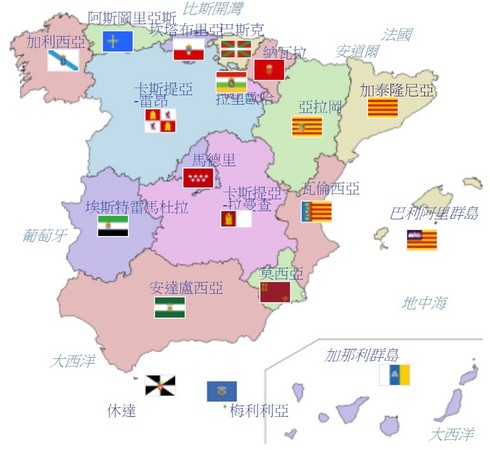
艾米麗:「你說得沒錯,背後還有很多其他的因素。加泰羅尼亞曾經是一個獨立的公國,幾個世紀以來,它享有很大的自治權。即使在15世紀末西班牙正式統一後,加泰羅尼亞仍然保留了自己的法律和制度。但隨著時間的推移,尤其是在18世紀,馬德里開始中央集權,試圖在全國範圍內推行統一政策。這讓加泰羅尼亞人感覺到自己的文化和語言受到了壓制。」
來源: Wiki
克拉拉:「所以,這不僅僅是文化問題,還涉及政治問題?」
艾米麗:「沒錯。加泰羅尼亞一直是一個經濟強區,他們覺得自己為西班牙貢獻了更多,卻沒有得到相應的回報。20世紀的佛朗哥獨裁時期,加泰羅尼亞的文化和語言受到了嚴重打壓,這加深了當地人的不滿。即使在佛朗哥去世後,西班牙恢復民主,加泰羅尼亞獲得了自治權,但完全獨立的願望從未真正消失。」
克拉拉:「我明白了。這是一個歷史怨恨、經濟問題和強烈區域身份的結合。」
艾米麗:「正是如此,巴斯克地區的情況也很相似,儘管他們的獨立運動有時更加激進。像加泰羅尼亞一樣,巴斯克人有自己的語言和文化,他們也感到自己在歷史上被馬德里邊緣化了。這兩個地區都地理上與西班牙其他地區有所區隔——多山且相對隔絕,這也幫助他們在幾個世紀內
Emily: “這也幫助他們在幾個世紀內保持了自己獨特的身份。巴斯克和加泰羅尼亞都有很強的民族認同感,這是他們對中央政府一直持有懷疑態度的原因之一。"
Clara: “這真的是地理和歷史交織的一個典範。這些山脈不僅是自然障礙,還是文化和政治分隔的象徵。"
Emily: “是的,這些地理上的隔離使得巴斯克和加泰羅尼亞能夠保存自己的語言、文化和傳統。相比之下,西班牙南部的文化就更融合了摩爾人和其他文明的影響。在山區,地理的隔離讓外來文化的滲透更加緩慢。"
Clara: “我很喜歡這樣從地理角度看歷史的方式。這趟旅程真的讓我更好地理解了為什麼西班牙的不同地區會如此不同。每個地方的地理環境在某種程度上都影響了他們的文化和政治發展。"
Emily: “正是如此。這也是為什麼每次旅行到西班牙不同地區,都會覺得像是在探索一個全新的國家。無論是巴斯克的獨立精神還是南方的摩爾文化影響,都可以通過地理條件來解釋。"
Clara: “這次朝聖之旅真的不只是為了歷史和文化,還有很多關於地理對人類歷史的深刻影響。接下來,我們可以討論一下我們的下一站了吧?"
Emily: “好啊,我們的下一站會經過一些著名的朝聖路線,然後我們會繞回到巴斯克地區。這是我們的最後一站,巴斯克有非常豐富的歷史,尤其是它的文化與西班牙其他地方的不同。"
English Continuation
Emily: “And that geographical separation really helped both Basque and Catalan cultures maintain their distinct identities. It’s why even today, both regions still have a strong sense of independence and skepticism toward centralized authority."
Clara: “It’s fascinating how these mountains are not just physical barriers but cultural and political ones as well."
Emily: “Exactly. The geographic isolation allowed both the Basque and Catalan people to preserve their languages, customs, and ways of life, whereas down south, the culture is much more of a blend of influences. In these northern mountains, it took much longer for outside cultures to penetrate."
Clara: “I love thinking about history this way—through the lens of geography. This trip has really opened my eyes to how each region’s landscape has shaped its culture and politics."
Emily: “It’s why traveling in Spain feels like you’re visiting several different countries at once. The Basque Country, with its fierce independence, and Andalusia, with its Moorish influences, couldn’t be more different, and geography plays a huge role in that."
Clara: “This pilgrimage journey has turned into so much more than just a cultural and historical exploration. It’s also about understanding the deep impact of geography on human history. Shall we talk about our next destination?"
Emily: “Absolutely. Our next stop will take us through some famous pilgrimage routes before circling back to the Basque Country. That will be our final destination, and the Basque region has such a rich history, especially in how its culture stands apart from the rest of Spain."
In this continuation, we’ve focused on the intertwining of geography, history, and regional identity. The conversation naturally transitions to the next phase of their journey, eventually leading to their final destination: the Basque Country. If you’d like further adjustments, I can refine the flow to fit the tone you prefer.
Conversation: The Journey of Saint James to Spain | 聖雅各的西班牙之行
Clara: “I’ve been thinking about Saint James. He’s one of Jesus’ apostles, right? But how did he end up being so closely associated with Spain?"
Emily: “That’s a great question. Saint James, or Santiago as he’s known here, is indeed one of the Twelve Apostles. According to Christian tradition, after Jesus’ death, the apostles were sent out to spread the Gospel, and it’s believed that Saint James traveled to the Iberian Peninsula to preach."
Clara: “So, he was actually in Spain during his lifetime?"
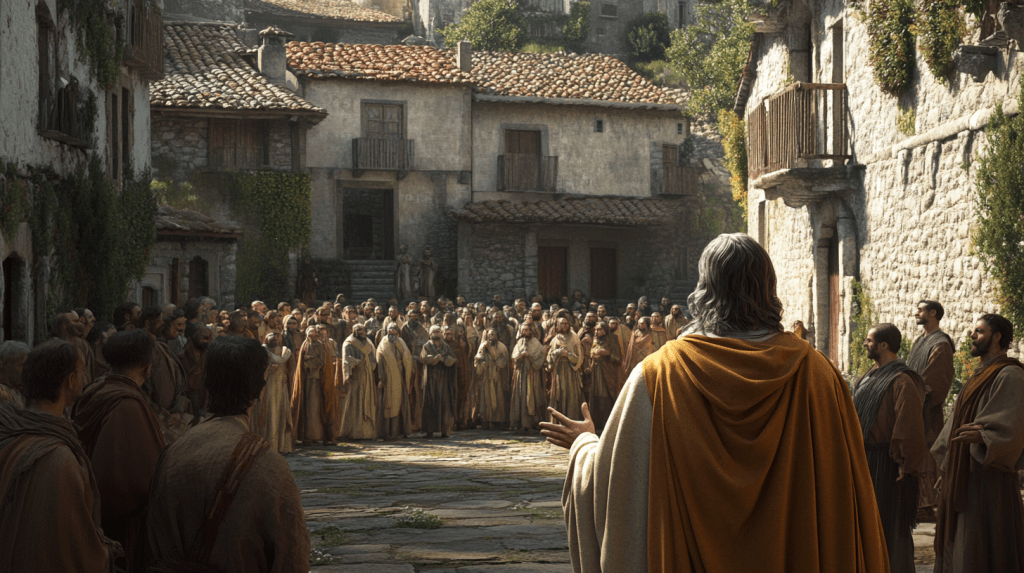
Emily: “That’s the tradition, though there’s no definitive historical proof. What’s more fascinating is the story of his remains. After his martyrdom in Jerusalem—he was executed by King Herod Agrippa around 44 AD—his followers supposedly took his body back to Spain and buried him in what is now Santiago de Compostela."
Clara: “That’s why there’s such a strong tradition of pilgrimage here?"
Emily: “Exactly. During the Middle Ages, when his tomb was allegedly rediscovered, Santiago became one of the most important Christian pilgrimage destinations, alongside Jerusalem and Rome. Pilgrims from all over Europe traveled along the Camino de Santiago, or Way of Saint James, to visit his relics."
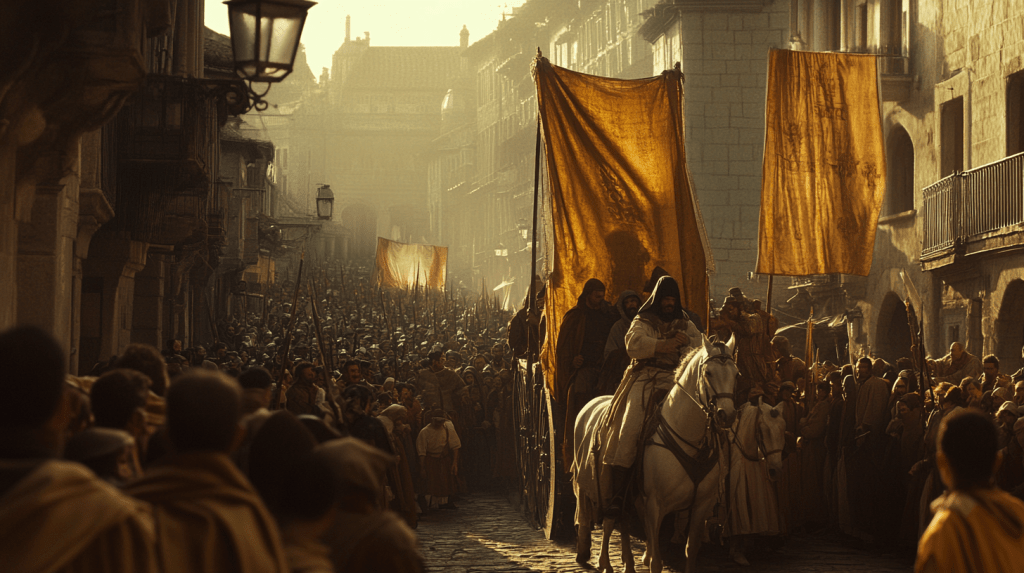
Clara: “It’s amazing how a figure from early Christianity could have such a lasting impact on Spain. But why Spain specifically?"
Emily: “It’s partly because Spain was seen as the westernmost edge of the known world in ancient times. If you were going to spread Christianity to the ends of the earth, Spain made sense as a final frontier. Plus, over time, the Spanish began to adopt Santiago as their patron saint, especially during the Reconquista, when they were fighting to reclaim the Iberian Peninsula from Muslim rule. The legend of Santiago Matamoros, or Saint James the Moor-slayer, emerged during that period, where he was said to have miraculously appeared on the battlefield to help Christian armies."
Clara: “So, his legacy became both spiritual and military?"
Emily: “Yes. He became a symbol of both faith and Spanish unity. His shrine at Santiago de Compostela drew people from across Europe, and he also became a national hero of sorts, invoked in the fight for Christian Spain."
Clara: “It’s incredible how one person’s story can weave into so many parts of history—from spreading the Gospel to the creation of a pilgrimage route and even becoming a figure in Spain’s national identity."
Emily: “That’s the power of tradition. Whether or not the details are fully accurate, the story of Saint James continues to inspire people today, especially those who walk the Camino."
討論:聖雅各的西班牙之行
克拉拉:「我在想聖雅各。他是耶穌的門徒之一吧?但他為什麼和西班牙有這麼密切的關聯?」
艾米麗:「這個問題很好。聖雅各,也就是這裡稱作的聖地牙哥,確實是十二使徒之一。根據基督教的傳統,在耶穌去世後,門徒們被派去傳揚福音,而傳說聖雅各前往了伊比利半島宣教。」

克拉拉:「所以,他在世的時候真的來過西班牙?」
艾米麗:「這是傳統說法,雖然沒有確鑿的歷史證據。更有趣的是關於他遺體的故事。在他於耶路撒冷殉道後——大約在公元44年被希律·亞基帕王處決——他的追隨者據說將他的遺體帶回了西班牙,並安葬在現在的聖地牙哥-德孔波斯特拉。」

克拉拉:「所以這就是為什麼這裡有這麼強烈的朝聖傳統?」
艾米麗:「正是如此。中世紀時據說他的陵墓被重新發現,聖地牙哥成為了僅次於耶路撒冷和羅馬的基督教重要朝聖地之一。來自歐洲各地的朝聖者沿著聖雅各之路(Camino de Santiago)前來拜訪他的聖物。」
克拉拉:「真讓人驚訝,早期基督教的一位人物竟然對西班牙產生了如此深遠的影響。但為什麼偏偏是西班牙呢?」
艾米麗:「這部分原因是因為在古代,西班牙被視為已知世界的最西邊。如果你要將基督教傳播到世界的盡頭,西班牙就是一個合理的選擇。此外,隨著時間的推移,西班牙人開始將聖雅各作為他們的守護聖人,特別是在收復失地運動期間,當時他們正試圖從穆斯林手中奪回伊比利半島。這時候,斬穆爾人的聖雅各(Santiago Matamoros)的傳說出現了,據說他在戰場上奇蹟般地幫助基督教軍隊。」
克拉拉:「所以他的遺產既是精神上的,也是軍事上的?」
艾米麗:「沒錯。他成為了信仰和西班牙統一的象徵。他的聖地吸引了來自全歐洲的朝聖者,他也成為了一個國家的英雄,被用來激勵基督教西班牙的抗爭。」
克拉拉:「真難以想像,一個人的故事能夠融入這麼多歷史——從傳播福音到創造朝聖路線,甚至成為西班牙國家身份的一部分。」
艾米麗:「這就是傳統的力量。不論細節是否完全準確,聖雅各的故事至今仍然啟發著人們,尤其是那些走聖雅各之路的人。」
Conversation: The Camino de Santiago and Religious Differences | 聖雅各之路與宗教差異
Clara: “So, the Camino de Santiago is a pilgrimage, right? Is it mostly Catholics who walk the route, or do other Christians take part as well?"
Emily: “Primarily, the Camino de Santiago is a Catholic pilgrimage. It has deep roots in Catholic tradition because the veneration of saints, relics, and sacred sites is much more prominent in Catholicism than in Protestantism. The Camino is centered around the tomb of Saint James in Santiago de Compostela, which has been a key destination for Catholic pilgrims for centuries."
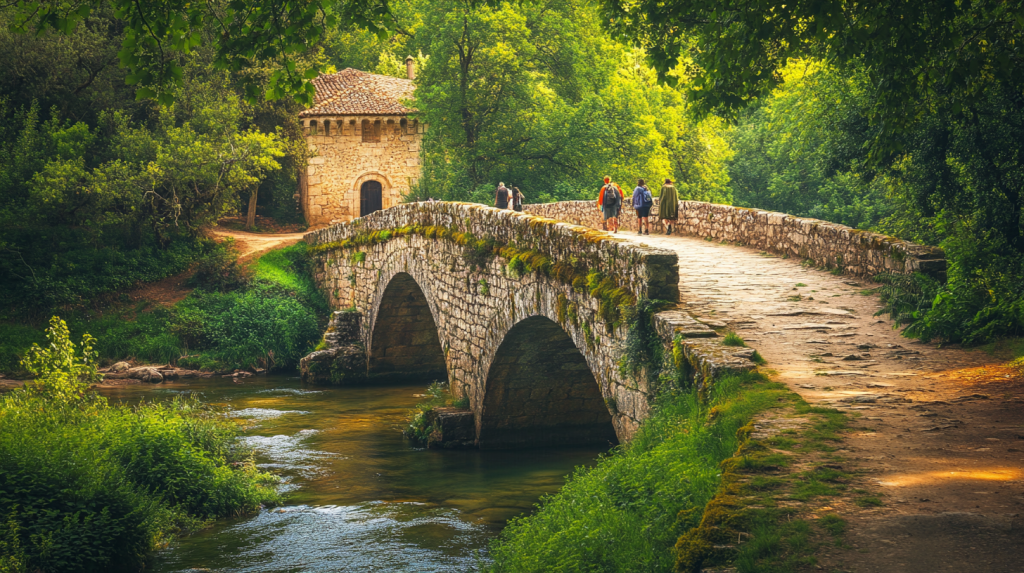
Clara: “That makes sense. But I’ve heard that not only Catholics walk the Camino these days. Is that true?"
Emily: “Yes, you’re right. While the Camino has Catholic origins, nowadays, it’s much more open. People from all sorts of religious backgrounds—or even no religious background—walk the Camino for various reasons. Some are drawn to the spiritual aspect of the journey, while others might be interested in the history, the culture, or even just the challenge of the walk."
Clara: “What about Protestants? I know pilgrimage isn’t really a big thing for them, is it?"
Emily: “That’s true. Protestantism, especially after the Reformation, distanced itself from the idea of pilgrimage. Many Protestant denominations believe that faith should be more focused on personal devotion and scripture, rather than visiting relics or sacred sites. So, for Protestants, the idea of walking a pilgrimage route like the Camino de Santiago might not hold the same religious significance as it does for Catholics."
Clara: “So, while a Protestant might walk the Camino, they wouldn’t necessarily do it for religious reasons?"
Emily: “Exactly. For some Protestants, walking the Camino might be more about personal reflection, enjoying the journey, or experiencing the cultural and historical aspects. They might not focus as much on the religious or spiritual aspects of the pilgrimage, like visiting Saint James’ tomb or attending Mass at the end of the route."
Clara: “It’s interesting how the same path can mean different things to different people. For Catholics, it’s about faith and devotion, but for others, it might just be a way to connect with nature or history."
Emily: “That’s what makes the Camino special—it’s a blend of everything. Some people walk it for deep religious reasons, while others are there for personal growth, and others are simply fascinated by the history. Even though it began as a Catholic pilgrimage, it’s become something much broader over time."
Clara: “It’s really amazing how traditions like this can evolve. What started as a strictly religious journey now brings together people from all walks of life."
Emily: “Yes, and that’s part of its enduring appeal. Even though its origins are tied to Catholicism, it’s become a symbol of something bigger—community, reflection, and discovery. Regardless of religious belief, people are drawn to it for the transformative experience it offers."
討論:聖雅各之路與宗教差異
克拉拉:「所以,聖雅各之路是一條朝聖路線,對吧?主要是天主教徒走這條路,還是其他基督教徒也會參與?」

艾米麗:「聖雅各之路主要是一條天主教的朝聖路線。它深植於天主教的傳統中,因為天主教徒對聖人、聖物和聖地的崇敬比新教更為重要。聖雅各之路的中心是位於聖地牙哥-德孔波斯特拉的聖雅各墓地,這個地方已經是天主教朝聖者的核心目的地幾個世紀了。」
克拉拉:「這聽起來很合理。但我聽說現在不只有天主教徒走這條路,是這樣嗎?」
艾米麗:「是的,沒錯。雖然聖雅各之路起源於天主教,但如今這條路已經開放給各種宗教背景的人——甚至沒有宗教信仰的人也會參與。很多人被這段旅程的精神層面所吸引,但也有不少人是為了歷史、文化,甚至是挑戰自我而來。」
克拉拉:「那新教徒呢?我知道朝聖在新教裡似乎不是很常見,對嗎?」
艾米麗:「是的,這沒錯。新教,尤其是在宗教改革後,與朝聖的概念拉開了距離。許多新教宗派認為信仰應該更多地集中在個人的虔誠和經文上,而不是拜訪聖物或聖地。因此,對於新教徒來說,像聖雅各之路這樣的朝聖路線可能不具備天主教徒那樣的宗教意義。」
克拉拉:「那麼新教徒走聖雅各之路的話,他們不會出於宗教原因去走?」
艾米麗:「正是如此。對一些新教徒來說,走這條路更多是關於個人反思、享受旅程,或者探索這條路的文化和歷史。他們可能不會像天主教徒那樣專注於朝聖的宗教或精神層面,比如參拜聖雅各的墓地或參加彌撒。」
克拉拉:「真有趣,同樣的路線對不同的人卻有著完全不同的意義。對天主教徒來說,這是關於信仰和虔誠的,而對其他人來說,可能就是一種與自然或歷史的連結。」
艾米麗:「這正是聖雅各之路特別的地方——它是各種元素的結合。有些人是為了宗教原因而來,有些人是為了個人成長,而有些人只是對這段歷史著迷。雖然它最初是一條天主教的朝聖路線,但隨著時間的推移,它變得更加廣泛。」
克拉拉:「傳統的演變真是令人驚嘆。從一開始的宗教旅程,到現在吸引了來自各行各業的人。」
艾米麗:「沒錯,這也是它持久吸引力的一部分。儘管它的起源與天主教密切相關,但它已經成為了一種更大範圍的象徵——社群、反思和探索。無論宗教信仰如何,人們都被它所提供的轉變經歷所吸引。」

 Virtual Travel | 虛擬旅行沉浸式英語學習
發表留言