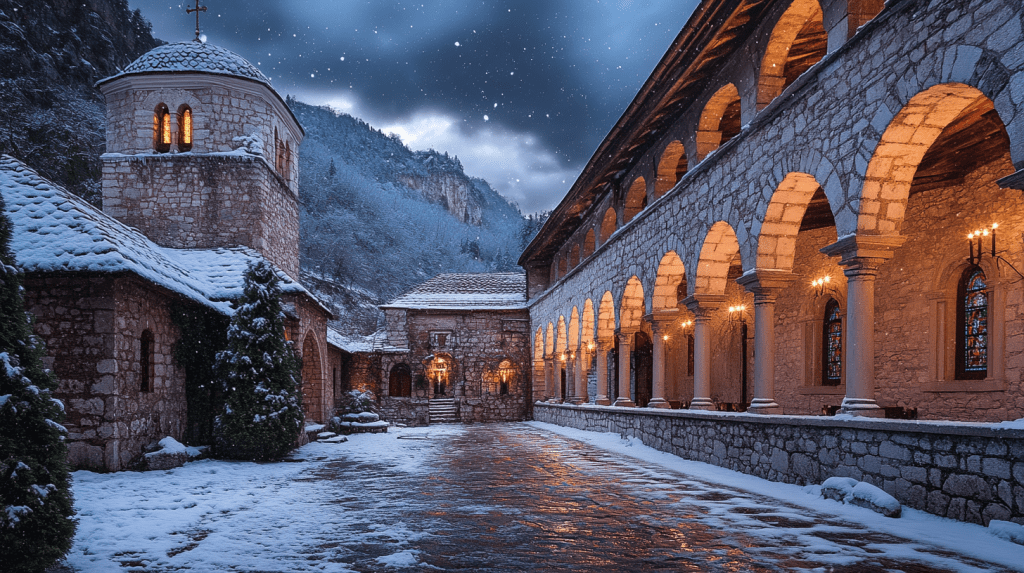

Leaving Belgrade – The City and the Countryside
The streets of Belgrade are waking up. The city, still bathed in the soft light of morning, is slowly coming to life. Cafés begin opening their doors, the scent of fresh coffee drifting into the air. A tram hums along the tracks, passing grand neoclassical buildings that bear the scars of time. Cars weave through the wide boulevards, framed by old socialist-era apartment blocks and modern glass towers. Meanwhile, Emma and Julia load their bags into the car, preparing for their journey out of the capital.
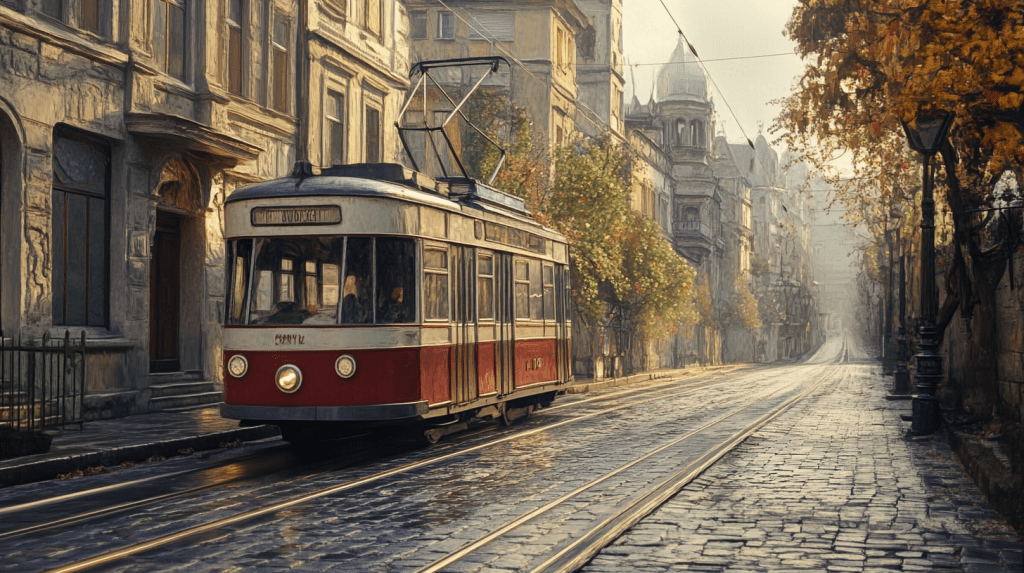
Emma: (Looking around) I’ll never get used to how many different layers this city has. Look at that—neoclassical façades, Soviet-style blocks, and then a glass tower right next to them.
Julia: Belgrade is a city of contrasts. It’s been destroyed and rebuilt so many times that now it’s just a blend of every era it’s lived through.
Emma: And you can feel it. The old scars, the modern ambition… it’s all mixed together.
Julia: That’s why I love it, though. It’s raw. Not polished like some European capitals. But as soon as we leave the city, you’ll notice the difference.
The car moves through the city streets, past faded billboards and bustling bakeries where locals pick up fresh burek for breakfast. The roads gradually open up, and the buildings become more spaced apart. Soon, they pass the last tram stop and leave the urban sprawl behind.
Emma: (Looking out the window) That was fast. We were in a dense, chaotic city just a moment ago, and now… it’s all open.
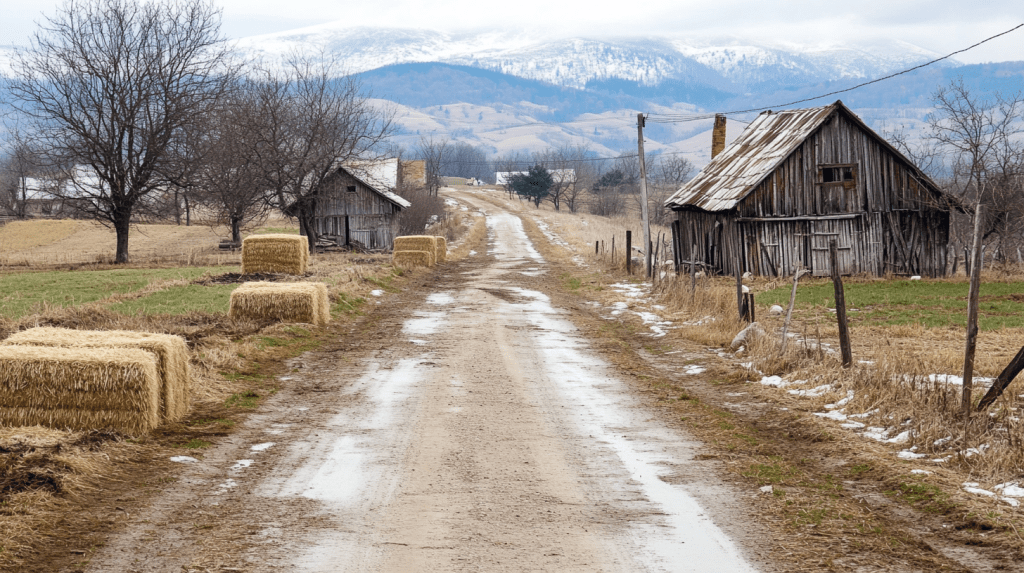
Julia: Welcome to the Serbian countryside. It’s a different world out here—no towering buildings, no rush. Just rolling hills, small farms, and tiny villages.
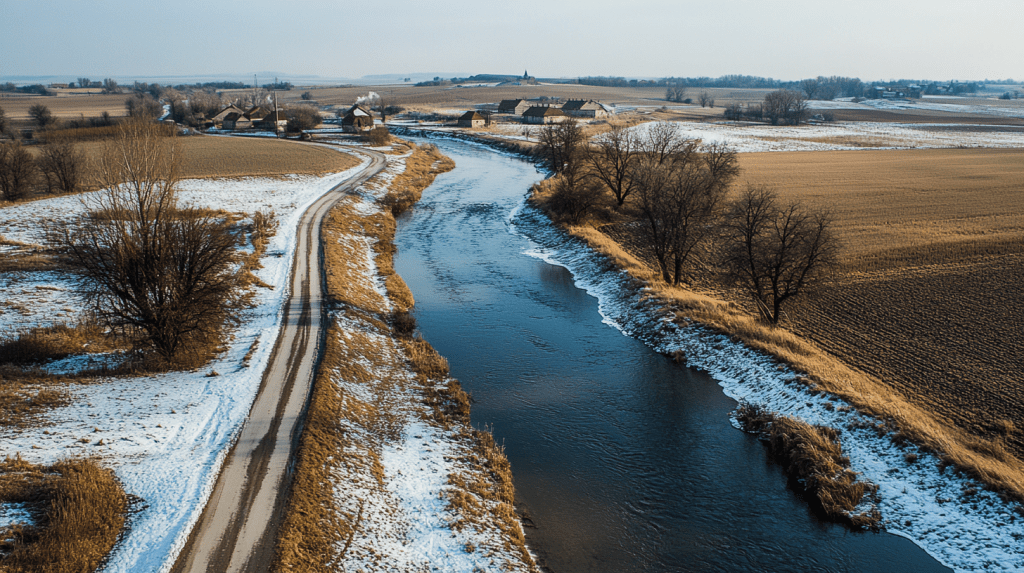
Emma: (Noticing the change) Even the colors are different. The city was all grey stone and concrete, but out here, it’s softer—earthy browns, green fields, red rooftops.
Julia: The pace of life changes, too. In Belgrade, people are always moving. Out here, time feels slower.
Emma: (Chuckling) Maybe that’s why people come to the hot springs—to embrace that slower rhythm.
Julia: Exactly. And the closer we get to the gorge, the more you’ll see nature reclaiming the landscape.
The car winds through narrow country roads, passing fields where early spring flowers are just beginning to bloom. Small roadside stalls dot the highway, selling honey, cheese, and homemade rakija. The sky, once boxed in by buildings, now stretches wide and open.
貝爾格勒的街道正在甦醒。清晨的柔光灑落在城市上空,喧囂尚未完全展開。咖啡館剛剛開門,空氣中瀰漫著新鮮咖啡的香氣。一輛電車沿著軌道滑過,駛過帶有歷史痕跡的新古典建築。寬闊的林蔭大道上,汽車穿梭,兩旁的蘇聯式公寓樓與現代玻璃塔樓相映成趣。Emma 和 Julia 正在酒店門口整理行李,準備啟程。
離開貝爾格勒往鄉村去

Emma: (環顧四周) 我永遠無法習慣這座城市有這麼多層次。你看,新古典主義建築旁邊是蘇聯風格的方塊公寓,再往旁邊一點,又出現了現代玻璃塔樓。
Julia: 這就是貝爾格勒的特色啊。它被摧毀過太多次,每次重建都帶來了不同的風格,最後就變成了這種時代交錯的城市。
Emma: 而且這種歷史感很明顯。舊建築上的彈痕、翻新的街道、正在興建的新大樓……這裡感覺像是一個還在演變中的城市,而不是一個已經定型的歐洲首都。
Julia: 這正是我喜歡它的地方。它不像那些精緻得像博物館的城市,這裡很真實。但等我們離開貝爾格勒,你會發現另一種完全不同的景象。
汽車駛過城市街道,經過幾個老舊的廣告牌和正排隊買 burek(肉餡酥皮卷)當早餐的麵包店。街道漸漸寬敞,建築物間的距離拉開,電車站消失在後視鏡裡,城市的喧囂慢慢退去。
Emma: (望向車窗) 這變化也太快了吧?剛剛還是擁擠、繁忙的城市,現在……變得一片開闊。
Julia: 歡迎來到塞爾維亞的鄉村。這裡的世界跟貝爾格勒完全不同——沒有高樓大廈,也沒有人潮匆匆,只有起伏的丘陵、小農場和寧靜的村莊。
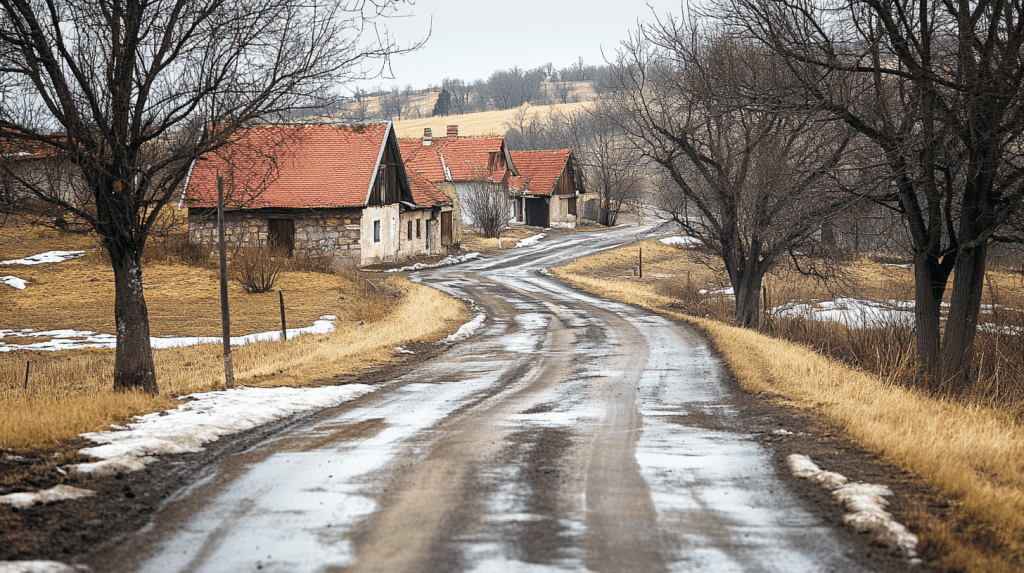
Emma: (注意到周圍的變化) 連顏色都變了。城市裡的色調大多是灰色的石牆、混凝土,這裡卻是暖色調的泥土、綠色田野、紅色屋頂。
Julia: 生活節奏也完全不一樣。在貝爾格勒,每個人都在趕時間,而這裡……時間彷彿慢了下來。
Emma: (笑了) 也許這就是人們來泡溫泉的原因——學著適應這種慢節奏的生活。
Julia: 正是。而且等我們越接近峽谷,你會發現大自然正在逐漸取回這片土地。
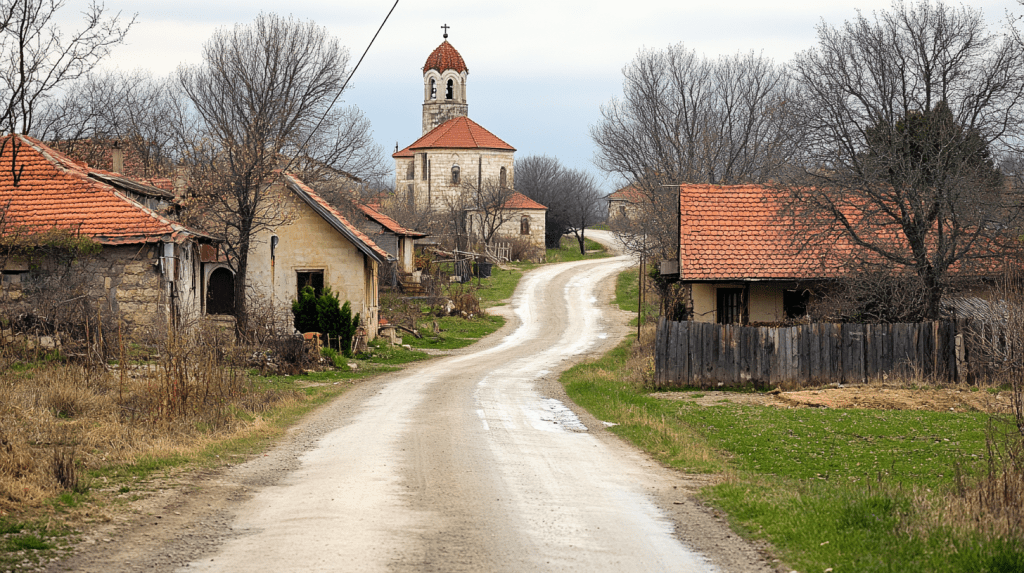
汽車開始沿著蜿蜒的鄉間小路行駛,路旁是一片片剛剛開始開花的春日田野。沿途有幾個小販擺攤,販售蜂蜜、起司和自家釀製的 rakija(巴爾幹果酒)。天際線從被建築包圍的狹窄畫框,變成了一片遼闊無垠的天空。
Entering the Ovčar-Kablar Gorge – the Landscape, History, and Personal Reflection
The road narrows as Emma and Julia enter the Ovčar-Kablar Gorge. Towering cliffs rise on either side, their rocky faces streaked with moss and small shrubs. The Western Morava River winds below them, its surface shimmering with soft reflections of the pale morning sky. In the distance, thin wisps of steam rise from the ground, signaling the presence of natural thermal springs. Scattered among the hills, small Orthodox monasteries cling to the slopes, their domed roofs barely visible through the trees.
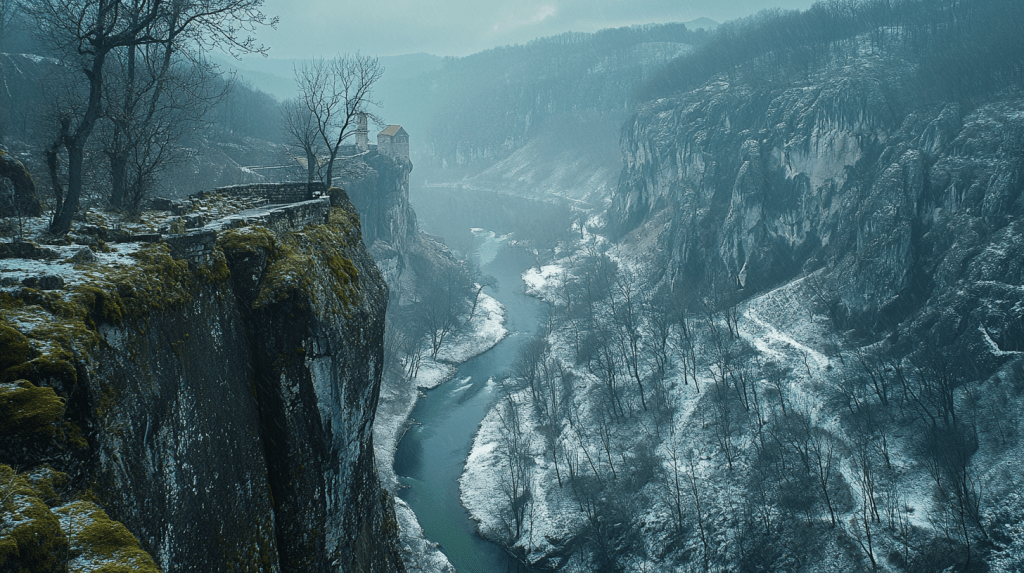
Emma: (Looking up at the cliffs) Wow… I knew this place was beautiful, but seeing it in person is something else. It’s like the mountains just split open to let the river through.
Julia: That’s exactly what happened. This whole gorge was shaped by the Morava River cutting through the rock over millions of years. It’s still changing, little by little.
Emma: It’s strange to think about. We measure time in years or centuries, but nature thinks in millions of years.
Julia: That’s the thing about places like this. They remind you how temporary human history really is.
Emma: And yet, people still tried to leave their mark. Look at those monasteries up there. They seem so small against the cliffs.
Julia: That’s the paradox, isn’t it? Humans are small in the face of nature, but we still carve temples, build roads, and try to make a place for ourselves. These monasteries were built hundreds of years ago by monks seeking solitude and spiritual retreat.
Emma: Solitude, sure… but it must have also been a place of refuge. This gorge looks defensible, hidden.
Julia: Exactly. During the Ottoman period, many monks fled here to escape persecution. Even during more recent wars, people used these mountains as a place to hide.
Emma: So, this isn’t just a peaceful landscape—it’s a witness to survival.
Julia: And endurance. The landscape barely changes, but people come and go, leaving behind layers of history.
They pass a wooden signpost pointing toward a side road: “Манастир Свете Тројице” (Monastery of the Holy Trinity). The road curves down toward the river, where a small stone bridge spans the water. Steam from the thermal springs rises in soft clouds, merging with the morning mist.

Emma: (Noticing the steam) That must be the springs. You can actually see the heat rising from the ground.
Julia: These waters are geothermally heated, and some of them have been flowing from underground for thousands of years.
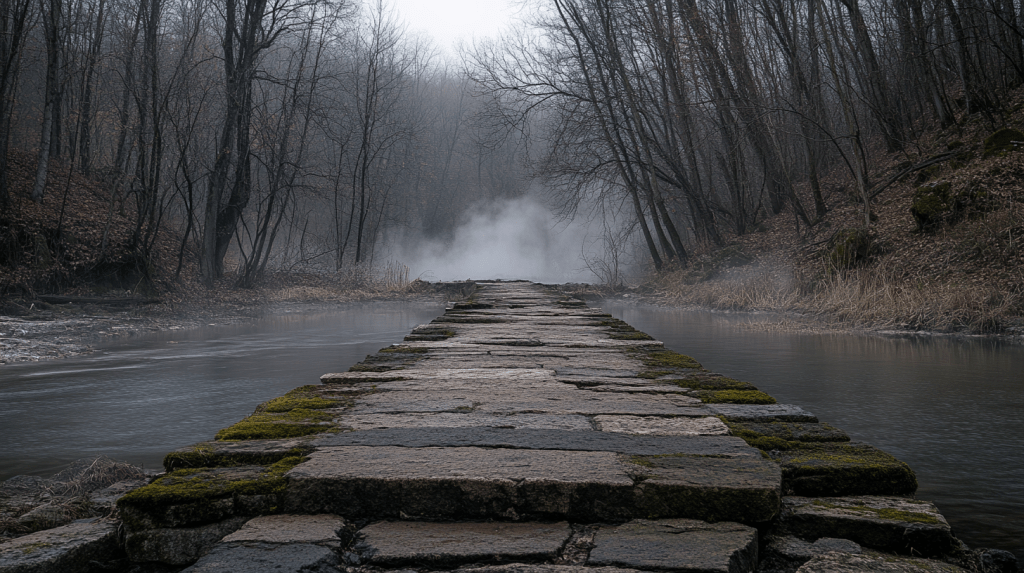
Emma: Just like the river carved this gorge over millions of years, the springs have been bubbling up, slowly shaping the land.
Julia: Nature takes its time. And yet, people have always been drawn to these places, whether for survival, healing, or faith.
Emma: (Smiling) I guess we’re just the latest ones to follow that path.
Personal Reflection – Emma Talks About the Lake District
Emma: You know, this place reminds me of home. The landscapes are different, but the feeling is similar.
Julia: The Lake District? I’ve never been there, but I know it’s beautiful.
Emma: It is. But it’s a quieter kind of beauty—softer hills, deep lakes, and misty mornings. No towering cliffs like this, but the forests have their own kind of mystery.
Julia: How so?
Emma: When I was little, I used to wander through the woods near my house. Some of the trees were hundreds of years old, twisted and covered in moss. I always imagined they had stories to tell, if only they could speak.
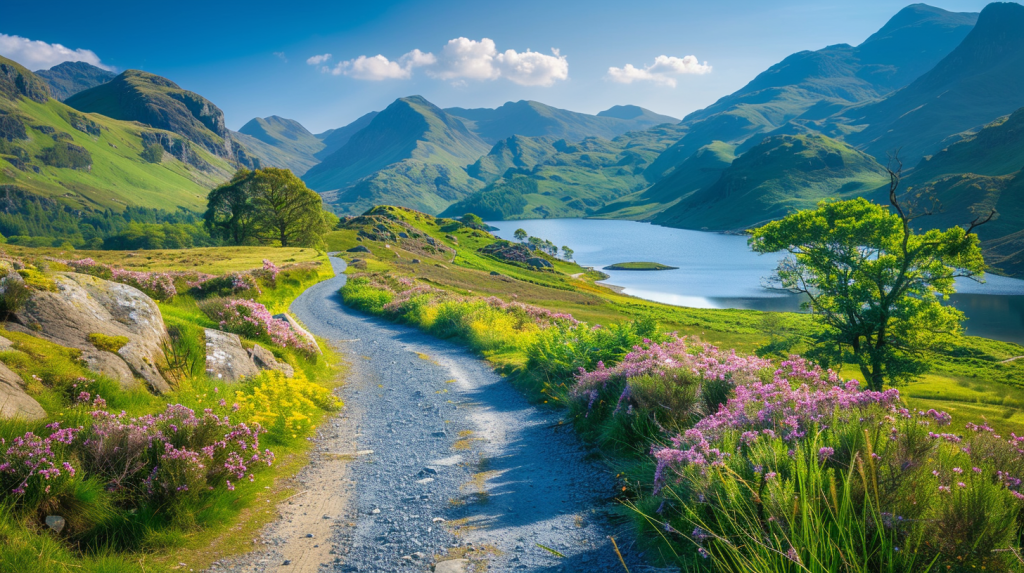
Lake District, England
Julia: That sounds almost like something out of a storybook.
Emma: It felt that way. Especially in the mornings when the mist rolled in over the lakes. You’d wake up and the world would be covered in this soft white fog, and for a moment, it felt like time had stopped.
Julia: That does remind me of this place. The mist over the river, the way the monasteries seem hidden among the trees.
Emma: Exactly. And even though the history is different, there’s something about places like this that make you feel connected to the past.
Julia: Like they hold memories.
Emma: Yes. In the Lake District, the history isn’t about war or survival like it is here, but you still feel it. The poets who wrote there, the farmers who worked the land for generations, the old stone fences that have been standing for centuries.
Julia: It’s a different kind of history—one that lingers rather than one that scars.
Emma: (Nods) And that’s what makes traveling so interesting. You see how different histories shape landscapes in different ways.
Julia: And how landscapes shape people.
Emma: (Smiling) Exactly.
進入歐布澤格峽谷(Ovčar-Kablar Gorge)——景觀、歷史與個人回憶

道路開始變窄,進入歐布澤格峽谷(Ovčar-Kablar Gorge)。兩側的懸崖高聳入雲,岩壁上覆蓋著苔蘚與零星灌木。西莫拉瓦河(Western Morava River)在峽谷底部蜿蜒流淌,河面反射著晨光的微光。遠處,一縷縷白色蒸汽從地面升起,顯示出天然溫泉的存在。散布在山坡間的小型東正教修道院,圓頂屋頂隱藏在樹林之間,低調地見證著時間的流轉。
Emma: (抬頭看向峽谷) 哇……我知道這地方很美,但親眼看到才覺得震撼。感覺像是山脈裂開了一條縫,讓河流穿過。
Julia: 這就是它的形成過程。整個峽谷是莫拉瓦河在幾百萬年的時間裡,慢慢切割岩石形成的。而且它還在變化,只是速度非常緩慢。
Emma: 很難想像。我們用幾年、幾百年來衡量時間,而大自然的時間單位是幾百萬年。
Julia: 這些地方總讓人意識到,人類歷史其實只是地球歷史中的一瞬間。
Emma: 可人類還是想留下自己的印記。你看那些修道院,在這些懸崖前顯得好渺小。
Julia: 這就是人類的矛盾吧?我們在自然面前微不足道,卻依然想雕刻神殿、修建道路,為自己找到一席之地。這些修道院是幾百年前建的,當時的僧侶來這裡尋找寧靜與靈性。
Emma: 靈性是其中一部分……但這裡一定也是避難所。這個峽谷這麼隱蔽,還有這麼多隱藏的小路。
Julia: 沒錯。在奧斯曼時期,很多僧侶逃到這裡避難。就算是近代戰爭,這些山脈也是藏身之處。
Emma: 所以這不只是個安靜的風景,而是一個生存的見證。
Julia: 而且是堅韌不拔的見證。地貌幾乎不變,但人來了又走,留下歷史的痕跡。
她們經過一個木製指示牌,上面寫著「Манастир Свете Тројице」(聖三一修道院)。小路蜿蜒向下,通往河邊,一座小石橋橫跨水面。遠處,溫泉的蒸汽與晨霧交織,為峽谷增添了一種神秘的氛圍。

Emma: (注意到蒸汽) 那一定是溫泉。你看,熱氣直接從地底升上來。
Julia: 這些水是地熱加熱的,有些溫泉已經在地下流動了上千年。
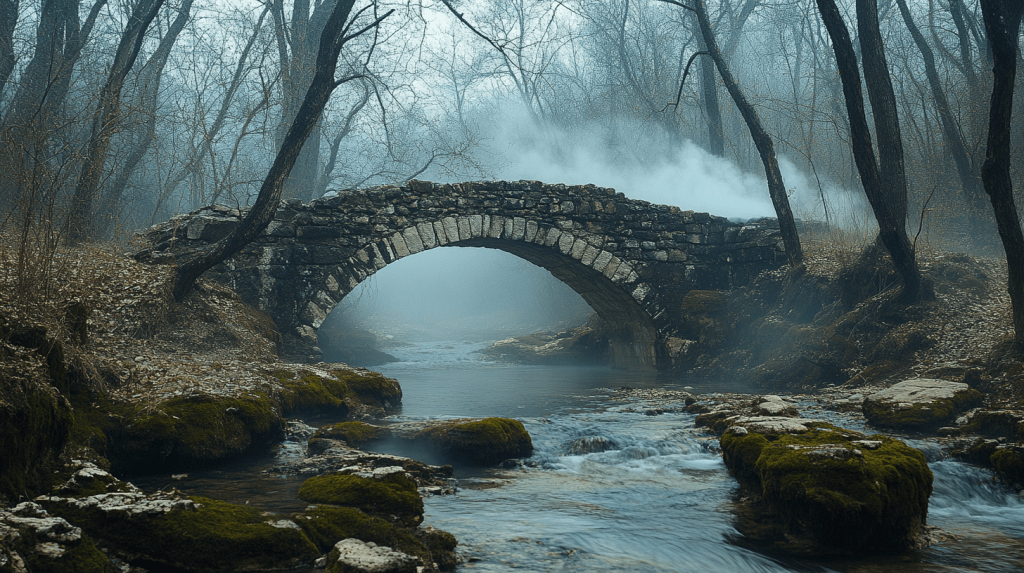
Emma: 就像這條河用了幾百萬年切割峽谷,溫泉也一直在湧出,慢慢塑造這片土地。
Julia: 大自然不急於改變世界,但它一直在改變。而人類一直被這些地方吸引——有時為了生存,有時為了療癒,有時為了信仰。
Emma: (笑著) 看來我們也是跟隨這條路線的最新一代旅人。
個人回憶 – Emma 談論英國湖區
Emma: 你知道嗎?這個地方讓我想到我的家鄉。風景雖然不一樣,但感覺很相似。
Julia: 湖區嗎?我從沒去過,但聽說很美。
Emma: 是的,但那裡的美比較安靜——柔和的丘陵、深邃的湖泊、晨間的薄霧。沒有這種高聳的懸崖,但森林有種自己的神秘感。
Julia: 怎麼說?
Emma: 小時候,我常常在家附近的樹林裡閒逛。有些樹已經幾百歲了,樹幹扭曲,覆滿苔蘚。我總覺得它們好像有故事要講,只是我們聽不見。
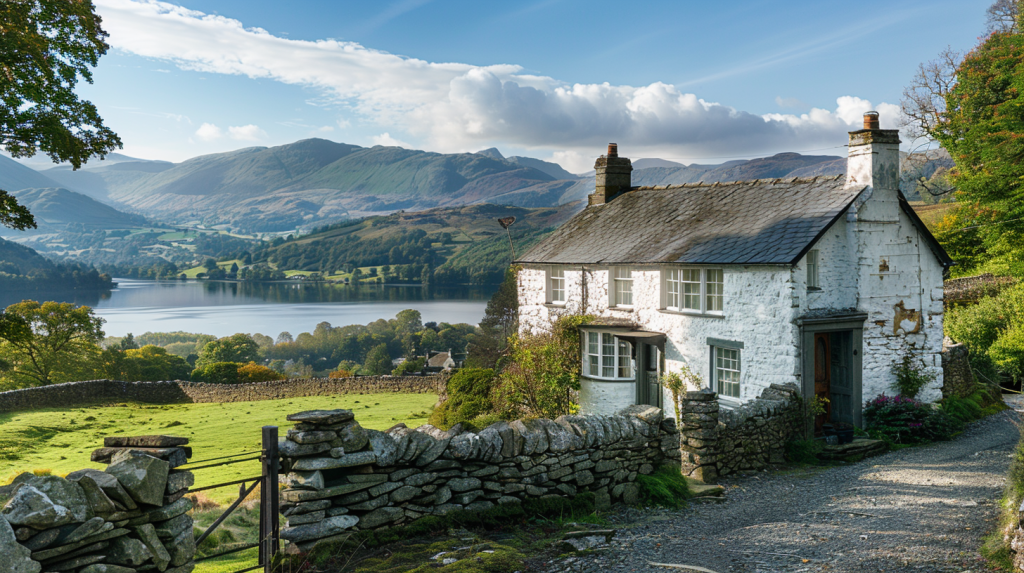
英國湖區
Julia: 聽起來像童話故事裡的場景。
Emma: 感覺就是那樣。尤其是在清晨,湖面上的霧升起來時,整個世界都被柔和的白霧包圍,讓人覺得時間彷彿停滯了。
Julia: 這倒是跟這裡有點像。河面的霧氣,隱藏在樹林裡的修道院……
Emma: 沒錯。雖然歷史背景不同,但這種地方總讓人覺得和過去有所連結。
Julia: 像是它們在承載著記憶。
Emma: 是的。在湖區,歷史不像這裡那麼充滿戰爭和生存的痕跡,但它依然存在。詩人曾在這裡寫作,農夫世世代代在這片土地上耕作,那些老舊的石牆已經矗立了幾百年。
Julia: 這是一種不同的歷史——它不是創傷,而是沉積。
Emma: (點頭) 這也是旅行最有趣的地方。可以看到不同的歷史如何塑造不同的景觀。
Julia: 以及景觀如何塑造人。
Emma: (微笑) 沒錯。
Settling in at the Guesthouse – Food, Climate, Architecture, and the Stories of the Gorge
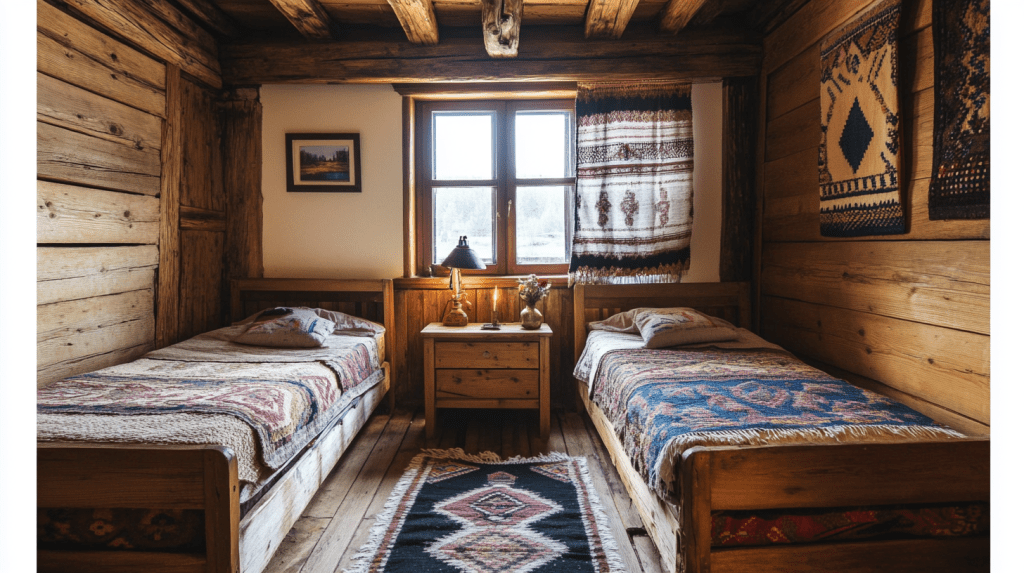
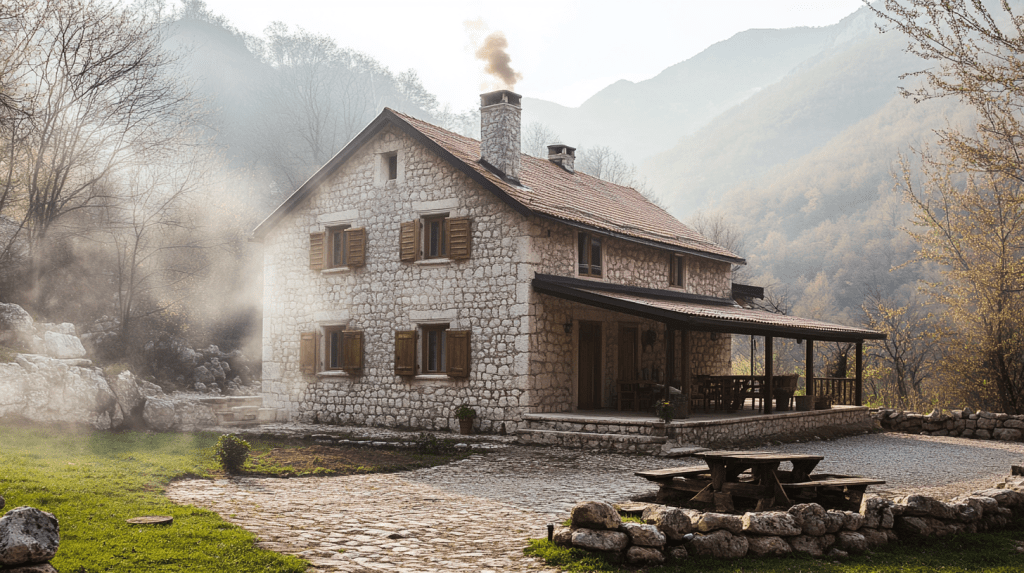
The sun has set behind the cliffs of the Ovčar-Kablar Gorge, casting a soft twilight over the valley. Emma and Julia have arrived at the small spa town of Ovčar Banja (Овчар Бања), nestled between the river and the steep mountains. The air carries the scent of damp earth, wood smoke, and distant hints of herbs from the kitchen of a rustic guesthouse where they plan to stay for the night. The building, with its thick stone walls, wooden balconies, and blue-painted shutters, feels like it has stood there for centuries.
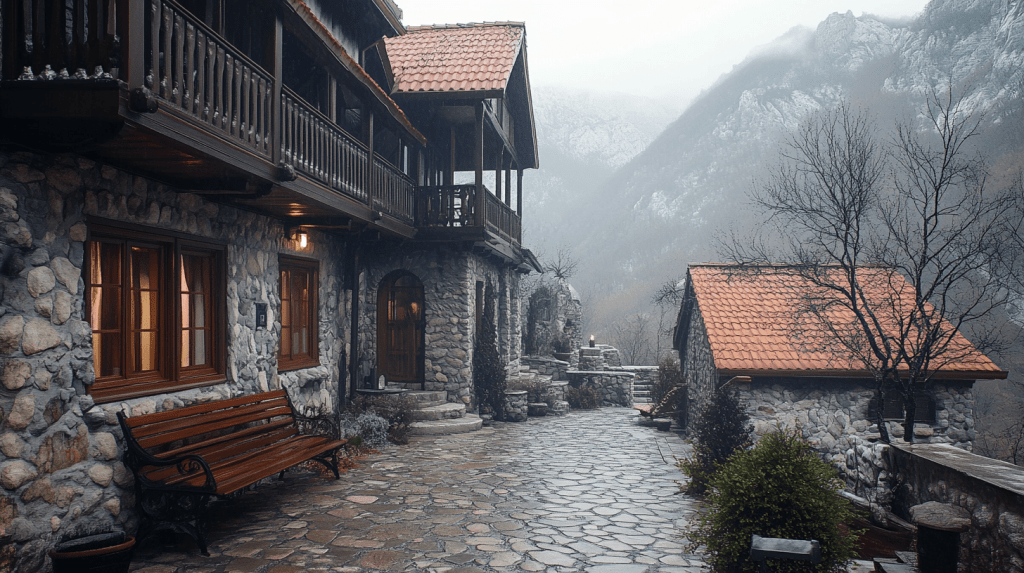

Emma: (Looking around) This place feels like stepping back in time. It’s simple, but you can tell it has history.
Julia: (Glancing up at the wooden beams) It reminds me of old inns in mountain villages—nothing fancy, but built to last.
Emma: And it smells incredible. I think I can already guess what’s for dinner.
Julia: (Smiling) Something slow-cooked, definitely.
The owner, a woman in her fifties, walks over. She wears a thick wool sweater and an apron, her hands slightly worn from years of work.
Owner: Добро вече! Welcome. You’re looking for a room?
Julia: Да, молим. Yes, just for one night.
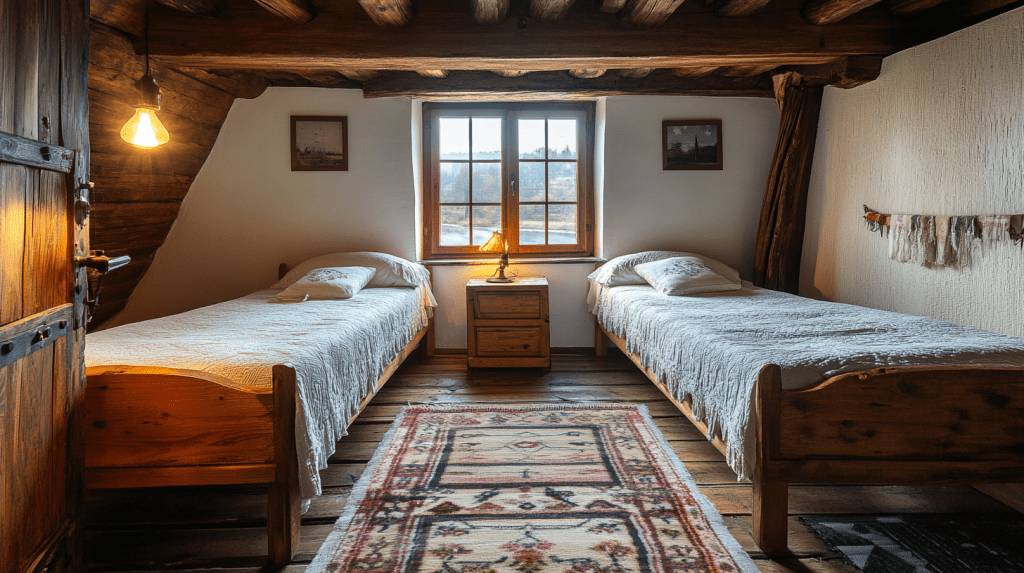
Owner: You’re lucky. We have one room left—with a view of the river. And, of course, dinner is included.
Emma: That sounds perfect. What’s on the menu?
Owner: Tonight, we have sarma—cabbage rolls stuffed with minced meat and rice, slow-cooked for hours. There’s also ćevapi—grilled minced meat sausages with fresh flatbread and onions. And if you prefer something lighter, we have trout, fresh from the river, grilled with garlic and rosemary.
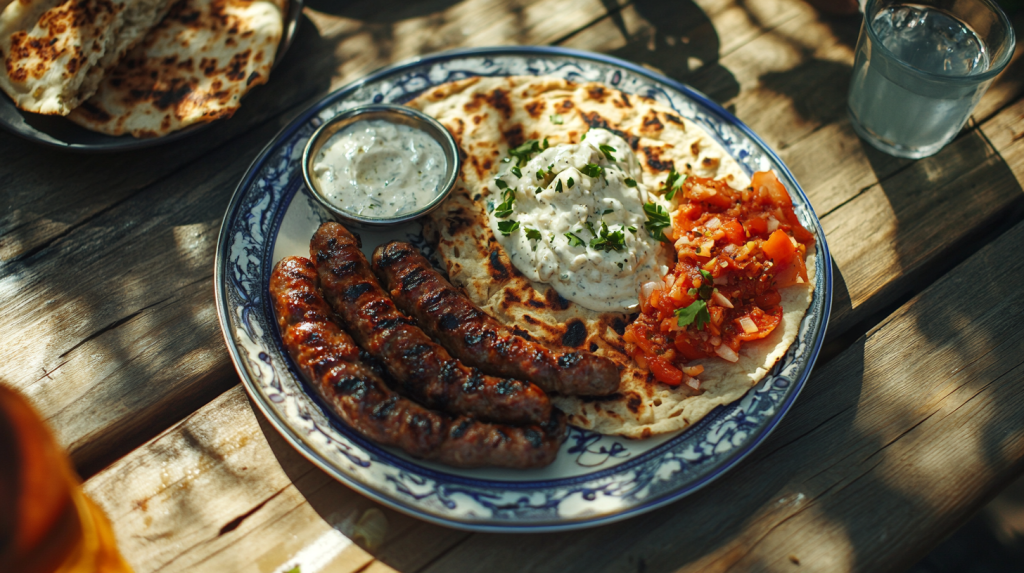
A plate of traditional Serbian ćevapi, grilled minced meat sausages with a crispy brown crust, served on freshly baked lepinja flatbread, topped with finely chopped onions, a side of kajmak (creamy dairy spread), and ajvar (red pepper relish)
Emma: That all sounds amazing.
Julia: And kajmak, right? You can’t have flatbread without kajmak.
Owner: (Laughing) Of course! And for dessert, we have pita sa višnjama—homemade cherry strudel.

Emma: (Grinning) You had me at cherry strudel.
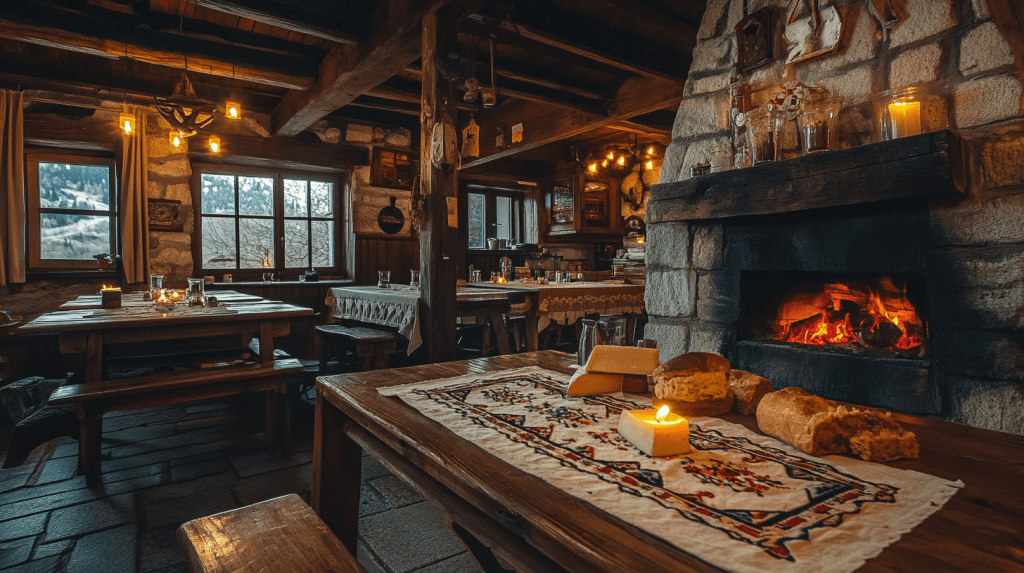
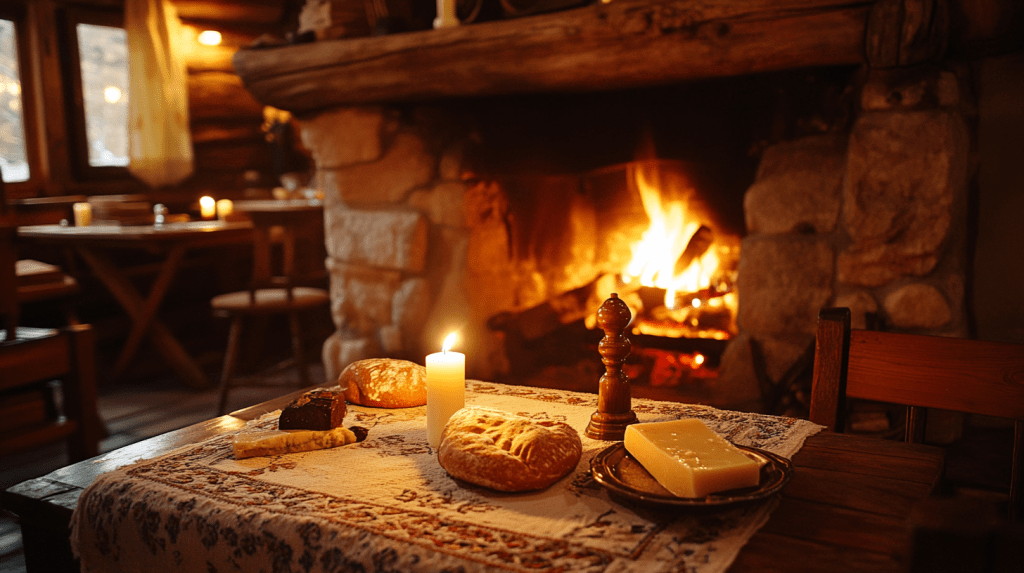
After checking in, Emma and Julia sit by the fireplace in the cozy dining area. Their table is covered with a traditional embroidered cloth, and the fire crackles softly, filling the room with warmth.
Emma: (Sipping warm herbal tea) This place is perfect. It feels like the kind of inn that’s been here forever.
Julia: Probably has. And it’s not just the buildings that carry history—places like this are full of stories.
Owner: (Setting down their plates) Speaking of stories… have you heard the legend of the monks and the hidden treasure?
Emma: (Intrigued) No, but now I have to hear it.
Owner: They say that during the Ottoman period, when the monks of these monasteries were forced to flee, they took their most sacred relics with them. But they couldn’t carry everything—so they hid a great treasure somewhere in the gorge.
Julia: What kind of treasure?
Owner: Gold, ancient manuscripts, relics from the monasteries. Some say they buried them near one of the monasteries, others believe they hid them deep inside a cave.
Emma: And no one has ever found it?
Owner: Many have searched, but the gorge is vast, and nature reclaims everything. Some believe the monks left signs—symbols carved into the cliffs, patterns in the stones—but no one has solved the mystery.
Julia: That’s the best kind of legend—one that keeps people wondering for generations.
Owner: And there’s one more part of the story. Some say the treasure is protected by the spirit of a monk, watching over it. They say, on misty mornings, you can sometimes see a shadow moving among the cliffs.
Emma: (Smirking) And I thought this place just had beautiful scenery. Turns out, it’s full of secrets.
Julia: Looks like we’re not just here for food and history—we’re also in the middle of a mystery.
The fire flickers, casting shadows on the walls, as the night deepens over the gorge, adding a touch of timelessness to the moment.
旅館、美食、氣候與當地傳說
夕陽已落,峽谷籠罩在微光之中。Emma 和 Julia 抵達奧夫查爾巴尼亞(Ovčar Banja),這座小鎮隱藏在群山與河流之間,以溫泉與修道院聞名。旅館古樸但充滿韻味,厚重的石牆、木製陽台、藍色的百葉窗,彷彿見證了無數歲月。空氣中瀰漫著柴火與廚房飄來的淡淡香氣。

Emma: 這地方好像穿越回過去一樣,簡單,但充滿歷史感。
Julia: 這種旅館通常經歷了幾代人,不華麗,但非常實用。
Emma: 而且食物的香味已經透出來了,聞起來好像燉了很久的東西。
Julia: 一定是什麼慢燉料理。
旅館老闆娘走過來,約五十多歲,穿著羊毛衣,手上有著長年勞作的痕跡。
老闆娘: Добро вече! 歡迎光臨,需要住宿嗎?
Julia: Да, молим. 是的,我們住一晚。
老闆娘: 剛好剩下一間房,有河景,晚餐當然也包括在內。
Emma: 太棒了,今天有什麼菜?
老闆娘: Sarma——燉了好幾個小時的酸菜捲,裡面是絞肉和米飯。還有 ćevapi,烤絞肉香腸,搭配新鮮烤好的皮塔餅和洋蔥。如果想吃清淡一點的,還有剛從河裡捕撈的鱒魚,配上迷迭香和大蒜烤製。

傳統塞爾維亞 ćevapi(烤絞肉香腸),表面焦脆金黃,搭配剛出爐的 lepinja(塞爾維亞扁平麵包),上面撒上細碎的洋蔥,旁邊附有 kajmak(濃郁的乳脂抹醬)和 ajvar(紅椒醬)。
Emma: 太豐盛了。
Julia: 當然還有 kajmak,對吧?
老闆娘: (笑)當然!甜點有 pita sa višnjama——手工櫻桃捲。
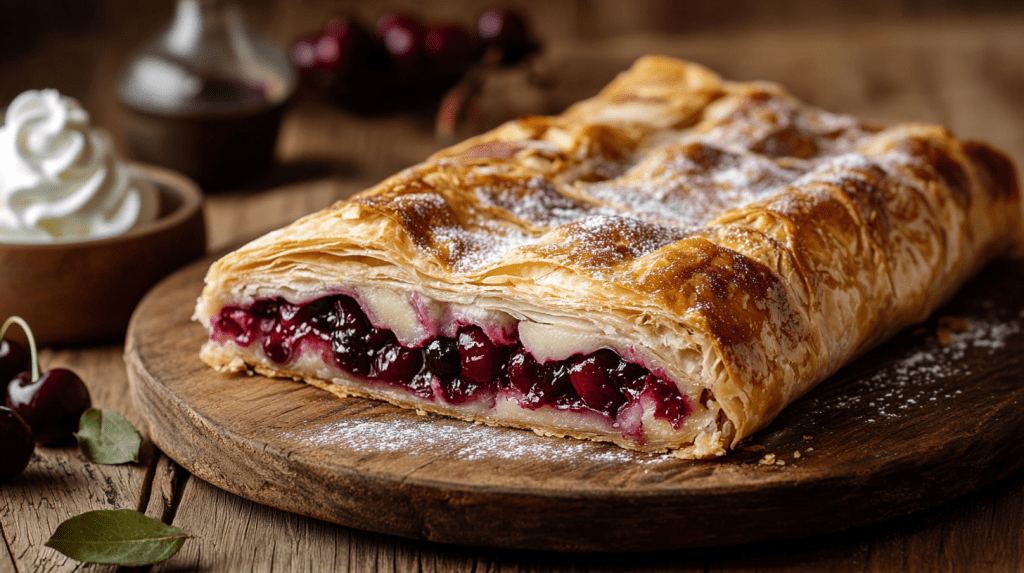
Cherry Strudel(櫻桃捲餅)是一種歐洲傳統甜點,起源於奧地利和中歐地區,在巴爾幹半島也很受歡迎。它是一種以 薄而脆的層層派皮 裹住 酸甜櫻桃餡 烘焙而成的糕點,表面通常撒上一層糖粉,口感外酥內軟。
老闆娘: 你們知道嗎?這座峽谷還有個傳說——關於修道士和隱藏的寶藏。
Emma: (興奮)寶藏?說來聽聽!
老闆娘: 傳說,在奧斯曼帝國時期,當修道士被迫逃離時,他們帶走了一些最珍貴的聖物,但還有許多無法帶走的寶藏——他們把它們藏在峽谷深處。
Julia: 什麼樣的寶藏?
老闆娘: 黃金、古老的手稿、宗教聖物……有人說,它們被埋在修道院附近,也有人相信它們藏在某個洞穴裡。
Emma: 那有人找到過嗎?
老闆娘: 沒有人知道,但據說,每當晨霧瀰漫時,你可以在懸崖上看到修道士的影子,在守護這些寶藏……
壁爐的火光閃爍,旅館外的風輕輕吹過夜色中的峽谷,這個故事似乎仍然回蕩在這片土地上。
Evening at the Guesthouse – History, Legends, and Reflections on the Region
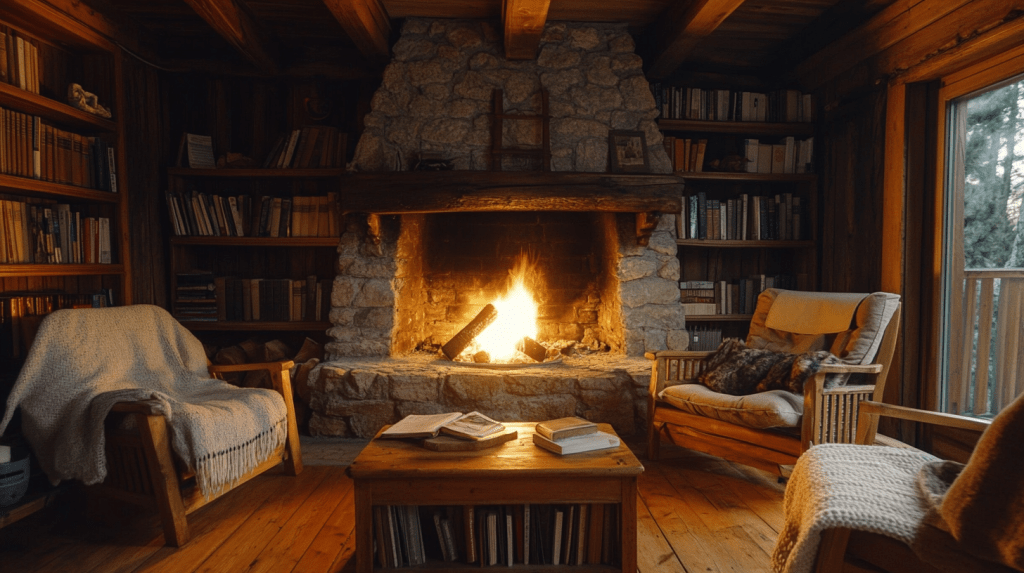
The fireplace crackles in the dimly lit dining room of the guesthouse. Outside, the Western Morava River reflects the silver glow of the moon, its gentle current whispering through the valley. The old wooden beams overhead creak softly as the mountain wind brushes against the building. Emma and Julia, now comfortably settled after their meal, sip on herbal tea as they continue their conversation, letting history and legends intertwine.
Emma: (Stretching slightly) That was one of the best meals I’ve had in a long time. Simple but perfect.
Julia: I agree. The best food is often tied to tradition, and these dishes—sarma, ćevapi, kajmak—they’ve been made the same way for generations.
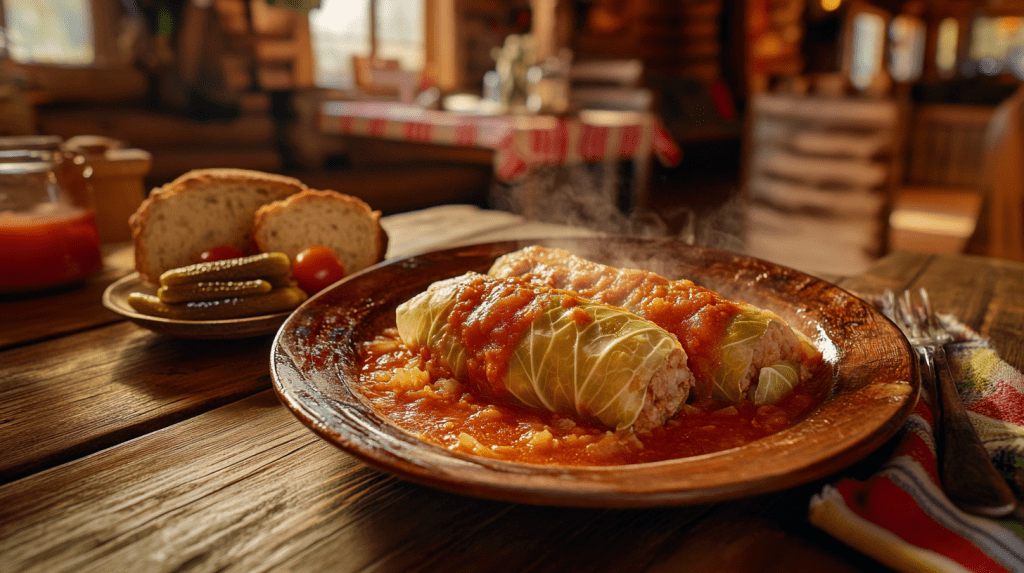
Sarma: slow-cooked stuffed cabbage rolls filled with minced meat and rice, covered in rich tomato sauce (Sarma:慢燉填餡捲心菜捲,內餡由絞肉和米飯組成,外層覆蓋濃郁的番茄醬)
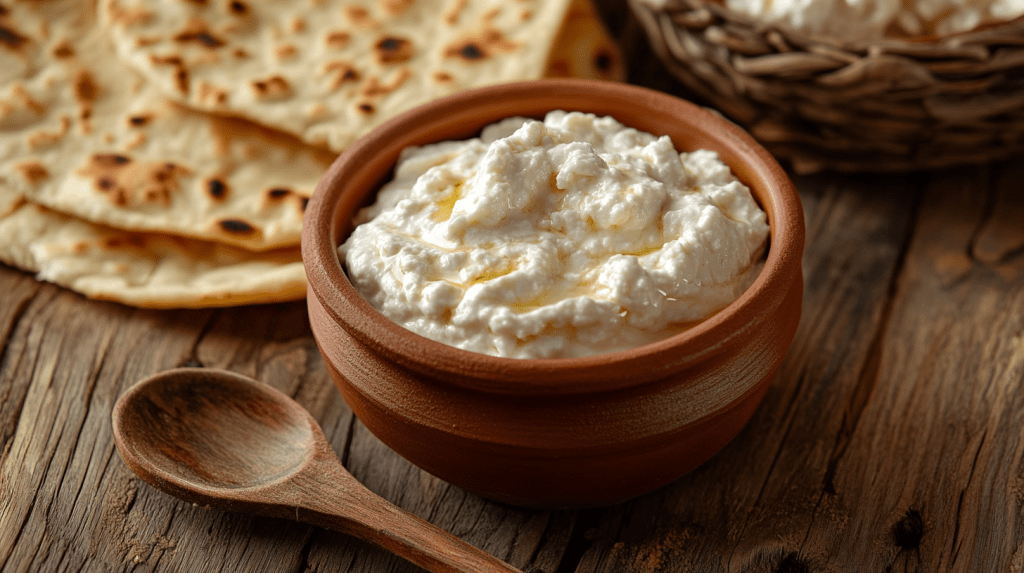
kajmak: a creamy and rich Serbian dairy spread. Kajmak 是一種 傳統的塞爾維亞乳製抹醬,質地濃郁、口感介於奶油和軟質起司之間。它是由新鮮的未經巴氏消毒的牛奶、羊奶或混合奶慢慢加熱,然後將奶脂層撈起來,靜置熟成數小時或幾天後形成的乳脂狀食品。抹在 Lepinja(塞爾維亞傳統麵包)上,搭配烤肉(如 Ćevapi)
Emma: (Sipping her tea) It makes you think about how much history is woven into everyday life here. Just sitting in this guesthouse, eating local food, surrounded by the mountains—it’s like stepping into a world where time moves slower.
Julia: That’s one of the things I love about the Balkans. History doesn’t feel like something confined to books or museums—it’s in the way people live, in the food they eat, in the stories they tell.
Emma: Speaking of stories, that legend about the hidden treasure—do you think there’s any truth to it?
Julia: Most legends have a grain of truth. And this region has seen enough upheaval for something like that to be possible.
Emma: The Ottomans ruled here for centuries, right?
Julia: Yes, from the 15th to the 19th century. When the Ottomans arrived, they took over most of the land, including the monasteries. Many were destroyed, some were turned into mosques or storage facilities. The monks had to choose—either adapt or flee.
Emma: And that’s when they supposedly hid the treasure?
Julia: Possibly. But it wasn’t just about wealth. Think about it—monasteries weren’t just places of worship; they were libraries, centers of learning. The real treasure might not have been gold but knowledge—manuscripts, religious relics, even old Slavic texts that would have been lost otherwise.
Emma: (Leaning forward) And yet, no one has found anything?
Julia: Some claim that parts of the treasure have been discovered over the centuries—old icons, hidden chambers beneath monasteries—but nothing definite. The gorge is vast, and nature has a way of covering up human secrets.
Emma: (Looking out the window) Imagine how many people must have passed through this valley over the centuries. Warriors, monks, traders…
Julia: And refugees. This region has always been a crossroads, and with that comes conflict. The Balkan Wars, World War I, World War II… people fled through these mountains time and time again.
Emma: (Pauses) That’s what’s fascinating about places like this. We see peaceful scenery now, but if the land could speak, it would tell stories of survival, struggle, and resilience.
Julia: And sometimes, we catch glimpses of those stories—through legends, through architecture, through the way people remember their past.
Emma: (Smiling) Through conversations like this.
A distant church bell tolls, marking the passing of another hour. The wind outside carries the scent of pine and damp earth, as if whispering the secrets of the past.

歷史、傳說與峽谷的隱藏故事
旅館餐廳內的壁爐發出微弱的劈啪聲,火光在木質橫梁上投下搖曳的影子。窗外,多瑙河的支流——西莫拉瓦河在夜色中閃爍銀光,水流在峽谷間低語。Emma 和 Julia 坐在餐桌前,茶杯中冒著熱氣,談話隨著歷史與傳說慢慢展開。
Emma: (伸展一下)這真是我近期吃過最美味的一頓飯。簡單,卻完美。
Julia: 我同意。最好的食物往往與傳統息息相關,而這些菜餚——sarma、ćevapi、kajmak——幾個世紀以來,人們都是這樣做的。

traditional Serbian ćevapi, grilled minced meat sausages with a crispy brown crust (傳統的塞爾維亞 Ćevapi,烤製的絞肉香腸,外皮酥脆焦香)
Emma: (啜飲熱茶)這讓我想到,這裡的歷史並不只存在於博物館或書籍裡,而是滲透在日常生活中。只是坐在這家旅館裡,吃著當地的食物,被這些山脈包圍著,就能感受到時間流動的不同。
Julia: 這就是巴爾幹半島最吸引我的地方。歷史不是過去的遺跡,而是活著的,它存在於人的生活方式、飲食、故事之中。
Emma: 說到故事,你覺得那個關於修道士寶藏的傳說,有沒有可能是真的?
Julia: 傳說往往源自某種真實事件。而這片地區的歷史動盪,確實讓這種故事有可能成真。
Emma: 這裡曾經被奧斯曼帝國統治了很長時間,對吧?
Julia: 是的,從 15 世紀到 19 世紀,幾乎四百年。奧斯曼人征服這裡後,不僅控制了土地,也掌管了修道院。有些修道院被拆毀,有些被改建成清真寺或倉庫。修士們只能選擇逃亡,或者留下來適應新秩序。
Emma: 這就是傳說中寶藏被藏起來的時候?
Julia: 可能是,但真正的「寶藏」可能並不是黃金,而是知識。修道院不僅是宗教場所,更是圖書館、文化中心。或許當時修士們藏起來的,不只是財富,而是手稿、宗教聖物,甚至是古老的斯拉夫文本——如果這些東西沒有被保存下來,可能早已消失。
Emma: (靠近桌前)但如果真的藏著這些東西,怎麼沒有人發現?
Julia: 有些人說,歷史上確實發現過一些東西——比如某些修道院地窖裡找到過隱藏的圖書室,或者有些古老的東正教聖像被偶然發掘。但峽谷這麼大,許多地方仍然未被探索。大自然有辦法將人類的秘密掩蓋起來。
Emma: (望向窗外)想想這幾百年來,這片峽谷迎來過多少人……戰士、修道士、商人……
Julia: 還有難民。這裡一直是歐洲的交叉路口,而這種地理位置也意味著戰爭與衝突。巴爾幹戰爭、第一次世界大戰、第二次世界大戰……人們一次又一次逃往這片山區。
Emma: (停頓)這就是這種地方最迷人的地方吧。我們現在看到的是寧靜的景色,但如果土地會說話,它會訴說無數生存、鬥爭與韌性的故事。
Julia: 而我們只能從傳說、建築、記憶中,一點一點地拼湊它的故事。
Emma: (微笑)或者,就像我們現在這樣,透過對話,慢慢挖掘過去的痕跡。
遠處的鐘聲響起,彷彿提醒著這座峽谷仍在訴說它的歷史。

Discussing Heating, Energy, and Traditional Practices
The fire in the guesthouse’s dining room crackles gently, casting flickering shadows on the wooden walls. The warmth is a welcome contrast to the crisp mountain air outside. Emma and Julia, now comfortably settled after their meal, sip on their herbal tea. Emma stretches her hands toward the warmth, then tilts her head slightly, as if noticing something for the first time.
Emma: (Looking around) It’s really warm in here, but I don’t see any radiators.
Julia: (Nods) I was thinking the same thing. It’s not central heating, that’s for sure.
Emma: So, what’s keeping this place so warm? Just the fireplace?
Julia: (Gesturing around) Probably a combination. The fireplace definitely helps, but I’d bet there’s an old furnace somewhere. Maybe even a wood-burning or pellet stove in the back.
Owner: (Walking over with a pot of tea) You’re observant. We heat this place the same way my grandparents did—with wood and sometimes coal, depending on the temperature.
Emma: (Curious) So, no gas heating at all?
Owner: Not here. The town does have gas lines now, but most people still rely on wood, especially in these old buildings. Gas is expensive, and besides—wood gives a different kind of warmth.
Julia: (Nodding) It does. There’s something comforting about it. The heat from a fireplace or a stove feels… thicker, if that makes sense.
Owner: It does. The heat stays longer, and the air doesn’t dry out the way it does with modern radiators.
Emma: (Gesturing to the wooden walls) And I guess the thick stone and wood construction helps too?
Owner: Absolutely. These walls keep the heat inside in winter and the cool air inside in summer.
Julia: (Thinking) That makes sense. In the Lake District, some of the older homes have stone walls nearly a meter thick. They hold heat in winter and stay cool in summer, just like this.
Emma: So, if it’s mostly wood heating, does everyone have to chop their own firewood?
Owner: Some do, but most people buy it in bulk before winter. You plan ahead, stack it outside, and make sure you have enough to last the season.

Julia: And in really cold winters?
Owner: Then you ration it carefully—or find extra. People help each other out. If one family runs low, a neighbor might have some to spare.
Emma: (Smiling) That’s something you don’t see as often in big cities.
Owner: Life in the mountains has always been about self-sufficiency—but also about community.
The fire pops, sending a small ember into the air before it settles back into the logs, a reminder that warmth in places like this has always been a shared resource, not just a convenience.
旅館的暖氣從哪裡來?
壁爐裡的火焰緩緩燃燒,木柴發出細微的噼啪聲。屋內溫暖舒適,與窗外寒冷的山間空氣形成鮮明對比。Emma 伸出雙手取暖,接著歪了歪頭,像是發現了什麼。

Emma: (四處張望)這裡真的很暖和,但我沒看到暖氣片啊?
Julia: (點頭)我剛剛也注意到了,這裡明顯不是中央供暖系統。
Emma: 所以這裡是靠什麼取暖的?就只有壁爐嗎?
Julia: (環顧四周)應該是好幾種方式結合吧。壁爐當然是主要熱源,但我猜後面可能還有一個燒木材或燃料顆粒的火爐。
老闆娘: (端著茶壺走過來)你們挺細心的。我們這裡的供暖方式,和我祖父母那個時代一樣——用木柴,有時候天氣特別冷時會加一些煤。
Emma: (好奇)所以這裡完全沒有天然氣供暖?
老闆娘: 這個小鎮現在有天然氣管道了,但大部分人還是用木柴取暖,特別是這些老房子。天然氣價格高,而且,木柴的熱度不一樣。
Julia: (點頭)確實,壁爐的熱好像比較厚重,讓人覺得更溫暖,和暖氣片的乾燥熱氣不太一樣。
老闆娘: 沒錯。木柴燒的熱氣比較溫潤,而且可以保持得更久,不像現代暖氣那樣一下子就散掉。
Emma: (指著牆壁)還有這些厚厚的石牆和木結構,應該也有保溫的作用吧?
老闆娘: 當然。冬天能留住暖氣,夏天又能保持涼爽。
Julia: (思考)這和英國湖區的老房子很像。那邊有些房子的石牆厚度接近一公尺,冬天能保暖,夏天則保持涼爽。
Emma: 那如果這裡冬天主要用木柴取暖,是不是每家每戶都要自己砍柴?
老闆娘: 有些人會自己砍,但大部分人會提前在秋天買好一整季的柴火,然後堆放在屋外,確保能撐過冬天。

Julia: 如果冬天特別冷呢?
老闆娘: 那就要更精打細算地用,或者再去找額外的木材。有時候鄰居之間也會互相幫忙,如果有人快燒完了,別人可能會借一些過去。
Emma: (笑)這種互相幫助的社區精神,在大城市比較少見了。
老闆娘: 住在山區,獨立生存很重要,但互相幫忙更重要。
壁爐的火焰輕輕跳動,一顆燒紅的木炭迸發出小火花,像是在提醒他們,在這片土地上,取暖不只是物質需求,更是一種文化傳承和人與人之間的連結。
Breakfast at the Guesthouse
The morning sun filters through the small wooden-framed window of the guesthouse, casting soft golden light onto the simple wooden table where Emma and Julia are having breakfast. The dining area is quiet except for the occasional clatter of dishes from the kitchen. Outside, the Western Morava River glistens under the first rays of daylight, and a faint mist lingers in the valley. The air carries the scent of freshly brewed coffee, warm bread, and something slightly sweet—perhaps honey or jam. A plate of local specialties sits between them: slices of warm lepinja (flatbread), fresh kajmak, homemade plum jam, and a plate of eggs with sausage.
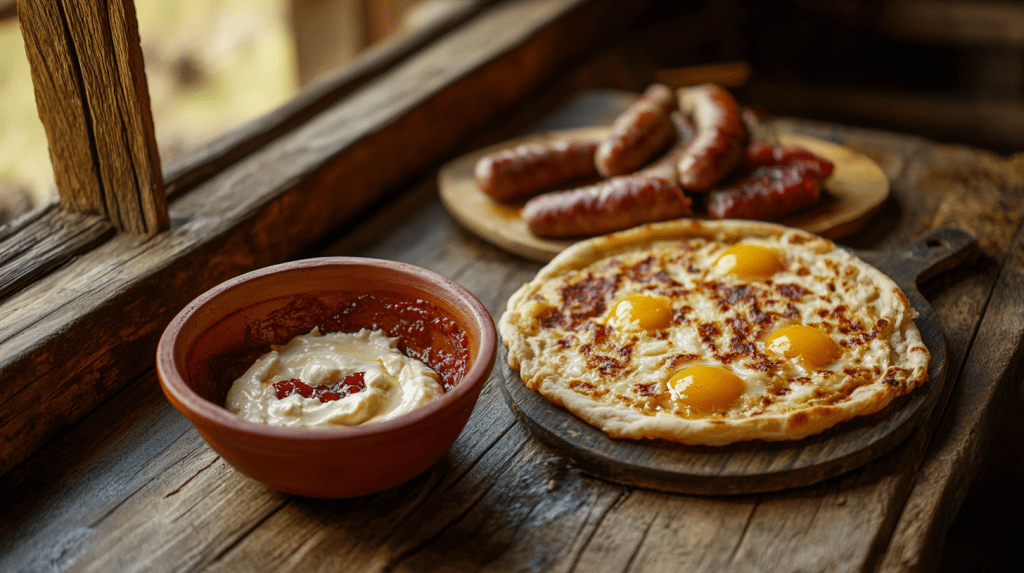
Serbian breakfast: a small clay bowl of fresh kajmak (creamy fermented dairy spread), warm lepinja flatbread with a golden, crispy crust, homemade plum jam with a deep purple hue, alongside grilled Serbian sausages and fluffy scrambled eggs.
Emma: (Spreading kajmak on her bread) I think I’ve become addicted to this. Why does it taste so much better here?
Julia: (Laughs) Because it’s fresh. You can’t get this kind of kajmak in supermarkets—it has to be homemade.
Emma: (Taking a bite) It’s like butter, but creamier. I’m definitely buying some before we leave.
Julia: You’ll have to eat it fast. It doesn’t keep for long unless you have the right conditions.
Emma: (Sipping coffee) That’s the thing about food here. It’s meant to be eaten fresh, not stored for months.
Julia: That’s because people here still follow older ways of eating—seasonal, local, simple.
Emma: And delicious. (Gesturing to the table) This breakfast is perfect. What’s the sausage called again?
Julia: Kobasica—a smoked Serbian sausage, usually made with pork and paprika. It’s got a nice smoky flavor, doesn’t it?
Emma: Yeah, and just enough spice to wake me up properly.
The owner walks by and refills their coffee cups, smiling as she hears their conversation.
Owner: You like the breakfast?
Emma: Love it. I think I could stay here just for the food.
Owner: (Laughing) Many people say that. Serbian breakfasts are simple but strong—you’ll have energy for the whole day.
Julia: Speaking of which, we should plan our day.
Emma: (Nodding) Right, so what’s next?
Julia: We have a few options. We could stay in the area a bit longer and explore another monastery. There’s one further up the hill—Manastir Nikolje—one of the oldest in the gorge.
Emma: That could be interesting. But we also talked about heading toward Tara National Park, right?
Julia: Yes, we could drive there today. It’s about an hour and a half from here, through Užice.
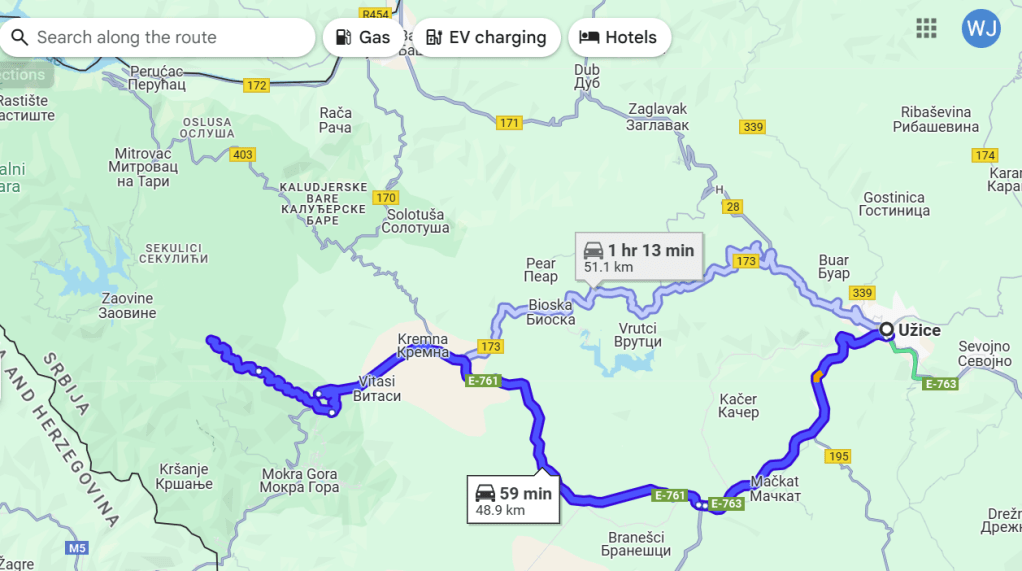
Emma: (Checking phone) And Tara is where we’ll see the Drina River Canyon, right?
Julia: Exactly. One of the most scenic spots in Serbia. We can stop at Banjska Stena, the best viewpoint over the canyon.
Emma: (Excited) That sounds amazing. Do we have time for a short hike?
Julia: Yes, there’s a moderate trail leading to the viewpoint. It’s not too long, maybe an hour’s walk.
Emma: Perfect. And what about lunch?
Julia: If we stop in Užice, we can try komplet lepinja—a local specialty. It’s a bread dish with eggs, kajmak, and a special meat-based sauce.
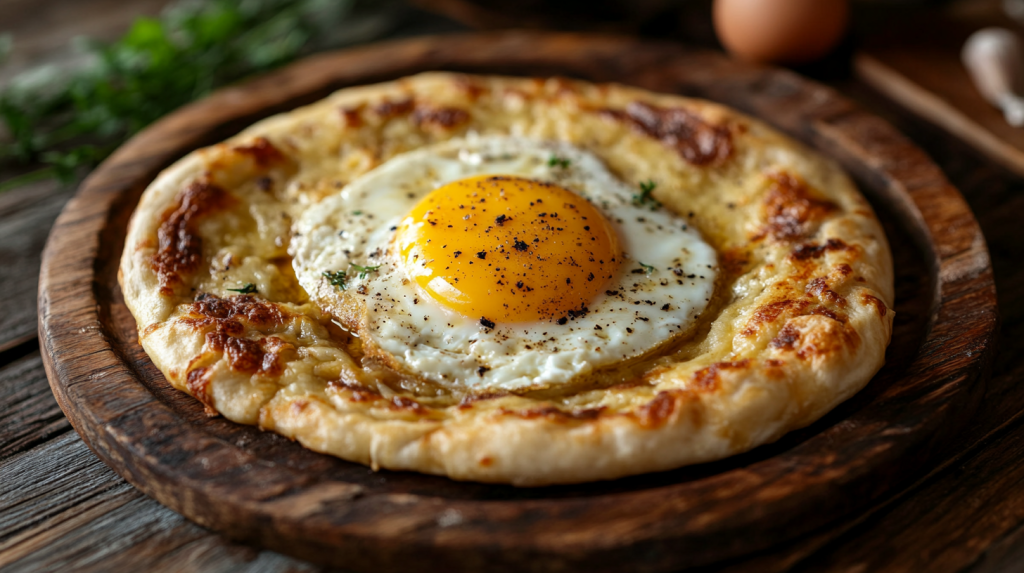
Komplet lepinja
Emma: That sounds both heavy and irresistible.
Julia: (Grinning) It is. But after a morning of hiking, I’d say we’ll deserve it.
Emma: So, breakfast here, a short stop at another monastery, then drive toward Tara, hike to the viewpoint, and lunch in Užice?
Julia: That sounds like a plan.
Emma lifts her coffee cup in a mock toast, and Julia does the same. The warm morning light makes everything feel peaceful, like they are exactly where they are supposed to be.
早餐與旅遊計劃
晨光透過旅館的小窗戶,灑在簡單的木桌上。Emma 和 Julia 坐在角落,享受著寧靜的早餐時光。窗外,西莫拉瓦河在陽光下閃爍著粼粼波光,谷地中仍殘留一絲晨霧。空氣中瀰漫著新鮮咖啡、剛出爐的麵包,以及淡淡的蜂蜜香氣。桌上擺著塞爾維亞傳統早餐:溫熱的 lepinja(扁平麵包)、新鮮的 kajmak(發酵奶油)、自製的梅子果醬,以及香腸與炒蛋。

傳統塞爾維亞早餐:一小碗 新鮮的 Kajmak(濃郁的發酵奶油抹醬)、溫熱的 Lepinja 扁平麵包,外皮金黃酥脆、自製的 梅子果醬,色澤深紫,搭配 烤製的塞爾維亞香腸 和 鬆軟的炒蛋。
Emma: (抹上 kajmak)我覺得我已經對這個上癮了。為什麼這裡的 kajmak 特別好吃?
Julia: (笑)因為這是現做的。這種 kajmak 在超市買不到,必須是自家製的才有這種口感。
Emma: (咬一口)比奶油還濃郁,太棒了。我一定要在離開前買一些。
Julia: 你得快點吃,這種東西不能放太久,得保持適當的溫度才不會變質。
Emma: (喝咖啡)這裡的食物就是這樣,沒有長期保存的加工品,一切都得趁新鮮吃完。
Julia: 人們還是保持著傳統的飲食方式——吃當季、吃當地的食材,簡單但充滿風味。
Emma: (指著盤子)這頓早餐就完美了。這個香腸叫什麼來著?
Julia: Kobasica,一種煙燻香腸,通常用豬肉和紅椒粉製成。它的煙燻味很明顯,對吧?
Emma: 是啊,還帶點微辣,正好讓我清醒過來。
老闆娘端著咖啡壺走來,為她們添上熱騰騰的咖啡,微笑著聽著她們的對話。
老闆娘: 你們喜歡這裡的早餐?
Emma: 非常喜歡!我可以因為這頓早餐多待幾天。
老闆娘: (笑)很多客人都這麼說。塞爾維亞的早餐很簡單,但能讓人充滿能量,足夠應付一整天的行程。
Julia: 說到行程,我們該決定今天去哪裡了。
Emma: (點頭)對,所以接下來呢?
Julia: 我們有幾個選擇,可以在這裡再逛一座修道院,比如更高處的 Manastir Nikolje,它是峽谷中最古老的修道院之一。
Emma: 這聽起來很有趣。但我們還想去 塔拉國家公園,對吧?
Julia: 是的,開車過去大約一個半小時,途中會經過 乌日策(Užice)。
Emma: (看手機)塔拉那邊有 德里納河峽谷(Drina River Canyon),對吧?
Julia: 沒錯,最美的觀景點是 Banjska Stena,我們可以去那裡。
Emma: (興奮)太棒了,我們能安排一小段徒步嗎?
Julia: 當然,那裡有一條適中的步道,大概一個小時的路程,不會太累。
Emma: 完美!那午餐呢?
Julia: 在乌日策可以吃當地特色 komplet lepinja,是一種用雞蛋、kajmak 和肉汁烤製的麵包。

Emma: 這聽起來又濃郁又誘人。
Julia: (笑)確實是。但我們爬完山後,應該值得一頓豐盛的午餐。
Emma: 那就這麼決定了!
兩人舉起咖啡杯輕碰一下,開始期待今天的旅程。

 Virtual Travel | 虛擬旅行沉浸式英語學習
發表留言