
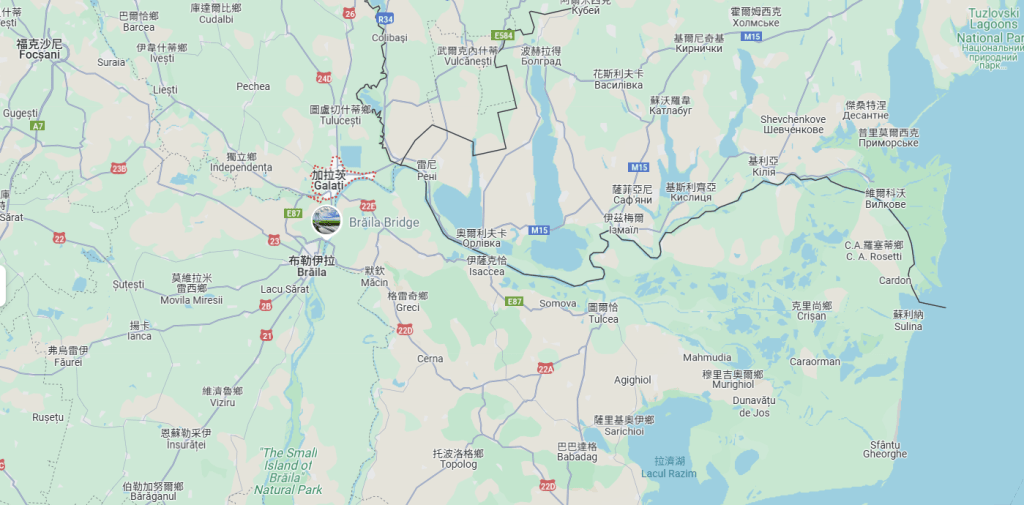
The Old Town of Brăila – A Crossroad of Ottoman and European Trade
(Emma and Julia arrive in Brăila, walking through the cobblestone streets of the old town. The city retains traces of its Ottoman past, with a blend of neoclassical and oriental architectural styles.)

Emma: (Looking at a row of low, historic houses) This place feels different from the other Romanian cities we’ve visited—almost more “eastern.” Is that the Ottoman influence?
Julia: (Nods) Exactly. Brăila was once an important Ottoman trade hub, a major port on the Danube. Merchants from the Balkans, Turkey, and even as far as the Middle East used to gather here.
Emma: (Pointing to an ornate building with arched windows) Was this a mosque?

Julia: It used to be. Now, it’s a cultural center. During Ottoman rule, the city had many mosques, but after the Ottomans retreated, most were converted into churches or secular buildings.
Emma: (Smiling) That sounds just like Belgrade—so many layers of history overlapping.
Julia: (Chuckles) Exactly. The Balkans and Eastern Europe are full of these layered histories. Each city tells a different version of the same story.
(They continue walking and catch the scent of grilled fish wafting from a nearby tavern, drawing them inside.)
布勒伊拉老城區——奧斯曼與歐洲貿易的交匯點
(Emma 和 Julia 抵達布勒伊拉,漫步在舊城區鋪滿鵝卵石的街道上。這座城市仍保留著奧斯曼統治時期的痕跡,新古典主義與東方建築風格交融共存。)
Emma:(看著一排低矮的歷史建築)這裡和我們之前去過的羅馬尼亞城市感覺不太一樣,甚至更偏東方風格。這是受到奧斯曼影響嗎?
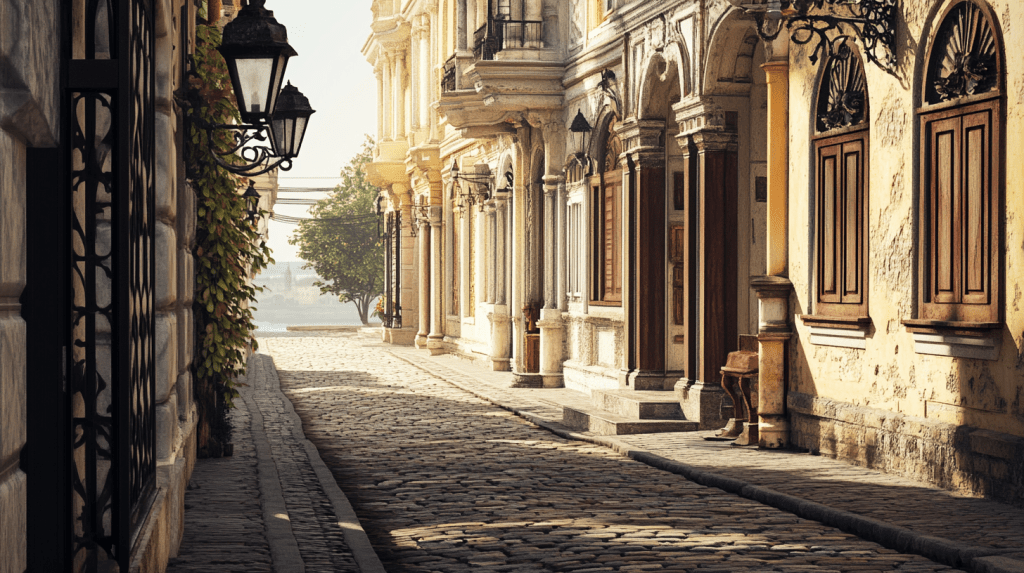
Julia:(點頭)沒錯,布勒伊拉曾是奧斯曼帝國的重要貿易港口,也是多瑙河上的關鍵樞紐。來自巴爾幹、土耳其,甚至遠至中東的商人,曾在這裡聚集交易。
Emma:(指著一棟帶有拱形窗戶的華麗建築)這裡以前是清真寺嗎?

Julia:對,過去確實是清真寺,但現在改建成了文化中心。在奧斯曼統治時期,布勒伊拉有許多清真寺,不過當奧斯曼人撤離後,大部分被改為教堂或公共建築。
Emma:(微笑)這讓我想起貝爾格勒,那裡的歷史也是層層疊疊,不同時代的文化交織在一起。
Julia:(輕笑)沒錯,巴爾幹半島和東歐地區到處都是這樣的歷史遺跡,每座城市都講述著相似但獨特的故事。
(她們繼續向前走,街邊飄來陣陣烤魚的香氣,吸引著她們走進一家當地的小酒館。)
A Taste of the Danube – Traditional Fish Cuisine in Brăila

(Emma and Julia enter a small, rustic tavern. An elderly fisherman-turned-chef is preparing a pot of ciorbă de pește, a traditional Danube fish soup.)
Tavern Owner: (Placing a steaming pot on the table) You’re travelers, aren’t you? If you’re in Brăila, you must try our fish soup. It’s been our tradition for generations!

Ciorbă de Pește, a traditional Danube fish soup
Emma: (Sniffing the aroma) Wow, the spices are really strong. What’s in it?
Tavern Owner: (Grinning) We use local river fish, add hot peppers, tomatoes, lemon, and our special herbs. It’s different from the soups you’ll find in other parts of Romania.
Julia: (Taking a sip) This has so much depth—more layers of flavor than I expected!
Emma: (Eating as she talks) So, is fishing still a big part of life here?
Tavern Owner: (Sighs) Not like it used to be. The river isn’t as full of fish as before, and young people don’t want to be fishermen anymore. Most of them move to the cities for other jobs.
(As they eat, they discuss how life along the Danube has changed, before setting off toward Galați.)
多瑙河的風味——布勒伊拉的傳統魚料理
(Emma 和 Julia 走進一家樸實的鄉村小酒館。一位年長的漁夫出身的廚師正在準備一鍋 ciorbă de pește,這是一道傳統的多瑙河魚湯。)
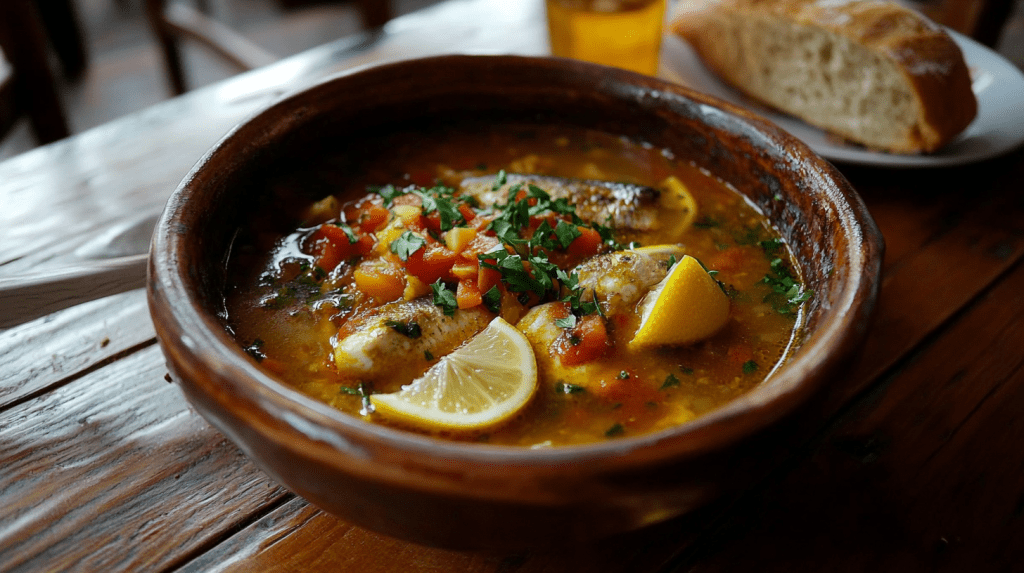
多瑙河魚湯
酒館老闆:(將一鍋熱氣騰騰的魚湯端上桌)你們是旅行者吧?來到 布勒伊拉(Brăila),一定要試試我們的魚湯,這可是我們世代相傳的傳統美食!
Emma:(嗅了嗅香氣)哇,這湯的香料味好濃郁,裡面放了什麼?
酒館老闆:(笑著)我們用本地的多瑙河淡水魚,加上辣椒、番茄、檸檬,還有我們特有的香草調味。這和羅馬尼亞其他地區的魚湯味道可不一樣。
Julia:(喝了一口)這味道好豐富,比我想像中還要有層次感!
Emma:(邊吃邊問)那這裡的捕魚業還像以前那麼興盛嗎?
酒館老闆:(嘆了口氣)已經不比從前了。河裡的魚越來越少,年輕人也不願意繼續當漁夫,大多都搬到城市裡找其他工作了。
(她們邊吃邊聊,討論著多瑙河沿岸生活的變遷,隨後啟程前往 加拉茨(Galați)。)
Galați – Romania’s Industrial Port and Its Global Connections
(Emma and Julia arrive in Galați, standing near the city’s sprawling Danube port. Cranes loom over the industrial docks, and workers are busy loading cargo onto ships.)
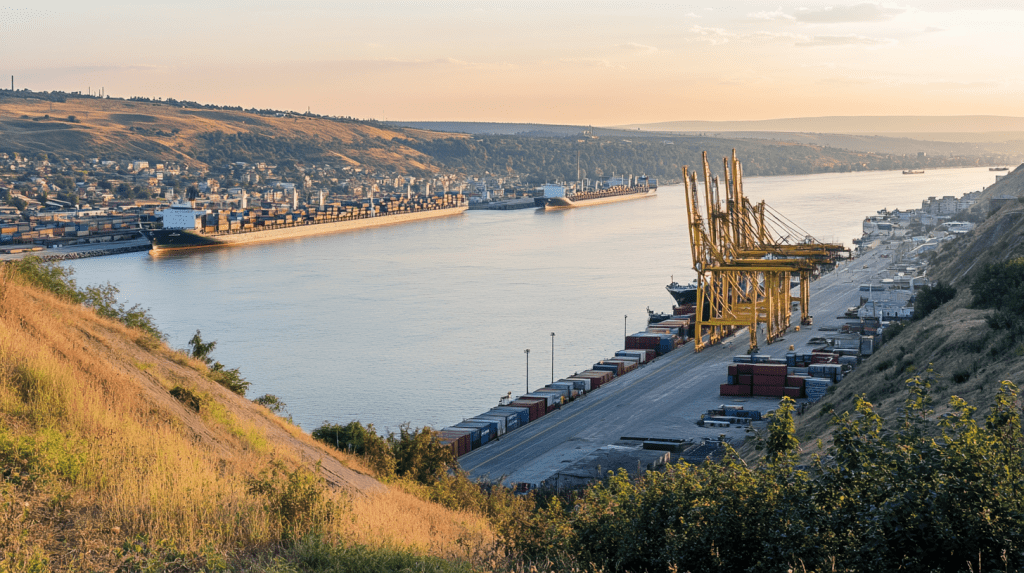
Emma: (Looking at the shipyard in the distance) This place still looks active, but I’m guessing it’s not as big as it used to be?
Julia: That’s right. During the communist era, Galați was Romania’s pride—one of the largest shipbuilding centers in Eastern Europe. They built massive cargo ships for the Soviet Union and other Eastern Bloc countries. But after the Cold War ended, the demand for shipbuilding dropped, and the industry struggled.
Emma: What do they build here now?
Julia: Mostly smaller commercial ships and river transport vessels. It’s nothing like the grand ocean liners they used to make.
(They walk closer to the docks, where an elderly shipyard worker is repairing a vessel. He waves at them.)
The Changing Face of the Shipbuilding Industry
(Emma and Julia approach the elderly worker, who is taking a break from his repairs.)
Shipyard Worker: (Smiling) Are you interested in ships?
Emma: (Laughs) We’re more interested in this city’s history. It must have been much busier here in the past?
Shipyard Worker: (Nods) Oh, absolutely. Thirty years ago, thousands of people worked here. Now… less than half that number.
Julia: Where did the workers go?
Shipyard Worker: (Shrugs) Many left for Germany or the Netherlands—better pay, better conditions. Those who stayed had to adapt to the smaller industry.
Emma: (Thoughtful) That sounds a lot like what we heard in Romania’s rural areas. Young people are moving away, leaving mostly the older generation behind.
Julia: (Nods) The Danube used to be a major artery of European trade and industry. Now, these old port cities are trying to find a new role.
(As the sun sets, Emma and Julia stand by the riverside, watching the Danube’s waters shimmer under the evening light, reflecting on how history and economics have shaped the cities along its banks.)
加拉茨—羅馬尼亞的工業港與國際聯繫

造船廠的變遷
(Emma 和 Julia 來到加拉茨的多瑙河港口,這裡曾經是羅馬尼亞最大的造船中心之一。)
Emma:(看著遠處的造船廠)這裡看起來還是很繁忙,但好像比不上當年的規模?
Julia:對,這裡在共產時代是羅馬尼亞工業的驕傲,當時為蘇聯與東歐各國生產貨輪,但冷戰結束後,很多造船廠因為缺乏訂單而衰退。
Emma:現在這裡主要造什麼船?
Julia:現在主要造一些小型商船和內河貨運船,跟當年的大型遠洋貨輪已經不可同日而語了。
(她們走近碼頭,一名正在修理船隻的老船員與她們打招呼。)
老船員:(笑)你們對造船有興趣嗎?
Emma:(笑)我們對這座城市的歷史感興趣,這裡曾經很輝煌吧?
老船員:(點頭)當然,我 30 年前剛開始工作的時候,這裡有上萬名工人,現在……不到一半。
Julia:年輕人都去哪了?
老船員:(聳肩)去西歐了,在德國、荷蘭的船廠賺更多錢。這裡的工資比不上外國,很多人學了技術就走了。
Emma:(沉思)這和羅馬尼亞的農村很像,年輕人都往外跑,留下來的多是老人和孩子。
Julia:(點頭)多瑙河曾經是歐洲的生命線,現在這些港口城市正在適應新的時代。
(夕陽下,Emma 和 Julia 站在碼頭邊,看著多瑙河的流水,思索著這條河如何連接起歷史與現代。)
Fish of the Danube – From Wild Catches to Aquaculture and Cuisine
(Emma and Julia are seated in a traditional riverside restaurant in Galați, overlooking the Danube. The water glistens under the afternoon sun, and a few fishing boats are moored nearby. A waiter brings out a steaming bowl of ciorbă de pește (Danube fish soup) and a plate of grilled carp with mămăligă (cornmeal porridge).)
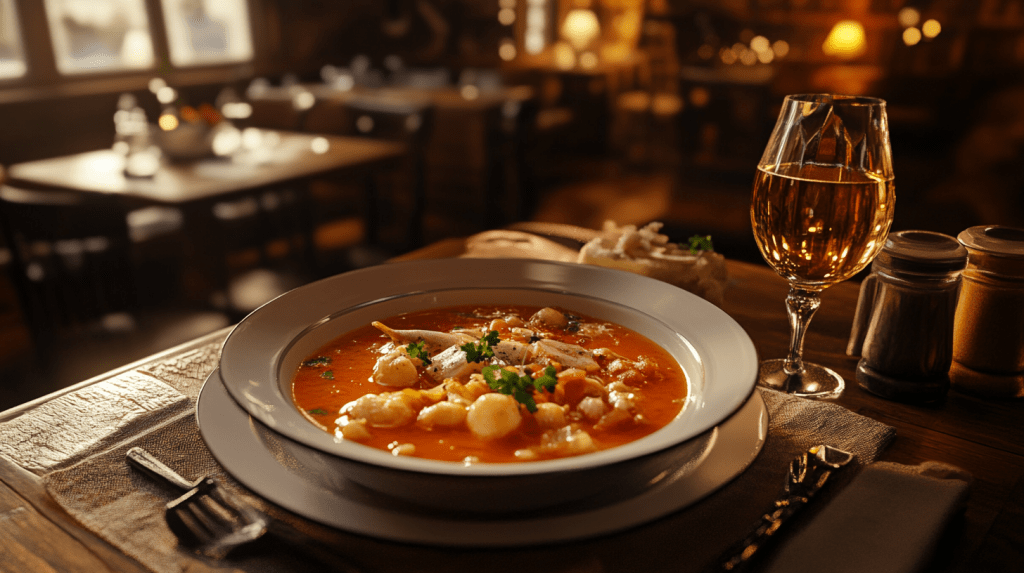
Emma: (Taking in the aroma) This smells rich—more intense than the stews we had in the mountains.
Julia: (Nods) That’s because Danube-style fish soup is made with a lot of paprika, tomatoes, and local herbs. It’s bolder in flavor compared to inland dishes.
Emma: (Scooping up a piece of fish) What kind of fish is this? It doesn’t taste like sea bass or trout.
Julia: (Looking at the waiter) What fish do you use in this dish?
Waiter: (Smiling) This is carp and zander, two of the most common fish in the Danube.
Emma: (Raising an eyebrow) Carp? I thought that was more common in Asia.
Julia: (Laughs) Not at all—the European carp is actually native to the Danube and has been a staple food here for centuries.

European carp (歐洲鯉魚)
Emma: (Taking another bite) But I’ve heard that in some places, carp isn’t considered a high-quality fish since it lives in muddy waters. Wouldn’t that mean there’s a risk of pollution?
Julia: (Thinking) Well, it depends on where the fish is from. Some are wild-caught, while others come from fish farms.
Waiter: (Adds) These days, we also have fish farms in the area, because wild fish are becoming scarce, and pollution has made fishing more complicated.
多瑙河的漁業——從野生捕撈到養殖與料理
(Emma 和 Julia 坐在加拉茨一家傳統的臨河餐廳,窗外就是波光粼粼的多瑙河,幾艘漁船停靠在碼頭邊。侍者端上一碗 ciorbă de pește(多瑙河燉魚湯) 和一盤烤鯉魚搭配 mămăligă(玉米糊)。)

Emma:(深吸了一口氣)這味道很濃郁,比我們在山區吃到的燉湯還要強烈。
Julia:(點頭)因為多瑙河魚湯通常會用大量的 紅椒粉、番茄和當地香草,風味比內陸的料理更濃烈。
Emma:(舀起一塊魚肉)這是什麼魚?吃起來不像海鱸或鱒魚。
Julia:(看向侍者)請問這道菜裡用的是什麼魚?
侍者:(微笑)這是鯉魚和梭鱸,都是多瑙河裡最常見的魚種。

European carp (歐洲梭鱸)
Emma:(挑眉)鯉魚?我以為這種魚主要是亞洲比較流行?
Julia:(笑)其實不然,歐洲鯉魚原產於多瑙河流域,這裡的人幾個世紀以來都在吃它。
Emma:(再咬一口)但我聽說有些地方不太喜歡吃鯉魚,因為它們生活在泥濘的水域,這樣會不會有污染風險?
Julia:(思考了一下)嗯,這要看魚的來源。有些是野生捕撈,有些則來自 魚類養殖場。
侍者:(補充)現在我們這裡也有魚類養殖場,因為野生魚類變少了,污染問題也讓捕撈變得更具挑戰性。
Wild vs. Farmed Fish – The Changing Fisheries of the Danube
(Emma and Julia are seated at a small riverside restaurant in Brăila, enjoying a meal of ciorbă de pește, the famous Danube fish soup. The golden evening light reflects off the river as boats move slowly past the docks.)
Emma: (Tasting the soup) This is different from what I expected. It’s tangy, slightly spicy, and there’s something really comforting about it.
Julia: That’s the vinegar and local herbs they use. Every region along the Danube has its own way of preparing fish.
Emma: (Curious) Alright, enlighten me. How does fish along the Danube change as you move across different countries?
Julia: (Smiles) Let’s start with where we are—Romania. The most famous dish here is ciorbă de pește—Danube fish soup. It’s usually made with carp, catfish, or perch, cooked with tomatoes, onions, and vinegar. They serve it with mămăligă—Romanian cornmeal porridge, which balances out the sour and rich flavors.
Emma: Right, I can see why. The cornmeal is simple, but it absorbs the broth really well.
Julia: Now, if we cross into Hungary, you’ll get something similar but with more heat. Hungarians love halászlé—spicy fish soup, loaded with paprika. It’s a fisherman’s dish, traditionally cooked in a big pot over an open fire.
Emma: (Laughs) So Hungary adds paprika to everything, even their fish?
Julia: Pretty much. The richer the red color, the better. Now, moving downstream to Serbia, they prefer their fish grilled or fried rather than in soups. One of their favorite dishes is grilled catfish with ajvar—that roasted red pepper spread. Or, if they’re having something casual, they’ll deep-fry fish and serve it with cold beer.

Traditional Hungarian halászlé (fisherman’s soup)
Emma: Sounds like a great riverside meal. But what about when the Danube reaches Austria and Germany?
Julia: That’s when it becomes more of a Central European style. They tend to prepare zander fillets, either baked or pan-fried, and serve them with potato salad. Less spice, more subtle flavors.

freshly grilled catfish fillet served with ajvar
Emma: (Smiling) So even though it’s the same river, the way people cook its fish varies so much from country to country.
Julia: (Nods) Exactly. It’s not just about food—it’s about culture, history, and geography all coming together along the Danube.
Emma: (Raises her spoon) Well, then—let’s toast to the Danube and all the flavors it brings!
(They clink their spoons together and continue enjoying their meal, savoring the taste of the river’s history in every bite.)
(They continue eating, enjoying the blend of flavors that tell the story of the Danube’s journey across Europe.)
Emma: (Looking down at the fish in her soup) Hmm… so is the fish we’re eating really “clean"?
Julia: (Laughs) Are you getting worried about what you’re putting into your stomach?
Emma: (Nods) Well, the Danube runs through so many countries. The pollution levels must vary, right?
Julia: (Explains) Exactly. The biggest threats to Danube fish come from three main sources: industrial pollution, where heavy metals like mercury, lead, and cadmium accumulate in bottom-dwelling fish such as catfish; agricultural runoff, where pesticides and fertilizers wash into the river, affecting species like carp that thrive in shallower waters; and plastic pollution, as fish accidentally ingest microplastics, with traces already found in sturgeon and carp.
Emma: (Sighs) So bottom-feeding fish like catfish are probably more affected by pollution than predatory fish like zander?
Julia: (Nods) Exactly. That’s why some places now recommend eating farmed fish instead of wild fish—farmed fish are raised in cleaner, controlled environments.
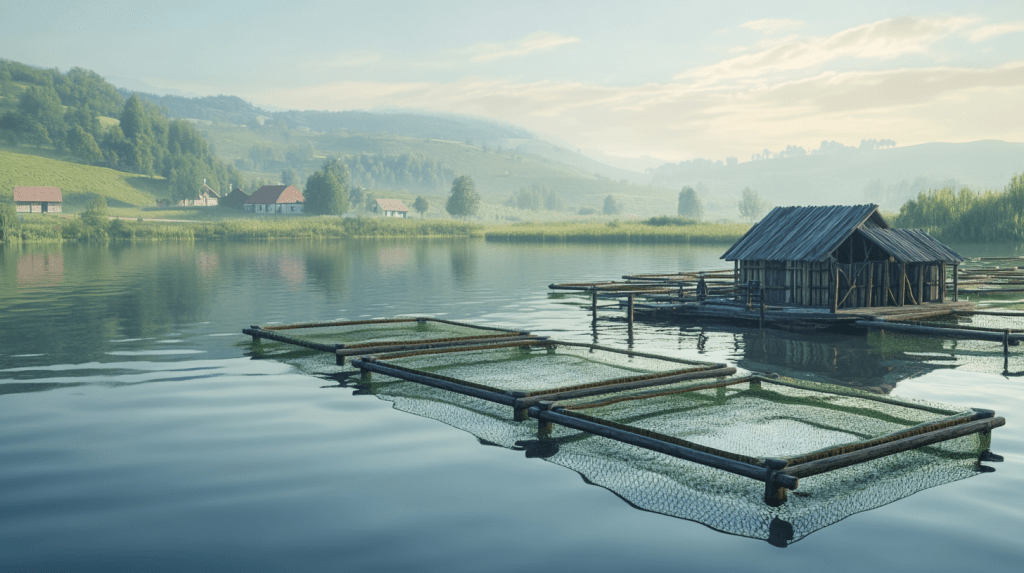
Fish Farm in Romania
Emma: (Looking at the waiter) Is the fish in our soup safe?
Waiter: (Smiles) Absolutely. We source our fish from regulated fisheries, and the water quality is monitored regularly.
Emma: (Relieved) Good, I was worried I’d end up with a “toxic fish" meal.
野生魚 vs. 養殖魚——多瑙河漁業的變遷
(Emma 和 Julia 坐在布勒伊拉的一家臨河小餐館,享用著著名的 ciorbă de pește(多瑙河燉魚湯)。金色的夕陽映照在河面上,碼頭邊的船隻緩緩晃動,空氣中瀰漫著濃郁的香氣。)
Emma:(嘗了一口湯)這和我想像的有點不一樣,帶點酸味,又帶點微辣,喝起來特別溫暖。
Julia:這是因為這道湯裡加了醋和當地香草。多瑙河沿岸每個地區都有自己獨特的魚料理方式。
Emma:(好奇地)好吧,來教教我,多瑙河沿岸的魚料理在不同國家是怎麼變化的?
Julia:(微笑)我們先從這裡——羅馬尼亞 開始吧!最有名的就是 ciorbă de pește(多瑙河燉魚湯),通常用鯉魚、鯰魚或河鱸來煮,搭配番茄、洋蔥和醋來提味,還會配上一份 mămăligă(玉米糊),酸中帶鮮,風味濃厚。
Emma:我懂了,玉米糊本身味道很淡,但可以吸收湯汁,剛好平衡口味。
Julia:那如果我們跨過邊界來到 匈牙利,你會發現一種更辛辣的版本,叫做 halászlé(辛辣漁夫湯)。這道湯加入了大量紅椒粉,所以湯的顏色會更紅,味道也更濃烈,通常是漁夫在戶外用大鍋煮的。
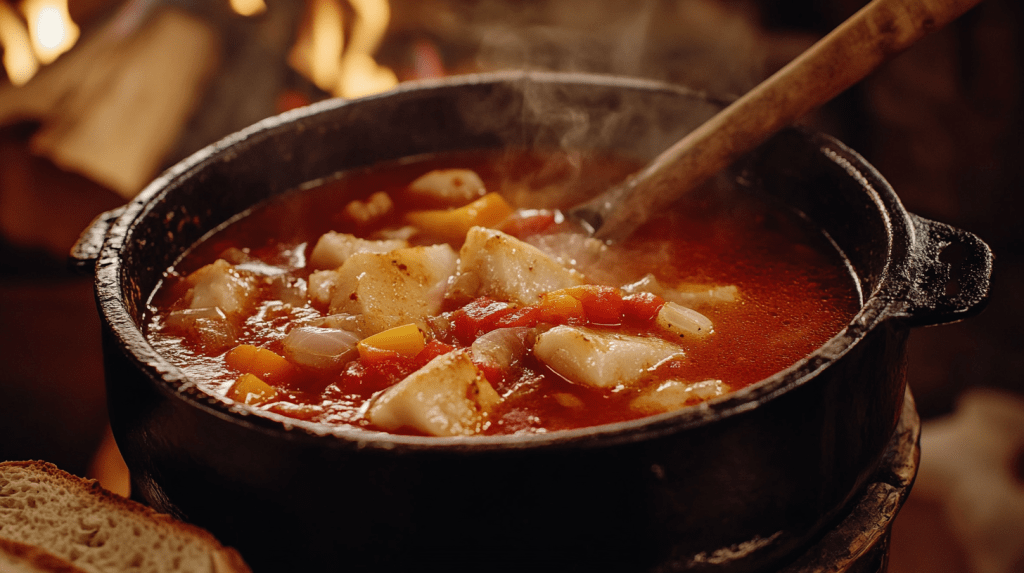
Halászlé(辛辣漁夫湯)
Emma:(笑)所以匈牙利人真的什麼都要加紅椒粉,連魚湯也不例外?
Julia:沒錯!他們覺得湯越紅越香。接下來我們順流而下來到 塞爾維亞 🇷🇸,這裡的人不像羅馬尼亞和匈牙利那樣愛喝魚湯,他們更喜歡烤魚或炸魚。其中一道經典料理是 烤鯰魚搭配 ajvar(烤紅椒醬),或者更簡單一點,就直接炸魚配冰涼啤酒。
Emma:聽起來很適合在河邊來上一盤!那當多瑙河流進奧地利和德國呢?
Julia:到了 奧地利 和德國,魚料理的風格就變得更中歐,他們通常不會做湯,而是烘烤或香煎梭鱸魚排,然後搭配馬鈴薯沙拉,整體味道比較淡雅,不像巴爾幹地區那麼重口味。

香煎梭鱸魚排配馬鈴薯沙拉
Emma:(微笑)雖然這條河流經不同國家,但每個地方的魚料理方式居然差異這麼大。
Julia:(點頭)沒錯,這不只是關於食物,而是歷史、文化與地理在多瑙河沿岸交織的結果。
Emma:(舉起湯匙)那麼,敬這條孕育無數風味的多瑙河!
(她們輕輕敲響湯匙,繼續品味這碗承載著歷史與文化的美味魚湯。)
污染與養殖——我們吃的魚真的安全嗎?
Emma:(看著碗裡的魚肉)嗯……我們吃的魚真的「乾淨」嗎?
Julia:(笑)你現在擔心自己吃進什麼了?
Emma:(點頭)畢竟多瑙河流經這麼多國家,污染狀況應該不太一樣吧?
Julia:(解釋)沒錯,多瑙河的魚類面臨三大污染問題:工業污染,像是汞、鉛和鎘等重金屬會沉積在河底,影響像鯰魚這類的底棲魚;農業污染,農藥和化肥經由雨水流入河流,特別影響生活在淺水區的魚種,比如鯉魚;還有塑膠污染,許多魚類誤食塑膠微粒,研究已經發現鱘魚和鯉魚體內含有塑膠殘留。
Emma:(嘆氣)所以像鯰魚這種吃河底沉積物的魚,受污染影響會更嚴重?
Julia:(點頭)沒錯,這就是為什麼有些地方現在建議改吃養殖魚,因為養殖魚的環境比較受控,相對來說更乾淨。
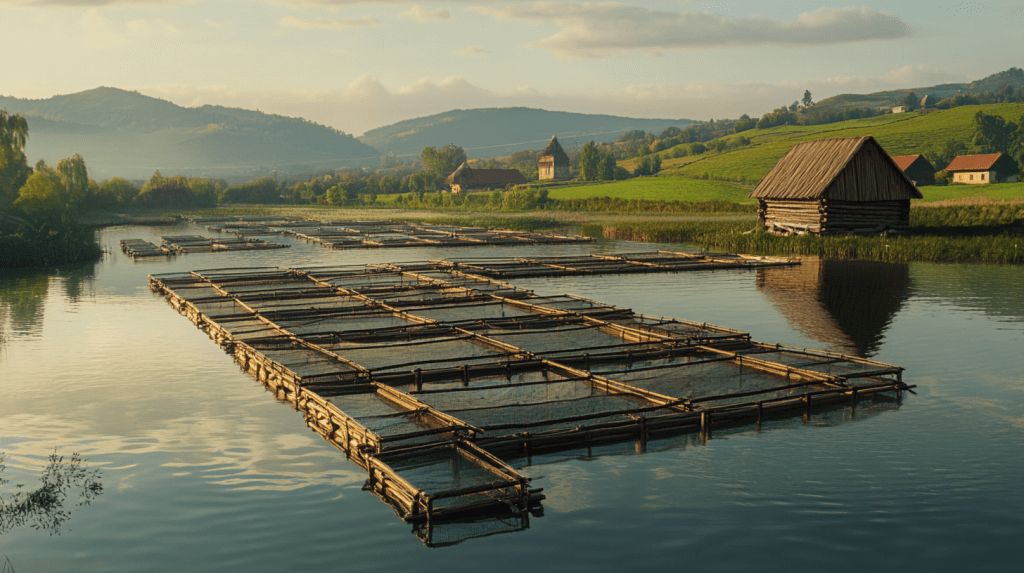
Emma:(轉向侍者)那我們這碗湯裡的魚是安全的嗎?
侍者:(微笑)當然!我們的魚來自經過監管的漁場,而且水質都有定期檢測。
Emma:(鬆了口氣)太好了,我剛剛還在擔心自己是不是吃了一頓「有毒魚餐」。
(Julia 和 Emma 相視一笑,從環境話題轉回對不同地區魚類料理的討論,繼續享受這道富有歷史與文化的多瑙河燉魚湯。)
Checking into a Riverside Hotel
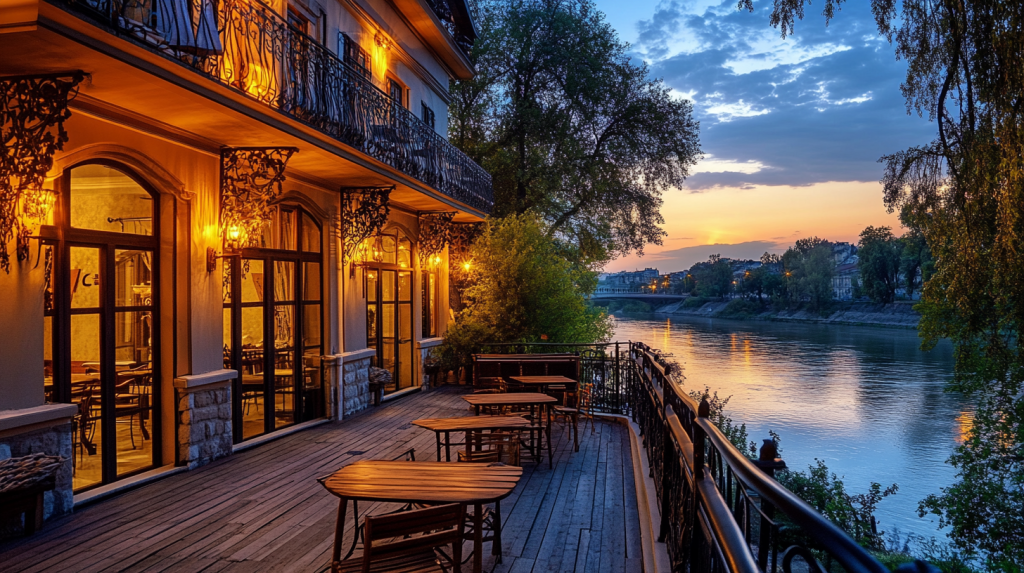
(Emma and Julia arrive at a cozy boutique hotel in Galați, overlooking the Danube River. The hotel is a renovated 19th-century building with large windows facing the water, its wooden floors creaking slightly as they step inside. The soft hum of river traffic can be heard through the open balcony doors, where the golden evening light reflects off the slow-moving water.)

Emma: (Setting down her bag) This place is perfect. I love how the river is right outside our window.
Julia: (Looking out at the Danube) It’s mesmerizing, isn’t it? Even at this hour, you can see barges moving in the distance.
Emma: (Grinning) You know, we’ve been following this river for days now. It feels like a character in our journey.
Julia: That’s a good way to put it. The Danube has shaped civilizations, economies, and cultures for centuries. But it’s always been a bit different from other great rivers, don’t you think?
Emma: (Sitting down by the window) You mean because it flows into the Black Sea instead of a major ocean like the Atlantic?
Julia: Exactly. Compare it to the Rhine, which flows into the North Sea, or the Thames, which connects London directly to the Atlantic. Those rivers became major arteries of global trade. The Danube, on the other hand, ends in a semi-enclosed sea.

https://cen.acs.org/environment/climate-change/happens-water-rivers-lakes-reaches/100/i38
Emma: So, you think the Black Sea limits its economic potential?
Julia: To some extent, yes. Historically, the Danube was vital for Central and Eastern Europe, but once goods reached the Black Sea, they still had to go through the Bosporus Strait to get to the Mediterranean. That made trade routes longer and more politically complicated, especially when the Ottoman Empire controlled access.
Emma: (Nodding) So that’s why ports like Galați and Brăila never became as globally dominant as, say, Rotterdam or Hamburg?
Julia: Exactly. They were important regional hubs, but the natural geography of the river limited their ability to become major global trade centers.
(Emma and Julia step onto the balcony, watching the river traffic below.)

入住河畔旅館
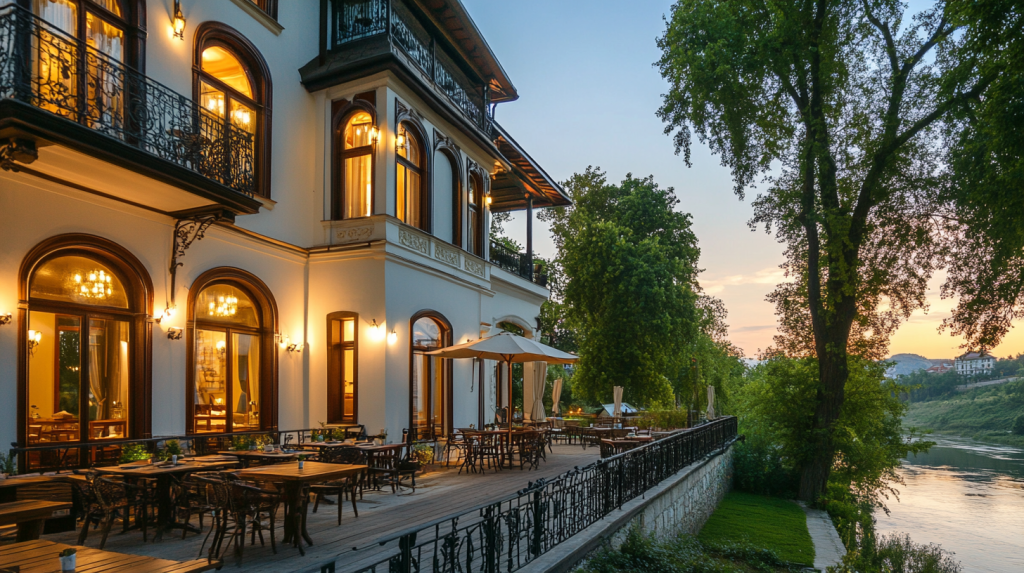
(Emma 和 Julia 抵達加拉茨的一家精品河畔旅館,這座旅館是一棟修復後的 19 世紀建築,擁有面向多瑙河的大窗戶,木質地板在她們踏入時發出輕微的吱嘎聲。陽台的門半掩著,從外頭傳來微微的河水流動聲與遠方駛過的貨船低鳴,在金黃色的傍晚光線中,河面閃耀著柔和的光澤。)

Emma:(放下行李)這裡太棒了!我喜歡這種感覺,窗外就是多瑙河,彷彿能直接感受到它的流動。
Julia:(望向窗外)這條河真的有種迷人的魅力,就算現在已經是晚上,還是能看到遠方的貨船在移動。
Emma:(笑著)你有沒有發現,這幾天我們一路跟著這條河走,它已經像我們旅程中的一個角色了?
Julia:很貼切的比喻。多瑙河塑造了這一帶的文明、經濟與文化,但與其他重要河流相比,它一直有點不太一樣,不是嗎?
Emma:(坐到窗邊)你是說,它的終點並不是大西洋,而是流入黑海?
Julia:正是如此。拿萊茵河來說,它流入北海,或者像泰晤士河,它直接將倫敦連接到大西洋,這些河流成為全球貿易的大動脈。但多瑙河的終點是一個半封閉的海域,黑海雖然重要,卻不像大西洋那樣能輕易連結全球市場。
Emma:所以你覺得黑海的地理位置限制了多瑙河的經濟潛力?
Julia:某種程度上,是的。歷史上,多瑙河對中歐和東歐極為重要,但貨物運到黑海後,還得經過博斯普魯斯海峽才能進入地中海,這讓貿易路線變得更長,且受到不同政權的控制,特別是在奧斯曼帝國時期,他們掌握了進出地中海的關鍵。
Emma:(點頭)這就是為什麼加拉茨和布勒伊拉這些港口無法像鹿特丹或漢堡那樣成為全球級的貿易中心?
Julia:沒錯。它們在區域內曾經很繁榮,但受限於河流的自然地理條件,它們的影響力無法擴展到更大的國際市場。
(Emma 和 Julia 走到陽台,俯瞰著靜靜流淌的多瑙河,看著遠方航行的貨船,在這條歷史悠久的河流上緩緩前進。)
The Danube’s Role in Modern Trade
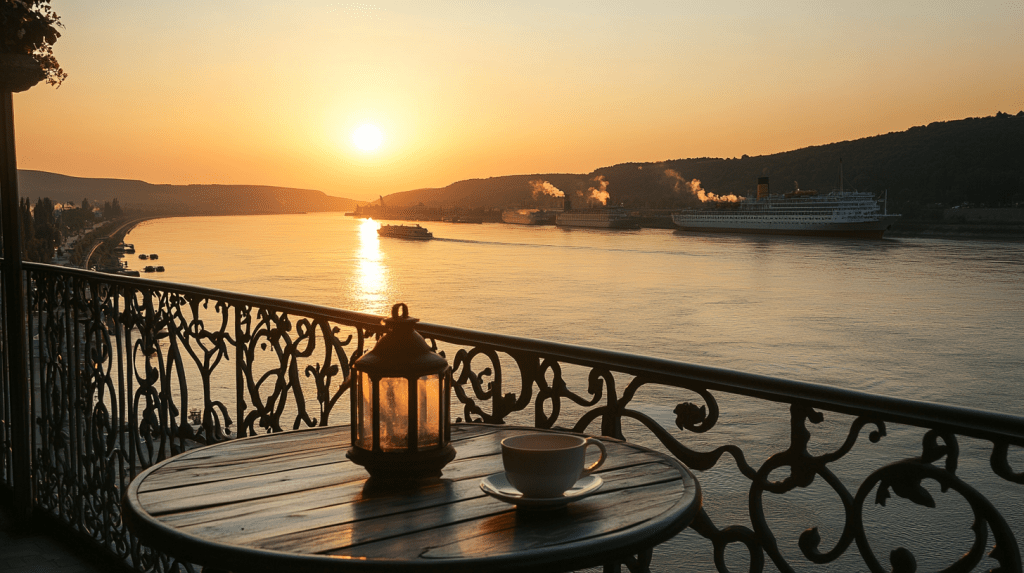
(As night falls, the lights from docked ships shimmer on the water. A large cargo barge slowly makes its way downstream, its deck loaded with metal containers.)
Emma: So, how does the Danube fit into modern trade? Is it still as important as it was centuries ago?
Julia: It’s still a crucial transport route, especially for bulk goods like grain, oil, and steel. But container shipping has mostly moved to the sea, which is why ports like Constanța on the Black Sea are more significant today than inland ports.
Emma: (Watching the barge pass) That makes sense. But I guess for the countries along its banks, the Danube is still a lifeline?
Julia: Definitely. Countries like Austria, Hungary, Serbia, and Romania still rely on it for trade. And it’s also important for tourism—think of the famous river cruises through Vienna, Budapest, and Belgrade.
Emma: And then there’s the environmental side. A lot of conservation efforts are focused on keeping the river healthy, right?
Julia: (Nods) Yes, and that’s a challenge. Parts of the Danube have suffered from industrial pollution, and its wetlands are under threat. The river is still home to sturgeon, one of the world’s oldest fish species, but overfishing has pushed them to the brink of extinction.
Emma: Sturgeon? Like the ones that produce caviar?
Julia: Yes, exactly. The Danube once had one of the richest sturgeon populations in Europe, but now they’re heavily protected.

Blinis with Crème Fraîche and Sturgeon Caviar
(A waiter arrives with their dinner, placing plates of grilled fish, fresh bread, and a glass of local white wine in front of them.)
多瑙河在現代貿易中的角色
(夜幕降臨,停泊在碼頭的船隻燈光在水面上閃爍。一艘載滿金屬貨櫃的大型貨運駁船正緩緩順流而下。)
Emma:那麼,在現代貿易中,多瑙河的地位如何?它現在還像幾百年前一樣重要嗎?
Julia:它仍然是一條關鍵的運輸通道,特別適合運送穀物、石油和鋼鐵等大宗貨物。但現代的貨櫃運輸主要依賴海運,這就是為什麼像黑海沿岸的康斯坦察港(Constanța)比內陸港口更重要。
Emma:(看著駁船駛過)這樣說也有道理。但對於沿岸國家來說,多瑙河應該還是重要的經濟命脈吧?
Julia:當然,像奧地利、匈牙利、塞爾維亞和羅馬尼亞這些國家依然依賴它進行區域貿易。此外,多瑙河對旅遊業也很重要,例如那些穿越維也納、布達佩斯和貝爾格勒的遊輪,吸引了無數遊客。
Emma:還有環境問題。現在應該有不少生態保護計畫,試圖維護這條河流的健康狀態吧?
Julia:(點頭)沒錯,但這是一個艱鉅的挑戰。多瑙河的一些地區曾經受到工業污染的嚴重影響,濕地生態系統也正面臨威脅。此外,多瑙河還是鱘魚(sturgeon)的棲息地——這種魚是世界上最古老的物種之一,但過度捕撈讓它瀕臨滅絕。
Emma:鱘魚?就是那種能生產魚子醬的魚嗎?
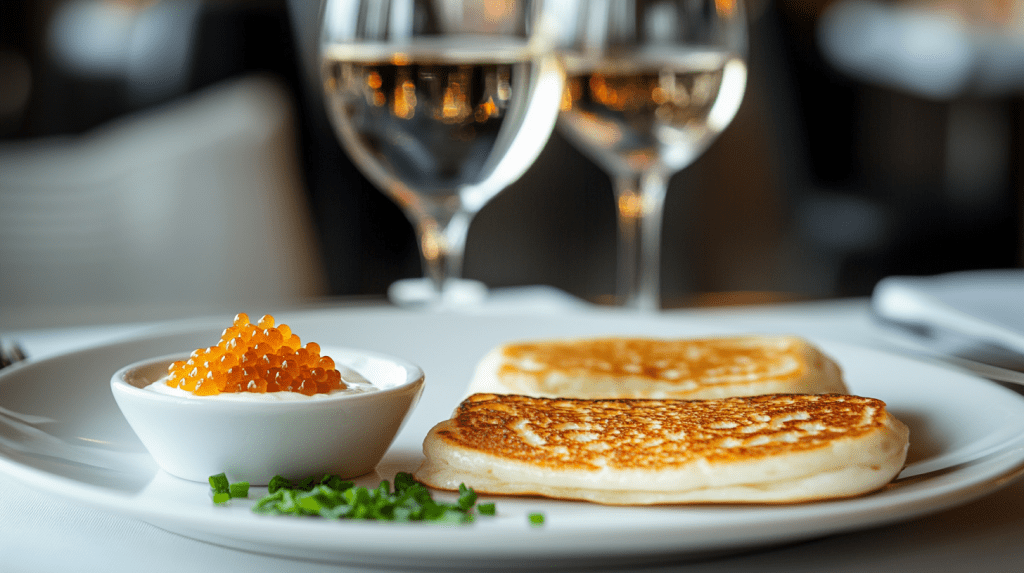
小薄餅(Blinis)搭配法式酸奶油(crème fraîche)與鱘魚魚子醬
Julia:沒錯。多瑙河曾經擁有歐洲最豐富的鱘魚資源,但如今已經受到嚴格保護,野生鱘魚幾乎消失了。
(此時,服務生端上她們的晚餐,擺上了烤魚、剛出爐的麵包,以及兩杯當地的白葡萄酒。)
Dinner by the River – Discussing Danube Cuisine
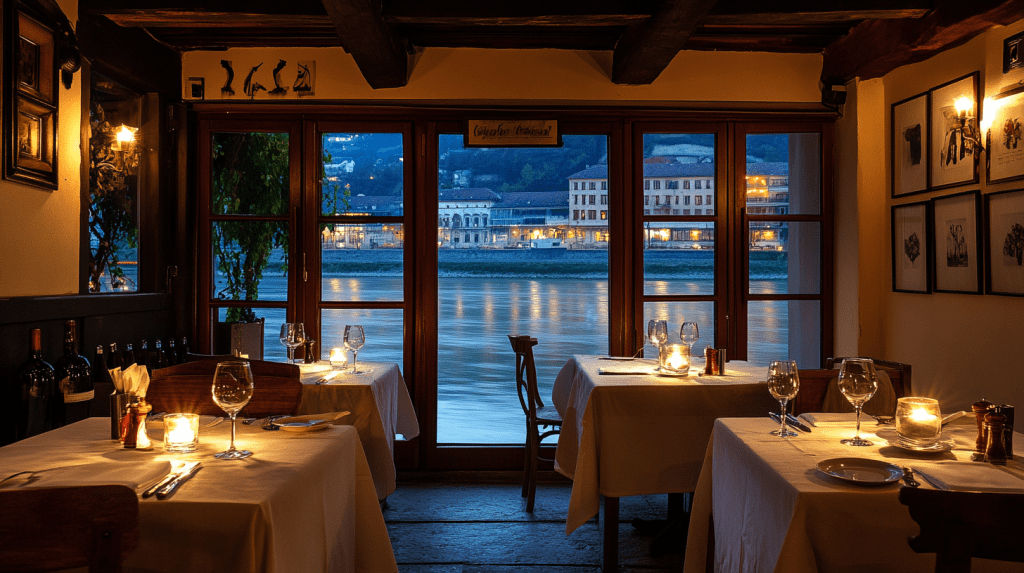
Waiter: (Smiling) Welcome! Tonight’s special is grilled Danube catfish, served with a side of polenta and garlic sauce.
Emma: That sounds perfect. (Turning to Julia) I love how every place we visit has its own take on river fish.
Julia: That’s true. Remember the spicy fish soup in Brăila?
Emma: (Laughing) How could I forget? And now we’re having catfish. What other types of fish are common here?
Julia: Besides catfish, there’s carp, pike, and perch. Some people still catch sturgeon illegally, but it’s heavily regulated now.
Emma: And what about fish farming? I imagine wild fish populations are struggling.
Julia: Absolutely. Aquaculture is becoming more common. In Romania and Serbia, there are big fish farms that raise carp and trout. But people say farmed fish don’t taste the same as wild ones.
Emma: (Tasting a bite) This catfish is delicious. I can’t tell if it’s farmed or wild, though.
Julia: (Smiling) Maybe you just need more experience eating fish.
(They both laugh, enjoying their meal as the sound of the river drifts through the open balcony doors.)
The Danube’s Future – Challenges and Possibilities
(After dinner, they stay on the balcony, sipping their wine and watching the boats.)
Emma: So, if the Danube has all these challenges—economic limitations, pollution, overfishing—what do you think its future looks like?
Julia: It’s not all bad news. The EU has invested a lot in improving navigation, building better locks and dredging deeper channels to keep trade moving. There are also major conservation projects to protect wetlands and fish populations.
Emma: And tourism will probably keep growing, right?
Julia: Yes, river cruises are getting more popular, and cities like Vienna and Budapest are making their riverfronts more attractive. Even in Romania, there’s growing interest in ecotourism, especially around the Danube Delta.

Emma: (Smiling) I like that. The river is adapting, just like the people who live along it.
Julia: Exactly. The Danube has always been about change—different empires, different economies, and now, different environmental priorities.
(They sit in comfortable silence for a moment, listening to the quiet lapping of water against the docks. The river, as always, continues its journey toward the

晚餐時間——談論多瑙河的漁業與美食

侍者:(微笑)今天的特餐是 多瑙河鯰魚烤盤,搭配玉米糊與蒜蓉醬,這是我們當地的特色。
Emma:(聞了聞香氣)太棒了!這幾天我們一直在嘗試不同的魚料理。
Julia:(笑)還記得布勒伊拉的香辣魚湯嗎?
Emma:(笑)怎麼會忘!今天是烤鯰魚,我很好奇這裡的魚種跟其他地方有什麼不同?
Julia: 除了鯰魚,這裡還有鯉魚、梭子魚和鱸魚。這些是最常見的野生魚類,但現在因為過度捕撈,很多餐廳開始使用養殖魚。
Emma: 那養殖漁業是不是已經取代了傳統捕撈?
Julia: 基本上是的,特別是在羅馬尼亞和塞爾維亞,有很多專門養殖鯉魚和鱘魚的漁場。但有些人覺得養殖魚的味道不如野生的。
Emma:(嚐了一口)這鯰魚味道很棒,我根本吃不出來是養殖還是野生的。
Julia:(笑)也許你需要再多吃幾次才分辨得出來!
(她們一邊享受晚餐,一邊聆聽著窗外河水的流動聲。)
多瑙河的未來——挑戰與機遇
(晚餐後,她們來到陽台,望著夜色中的多瑙河,燈光閃爍,靜謐而深邃。)
Emma: 如果多瑙河的發展受到這麼多限制,你覺得它的未來會怎麼樣?
Julia: 其實不算太悲觀,歐盟已經投入資金改善航道,讓貿易更便利。另外,很多地方也開始重視環保,保護濕地和野生動物。
Emma: 旅遊業應該會越來越重要吧?
Julia: 沒錯,越來越多遊客來這裡搭郵輪,城市也開始重視河岸美化。而在羅馬尼亞,多瑙河三角洲已經成為最重要的生態旅遊區之一。
Emma:(微笑)這條河就像一個變革的象徵,適應時代,適應人類的需求。
(她們舉起酒杯,在夜色中敬這條承載著歷史與未來的河流。)

生態保護區
The Danube in War and History – A River of Conflict and Civilization
Emma and Julia sit on the balcony of their hotel in Galați, watching the Danube flow quietly at dusk. In the distance, a cargo ship slowly makes its way toward the Black Sea, its reflection shimmering on the water.
Emma: (Softly) This river is truly incredible. We’ve been following it for so long, yet it still feels like it holds endless stories beneath its surface.
Julia: (Nods) Absolutely. The Danube isn’t just one of Europe’s most important rivers—it has also been a battleground for centuries. It has served as both a natural barrier and a crucial route for invaders and empires.
The Danube’s Strategic Role – A Natural Border and a Battlefield
Emma: (Thinking) Geographically speaking, the Danube stretches across Europe, but historically, was it more of a defensive barrier or an invasion route?
Julia: (Smiles) Both. Take the Roman Empire, for example. The Danube was considered the empire’s northern frontier—the famous Limes border. Roman legions were stationed along the river to defend against invasions from Germanic tribes and the Dacians.
Emma: (Nods) So, Roman military camps were set up all along the river?
Julia: Exactly. Places like Viminacium in Serbia and Drobeta in Romania were key Roman outposts. They weren’t just military bases; they also became centers of trade and cultural exchange with local tribes.
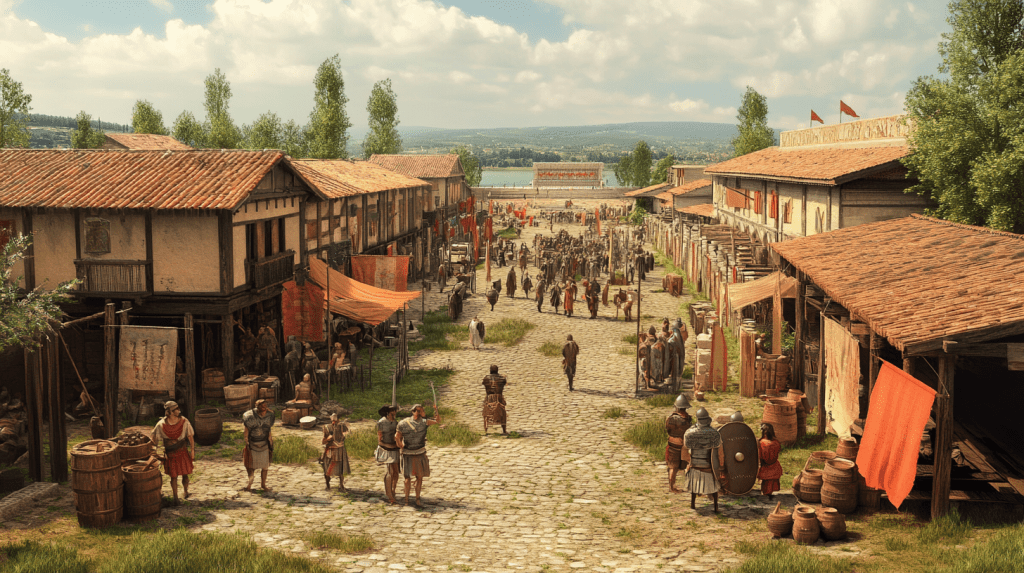
A historical depiction of Viminacium, an ancient Roman military camp (古羅馬軍事駐地與行省首府位於今日塞爾維亞境內)
Emma: (Thoughtful) But in the end, Rome couldn’t hold this border forever.
Julia: (Sighs) No, as the empire weakened, barbarian groups crossed the Danube, eventually contributing to Rome’s fall.
The Ottoman Empire vs. the Habsburgs – A Struggle for Control
Emma: (Suddenly remembering) Wait, didn’t the Ottomans and the Habsburgs also fight over this region?
Julia: (Laughs) Absolutely! From the 16th to the 18th century, the Danube was a major front in the war between the Ottoman Empire and the Habsburg monarchy of Austria. The Ottomans pushed northward into Central Europe, while the Austrians fought to stop their expansion.
Emma: (Frowning) So cities like Belgrade and Budapest must have been major battlegrounds?
Julia: Exactly. Belgrade changed hands multiple times between the Ottomans and the Habsburgs, and Vienna itself was under siege by the Ottomans in 1683. That battle—the Siege of Vienna—was a turning point in European history.
Emma: (Excited) The Siege of Vienna! That’s when Austria and its allies pushed the Ottomans back, marking the beginning of their decline, right?
Julia: (Nods) Yes, after that battle, Austria slowly reclaimed control over the Danube region. The Ottomans never managed to expand into Central Europe again.
Modern Wars and the Danube – The 20th Century
Emma: (Sipping her tea) This river wasn’t just a battlefield in ancient times—it must have played a role in modern wars too, right?
Julia: Of course, especially during the two World Wars. In World War II, Nazi Germany used the Danube to transport supplies and troops. Later, when the Soviet Red Army advanced westward in 1944, they followed the Danube into Hungary and Austria.
Emma: (Thinking) So Budapest and Belgrade saw major fighting?
Julia: (Nods) Yes, especially the Siege of Budapest in 1944-45. It was a brutal battle between Nazi Germany and the Soviet forces, and it left much of the city in ruins.
Emma: (Quietly) It’s strange to think that such a peaceful river today was once the site of so much bloodshed.
Julia: (Looking at the water) The Danube isn’t just a river—it’s a witness to history. It has connected countries, but it has also divided them in times of war.
(The two of them sit in silence, watching the river flow. The last light of the sunset bathes the water in a golden hue, casting long shadows over the docks.)
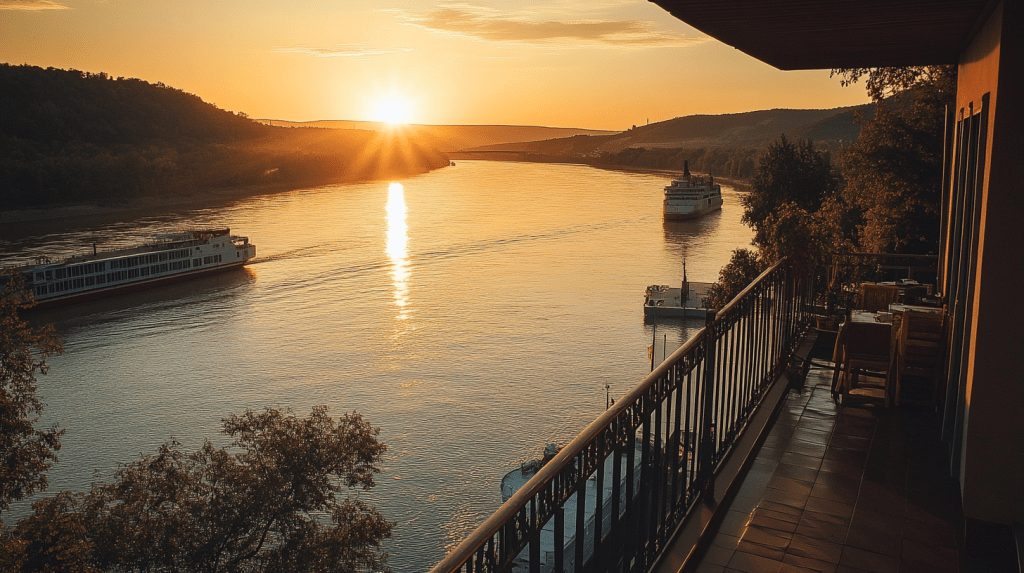
多瑙河的戰爭與歷史——一條承載衝突與文明的河流
(Emma 和 Julia 坐在加拉茨的旅館陽台上,看著黃昏時分靜靜流淌的多瑙河。遠處,一艘貨船緩緩駛向黑海,河面的倒影隨著水波輕輕晃動。)
Emma:(輕聲)這條河真是壯觀。我們已經沿著它走了這麼久,但仍然覺得有無數的故事隱藏在這水面之下。
Julia:(點頭)沒錯,多瑙河不僅是歐洲最重要的河流之一,也是歷史上許多戰爭的戰場。它既是天然的屏障,又是兵家必爭之地。
多瑙河的戰略地位——邊界與戰場
Emma:(思索)從地理上來看,多瑙河貫穿整個歐洲,那麼它在歷史上主要是作為防禦屏障,還是進攻的通道呢?
Julia:(微笑)兩者皆是。你看,從古羅馬時期開始,多瑙河就被視為羅馬帝國的邊界——也就是「萊姆斯邊界」(Limes)。帝國的北部邊境沿著這條河修築了許多軍事堡壘,防禦來自日耳曼部落和達契亞人的入侵。
Emma:(點頭)所以當時的羅馬軍隊會駐紮在河邊?
Julia:對,像是塞爾維亞的 Viminacium(古羅馬軍事駐地)和羅馬尼亞的 Drobeta 都是重要的前哨站。這些軍事基地不僅防禦北方的蠻族,也成為羅馬與當地民族貿易與文化交流的中心。
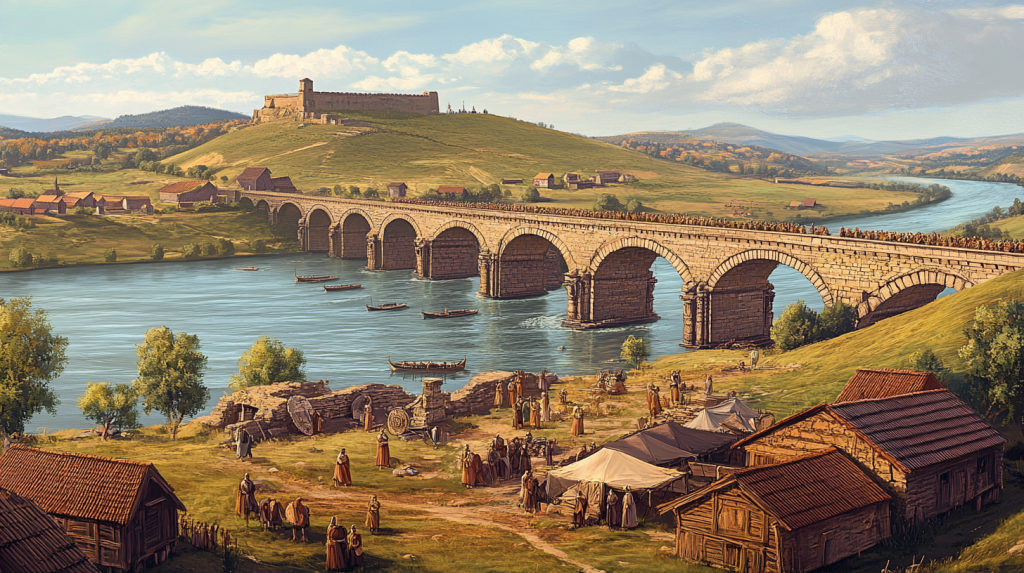
A historical illustration of Drobeta, Romania
Emma:(若有所思)但羅馬帝國終究沒能守住這條邊界。
Julia:(嘆氣)是的,隨著帝國的衰落,蠻族開始南下,跨越多瑙河,逐漸瓦解了羅馬的控制。
奧斯曼帝國 vs. 哈布斯堡王朝——多瑙河的爭奪戰
Emma:(想起什麼)等等,奧斯曼帝國和哈布斯堡王朝是不是也在這裡交戰過?
Julia:(笑)沒錯!16 世紀到 18 世紀,這條河成為奧斯曼帝國與哈布斯堡王朝(奧地利)的主要戰線。奧斯曼人北上入侵中歐,奧地利人則試圖阻止他們擴張。
Emma:(皺眉)所以,像貝爾格勒、布達佩斯這些城市,都是當時的戰場?
Julia:對,而且這場戰爭持續了數百年。貝爾格勒曾多次在奧斯曼與哈布斯堡之間易手,而維也納更是在 1683 年遭到奧斯曼大軍圍攻——那場「維也納之圍」是多瑙河戰爭史上的一大轉折點。
Emma:(興奮)維也納之圍!這場戰爭不是奧地利最終擊退了奧斯曼軍隊,還導致奧斯曼帝國勢力開始衰退嗎?
Julia:(點頭)沒錯,這場戰役結束後,奧地利逐步收復多瑙河流域的控制權。此後,奧斯曼勢力開始減弱,而奧地利和後來的普魯士則成為歐洲的主導力量之一。
近代戰爭與多瑙河——兩次世界大戰的影響
Emma:(喝了一口茶)這條河不只是古代戰場,在現代戰爭中也一定扮演了重要角色吧?
Julia:當然,特別是兩次世界大戰期間。多瑙河是德國與蘇聯之間的關鍵戰略路線,納粹德國佔領東歐時,利用這條河進行軍事運輸。而蘇聯紅軍在 1944 年反攻時,也沿著多瑙河推進,一路攻入匈牙利和奧地利。
Emma:(若有所思)所以當時的布達佩斯、貝爾格勒等城市都經歷了激烈戰鬥?
Julia:(點頭)特別是 布達佩斯之圍,這是一場極為慘烈的戰役,納粹德軍與蘇聯紅軍在這座城市激戰數個月,最終蘇聯攻克布達佩斯,這也加速了德國在東歐的潰敗。
Emma:(低聲)想想看,這條看起來平靜的河流,曾經見證了這麼多殘酷的戰爭……
Julia:(凝視著河面)是啊,多瑙河不僅是歐洲的文化與經濟動脈,也是歷史的見證者。它連接了許多國家,但也曾成為它們的戰場。
(她們靜靜地看著河水流動,夕陽的餘暉灑在水面上,將整條河流染上一層溫暖的金色。)


 Virtual Travel | 虛擬旅行沉浸式英語學習
發表留言