
Arrival in Juodkrantė: Dinner by the Quiet Lagoon
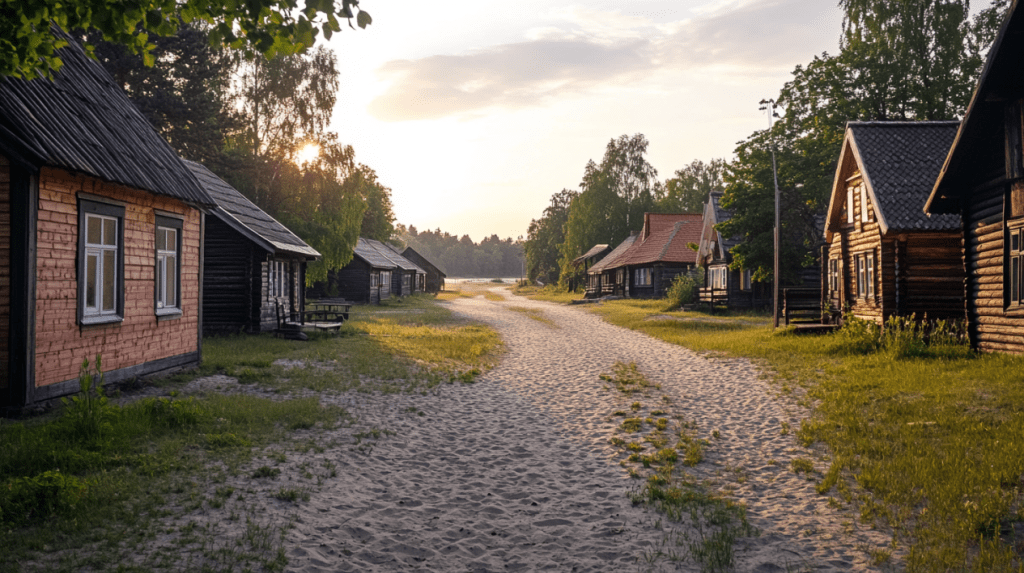
By the time they reached Juodkrantė, the light had already begun to soften into evening.
The village was quiet, the lagoon glowing faintly under the sinking sun.
Tomas pulled into a gravel parking area near a small restaurant. The simple wooden sign swung in the breeze: Lagoon Café.

Inside, it was cozy — a few wooden tables by large windows looking out onto the water. The air smelled of fresh bread and grilled fish.
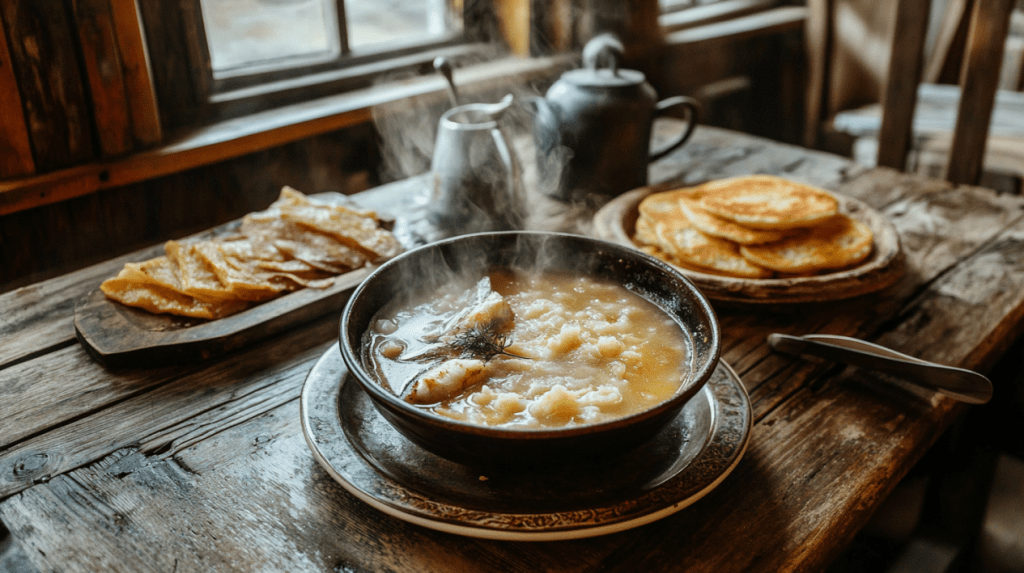
They chose a table by the window. The menu was simple: fish soup, potato pancakes, smoked fish platters.
Ben stretched and smiled. “Perfect timing. I’m starving."
They ordered — hearty dishes to fill them up before the evening walk: bowls of soup, potato pancakes, smoked perch, dark rye bread.
As they ate, the sky outside turned a deeper gold.
As they finished their meal, Tomas checked his phone. “I’ve booked us a guesthouse here in Juodkrantė. Just a few minutes’ walk from the lagoon."
Ben looked relieved. “Good. After the walk, I don’t think I want to drive anymore."
Emma smiled. “Perfect. It feels right to stay here — close to the trees and the water."
Julia nodded. “And we can start fresh tomorrow, heading further south."
Outside, the evening light was fading, the air cooling with the scent of pine and salt.
潟湖邊的晚餐時光
當他們抵達Juodkrantė時,天色已經開始染上柔和的傍晚色調。村莊靜靜地躺在潟湖邊,夕陽把水面映得微微發亮。
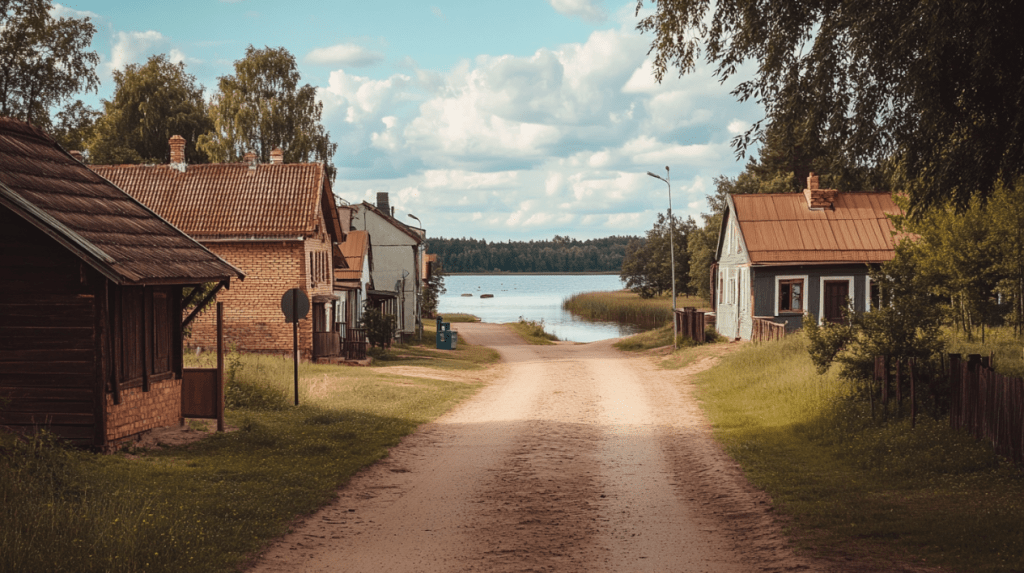
托馬斯將車子停進一個碎石鋪成的小停車場,旁邊是一間小餐館,木製的招牌在微風中輕輕搖晃:Lagoon Café。

餐館內部溫暖而簡單,幾張木桌靠著大窗戶,窗外是靜靜泛光的潟湖,空氣中飄著新鮮麵包和烤魚的香氣。
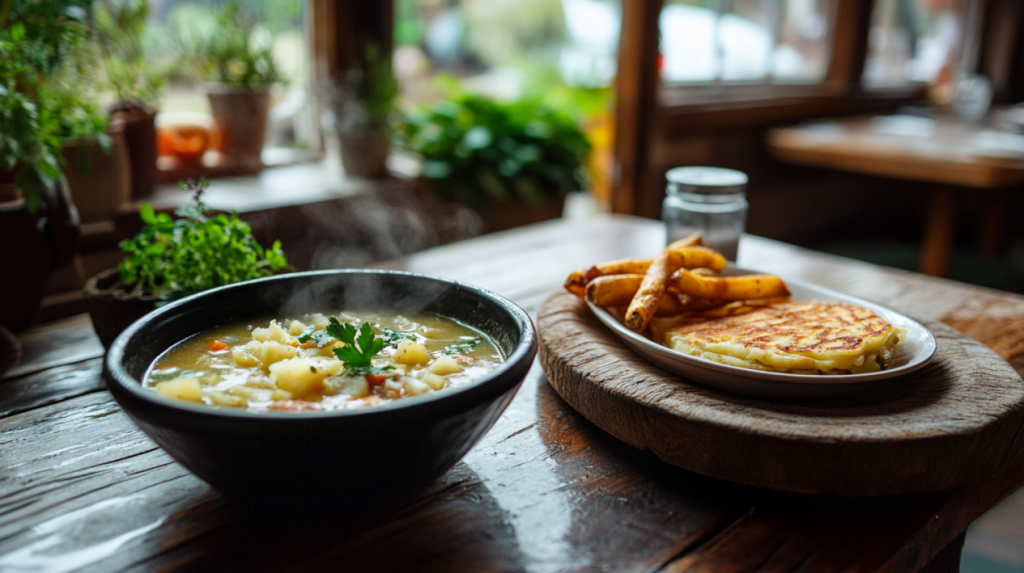
他們挑了靠窗的位置坐下。菜單簡單:
魚湯、馬鈴薯煎餅、煙燻魚拼盤。
Ben伸了個懶腰,笑著說:「時間剛剛好,我快餓死了。」
他們點了幾道紮實的菜,準備吃飽再去走步道——魚湯、馬鈴薯煎餅、煙燻鱸魚,還有一籃厚實的黑麥麵包。
吃飯的時候,窗外的天空漸漸轉為濃濃的金色。
吃完飯後,托馬斯看了一下手機。「我已經在Juodkrantė訂好今晚的民宿了,走路到潟湖邊只要幾分鐘。」
Ben鬆了一口氣。「太好了。走完一圈,我可不想再開車了。」
艾瑪笑著說:「很適合留在這裡,靠近樹林和水邊。」
茱莉亞也點點頭。「而且明天一早,我們可以精神飽滿地繼續往南走。」
外頭,晚霞慢慢褪去,空氣中瀰漫著松針與海鹽交織的清新味道。
Arrival at the Guesthouse: A Glimpse of Baltic Architecture
When they pulled into the small courtyard, everyone fell quiet for a second.
The guesthouse was not just another plain building. It was a charming old villa, with delicate wooden balconies painted pale blue, and tall windows catching the late afternoon light. A few pine trees framed the house, and the air smelled faintly of sun-warmed grass and wood.
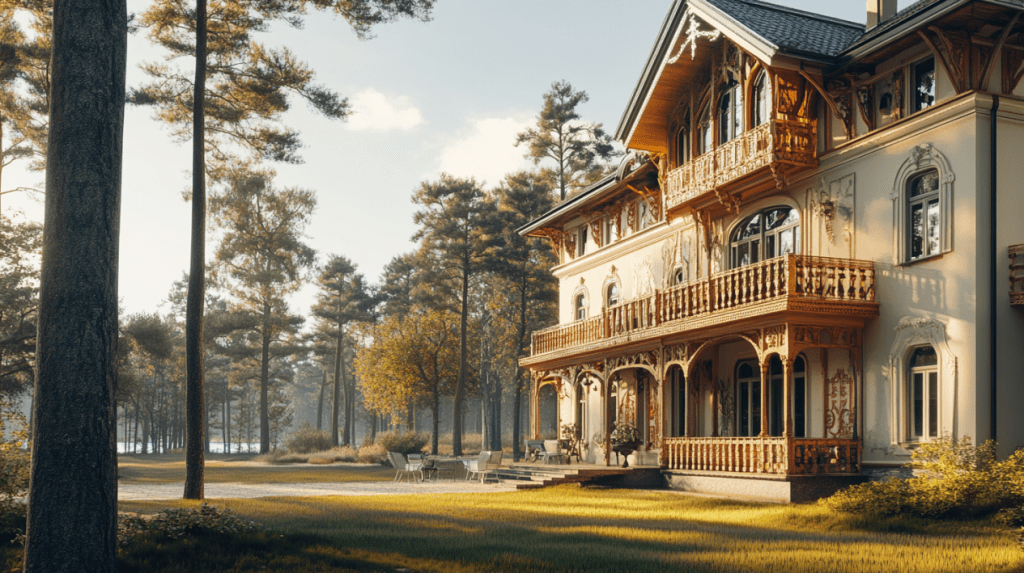
Julia whistled softly. “This is… much nicer than I expected."
Emma smiled, pulling her bag from the trunk. “It looks like something out of an old postcard."
Ben craned his neck to look up at the wooden carvings under the eaves.
“You can tell this place has history. Not just another tourist spot."
Tomas laughed. “I told you — Juodkrantė isn’t flashy, but it knows how to be beautiful."
They carried their bags toward the front steps, the wooden boards creaking slightly underfoot, the scent of the nearby lagoon drifting in with the cooling air.
Emma paused for a moment, looking up at the light-painted wood and delicate balconies.
“You can tell it’s Baltic," she said thoughtfully. “Light structures, open balconies, a kind of airiness. It feels different from the heavy stone villas you’d find further west — more connected to the landscape."
She ran a hand lightly along the weathered wood of the porch railing.
“It’s closer to nature, and you can still see traces of the old Prussian influence in the details."
Renata smiled, touching the carved woodwork. “This kind of design — the wide balconies, the pale colors — it’s very much Baltic style," she said.
“Especially here, close to the sea."
Ben glanced up at the wide-open balconies and raised an eyebrow.
“But wouldn’t that be a problem in winter? All the snow blowing in?"
Tomas chuckled. “These houses were mostly built as summer homes," he said. “In the old days, people came here for the fresh air and the sea.
Winter was never the main season. Most families would just close up the upper floors and move back inland."
Renata added, smiling, “Some places now put up glass panels or shutters for the winter. But back then, people just accepted it — a little snow on the balcony wasn’t the end of the world."
Ben laughed softly. “Definitely different from what I’m used to."
抵達民宿:一場波羅的海建築的短暫邂逅
車子開進小小的庭院時,眾人不約而同地安靜了片刻。
眼前的民宿,並不是一間普通的建築。那是一棟有著細緻雕花陽台的老別墅,刷成淡淡的藍色,高高的窗戶映著午後即將落下的金色陽光。幾棵松樹圍繞著房子,空氣裡飄著被陽光曬暖的草香與木頭味道。
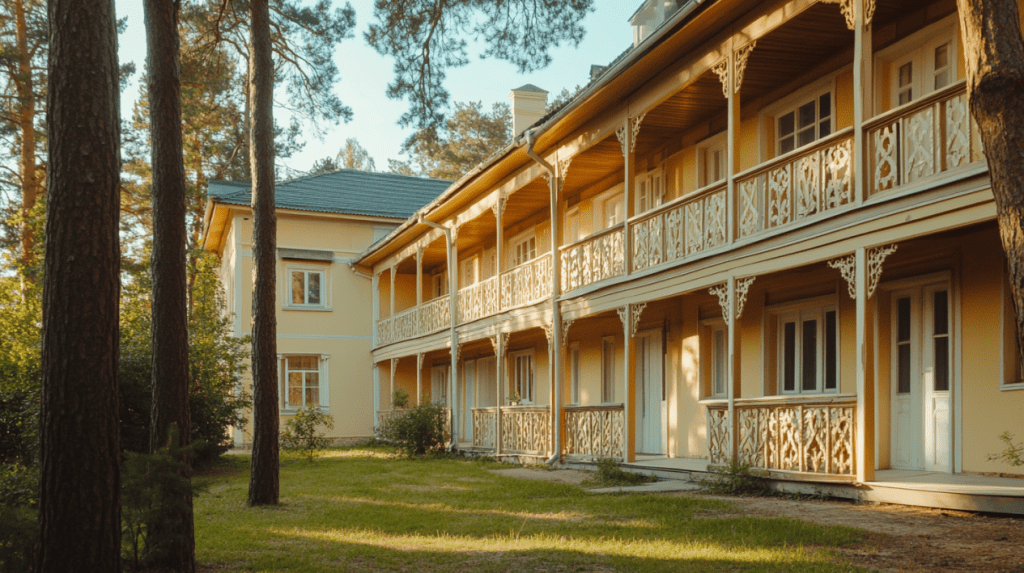
茱莉亞輕輕吹了聲口哨:「這比我想像的漂亮多了。」
艾瑪一邊從後車廂拉出行李,一邊笑著說:「像是老明信片裡的場景。」
班仰起頭,看著屋簷下的木雕細節,說道:「一看就知道這房子有歷史,不是為觀光客臨時蓋出來的那種地方。」
托馬斯笑了笑說:「我早就說過了,尤德克蘭特不浮誇,但它知道怎麼展現自己的美。」
他們提著行李往前走,木質的台階在腳下輕輕咯吱作響,空氣中也逐漸飄來潟湖邊那種微微涼爽、帶著水氣的味道。
艾瑪停下腳步,仰頭細細打量著刷上淺色漆的木屋與細緻的雕花陽台。
她若有所思地說:「一看就知道是波羅的海沿岸的建築。結構輕盈,陽台敞開,整個建築有種空氣感。跟西邊那些厚重的石造別墅很不一樣——這裡更貼近自然。」
她輕輕拂過門廊上微微風化的木欄杆。
「而且細節中還能隱約看見舊普魯士時期的影子。」
雷娜塔也微笑著摸了摸雕刻的木條,補充說道:「這種設計——寬大的陽台、淡雅的色彩——就是很典型的波羅的海沿岸風格。」「尤其是在這種靠海的小鎮裡。」
班抬頭望向敞開的陽台,忍不住問道:「可是這樣冬天不會很麻煩嗎?雪會不會直接吹進來?」
托馬斯笑了笑說:「這些房子原本是為了夏季度假而建的。早期的人們是為了呼吸新鮮空氣、靠近海邊才來的,冬天根本不是主要季節。大多數家庭會在秋天把上層封起來,搬回內陸去過冬。」
雷娜塔笑著補充:「現在有些地方會加裝玻璃或百葉窗來擋冬天的風雪,
但以前的人很隨性——陽台上積點雪,也沒什麼大不了的。」
班輕輕笑了笑。「跟我習慣的生活方式真的很不一樣啊。」
Settling In: A Cozy Loft by the Lagoon
The hostess led them through a side entrance into the guesthouse, up a narrow staircase, and into a room with a small living area and a loft.
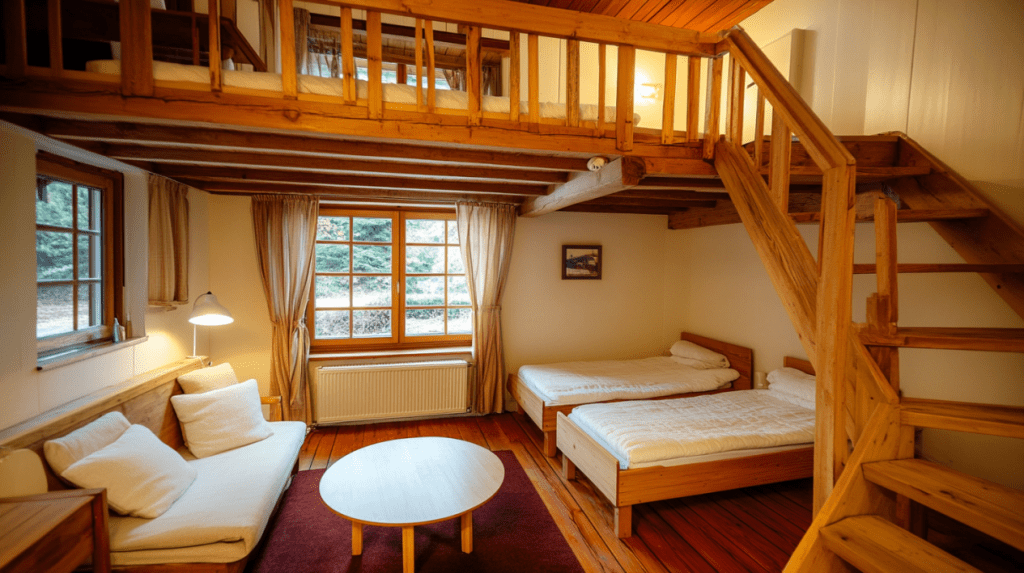
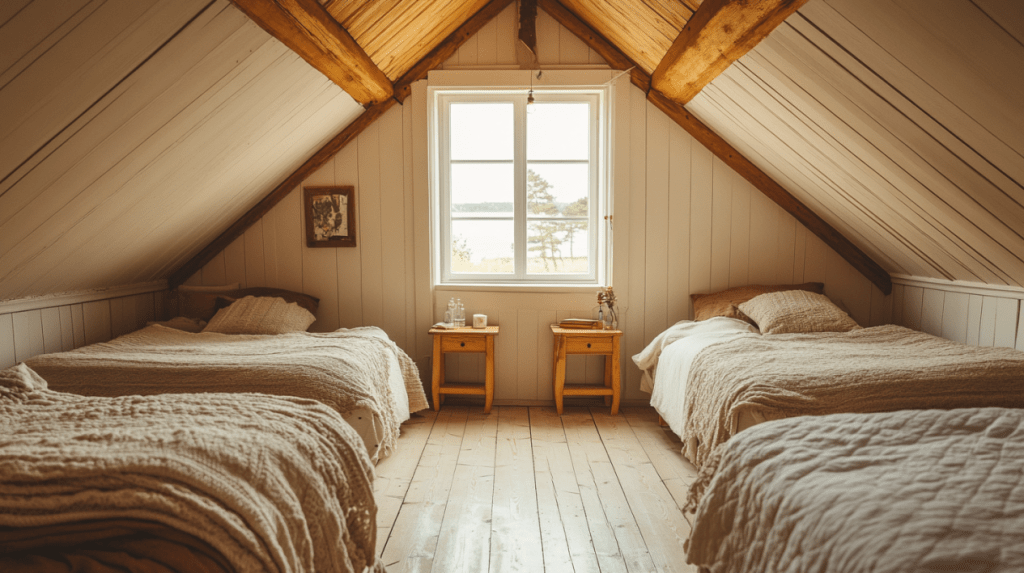
Each suite had the same layout — a living area downstairs with a couple of armchairs, a sofa, a small round table, and a narrow staircase leading up to a loft where three single beds were lined up under a slanted wooden ceiling.
The walls were painted white, the beams exposed, and everything smelled faintly of pine and old linen.
The girls’ room filled quickly with the sound of footsteps and zippers.
Julia tossed her jacket onto one of the armchairs and headed upstairs, her footsteps light on the wooden stairs.

Renata followed, running a hand along the banister, while Emma stayed downstairs for a moment, opening the window to let in the cool lagoon air.
Ben and Tomas dropped their backpacks on the floor of their own suite.
Ben flopped into the sofa with a sigh. “I could just fall asleep right here."
Tomas laughed as he set his camera bag down. “Save some energy. We’re still having a drink later."
The afternoon light was beginning to soften, slanting through the large windows and casting gentle shadows on the wooden floor. It was simple, and maybe a little worn, but it felt good.
They were off the road now, tucked into a quiet corner of the lagoon, and the evening was still theirs to enjoy.
安頓下來:潟湖邊的小閣樓
女主人帶著他們從一個側門進入民宿,穿過狹窄的樓梯,來到有客廳閣樓的房間。
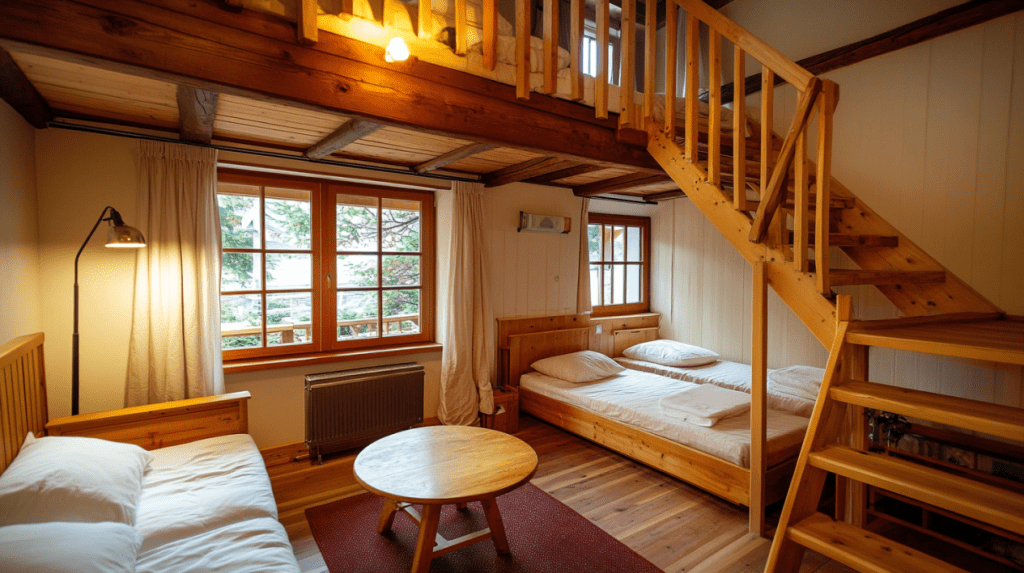
每一間套房的格局差不多——樓下有幾張扶手椅、一張沙發和一張小圓桌,還有一座窄窄的樓梯通往上方的閣樓,閣樓下斜的木質屋頂下,整齊擺著三張單人床。
牆面刷成白色,屋樑裸露著,空氣中飄著淡淡的松木與老亞麻布的味道。
女生們很快地忙碌起來。茱莉亞把外套往樓下的扶手椅上一丟,輕快地踩著木樓梯上樓。雷娜塔跟在後頭,手指沿著扶手滑過;艾瑪則暫時留在樓下,輕輕推開窗戶,讓潟湖邊涼爽的空氣流了進來。
班和托馬斯把背包往沙發旁一放。班一屁股倒進沙發裡,長長地呼了口氣。「我可以直接在這裡睡著了。」
托馬斯一邊整理著相機包,一邊笑說:「先留點體力,晚點還要喝點東西呢。」
夕陽的光線已經柔和下來,從大大的窗戶斜斜灑進來,在木地板上投下溫暖的影子。
簡單,有點舊,但感覺很好。他們已經離開了公路的奔波,安穩地落腳在潟湖邊的一個安靜角落。
而夜晚,還正慢慢展開。
Evening at the Guesthouse: Beer & Snacks
After settling in, they decided they needed something more. There was a small shop not far from the guesthouse, and Tomas and Ben volunteered to walk there.
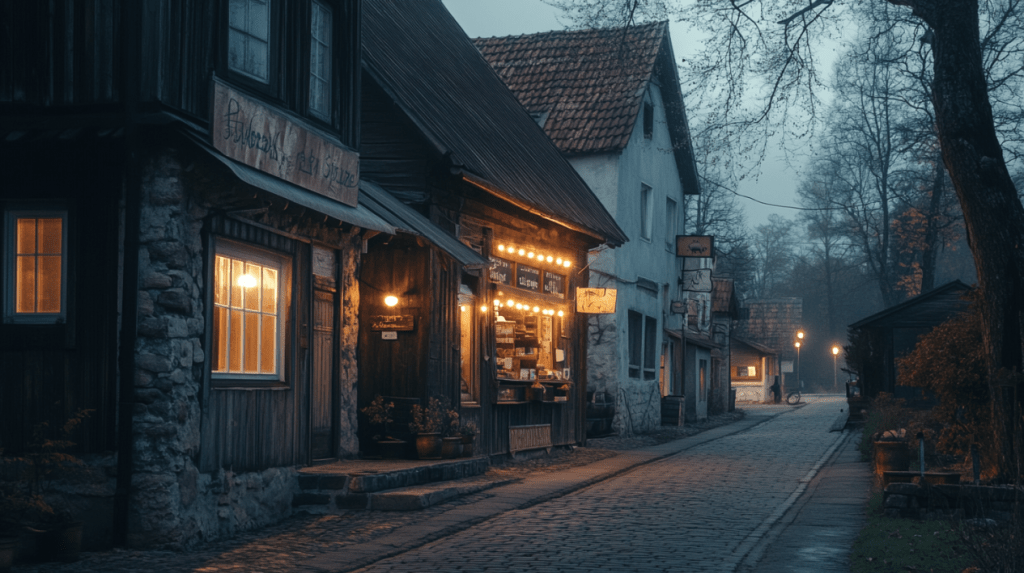
Fifteen minutes later, they came back with a plastic bag clinking with local beers and a few packages of smoked cheese, rye crackers, and pickled cucumbers.
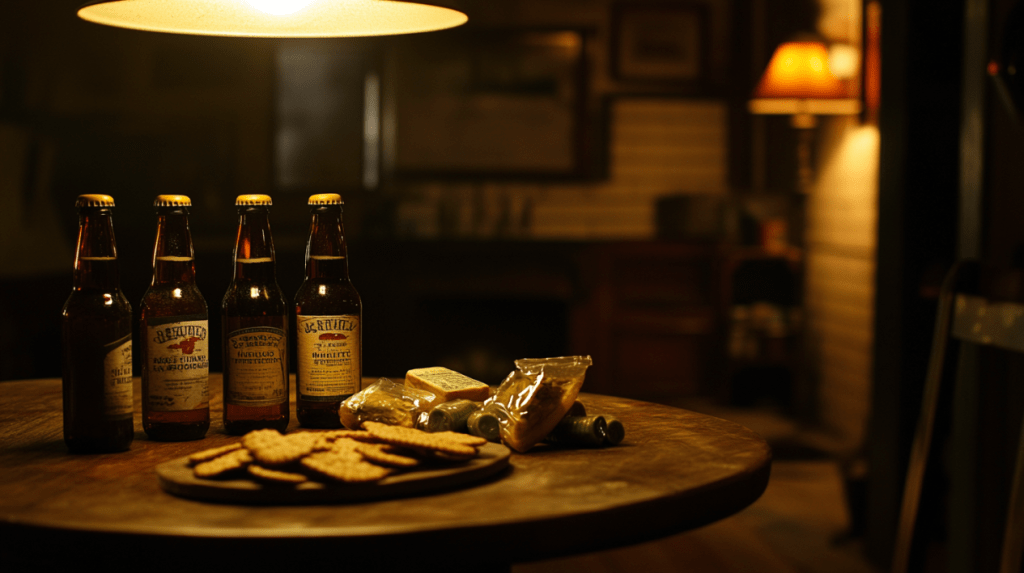
They gathered around the small round table downstairs, opening bottles and unwrapping the simple snacks. The warm light from the ceiling lamp made the wood grain glow softly.
Ben raised his bottle. “To finding the coziest place on this whole trip," he said with a grin.

They clinked their bottles lightly, laughing.
Renata leaned back in her chair. “You know," she said, “this reminds me a little of summers at my grandmother’s house. The same kind of slightly worn wood, the smell of grass and lake water. Except," she added with a smile, “she didn’t have beers."
Julia laughed. “In Canada, our cabins are usually more isolated. More trees, fewer neighbors. But the feeling’s the same. You settle in, you let the silence come."
Emma turned her bottle slowly in her hands. “It’s funny," she said, “how quickly you fall into a different rhythm. You leave the noise behind without even noticing."
Tomas nodded. “Most people don’t realize how loud their daily lives are until they step into a place like this. No traffic. No constant buzz. Just a creaky floorboard and the wind."
Ben popped a slice of smoked cheese into his mouth. “And good beer."
They laughed again.
For a moment, they sat in a quiet that wasn’t awkward, just easy.
Through the window, the lagoon reflected the last faint light of the sky.
Renata broke the silence. “I think places like this survive because people need somewhere to remember they’re human."
No one said anything immediately, but they smiled, each in their own way.
民宿的夜晚:啤酒與宵夜
安頓好之後,他們覺得還少了點什麼。
民宿附近有一家小商店,托馬斯和班自告奮勇去走一趟。大約十五分鐘後,他們提著一袋叮噹作響的塑膠袋回來,裡面是當地的啤酒,還有幾包煙燻起司、黑麥餅乾和醃小黃瓜。

他們圍坐在樓下的小圓桌旁,打開啤酒,攤開簡單的宵夜。頭頂的暖黃燈光讓木桌的紋理柔柔地發亮。
班舉起啤酒瓶,笑著說:「敬這趟旅程找到最舒服的地方!」
大家輕輕碰了碰瓶子,笑聲自然地散開。
雷娜塔靠在椅背上,說:「你們知道嗎,這種地方讓我想起小時候去外婆家的夏天。那種舊舊的木頭味,草地和湖水的氣息。」她笑了笑補充:「只不過,外婆家當然沒有啤酒啦。」
茱莉亞笑了。「在加拿大,我們的木屋通常更孤零零,樹多得像牆一樣。但那種感覺一樣——你進去,靜下來,讓那種沉靜自然發生。」
艾瑪慢慢轉著手中的啤酒瓶,輕聲說:「很有趣喔,你根本沒意識到,就這麼掉進了另一種節奏。好像那些平常聽慣的喧鬧一下子都不存在了。」
托馬斯點點頭。「大部分人都不知道自己每天生活有多吵。直到來到這樣的地方——沒有車聲、沒有永遠不斷的嗡嗡聲,只剩下樓板輕輕吱嘎聲和風聲。」
班塞了一片煙燻起司進嘴裡,含糊地說:「還有好喝的啤酒。」
眾人又笑了。
接著是一段很自然的靜默,不尷尬,而是自在的。窗外,潟湖還映著天邊最後一抹微光。
雷娜塔輕輕開口打破沉默:「我想,這種地方之所以能一直存在,是因為人還是需要有個地方,記得自己是個普通人。」
沒有人馬上回應,但每個人都帶著一點會心的微笑。
Ben leaned back and tapped his bottle against the table lightly.
“So… do people who live here have to take the ferry every time they go anywhere?"
Tomas nodded. “Pretty much. The locals are used to it. But yeah, it can be a hassle, especially in the winter when the schedules get tighter."
Emma raised an eyebrow. “Does everyone work in tourism then?"
Tomas shook his head. “Not everyone. A lot of people still work in forestry, conservation, and some do fishing. But yes, tourism is a big part of it now — guesthouses, cafes, boat rentals, that kind of thing."
Renata smiled.
“My cousin’s friend grew up near here. She said when you live in a place like this, you learn patience early. Miss the ferry? You wait. Bad weather? You stay put."
Julia laughed. “Sounds like a good life lesson."
Ben grinned. “I’d probably panic if I missed the ferry and had to stay overnight by accident."

Tomas chuckled. “That’s why most locals don’t rush. They know there’s no point."
Emma leaned her chin on her hand. “Living here must feel like living a little outside of time."
Tomas nodded thoughtfully. “Yes. That’s the thing about the Curonian Spit — it’s beautiful, but it’s also isolated. People who stay year-round accept that."
Ben tilted his bottle toward the window, where the dark lagoon stretched into the night. “Not a bad place to be stuck though."
They laughed again, the easy kind of laughter that fills small rooms late at night.
班輕輕用啤酒瓶敲了敲桌面,說:「所以……住在這裡的人,每次要出門都得搭渡輪嗎?」
托馬斯點點頭:「差不多。本地人都習慣了,但冬天的時候班次會變少,要配合時間,不太方便。」
艾瑪皺了皺眉問:「那這裡的人是不是幾乎都靠觀光業吃飯?」
托馬斯搖搖頭:「不全是。還有人做林業、自然保護的工作,還有一些傳統的漁業。不過觀光業確實很重要,像民宿、咖啡館、租船這些。」
雷娜塔笑著說:「我有個表妹的朋友就在這附近長大。她說,住在這種地方,從小就得學會『耐心』。錯過渡輪?等下一班。遇到壞天氣?就乾脆別動了。」

茱莉亞笑了:「聽起來……很適合修身養性喔。」
班咧嘴一笑:「要是我錯過渡輪,還得臨時找地方過夜,應該會超慌張。」
托馬斯笑了笑:「所以當地人都很淡定,因為趕也沒用啊。」
艾瑪托著下巴,慢慢說:「住在這裡……感覺真的像是脫離了現代時間的節奏一樣。」
托馬斯也點點頭,神情有些溫和地說:「是啊。庫洛尼亞沙嘴就是這樣。
它很美,但同時也很孤立。選擇留在這裡的人,心裡早就接受了這種節奏。」
班抬了抬手裡的啤酒瓶,指向窗外那片靜靜的潟湖:「但如果要被困住……這種地方還真不錯呢。」
眾人又笑了,是那種輕鬆自在、不需要刻意填補空氣的笑聲,在小小的木屋裡,慢慢地溫暖開來。
Tomorrow’s Plans and a Quiet Night
The night grew deeper. The last few candles flickered gently on the table, their light casting soft shadows on the wooden walls.
Ben leaned back in his chair and stretched. “So… are we getting up early tomorrow?"
Tomas smiled. “Not too early. But if we want to catch the birds, we should be out there around eight."
Renata nodded, brushing crumbs from the table. “I heard the lagoon side is especially good for seeing cranes and herons this time of year."
Emma stood up and stretched her arms toward the ceiling. “Sounds perfect. I’m not built for five a.m. adventures anymore."
They laughed quietly.
Julia finished the last sip of her beer and looked around. “This is one of those nights I wouldn’t mind lasting a little longer."
Tomas stacked a few empty bottles together. “Good company, good air, no rush. That’s what traveling should be."
They slowly tidied up — folding the bread wrappers, wiping the table, setting the empty bottles aside. There was no hurry, no pressure.
Ben pulled the curtain back a little and peeked outside. The lagoon was almost invisible now, a dark mirror under the stars.
He turned back, grinning. “Tomorrow, we’ll see a different side of this place."
They wished each other good night, and one by one, they climbed the stairs to their small beds under the beams, the soft sounds of the wooden house settling around them.

明天的計劃與靜靜的夜晚
夜越來越深了。桌上的幾根蠟燭還微微晃動,光線在木牆上投下柔柔的影子。
班靠在椅背上,伸了個懶腰,問:「所以……明天要早起嗎?」
托馬斯笑了笑:「不用太早,但如果想看鳥,八點左右出發比較剛好。」
雷娜塔一邊拍拍桌上的麵包屑,一邊點頭:「聽說這個季節,在潟湖邊可以看到不少鶴和蒼鷺呢。」
艾瑪站起來,伸了個大大的懶腰:「聽起來很理想。五點起床的行程我現在已經沒辦法了。」
大家輕輕笑了。
茱莉亞喝完最後一口啤酒,環顧了一下小屋,輕聲說:「這種夜晚啊……真希望可以久一點。」
托馬斯一邊把空瓶子收攏,一邊說:「有好朋友、有好空氣,又不用趕路——這才叫旅行。」
他們慢慢地收拾起來——收起麵包袋子,擦了擦桌子,把空瓶子擺到一旁。沒有人急著,節奏也沒有被打亂。
班拉開窗簾的一角往外看了看。潟湖幾乎隱沒在夜色中,像一面靜靜的黑色鏡子,映著星星。
他回過頭來,笑著說:「明天,會看到這地方的另一個樣子吧。」
他們互道晚安,一個接一個慢慢走上樓,回到樓上的小床鋪,
在屋樑下聽著木屋輕輕呼吸的聲音,進入夜的懷抱。


 Virtual Travel | 虛擬旅行沉浸式英語學習
發表留言