
Evening in Klaipėda
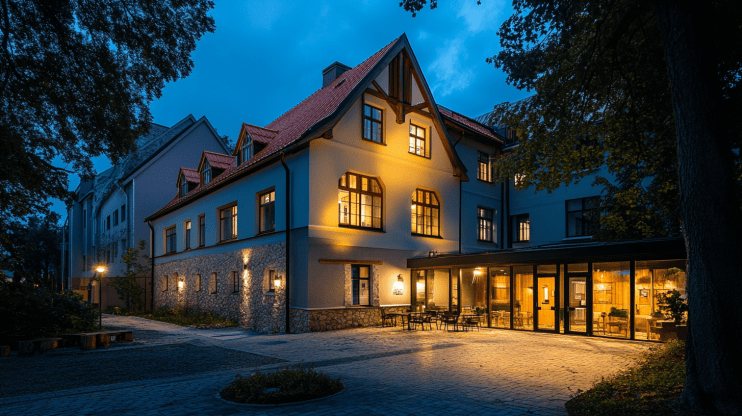
They checked into a small guesthouse tucked behind a cobbled square near Klaipėda’s old town, the kind of place with narrow wooden stairs and windows that looked out over tiled roofs and ship masts.
The woman at the front desk greeted them with a quiet smile and no fuss, handing over two room keys and a map marked with walking paths and late-night bakeries.
The rooms were simple—pale walls, creaking floors, thick linen blankets folded neatly on the beds.
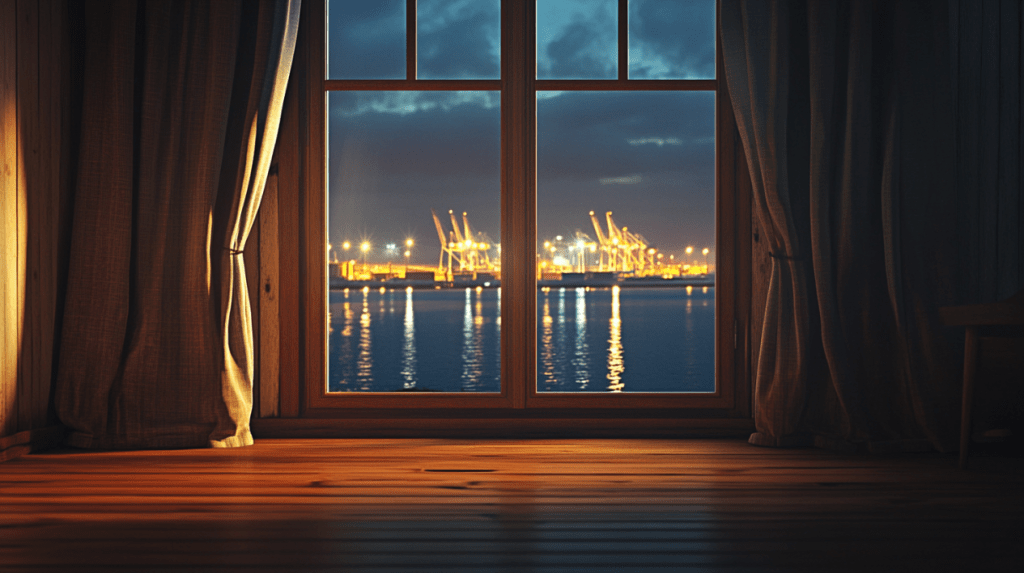
But the windows opened wide to let in the sounds of a living city: footsteps, faint horns from the harbor, laughter from a bar two streets away.
Renata flopped onto her bed and sighed. “Okay, we need dessert round two.”
Ben was already by the window, adjusting his camera. “This light is insane. The reflections on the ship hulls—like moving gold.”
“I wouldn’t mind a short walk,” said Emma, stretching. “Something sweet and something to see.”
Julia nodded. “And something to talk about tomorrow. We’ve been on the lagoon’s edge long enough. Time to see what the mainland remembers.”
Tomas smiled. “Let’s find out. The old town’s been watching the sea for centuries. Maybe tonight it will tell us a bit of its story.”
夜宿克萊佩達老城
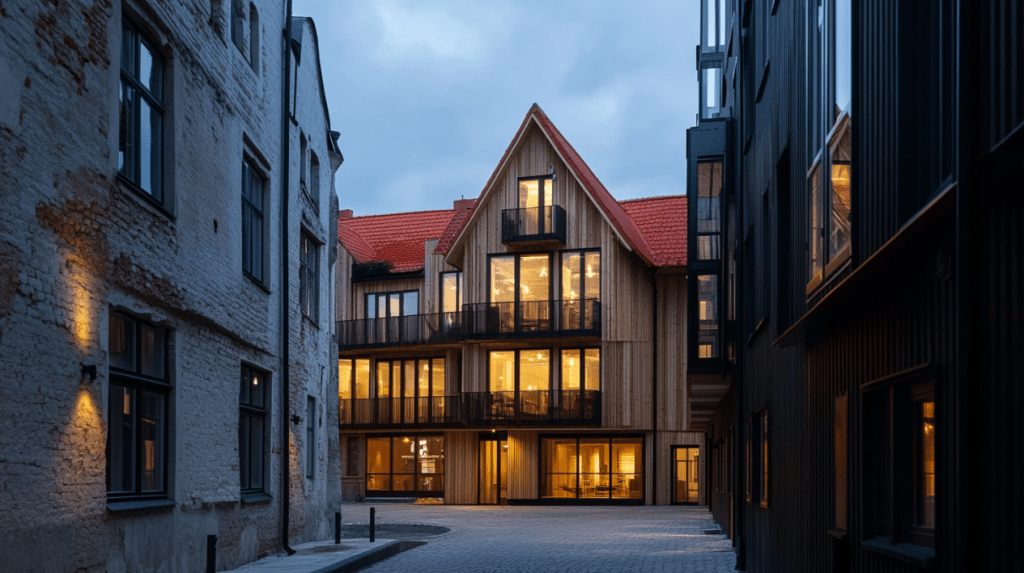
他們在克萊佩達老城區一家隱身在石板廣場後方的小旅館辦理入住。
這裡有陡峭的木樓梯、可以看到屋頂與船桅的窗戶,一切簡單卻帶著歷史的氣味。
櫃檯的老太太安靜地笑著,沒多話,遞給他們兩把鑰匙和一張地圖,上面用筆圈出幾條適合晚上散步的路線,還特地標註了「深夜也會開著的麵包店」。
房間很樸素——牆壁刷著淡色,地板偶爾會發出咯吱聲,床上的亞麻被單摺得方方正正。
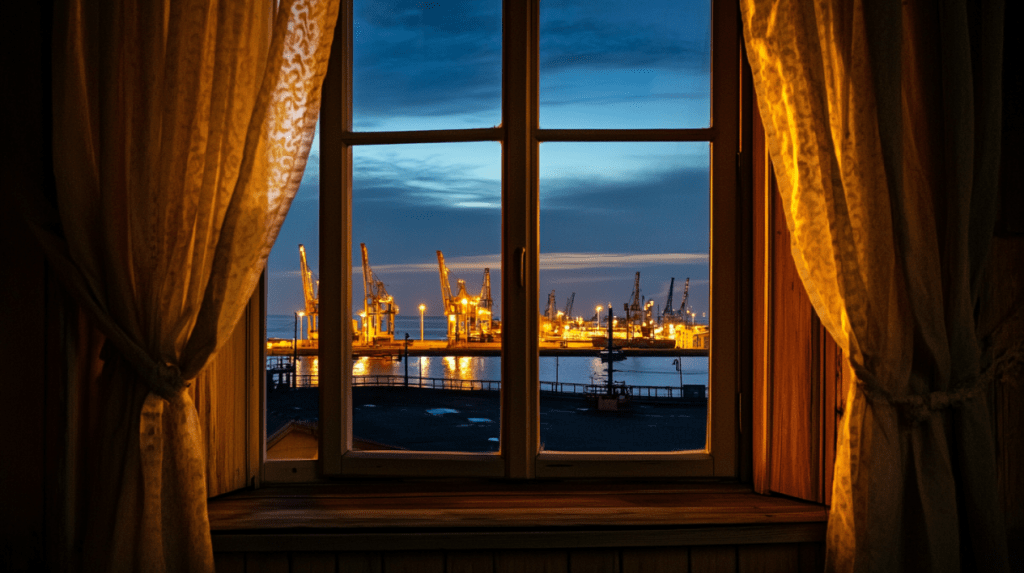
但窗戶一打開,整座城市的聲音便流了進來:腳步聲、港邊微弱的船鳴、還有遠處巷口酒吧傳來的笑聲。
Renata 一躺上床就大大地嘆了口氣:「我需要第二輪甜點。」
Ben 已經站在窗邊調整相機:「這個光太誇張了,船殼上的倒影像在流動的金箔。」
Emma 伸了個懶腰:「我也想走走,吃點東西,也看看點什麼。」
Julia 點頭:「我們在潟湖邊上待得夠久了,是時候看看這塊本土記得些什麼了。」
Tomas 笑了一下:「走吧。這座老城看著大海過了幾百年,說不定今晚也會跟我們說幾句它的故事。」
A Warm Supper Near the Guesthouse
They didn’t go far—just found a small place a couple of streets from the guesthouse.
A soft yellow lamp hung by the door, its glow diffused on the fogged-up window. The sign beside the entrance simply read “Kitchen & Beer.” Inside, it was warm, a little damp, but not unpleasant.
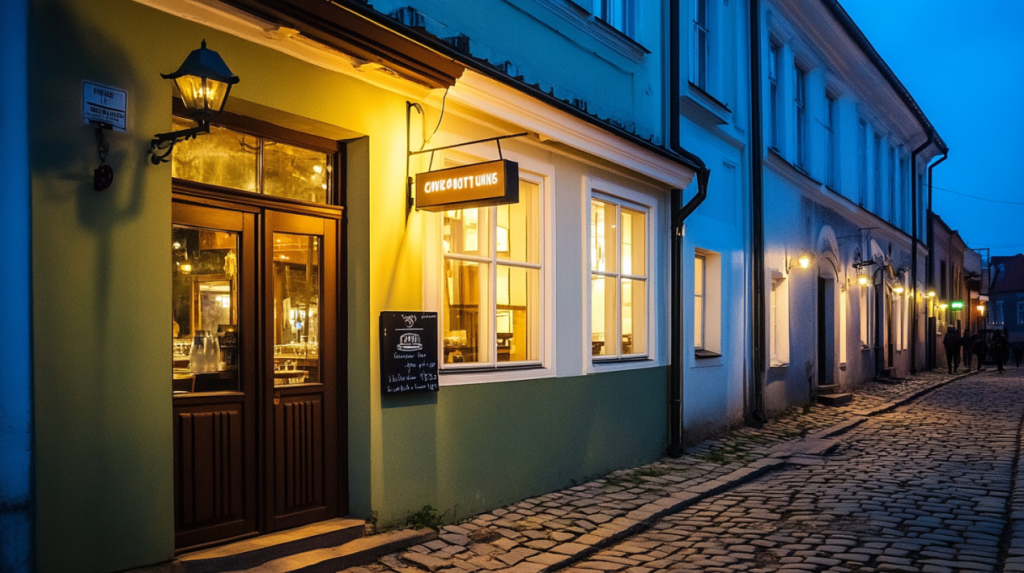
The menu was simple, and not fish-heavy.
Instead, it focused on local seafood: shellfish risotto, butter-baked clams, and squid rings in a dark rye beer sauce.
“I don’t even feel like eating fish anymore,” Julia said, setting the menu down. “We’ve seen enough of it at the market today.”
Ben nodded. “Same here. I want something with a shell. Those baked clams sound good.”
They ordered three dishes to share, a carafe of white wine, and a glass of local beer.
When the food arrived, the clams were still sizzling, the risotto carried the gentle aroma of bay leaves, and a soft cloud of steam rose over the table.
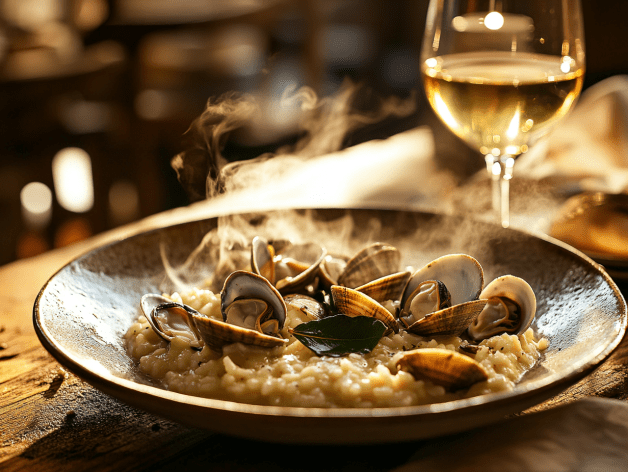
“What happens to these shellfish in winter?” Emma asked, nudging a tiny clam in her broth with a fork.
Tomas replied, “The Baltic partially freezes over, especially in the inner bays. Bottom-dwellers like these slow down a lot. Some basically hibernate.”
Julia looked up. “They don’t all die off?”
He shook his head. “They’re built for it. Some burrow into the sand to survive the cold. The ones we’re eating now are the tough ones.”
Renata glanced at the little pile of empty shells and grinned. “So these guys made it through a full winter, only to end up on our plate?”
Ben raised his glass. “Here’s to the resilient ones.”
Everyone laughed, then settled back into their food.
港邊的晚餐
他們沒有走太遠,就在旅館附近找了一家小館子。兩條街外,掛著一盞微黃的燈,窗戶上有點霧,門邊的招牌只是簡單寫著「Kitchen & Beer」。店裡暖洋洋的,有點潮氣但不討厭。

菜單很簡單,但不是魚類為主。
反而有一些當地的海鮮料理:貝類燉飯、用奶油烤的蛤蜊、還有搭配黑麥啤酒醬的魷魚圈。
「我來這裡反而不想再吃魚了,」Julia 把菜單放下說,「今天市場裡已經看太多了。」
Ben點頭:「同感,我想吃點有殼的。烤蛤蜊那道聽起來不錯。」
他們點了三道菜分著吃,一壺白酒,一杯本地啤酒。食物端上來時,烤蛤蜊冒著泡、燉飯有淡淡的月桂葉香,桌上立刻熱氣蒸騰。
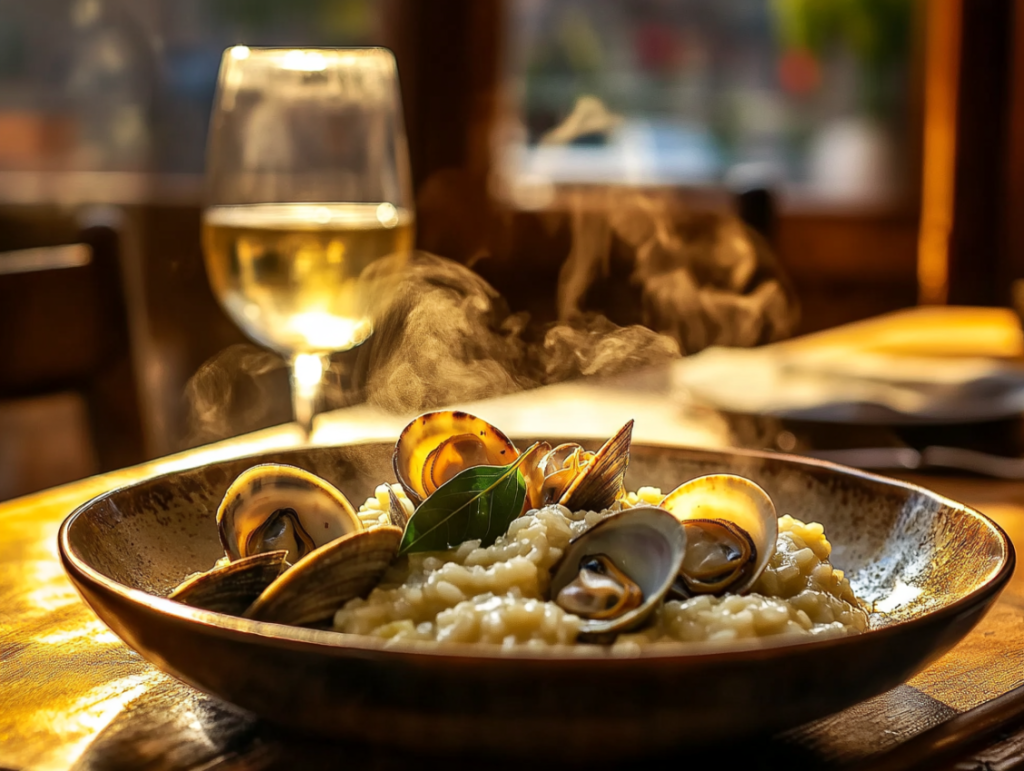
「這邊的貝類冬天會怎麼樣啊?」Emma問,一邊用叉子挑著湯裡的小貝殼。
Tomas說:「波羅的海會部分結冰,尤其內灣那邊。底棲的東西會慢一點,活動力低下,有些貝類就直接冬眠狀態。」
Julia好奇:「不會死光嗎?」
Tomas搖頭:「它們習慣了。有些種類還能鑽進沙底下避凍。你現在吃的這種,就是耐得住冷的。」
Renata看著殼堆起來的盤子笑說:「那牠們算是有過一個完整的冬天,才上來變成晚餐?」
Ben舉杯說:「敬堅強的貝類。」
大家笑了起來,然後又各自安靜吃著。
From Shellfish to Seaports
After the laughter faded, a brief silence settled over the table. Ben looked into his glass, now nearly empty, and said,
“Funny how this ‘introverted sea’—the Baltic—has actually been one of the most fought-over bodies of water in history.”
Tomas looked up. “You mean because of the seaports?”
Ben nodded. “Yeah. Russia, for example, has always wanted a stable, unfrozen outlet to the sea. The Baltic is crucial to them, but the problem is—too many countries, too many chokepoints.”
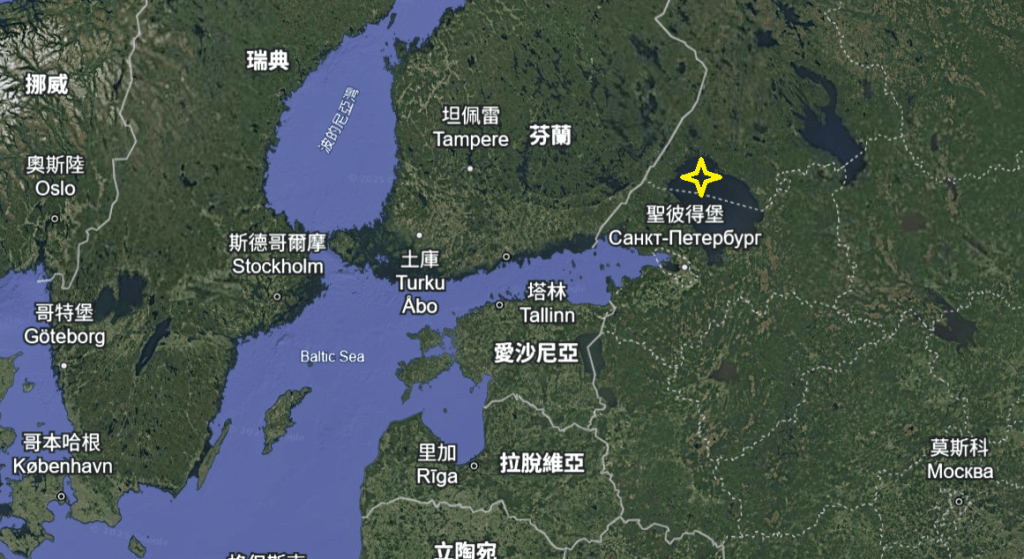
Julia chimed in, “Don’t they have St. Petersburg, though?”
“They do,” Ben said. “But it freezes in winter. Warships can’t move.
And anytime there’s a blockade or conflict, it gets cut off fast. That’s why Peter the Great, the Soviets, even now—Kaliningrad and the entire Baltic coastline are super sensitive issues for them.”
Emma added, “Didn’t they fight a bunch of wars just for access to Baltic ports?”
Tomas chuckled. “Swedes, Poles, the Teutonic Knights, Russians—everyone’s taken a swing at this coastline.”
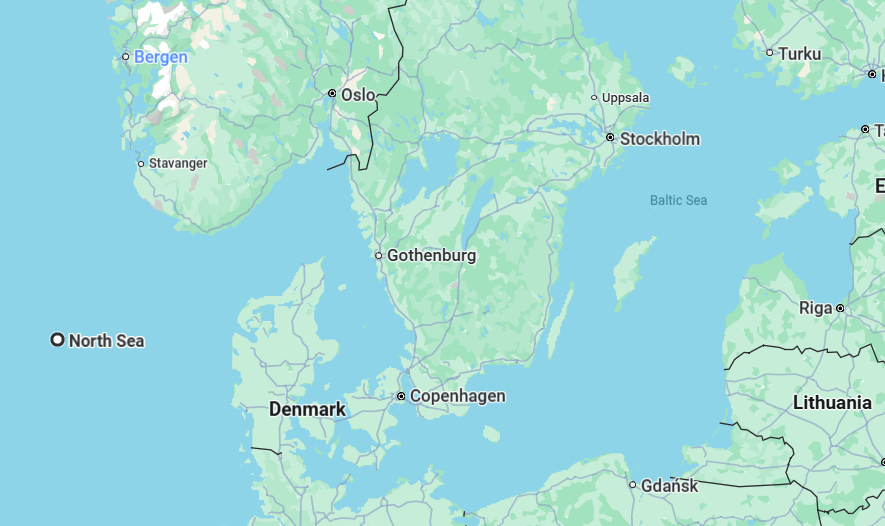
Renata took a sip of her drink and asked, “Wouldn’t the North Sea be more… open?”
Julia replied, “Exactly. The coastline there is wide open—there’s enough access for everyone. But the Baltic? It’s like a cluttered room where everyone’s trying to reach the same door.”
Ben nodded. “Great analogy. And Russia’s that neighbor who keeps trying to squeeze through.”
Everyone laughed again.
Ben added another clam to his plate, gave his wine glass a gentle swirl, and asked,
“So, are there really a lot fewer shellfish in the Baltic than in the North Sea?”
Julia glanced at him. “Yeah, fewer species—and the flavor’s different too. The Baltic’s a semi-enclosed sea, and the salinity is way lower than in the North Sea. Some marine life just can’t survive here.”
Tomas added, “Most of the shellfish we’re eating tonight are species that have adapted to low salinity. But if you go to the North Sea—especially around Germany and Denmark—the water is closer to Atlantic levels. Way more shellfish there, and the flavor is richer too.”
Emma nodded. “Plus, the North Sea has strong tides and currents, so nutrients circulate faster. The Baltic is more stable, but kind of stagnant. Pollution sticks around longer, and aquaculture’s harder.”
“No wonder there aren’t many seafood restaurants around here,” Renata said. “Even the menus are pretty minimal—nobody’s exaggerating anything.”
“Exactly,” Julia said with a smile. “This sea feels… introverted.”
Ben laughed. “Seas have personalities now?”
Tomas shrugged. “Geographically, it kind of works. The Baltic’s like a slow, stay-at-home type. The North Sea’s out there dancing in the wind.”
Renata bit into another squid ring and nodded. “Well, I think I’m more into introverted seafood.”
從貝類談到出海口
笑聲落下之後,大家靜了一會兒。
Ben看著杯子裡剩下的酒,忽然說:「其實從歷史上來看,波羅的海這樣的‘內向海’,反而讓很多國家搶破頭。」
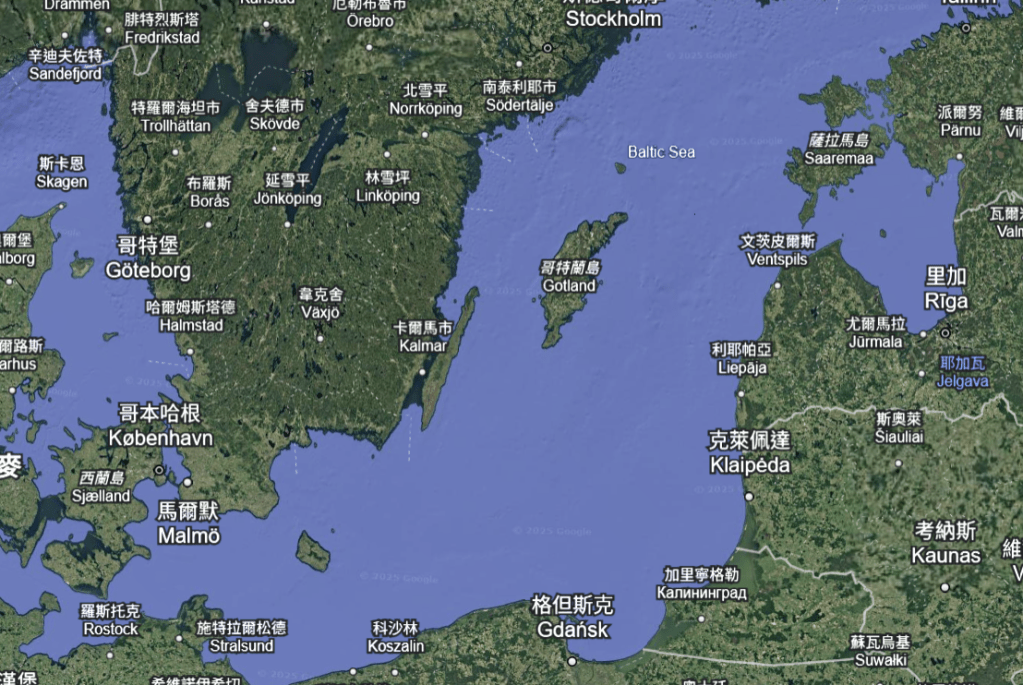
Tomas抬起頭:「你是說出海口的問題?」
Ben點點頭:「對啊。像俄國歷史上,一直想要穩定的、不會被封鎖的出海口。波羅的海對他們來說很關鍵,但問題是——這裡有太多國家、太多地緣障礙了。」
Julia附和:「他們不是有聖彼得堡嗎?」
Ben說:「對,但那裡冬天會結冰,軍艦出不去。而且一遇到戰爭或封鎖,馬上就被卡死。」
「所以你看彼得大帝、然後蘇聯、甚至現在,他們對加里寧格勒、對整個波羅的海沿岸的戰略都非常敏感。」
Emma說:「我記得他們還打過一堆仗,就是為了搶波羅的港口?」
Tomas笑了笑:「從瑞典、波蘭、條頓騎士到俄羅斯,誰沒打過這裡。」
Renata一邊喝酒一邊問:「那北海不會比較自由一點嗎?」
Julia說:「北海的岸線太開放了,大家都能分一點。但波羅的海這邊比較像一個裝滿東西的房間,大家擠在門口搶出口。」
Ben點頭:「你這比喻不錯,然後俄國就是那個老想擠進來的鄰居。」
大家都笑了。
Ben又加了一顆蛤蜊到盤裡,順手拿起酒杯轉了一下,問:「所以,波羅的海這邊的貝類是不是比北海的少很多?」
Julia看了他一眼:「嗯,種類少,味道也不一樣。波羅的海是半封閉型海域,鹽度比北海低太多了。有些生物根本活不下來。」
Tomas補充:「像我們今天吃的這些貝,大部分是適應低鹽環境的物種。但如果你去北海,尤其德國、丹麥那一帶,海水接近大西洋標準,那邊的貝類多很多,味道也比較濃。」
Emma點點頭說:「而且北海潮汐強、洋流大,所以營養循環快。波羅的海就穩定但偏悶,污染留得久,養殖也比較難。」
「難怪這裡的海鮮餐廳比較少見,」Renata說,「連選項都明顯少,店家也不太會誇大介紹。」
「是啊,」Julia笑笑地說,「這裡的海比較內向。」
Ben笑了:「海也有個性?」
Tomas說:「地理上還真的有點像內向跟外向。波羅的海好像是慢吞吞的家裡蹲,北海則是在風口浪尖上跳舞的那種。」
Renata一邊咬下一口魷魚圈,一邊點頭:「嗯,我比較適合吃內向的。」
港邊的老旅館
The guesthouse stood at the corner of a quiet stone-paved square, its dark wooden beams and pale plaster facade giving away its age.
Once, it had belonged to a merchant family—perhaps dealing in fish, amber, or rope—and now it bore the patina of time: uneven floors, sun-faded shutters, and a brass bell at the door that rang with a deep, old tone.
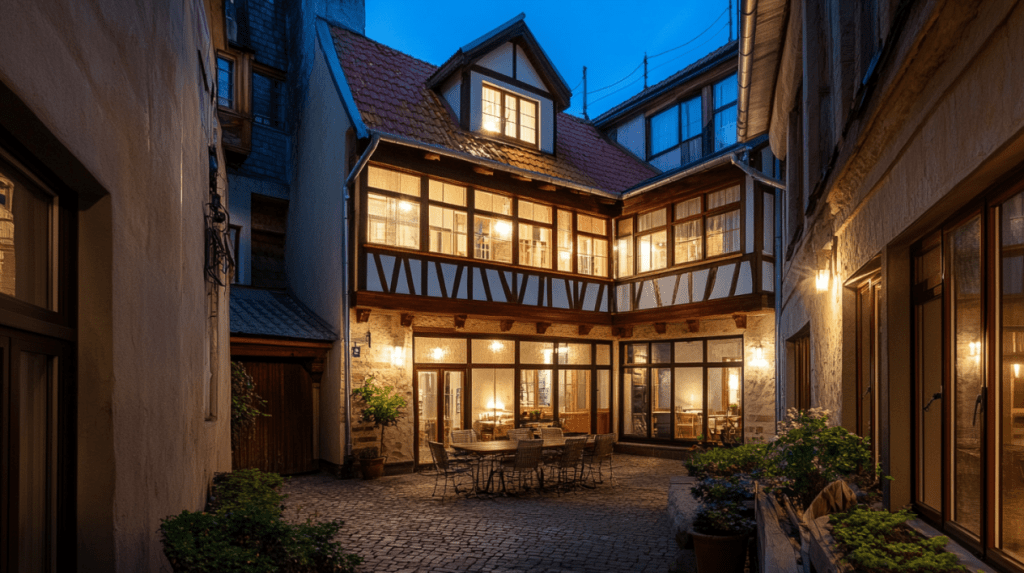
Inside, the layout was simple and close: a narrow hallway with creaking floorboards, two sets of stairs, a reading room that smelled faintly of old books and sea salt.
In the rooms, windows opened outward on iron hinges, framing rooftops, balconies with rusted rails, and the distant masts of ships in port.
It wasn’t luxurious, but it had weight. The kind of place where the walls held echoes, and the night felt stitched with the slow breath of the city.
An Old Inn by the Harbor
This guesthouse sat at the quiet corner of a cobblestone square, its dark wooden beams and pale gray plaster walls quietly telling of its age.
It once belonged to a family of fishermen or rope merchants, but time had softened its edges—the floors were slightly uneven, the wooden shutters faded, and a heavy brass bell hung at the door, ringing with a deep, muffled tone.
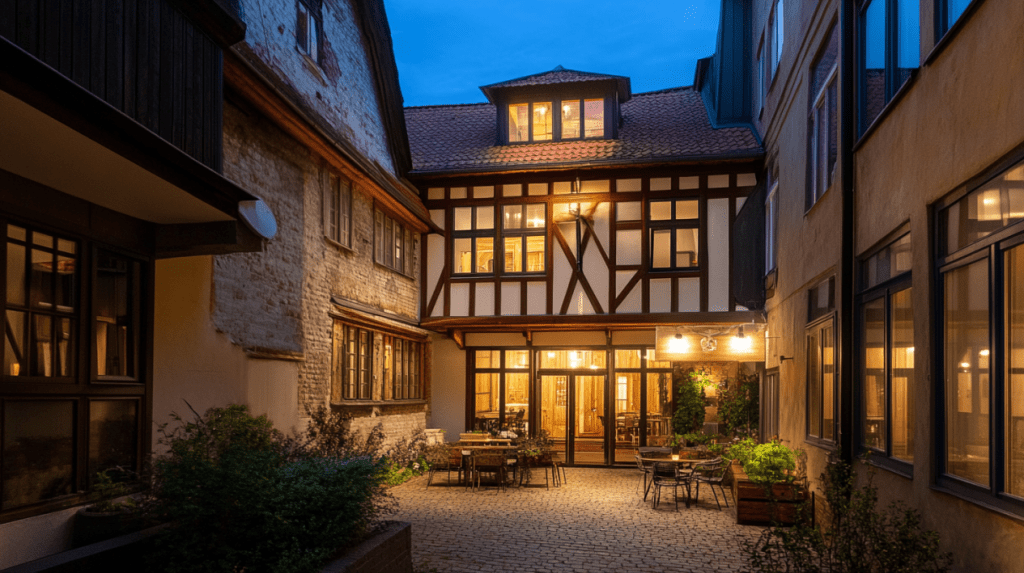
Inside, the layout was compact and unpretentious: narrow hallways, creaking floorboards, and between two short staircases, a small study that still held the faint scent of salt and the yellowing corners of old maritime maps.
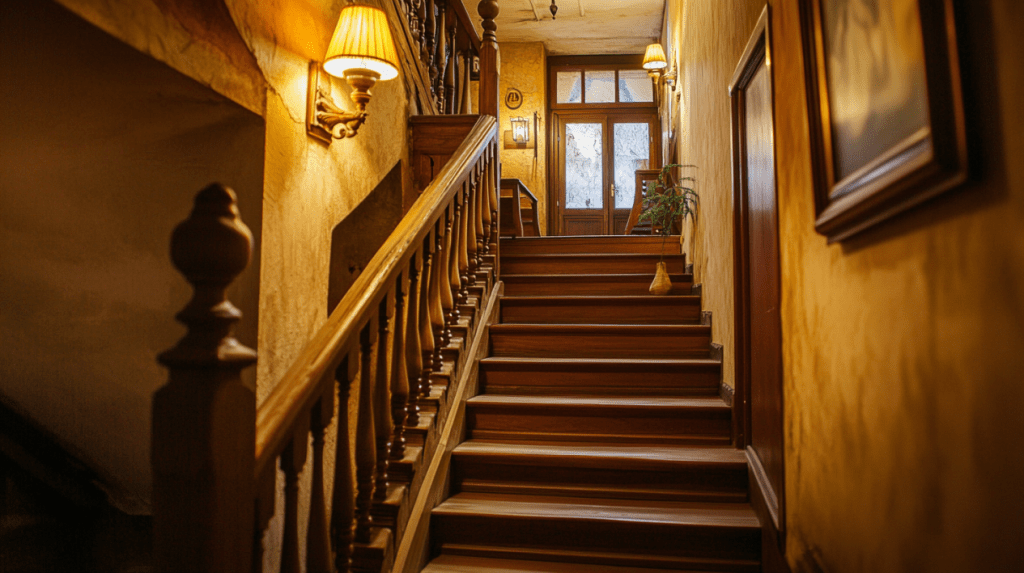
The room’s windows opened outward on iron hinges, framing slanted rooftops, rusting balcony railings, and the distant outline of masts rising from the harbor.
It wasn’t luxurious, but it had weight. The walls felt like fabric soaked in stories, and at night, the whole building seemed to breathe in rhythm with the sleeping city.
港邊的老旅館
這家旅館位於一個安靜的石板廣場邊角,深色的木樑與淡灰色的灰泥牆面,靜靜訴說著它的年歲。
它曾經屬於某個漁業或繩索商人家族,如今已被時光磨去稜角——地板略微傾斜,窗戶的木百葉早已退色,門口掛著一個沉沉作響的黃銅鈴。
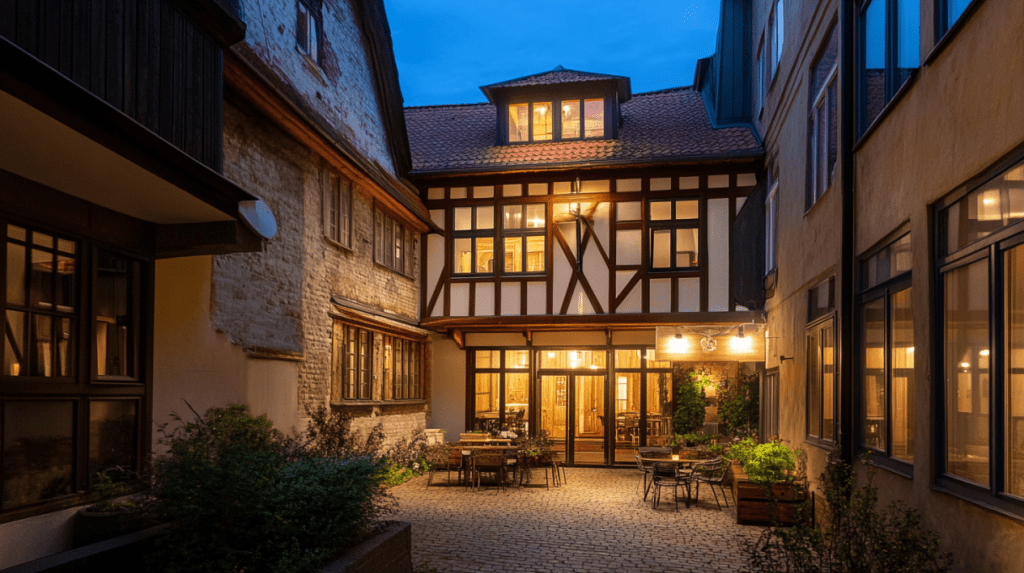
走進屋內,格局緊湊而質樸:走廊窄窄的,地板踩起來會咯吱響;兩層樓梯之間是一間帶點鹹味的舊書房,牆角還留著泛黃的航海地圖。
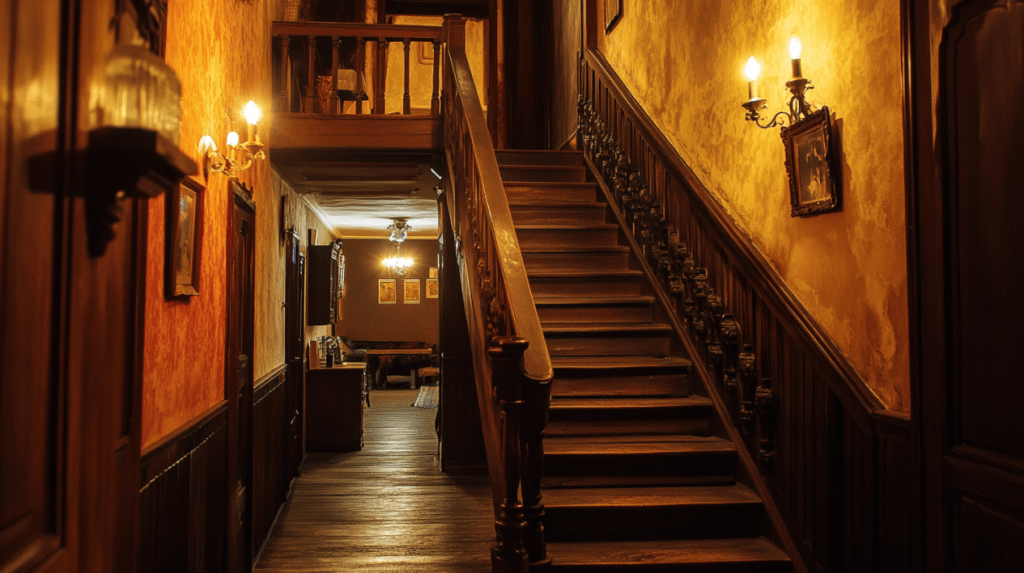
房間裡的窗戶朝外開啟,用鐵鉸鏈固定,窗外是斜斜的屋頂、老舊陽台上的鐵欄杆,以及遠方船桅交錯的港口輪廓。
這裡稱不上豪華,但有份量。牆壁像吸附著故事的布料,夜晚像是整座城市緩慢呼吸的節奏。
One Night in Klaipėda
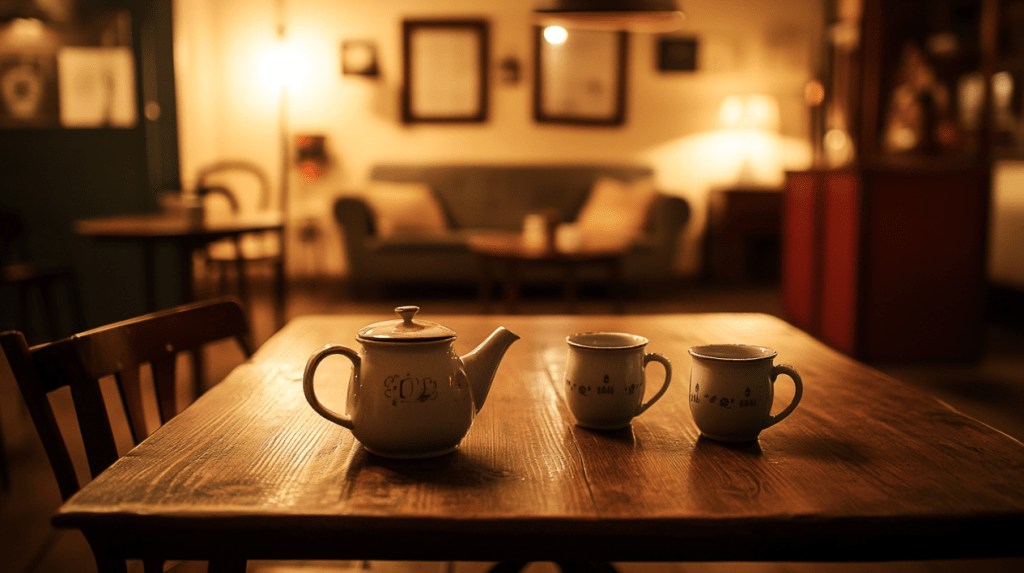
They didn’t unpack much—just enough to brush teeth, charge phones, and find something warm to wear. The old guesthouse creaked under their footsteps, but the place was warm and smelled faintly of wood and soap.
They met again in the common area, mostly out of habit.
No big conversations—just the quiet kind of company after a long day.
Renata sat on the armrest of a couch, sipping warm tea. “I still smell fish. Is it me?”
Ben sniffed his hoodie. “Might be all of us.”
Emma dropped into a chair with a blanket over her lap. “Not complaining. I kind of like it.”
Tomas looked around the room. “This place must be over a hundred years old. Feels like it.”
Julia, flipping through some tourist brochures on the coffee table, added, “The windows don’t close all the way. I heard the ferry horn again just now.”
Renata smiled. “I like that. Makes it easier to remember where we are.”
They didn’t say much more after that. A few yawns. A little laughter.
Then one by one, they turned off lights and headed upstairs, shoes soft against the old wooden steps.
克萊佩達的一夜
他們沒有特別整理行李,只是各自刷了牙、幫手機插上充電線,換上舒服的衣服。
這家老旅館踩起來會咯吱響,但屋裡暖和,有淡淡的木頭味和肥皂香。
大家不約而同又聚在樓下的公共空間,也不是真的要聊什麼,純粹是習慣,有人在,就過去坐一下。
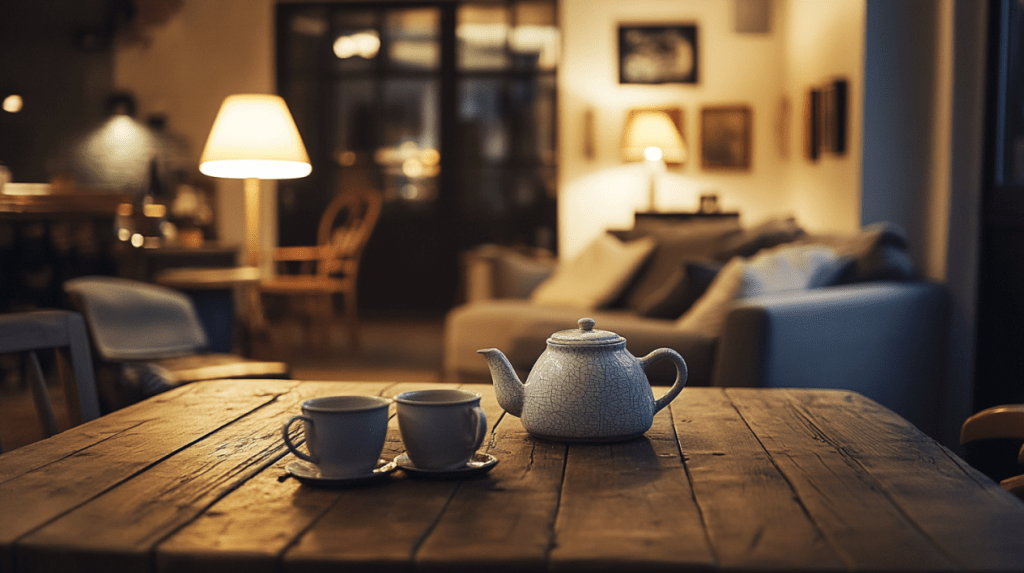
Renata 坐在沙發扶手上喝熱茶:「我身上是不是還有魚味?」
Ben 聞了一下自己的帽T:「可能大家都有一點。」
Emma 披著毛毯坐下來:「我不介意,還蠻喜歡這個味道的。」
Tomas 看了一下四周:「這棟房子應該有一百年以上吧,感覺得出來。」
Julia 翻著茶几上的觀光小冊子說:「窗戶關不太緊,我剛剛又聽到渡輪的聲音。」
Renata笑了:「我喜歡這樣,至少不會忘記自己還在港口邊。」
後來他們沒再多說什麼。
幾個呵欠、幾聲笑,然後就一個個起身關燈,慢慢走上那吱吱作響的木樓梯。

 Virtual Travel | 虛擬旅行沉浸式英語學習
發表留言