
Leaving the Port
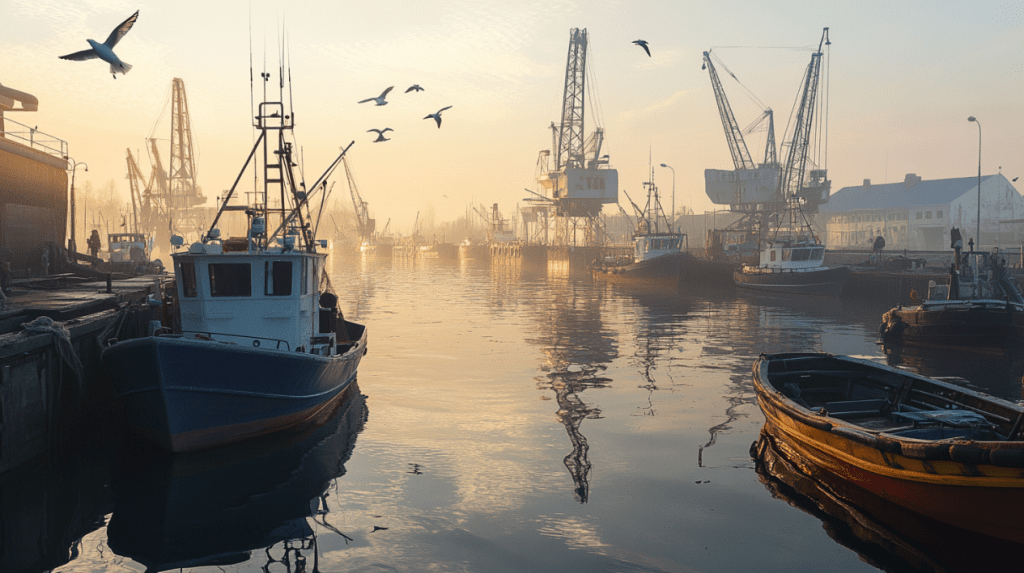
The sunlight crept in through the sheer curtain, casting long, golden lines on the wooden floor. Downstairs, the smell of dark rye toast and boiled eggs drifted up through the staircase. The guesthouse, an old building near a quiet corner of Klaipėda’s harbor, felt like it had been quietly watching the sea for decades.
Emma came down first and chose a spot near the window. The dining area was simple: pinewood tables, white tablecloths, a few pots of herbs on the sill. Other guests sat scattered around—mostly middle-aged German tourists in hiking gear, a couple speaking Polish, and one woman quietly reading beside a basket of apples.

Renata arrived next, with Julia following. “This place reminds me of my grandmother’s house,” Renata said as she poured herself some black tea. “Same kind of boiled potatoes, soft curd, and cucumber salad.”
“They even have those buckwheat pancakes,” Julia said, picking one up and adding some sour cream. “I like how everything here is either sour, smoked, or both.”
Ben finally showed up, rubbing his eyes and heading straight for the coffee. “So what’s the plan today?”
“We head northeast,” said Tomas, already halfway through a soft-boiled egg. “Up into the highlands of Samogitia.”
Ben glanced out the window at the line of cars and early morning clouds over the port. “Still can’t believe this place used to be East Prussia.”
Tomas smiled slightly. “That’s why everything feels both German and Baltic.”
離開港口的早晨

陽光從薄紗窗簾間灑進來,在木地板上投下長長的金色線條。樓下傳來黑麥土司和水煮蛋的香氣,這間旅館是一棟位於克萊佩達港邊的老房子,靜靜地坐在港口一角,像是看海看了幾十年。
Emma 最早下樓,挑了靠窗的位置坐下。餐廳空間簡單,松木桌上鋪著白桌布,窗台上擺著幾盆香草。其他房客零零散散地坐著——有幾位穿著登山裝的德國中年旅客、一對說著波蘭語的夫妻,還有一位安靜閱讀的女士,身邊放著一籃蘋果。
Renata 接著走進來,Julia 跟在後頭。「這裡讓我想到我外婆家的早餐,」Renata 一邊倒茶一邊說,「水煮馬鈴薯、凝乳和小黃瓜沙拉,一模一樣。」

「他們還有蕎麥煎餅耶,」Julia 拿起一塊,抹上酸奶,「這裡的食物要嘛酸,要嘛煙燻,或是兩者都有。」
Ben 最後才來,一邊揉眼睛一邊走向咖啡壺。「今天的行程是什麼?」
「往東北走,」Tomas 已經吃了一半的水煮蛋,「進入薩莫吉希亞的高地。」
Ben 望向窗外,港邊的汽車列隊、雲層壓低。「還是很難相信,這地方以前是東普魯士。」
Tomas 淡淡地笑了一下:「所以你才會覺得這裡既像德國,也像波羅的海。」
Layers of Power and Belief
While peeling a boiled egg, Julia glanced at the window and said, “It’s kind of strange that Samogitia converted to Christianity so much later than the rest of Lithuania.”
Tomas stirred his tea. “It’s not that strange when you think about it. Samogitia was always on the edge of the state—close to the Teutonic Order’s border, constantly under attack.”

Teutonic Knights (14th century)
Ben raised his eyebrows. “But wasn’t it part of the Grand Duchy of Lithuania from the beginning?”
“Yes,” Tomas nodded. “Politically, yes. But culturally, it was different. Even when the Grand Duchy officially embraced Catholicism in 1387, Samogitia held out until 1413.”
Renata added, “So people here were basically pagan for longer?”
“They were,” Emma said, sipping her tea. “And they resisted not just for religious reasons. Accepting Christianity meant accepting the authority of foreign bishops—often German ones, which they didn’t trust.”
Julia leaned forward. “So they were part of the same country, but not really the same culture?”
Tomas smiled. “That’s the Grand Duchy for you. It was like a patchwork empire. Different languages, beliefs, systems—all under one flag.”
Ben nodded. “And Samogitia was like the stubborn younger sibling who didn’t want to play along.”
They all laughed, and for a moment, the conversation paused as they focused on their food—buckwheat pancakes, boiled potatoes, soft cheese with herbs.
Then Julia added, “But without Samogitia, the Duchy might not have survived the knights’ attacks.”
Tomas looked thoughtful. “Exactly. They were the buffer, the shield. History tends to forget the edges, but they’re often the reason the center holds.”
信仰與政權的交疊
Julia 一邊剝水煮蛋,一邊望向窗外說:「薩莫吉希亞皈依基督教這麼晚,其實還滿讓人意外的。」
Tomas 攪著茶,語氣平靜地說:「其實想想也不奇怪。這裡一直都在國家的邊緣——靠近條頓騎士團的邊界,經常受到攻擊。」

條頓騎士團 (十四世紀)
Ben 揚起眉毛:「但它不是一開始就屬於立陶宛大公國嗎?」
「在政治上是,」Tomas 點點頭。「但文化上很不同。大公國在 1387 年正式接受天主教,可薩莫吉希亞一直到 1413 年才改宗。」
Renata 插話:「所以這裡的人等於更久都是信奉自然神的?」
「沒錯,」Emma 啜了一口茶說:「他們抗拒的不只是宗教,而是不想接受外國主教的權威——尤其是德國來的,他們不信任。」
Julia 身子往前傾:「所以雖然同屬一國,文化卻像兩個世界?」
Tomas 笑了:「這就是立陶宛大公國的樣子啊,像拼布帝國一樣。語言、信仰、制度全都不一樣,但還是在同一面旗幟下。」
Ben 點頭:「那薩莫吉希亞就像那個固執、不太願意配合的小弟弟。」
大家都笑了起來,話題暫時停了下來,桌上安靜了一會,只剩下吃飯的聲音——蕎麥煎餅、水煮馬鈴薯、加了香草的凝乳。
過了一會兒,Julia 又說:「不過,沒有薩莫吉希亞,搞不好整個大公國早就撐不過騎士團的進攻了。」
Tomas 靜靜地點頭:「沒錯。他們是盾牌。歷史常常忘記邊陲,但往往是邊陲守住了核心。
Through the Hills of Samogitia
They left the harbor town just as the sky began to clear. The road soon led them inland, curving gently through soft hills dotted with pine forests and meadows.
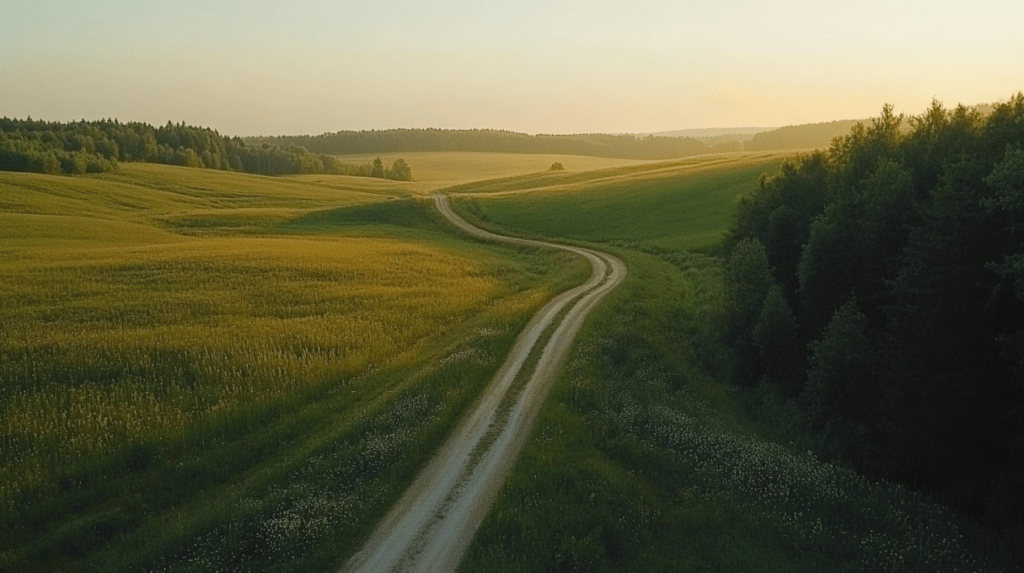
Morning mist still lingered in the lowlands, and the sunlight filtered through it in streaks.
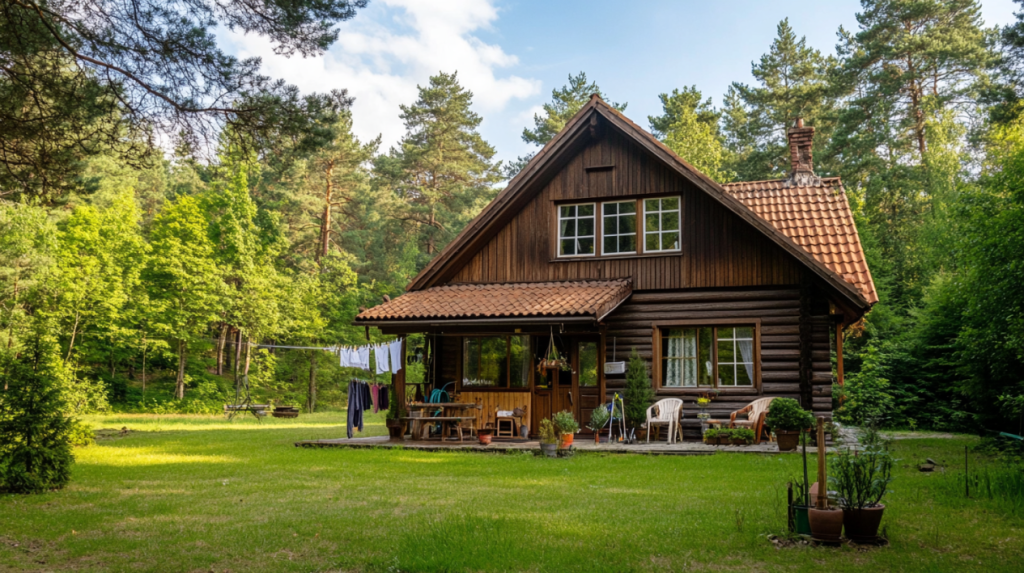
Occasionally, small farmsteads came into view—wooden houses with slanted red roofs, laundry fluttering in the breeze.
Renata sat in the front passenger seat, flipping through her notebook. “I forgot how hilly this part of Lithuania is,” she said. “It feels completely different from the flat plains around Vilnius.”
Tomas, who was driving, nodded. “Samogitia is one of the oldest upland regions in the country. It’s not mountainous, but the land rolls steadily—perfect for old forest routes and hidden fortresses.”
Emma looked out the window. “And colder too, right?”
“A little,” said Julia from the backseat. “The climate here is slightly damper and windier. The Baltic Sea still affects it, but not as strongly as the coast.”
Ben was quiet for a moment, then said, “So this is the land that held off the Teutonic Knights for centuries?”
Tomas smiled. “Yes. They tried over and over to conquer it. Samogitians were the last pagans of Europe, and they fought fiercely to stay that way.”
“Weren’t there like… twenty campaigns?” Ben asked.
“More,” said Tomas. “But the most famous one was the Battle of Durbe, in 1260. The knights suffered one of their worst defeats here. Local tribes rose up together—and even some of the knights’ own allies refused to fight.”
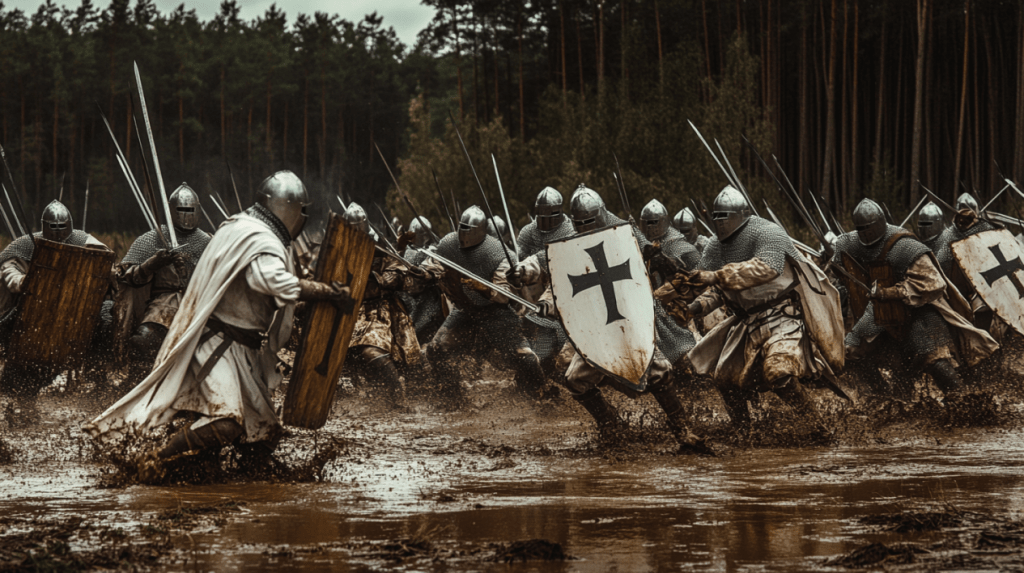
Battle of Durbe, 1260, knights of the Teutonic Order in white cloaks with black crosses fighting Samogitian and Curonian warriors
“It’s kind of amazing. A place this quiet now used to be the front line of medieval Europe.”
“And not just militarily,” Julia added. “Spiritually too. The resistance here wasn’t just about territory—it was about belief, language, and identity.”

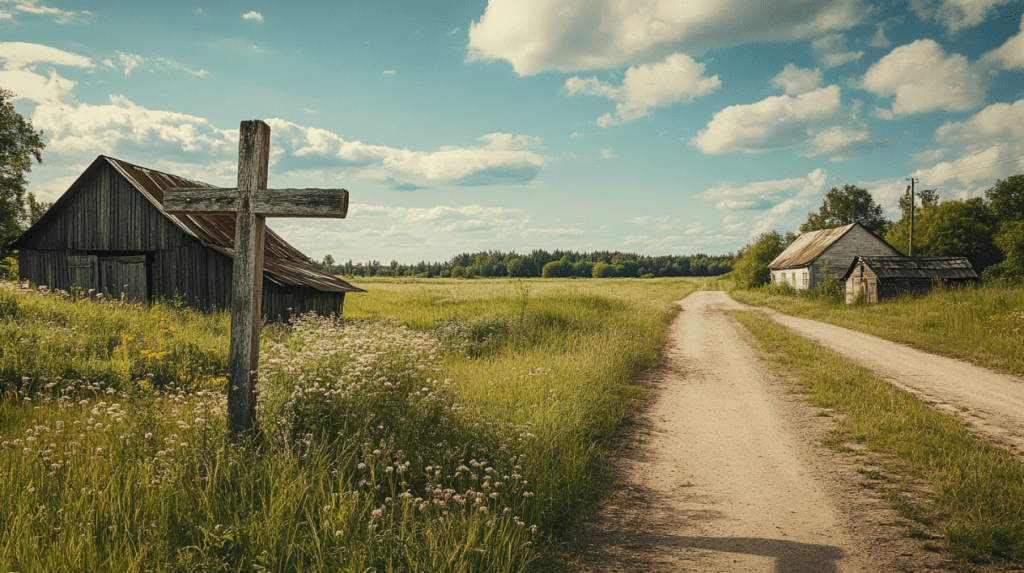
They drove on, winding through the rising curves of the land. A wooden wayside cross stood near a bend, weathered but upright.
Fields stretched out, yellowing with early summer, while the car pressed deeper into the old green heart of Samogitia.
穿越薩莫吉希亞丘陵
他們離開港邊時,天色漸漸放晴。道路轉向內陸,沿著起伏的丘陵緩緩前行,兩旁是松林與草地交錯的風景。
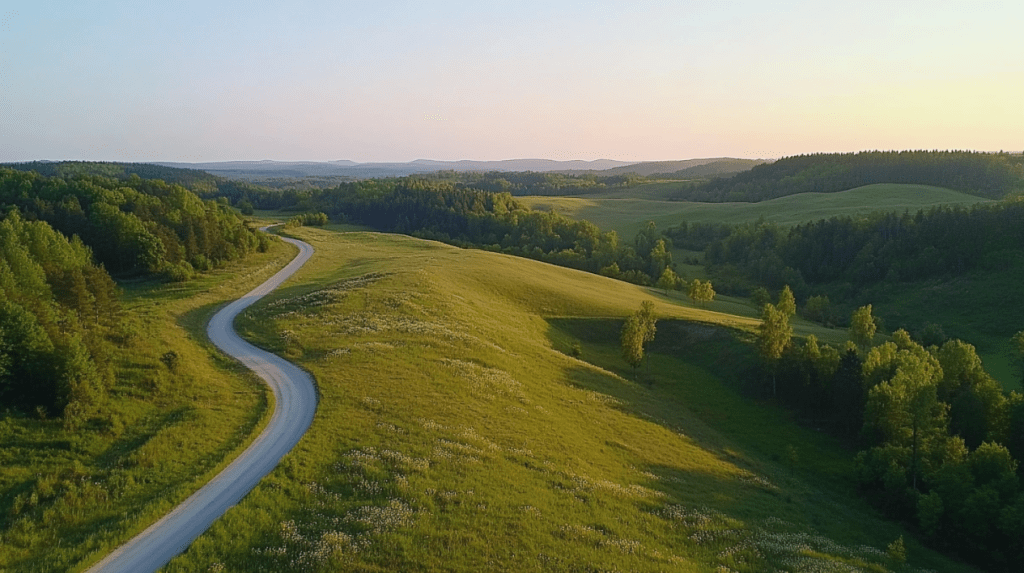
低窪處仍有些晨霧未散,陽光穿過霧氣,像絲線一樣灑在田野上。偶爾能看到幾戶人家——斜屋頂的木造小屋、晾在風中飄動的衣物。

Renata 坐在副駕駛座,翻著筆記本說:「我差點忘了這邊這麼多丘陵,跟維爾紐斯附近的平原完全不同耶。」
開車的 Tomas 點點頭:「薩莫吉希亞是立陶宛最早形成的高地之一。雖然不是山區,但這種緩坡起伏的地形,很適合建古老的森林小路和藏身的堡壘。」
Emma 看著窗外說:「而且這邊也比較冷吧?」
Julia 從後座說:「稍微冷一點,而且濕氣也重些。雖然還受到波羅的海影響,但不像沿海那麼明顯。」
Ben 安靜了一下,然後說:「所以這裡就是那個打不下來的地方?騎士團打了幾百年?」
Tomas 笑了笑:「沒錯。他們一次又一次地想征服這裡。薩莫吉希亞人是歐洲最後的異教徒,他們為了守住信仰而戰。」
「不是有什麼……二十次戰役嗎?」Ben 問。
「不只,」Tomas 說:「最有名的是 1260 年的杜爾貝戰役,騎士團在這裡遭遇重大失敗。當地部族聯合起來反抗,連部分原本支持騎士團的盟軍都拒絕作戰。」
Renata 把頭靠在車窗上說:「好難想像,這麼安靜的地方,竟然曾經是中世紀歐洲的前線。」
「不只是軍事上的,」Julia 補充說:「也是信仰上的。當時的抵抗不只是為了土地,而是為了語言、信仰和身分認同。」

車子持續往前開,穿過一道道起伏的坡地。
轉彎處有一座老舊但挺立的路邊十字架,田野隨著初夏微黃,旅程漸漸深入這片綠意盎然的薩莫吉希亞之心。
An Afternoon Stop in Samogiti
They slowed down as the road narrowed, entering a small town nestled among the hills.
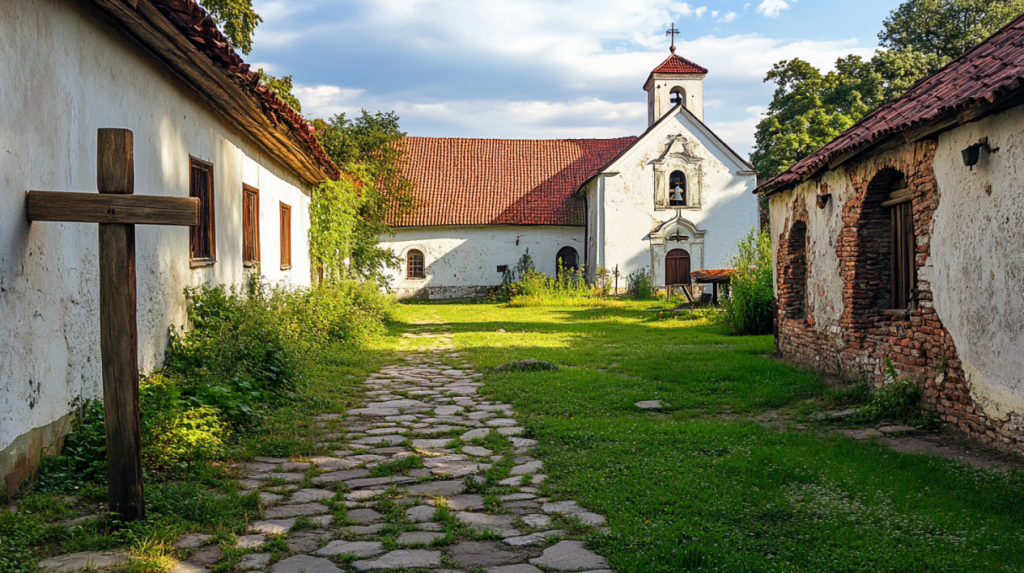
Low houses with steep wooden roofs lined the street, their paint faded by years of wind and rain. A quiet square appeared, where a whitewashed chapel stood beside an old oak tree. Across the road, a stone wall enclosed what looked like a former monastery.

Tomas parked beside the chapel. “Let’s stretch a bit. This place has some history.”
They stepped out, the air cooler here than in Klaipėda.
A light breeze stirred the birch trees along the path. Near the entrance of the chapel stood a tall wooden cross, carved with intricate symbols and inscriptions in the old Samogitian dialect.
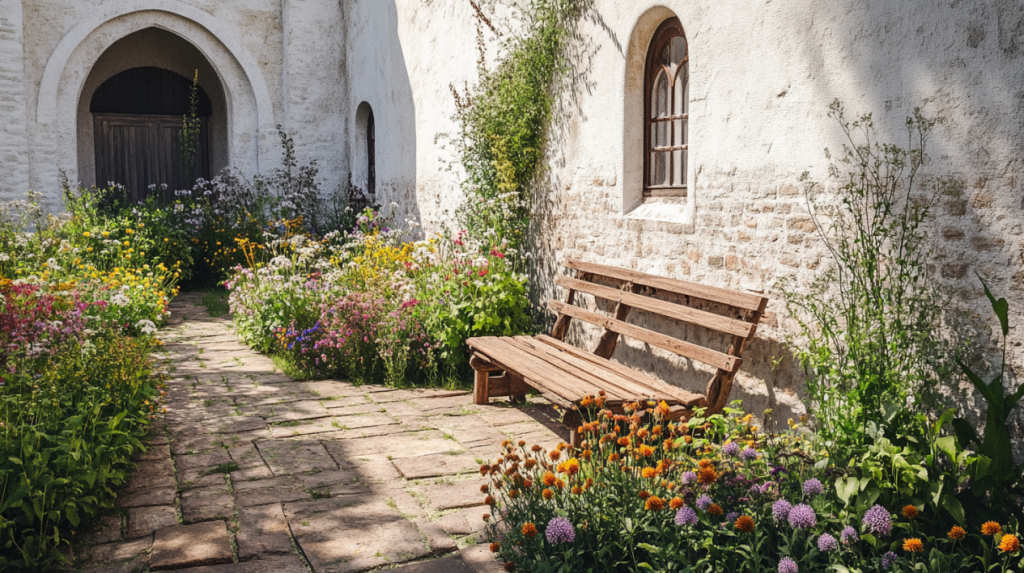
Julia approached it and ran a hand gently over the carving. “This isn’t standard Lithuanian.”
“It’s not,” Tomas said. “That’s the old Žemaitijan dialect. You won’t find it taught in most schools, but older people here still speak it.”
Ben took a photo. “Feels like we’re in a separate country.”
Emma glanced toward the monastery. “Was this part of the resistance to Christianization?”
Tomas nodded. “Yes, and later it became a religious center. Once the region converted, faith took root here in a very local way. It wasn’t about bishops from Vilnius or Rome—it was about the village, the land, the ancestors.”
Renata stepped closer to the wall. “I like how the faith here still feels grounded. Not fancy, just… present.”
Julia added, “That’s probably why so many of these crosses are outside, at roadsides and fields. It’s like faith was part of the landscape.”
They stood for a moment, quietly watching a woman with a headscarf light a candle by the chapel. The only sound was the rustling of leaves and a dog barking somewhere far off.
薩莫吉希亞午後的停留
隨著道路變窄,他們的車速也慢了下來,進入一個被丘陵圍繞的小鎮。
街道兩旁是低矮的木屋,屋頂又高又陡,經年風吹雨打使外牆的油漆早已褪色。小鎮中心有個寧靜的廣場,一棵老橡樹下立著一間白色小教堂,對面是一圈石牆圍起的建築,看起來像是過去的修道院。
Tomas 把車停在教堂旁。「下來走走吧。這裡有點歷史。」
空氣比克萊佩達涼爽,白樺樹隨風輕搖。教堂入口處豎著一座高大的木十字架,上面刻著複雜的圖樣與用舊薩莫吉希亞方言寫的文字。

Julia 走近,輕輕撫過木雕上的紋路。「這不是標準的立陶宛語吧?」
「不是,」Tomas 回答:「那是舊的 Žemaitijan 方言。現在學校幾乎不教了,但這裡的老人家還會講。」
Ben 拍了一張照片:「感覺像進入另一個國家。」
Emma 朝修道院的方向望去:「這地方以前是不是也抵抗過基督化運動?」
Tomas 點頭:「對,而且後來還變成一個地方信仰中心。雖然改信了,但他們的信仰不是從維爾紐斯或羅馬來的,而是從土地、祖先和村落來的。」
Renata 走到石牆邊說:「我喜歡這種信仰方式,不是那種華麗的,而是腳踏實地、一直都在那裡的感覺。」
Julia 接著說:「也許這就是為什麼這裡的十字架都立在田邊、路邊,好像信仰本來就是風景的一部分。」
他們靜靜站在原地,看著一位戴頭巾的婦人在教堂邊點燃蠟燭。四周只有葉子摩擦的聲音,還有遠方傳來一聲狗吠。
Echoes of Faith
As they slowly walked along the stone wall, a small sign came into view: Cultural Heritage Site – Former Monastery.
The gate stood ajar, revealing a quiet inner courtyard with climbing vines, a weathered bell tower, and a path leading to what looked like a chapel door.
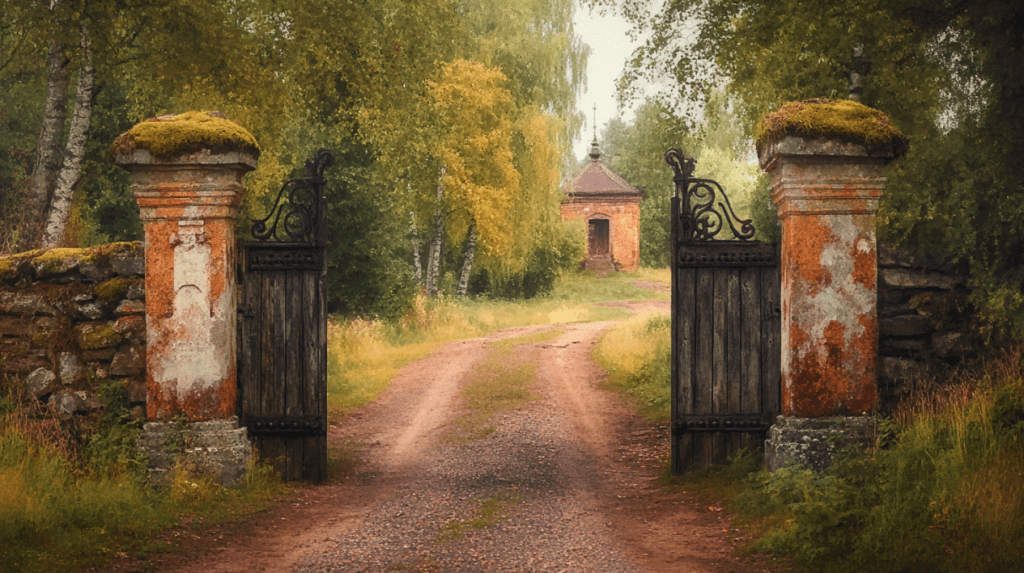
Julia paused. “So… is this still an active religious site?”
Tomas looked at the sign. “Officially, no. It hasn’t housed a full religious community in decades. But I’ve heard there are still a few sisters who stay here part of the year, especially during retreats.”
Emma tilted her head, watching a pigeon land on the chapel roof. “So it’s part historical, part spiritual?”
“Yes,” Tomas said. “It’s not a functioning convent anymore, but the place is still under the care of the Church. And during summer, local parishes organize youth retreats or spiritual workshops here.”
Ben leaned on the fence. “Do tourists come here?”
“Some,” said Renata. “Usually the quieter ones. It’s not a big bus-tour stop. More like regional travelers, sometimes Poles or Latvians, even Germans who have some family connection or historical interest.”
Emma added, “I imagine it’s not easy to market a place like this. Too solemn for selfies.”
Julia smiled. “That’s what makes it good.”
They stepped through the gate, their footsteps soft on the stone path. No signs of crowds—just the wind, the scent of old stone and grass, and the feeling of stories quietly waiting behind each closed wooden door.
信仰的回聲
他們沿著石牆慢慢走,一塊小小的木牌出現在轉角處,上面寫著:「文化遺產地——前修道院」。
鐵門半開,裡面是一個靜靜的院落,有爬滿藤蔓的牆、風化的鐘塔,一條石徑通往看似教堂的大門。
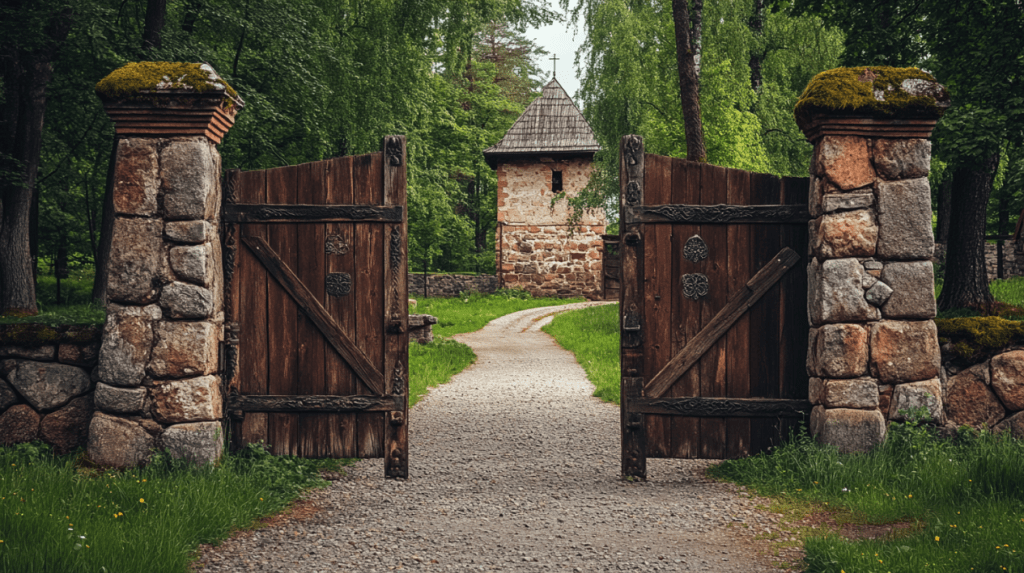
Julia 停下腳步:「所以這裡現在還有修女住嗎?」
Tomas 看著牌子說:「正式來說,沒有了。這裡已經幾十年沒常駐修女了。但我聽說有幾位修女偶爾會來,尤其是夏天舉辦退省的時候。」
Emma 抬頭看著屋頂停下的一隻鴿子:「所以算是半宗教、半歷史的場所?」
「可以這麼說,」Tomas 點頭:「它已不是真正運作的修道院,但仍然由教會管理。有時候夏天會有地方堂區來這裡辦青年退省、默想營之類的活動。」
Ben 靠著圍欄說:「會有觀光客來嗎?」
「會,」Renata 說:「但不是那種吵鬧的大批觀光客。來的多半是附近地區的遊客,有時是波蘭人、拉脫維亞人,也有些德國人來尋找家族的歷史痕跡。」
Emma 說:「這種地方不好行銷吧。太莊嚴了,不適合拿來自拍。」
Julia 笑了一下:「所以才值得一來。」
他們走進鐵門,踏在石頭小徑上,四周安靜得只剩風聲、石牆上植物的味道,和每一扇關著的木門後,那些還沒被說出來的故事。
A Quiet Presence
They wandered quietly through the courtyard, their steps softened by moss-covered stones. Just as they approached the side of the chapel, a door opened with a soft creak.
A woman in a dark gray habit stepped out, holding a basket of herbs. She looked surprised for a moment, then smiled warmly.

“Good afternoon,” Tomas greeted her in Lithuanian.
“We were admiring the building. Are you one of the sisters who still stays here?”
The woman nodded. Her voice was soft, but clear.
“Yes, I’m Sister Alda. I’m not here year-round—just during the warm months. I help care for the grounds… and the quiet.”
Julia stepped forward. “Does anyone else live here?”
“Not permanently,” Sister Alda said. “Sometimes other sisters join for retreats. The Church allows us to maintain this place as a seasonal residence and prayer space. It’s not a tourist site, though people pass through.”
Ben asked, “How is the place maintained?”
“We get a little help from the diocese,” she said, “but mostly we rely on donations from locals—many of them were baptized or married here. The village still remembers.”
Emma asked gently, “And you—why here? Why this place?”
Sister Alda looked at the bell tower above. “I was born not far from here. This place always felt… unfinished. Like something was waiting to be heard. So I listen.”
No one said anything for a moment. The wind stirred the vines. A bird fluttered in the eaves.
Renata broke the silence. “It must be a rare kind of peace.”
The sister smiled again. “Not rare. Just quiet enough to notice.”
靜靜的守候者
他們在院子裡慢慢走著,地上的石板被苔蘚覆蓋,踩起來幾乎沒有聲音。當他們繞到小教堂側邊時,一扇木門輕輕地開了。
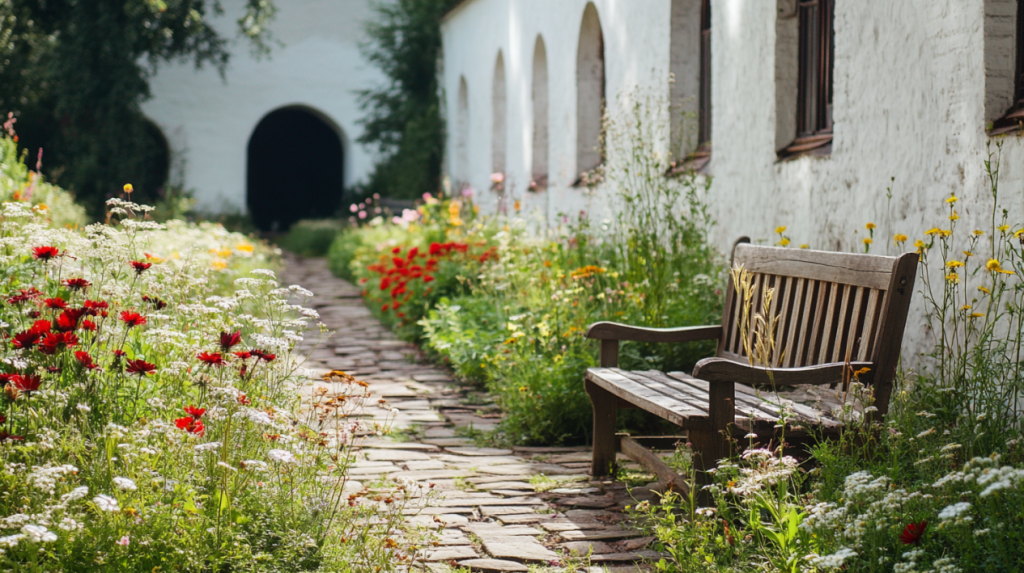
一位穿著深灰色修道服的女子走了出來,手上提著一籃香草。她先是愣了一下,隨即露出溫和的微笑。
Tomas 用立陶宛語問候:「午安,我們剛才在欣賞這裡的建築。請問您是仍然住在這裡的修女之一嗎?」
她點點頭,聲音柔和而清晰:「是的,我叫 Alda 修女。我不是全年都住在這裡——只在溫暖的季節會來。平時就幫忙照顧這裡……還有這份安靜。」
Julia 往前一步問:「這裡還有人長住嗎?」
「現在已經沒有長駐的修會成員了,」Alda 修女說:「偶爾有其他姐妹來參加退省。教會允許我們將這裡保留下來,作為一個季節性的居所和祈禱空間。這不是觀光景點,但也會有人偶爾來參觀。」
Ben 問:「那這個地方怎麼維持呢?」
「教區會給一點支持,」她說:「但大多靠當地居民的捐助——很多人在這裡受洗、結婚。這個村子還記得我們。」
Emma 輕聲問:「那妳自己呢?為什麼選擇留在這裡?」
Alda 修女抬頭看著鐘塔說:「我出生在這附近。這個地方一直讓我覺得……有些事情還沒完成,好像在等人傾聽。所以我就留下來,繼續聽。」
大家一時都沒說話。風輕輕吹動藤蔓,有鳥從屋簷間飛起。
Renata 終於開口:「這樣的平靜應該很難得吧。」
修女微笑著說:「不是難得,只是安靜到足以讓你察覺它。」
Echoes of the Past
Inside the monastery, the group followed Sister Alda through a narrow corridor that opened into a modest exhibition room. The walls were lined with glass cases, each displaying artifacts from the monastery’s rich history.
Sister Alda gestured toward a display of liturgical items. “These chalices and vestments date back to the 17th century,” she explained. “They were used during Masses when this monastery was a vibrant center of worship.”
Emma leaned in to examine a beautifully embroidered chasuble. “The craftsmanship is incredible,” she murmured.

Tomas pointed to a collection of old books. “Are these original texts?”
“Yes,” Sister Alda nodded.
“Some are hymnals and prayer books from the 18th century, written in Latin and Samogitian dialect. They were preserved by the monks even during times of suppression.”
Ben noticed a set of black-and-white photographs on the wall. “Who are these people?”
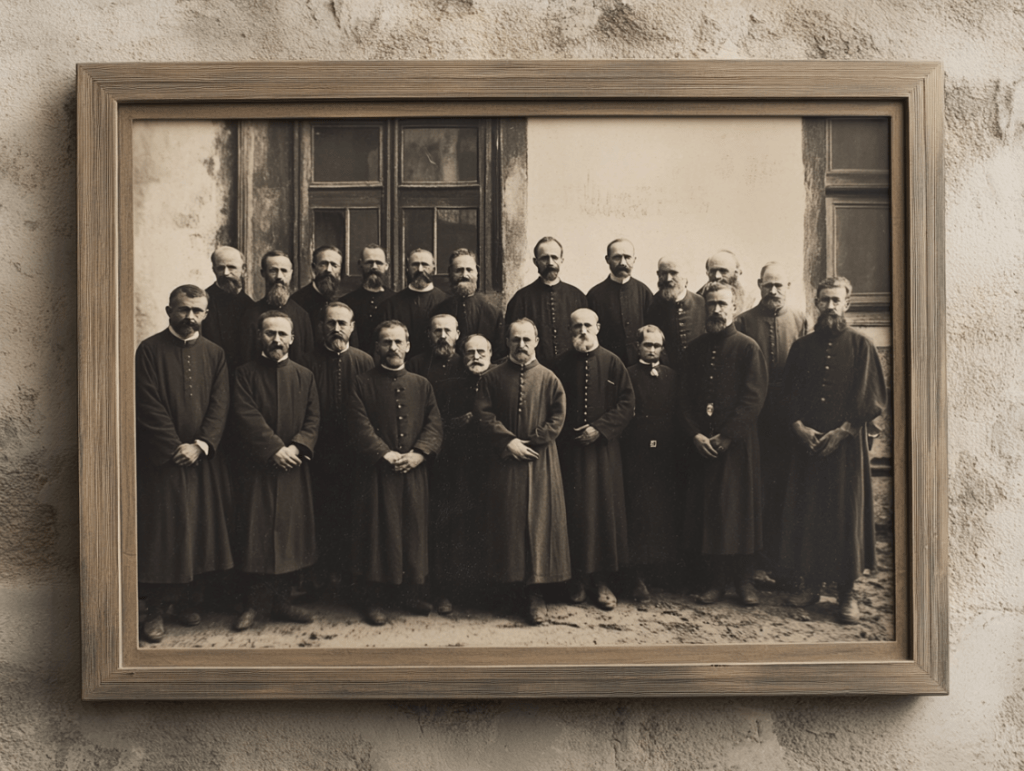
Former residents of the monastery (AI-generted)
“Former residents of the monastery,” Sister Alda replied. “Some were clergy, others were laypeople who sought refuge here during turbulent times.”
Julia paused before a faded painting of the Virgin Mary. “This must have been a place of solace for many.”
Sister Alda smiled. “Indeed. Even now, people come here seeking peace and reflection.”
過往的回聲
在修道院內,修女 Alda 帶領大家穿過一條狹窄的走廊,來到一間簡樸的展覽室。牆上排列著玻璃展示櫃,裡面陳列著修道院豐富歷史的文物。
Alda 修女指著一組禮儀用品說:「這些聖杯和祭衣可以追溯到 17 世紀,當時這座修道院是充滿活力的禮拜中心。」
Emma 靠近仔細觀察一件精美的刺繡祭披,輕聲說:「這手工藝真是令人驚嘆。」

Tomas 指著一排舊書問:「這些是原版書籍嗎?」
「是的,」Alda 修女點頭說:「有些是 18 世紀的聖歌集和祈禱書,用拉丁文和薩莫吉希亞方言書寫。即使在壓迫時期,修士們也努力保存了它們。」
Ben 注意到牆上有一組黑白照片,問:「這些人是誰?」
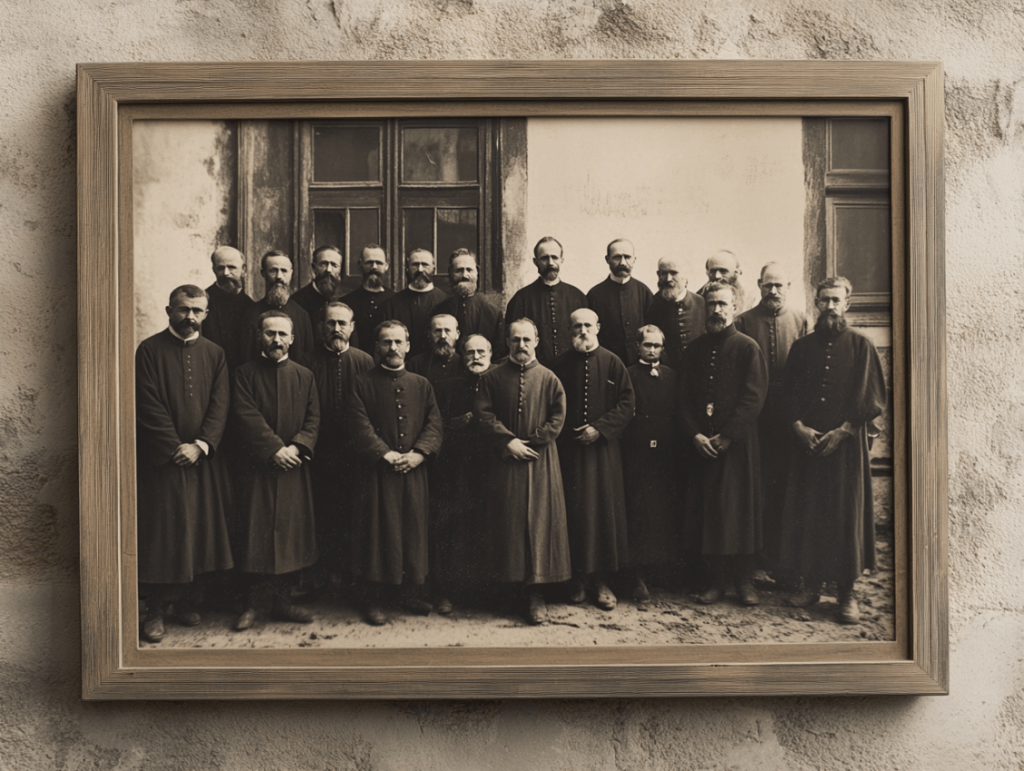
修道院住民 (AI 生成)
「是修道院的前居民,」Alda 修女回答:「有些是神職人員,其他則是在動盪時期尋求庇護的平民。」
Julia 停在一幅褪色的聖母瑪利亞畫像前,說:「這裡對許多人來說一定是一個慰藉之地。」
Alda 修女微笑著說:「的確。即使現在,仍有人來這裡尋求平靜與反思。」
Between Forests and Faith
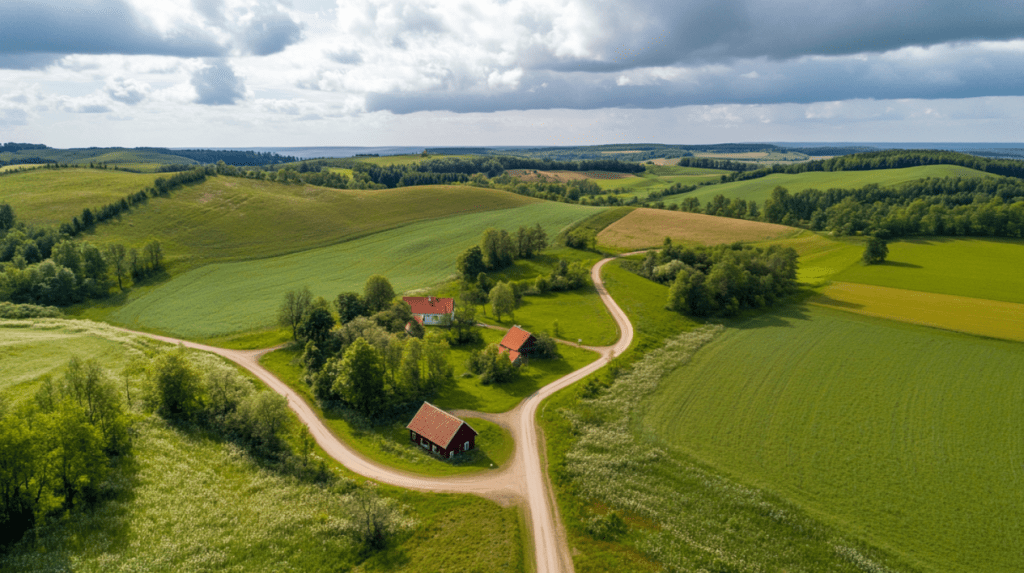
The road wound gently through hills and pine forests, the late afternoon light slanting across the windshield.
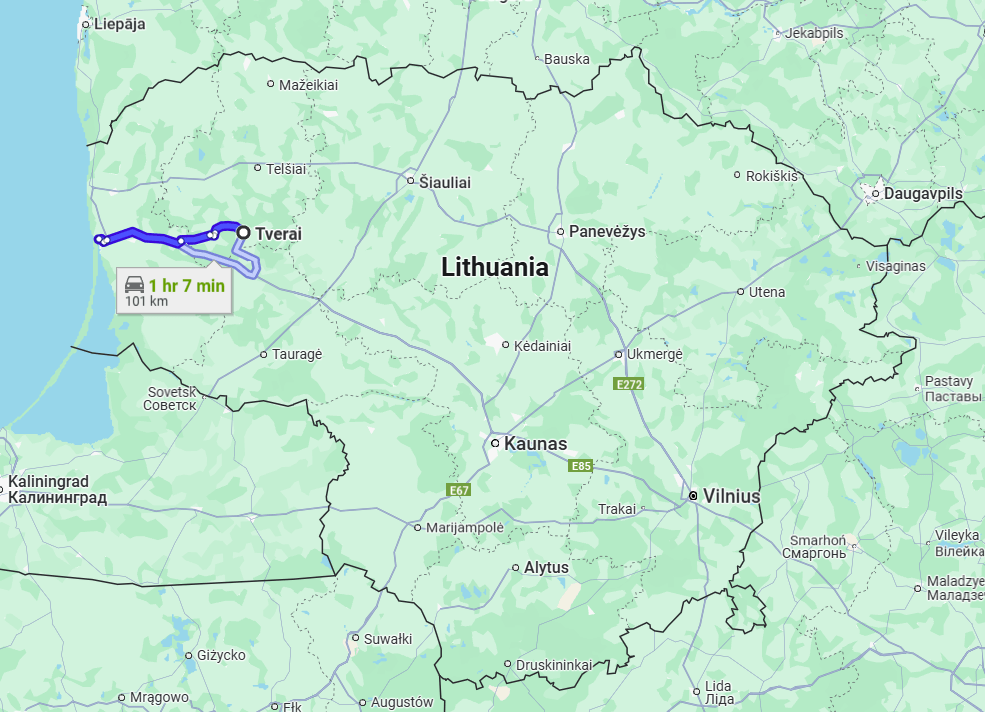
They had left the monastery behind an hour ago, heading east toward a small rural guesthouse outside Tverai. The silence in the car was comfortable—until Julia, still looking out the window, said, “You know, I was just thinking. It’s kind of surprising that Lithuania stayed Catholic through all that Reformation chaos in Europe.”
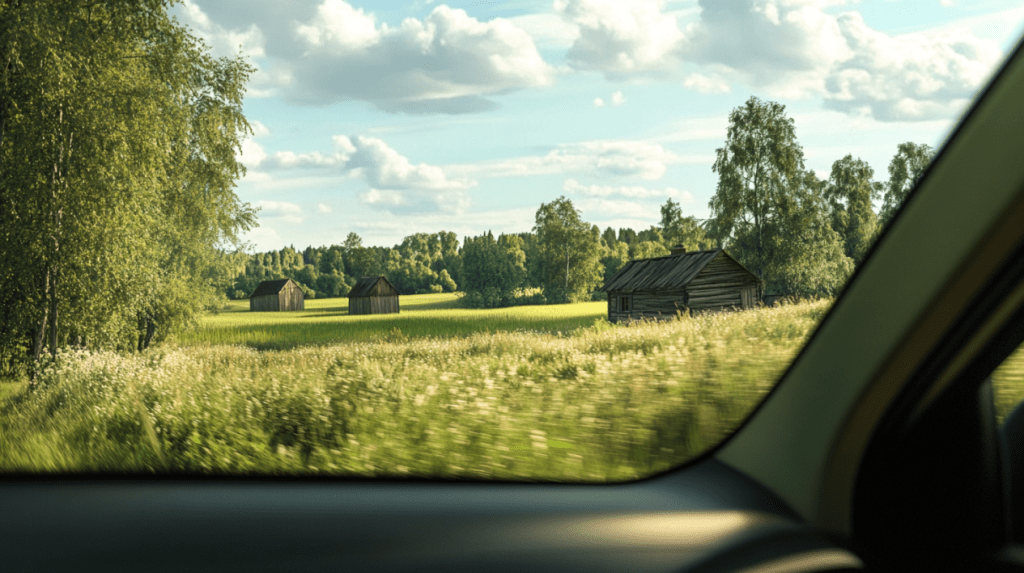
Tomas glanced in the rearview mirror. “Not so surprising if you look at the political alliances. The Polish-Lithuanian Commonwealth was staunchly Catholic. The nobility had strong ties to Rome, and they weren’t keen on shaking that up.”
Ben leaned forward between the front seats.
“But didn’t Protestant ideas spread across Europe pretty fast? I mean, Luther’s stuff made it to Scandinavia and the Baltics pretty early.”
“True,” said Emma. “But Lithuania had a different linguistic and cultural landscape. Luther’s writings were in German. Most Lithuanians at the time spoke Samogitian, Aukštaitian dialects, or Polish. The messages didn’t quite land.”
“And don’t forget the Jesuits,” added Julia. “They were everywhere—founding schools, training clergy, even publishing in the local languages. It was like a full-scale counteroffensive.”
Tomas nodded. “Vilnius University was founded in 1579 by Jesuits. It wasn’t just education—it was a strategy to hold cultural ground.”
Renata, who had been quiet, finally spoke up. “So it wasn’t just about faith—it was also about identity?”
“Exactly,” said Tomas. “Being Catholic became part of resisting both Protestant pressure and, later, Russian Orthodoxy.”

They passed a wooden cross by the roadside, crowned with flowers and faded ribbons.
Emma looked at it and smiled. “And you still see signs of that everywhere.”
在森林與信仰之間
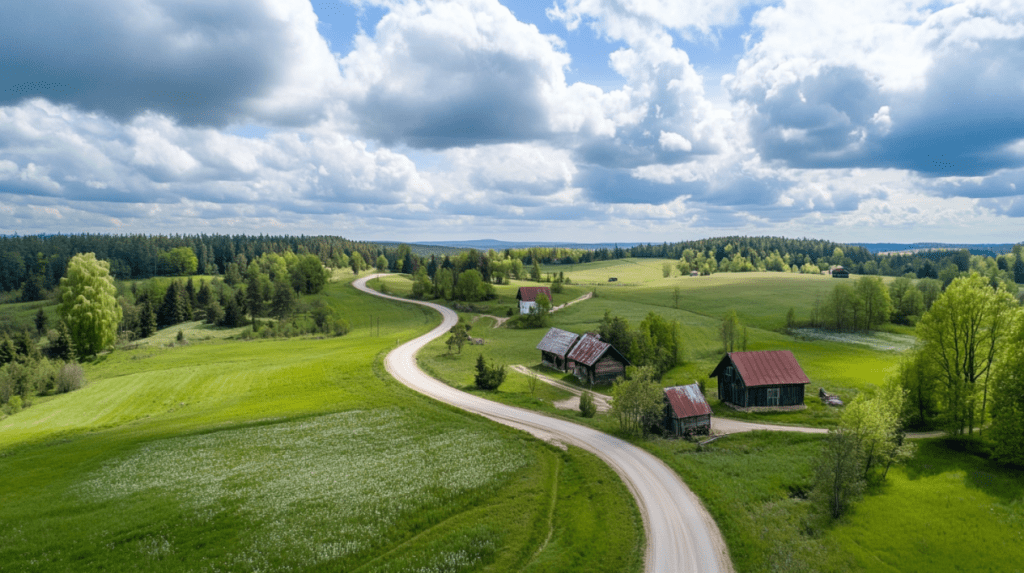
道路在丘陵與松林之間蜿蜒,午後的陽光斜照進擋風玻璃。
他們離開修道院已經有一小時,正往特維賴(Tverai)郊外的一處鄉間旅宿前進。
車內一片寧靜,但這種寧靜並不令人不安——直到 Julia 望著窗外說:「我剛剛在想——立陶宛當初怎麼能在整個歐洲的宗教改革浪潮中還維持天主教身份,真的有點神奇耶。」

Tomas 從後視鏡看了她一眼:「如果從當時的政治聯盟來看,其實不奇怪。波蘭-立陶宛聯邦本來就是天主教勢力主導,貴族跟羅馬教廷的關係深,不太可能主動去翻轉那一套體系。」
Ben 身子往前傾了一些:「可是新教的思想傳得很快不是嗎?像路德的東西很早就傳到北歐跟波羅的海沿岸了。」
Emma 說:「那是沒錯。不過立陶宛的語言和文化環境不太一樣。路德的著作是德文寫的,但那時候的立陶宛人多半講薩莫吉希亞語、奧克什泰提亞語,或者是波蘭語。那些新思想不太容易傳下來。」
Julia 接著說:「而且耶穌會真的無所不在。他們開學校、訓練神職人員,甚至還用本地語言出版教義。那幾乎是一場全面反擊。」
Tomas 點頭:「維爾紐斯大學就是他們在 1579 年創立的。不只是教育,更是一種文化上的防禦行動。」
一直安靜的 Renata 忽然說話:「所以這不只是宗教信仰的選擇,也是一種文化認同的維持?」
「正是這樣,」Tomas 說:「天主教信仰成了一種抵抗外來宗教壓力的方式——先是對新教,後來也對俄羅斯正教。」
他們的車經過路旁的一座木製十字架,上面插著乾花與褪色的緞帶。
Emma 看著它微微一笑:「現在還到處都能看到這些痕跡呢。」
Arrival Near the Border
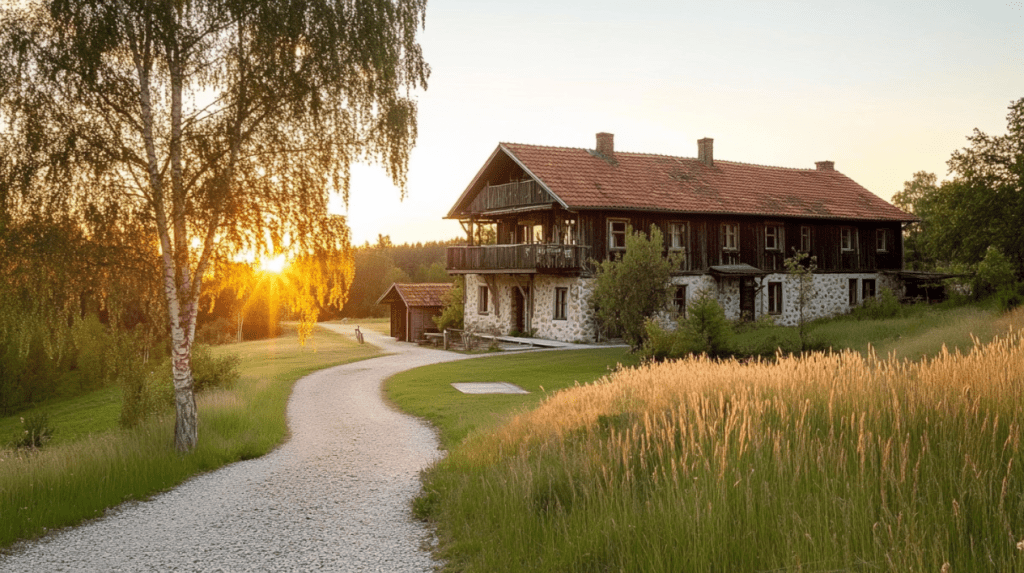
They arrived just before sunset. The gravel road curved gently through tall grass and low hedgerows, revealing a long, timber-framed guesthouse tucked between a line of old birch trees.
The lower floor was plastered in white lime, the upper two made of dark, weathered wood with slanted red roofs. A few dormer windows caught the last of the sunlight, and wooden shutters hung slightly uneven.
“I love buildings like this,” Julia said, getting out of the car. “Looks like it’s been here for a century.”
“It probably has,” Tomas replied. “This area didn’t get much bombed or rebuilt. A lot of the older farmhouses and inns stayed in use.”
The air smelled faintly of hay and pine. In the distance, they could hear a dog barking and the hum of a tractor dying down.
They checked in with a soft-spoken woman who lived on-site and were shown to two adjoining rooms under the steep roof.
The walls inside were rough timber, with handwoven blankets on simple wooden beds. The shared hallway had a low table with a pot of wildflowers and a small icon of the Virgin Mary tucked into a wooden frame.
As they unpacked and washed up, the last light faded into a pale lavender sky. Outside, a pair of storks landed in a field, walking slowly through the grass.
抵達邊境鄉間
他們抵達的時候,太陽正要落下。碎石路在高草與低矮灌木間蜿蜒,最後露出一棟長型的木造旅館,藏在一排老樺樹後方。

建築下層是石灰白牆,上方兩層是深色、風雨侵蝕過的木板,屋頂斜斜地覆著紅瓦。幾扇閣樓小窗反射著夕陽,木百葉窗有些已經歪斜。
「我超喜歡這種建築,」Julia 下車時說。「看起來有百年歷史了。」
「說不定真的有,」Tomas 回應道。「這區戰爭時沒怎麼被炸,也沒大翻修,很多舊農舍或客棧都還在用。」
空氣裡有乾草與松樹的味道。遠方傳來狗叫聲與拖拉機慢慢熄火的聲音。
他們辦理入住時,接待他們的是一位住在此地的老婦人,聲音柔和。
她帶他們上樓到兩間相連的房間,屋頂低矮,木牆未經加工,床鋪上鋪著手織毛毯。走廊裡擺著一張矮桌,上面插著一壺野花,還有一幅嵌在木框裡的聖母像。
他們一邊整理行李、一邊洗把臉,天色也漸漸變成淡紫色。窗外,一對鸛鳥正降落在田野間,慢慢走進草叢裡。
Across the Borderline
Dinner was light—just cold cuts, cheese, boiled eggs, and dark bread, laid out by the innkeeper on a small table near the window. The group brought down a bottle of local beer they had picked up earlier and sat around as the lanterns flickered on.
“This place feels really remote,” Ben said, stretching. “I didn’t realize we were this close to Latvia until I checked the map.”
“We’re maybe thirty minutes from the border,” Tomas replied. “Some of these villages actually have cousins on both sides.”
“Do people cross over for work?” Emma asked.
Tomas nodded. “Occasionally. Latvia’s economy was a bit stronger for a while—faster digital infrastructure, some higher wages in certain sectors. But honestly, now it depends on the field.”
Julia added, “I met a few geographers at a conference last year who worked in Riga but lived in northern Lithuania. Said housing was cheaper here.”
“And what about churches?” Renata asked. “Are they connected across the border?”
“They were, historically,” Tomas said.
“Some Catholic parishes still maintain ties. But language and national policies create distance too. Latvia’s got more Lutheran traditions mixed in.”
Ben took a sip of beer and said, “So even the churches have borders?”
Julia smiled. “Invisible ones, but yes. Culture rarely aligns perfectly with politics.”
The sky outside had gone fully dark. The windows reflected their faces like faint ghosts against the glass.
邊境的對話
晚餐很簡單——幾樣冷肉、起司、水煮蛋與黑麥麵包,是旅館女主人在窗邊的小桌上擺好的。他們拿出先前買的一瓶當地啤酒,一邊吃,一邊在搖曳的燈光下閒聊。
「這地方真的很偏遠,」Ben 伸了個懶腰說。「我剛剛看地圖才發現我們離拉脫維亞這麼近。」
「開車半小時就到邊界了,」Tomas 說。「這一帶很多村子其實都有親戚住在對面。」
「那有人會跨境上班嗎?」Emma 問。
Tomas 點點頭:「有時候會。拉脫維亞前幾年經濟比較強一點,網路建設也比較快,有些產業的薪水稍高。不過現在就看行業了。」
Julia 補充說:「我去年參加一場地理學會議,有幾個人住在立陶宛北部但在里加工作。他們說這邊房子便宜。」
「那教會之間會有聯繫嗎?」Renata 問。
「以前有,」Tomas 說。「有些天主教堂現在還保持聯絡,但語言與政策會造成距離。拉脫維亞有更多路德宗傳統。」
Ben 喝了一口啤酒笑著說:「原來教會也有邊界?」
Julia 微笑:「看不到的邊界,但有啊。文化從來不會跟政治完全對得上。」
窗外已是全黑,玻璃上映出他們的臉,就像幾道微弱的倒影。
Cross-border Commute ?
Ben leaned forward. “If they live here and work in Riga… do they really commute every day?”
Julia laughed softly. “No, not usually. It’s about two and a half hours one way, depending on where you start. Most of them stay in the city during the week and come back on weekends.”
“Like students or seasonal workers,” Emma added.
Tomas nodded. “There’s actually a small shuttle line that runs across the border a few times a week. But daily commuting? Not really practical unless you’re very close to the main road.”
跨國通勤 ?
Ben 身子往前傾了傾:「如果住在這裡、工作在里加……他們真的每天通勤嗎?」
Julia 輕笑了一下:「通常不會啦。看起點在哪,單程大概要兩個半小時。他們多半是平日住在城市,週末才回來。」
「像大學生或季節工那種,」Emma 補了一句。
Tomas 點頭:「其實現在有小型接駁車每週幾天會跨國開,但要每天來回……除非你家就在主幹道旁,否則不太實際。」
Rail Lines and Borders
Ben leaned back against the window frame. “You know, earlier when we talked about commuting to Riga—I wonder if that would change once Rail Baltica is fully running.”
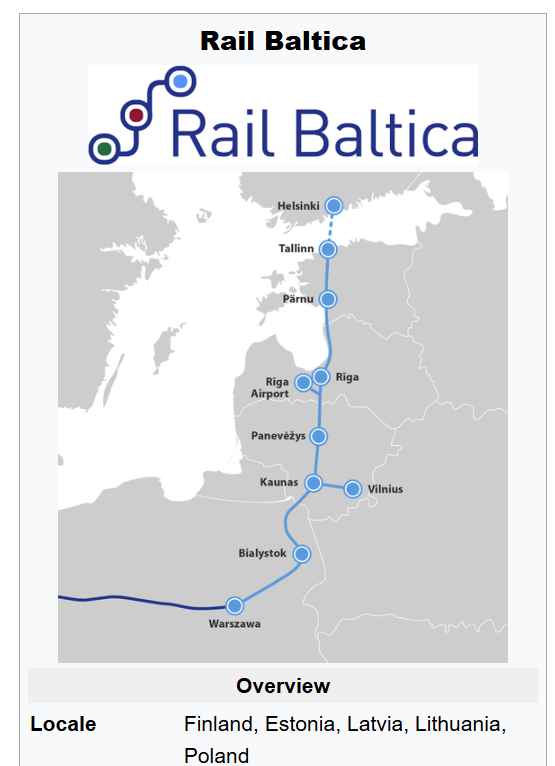
Julia looked up. “The high-speed line? Yeah, that could be a game changer. If it actually links Warsaw to Tallinn with real speed, not just promises.”
Tomas chuckled. “Lithuania’s portion is under construction, but there’s a catch—these trains can’t stop too often. That’s the trade-off with high-speed lines.”
Emma nodded. “Exactly. If it only stops in major cities, then places like this—quiet, rural, slightly off the main track—won’t benefit much.”
Renata looked up from her phone. “So even if it flies by overhead, it’s like we’re still on the sidelines?”
Tomas gave a small shrug. “In a way, yes. It’s symbolic progress, but it won’t bring daily convenience to smaller towns.”
Julia added, “It’ll help international business and tourism. But for local people who just want a job an hour away, it might not change much.”
Ben said, “That’s the strange thing about fast connections—they can also highlight how far away you are.”
Everyone paused, letting the idea settle in, as the room fell quiet except for the distant ticking of the hallway clock.
鐵路與邊界
Ben 靠著窗框坐下,說:「你們不覺得……如果 Rail Baltica 高鐵真的通了,通勤去里加也許就變得可能?」
Julia 抬起頭:「嗯,那條從華沙到塔林的高鐵吧?如果真的實現了,不只是交通方式,整個地區的連結可能都會不一樣。」
Tomas 笑了笑:「立陶宛那一段正在蓋,不過有個問題——高鐵不能停太多站。速度是靠少停換來的。」
Emma 點點頭:「對啊。如果只停大城市,那像這種鄉下、離主幹線有點距離的地方,就不太會受惠。」
Renata 抬頭問:「所以就算高鐵從頭頂呼嘯而過,對這裡還是沒什麼差?」
Tomas 聳肩:「某種程度上是。它代表一種進步的象徵,但未必對日常生活帶來改變。」
Julia 說:「它會幫助國際商務跟觀光沒錯,但如果只是想去一小時外的地方工作,可能還是照舊。」
Ben 愣了一下,然後說:「有時候快速的連結,反而讓人更感覺到自己多遠。」
大家靜了一會兒,房間裡只剩下走廊掛鐘低聲的滴答聲。
Winding Down

Back upstairs, the hallway was dim and quiet.
A single reading lamp cast a warm circle on the floor, and the wooden steps creaked under their feet. Emma opened the window just a crack to let in the night air—cool and damp with the scent of earth.
Renata sat cross-legged on her bed, going through the clips she had filmed earlier.
“Some of these shots at the fish market are pretty good,” she said. “I might start cutting together a short teaser tomorrow.”
Ben was crouched by the window with his camera.
“I got a few timelapses going—one from the roof window, one down in the yard. If the clouds stay away, the stars should show up around midnight.”
Julia was flipping through a notebook.
“Do we know yet where exactly we’re stopping tomorrow? Somewhere between here and the wetlands?”
Tomas nodded. “There’s a small historical site we could visit—an old manor near the forest, and a village that still has traditional wooden barns. Nothing touristy.”
“Perfect,” Emma said. “A quiet day.”
夜色慢慢沉下來

回到樓上,走廊昏黃而寧靜。
只有一盞閱讀燈在地板上灑下一圈溫暖的光,他們踩在木頭樓梯上,發出細細的咯吱聲。Emma 打開窗戶一條縫,讓夜風透進來——帶著一點泥土與濕氣的味道。
Renata 盤腿坐在床上,邊滑動平板邊說:「魚市場那幾段拍得還不錯。我明天可能會剪一支 teaser。」
Ben 則蹲在窗邊調相機:「我有拍兩個縮時,一個從閣樓窗戶,一個在院子裡。如果雲沒蓋住,半夜應該可以看到星星。」
Julia 翻著筆記本:「我們明天是先去哪裡?是在濕地前的某個點?」
Tomas 點點頭:「有一個小地方可以順路看,是個靠森林的老莊園,旁邊村落還有傳統的木穀倉。沒什麼觀光客。」
「太好了,」Emma 說,「剛好安靜點。」

 Virtual Travel | 虛擬旅行沉浸式英語學習
發表留言