
The Room on Arrival
They took their keys and headed upstairs with their bags.
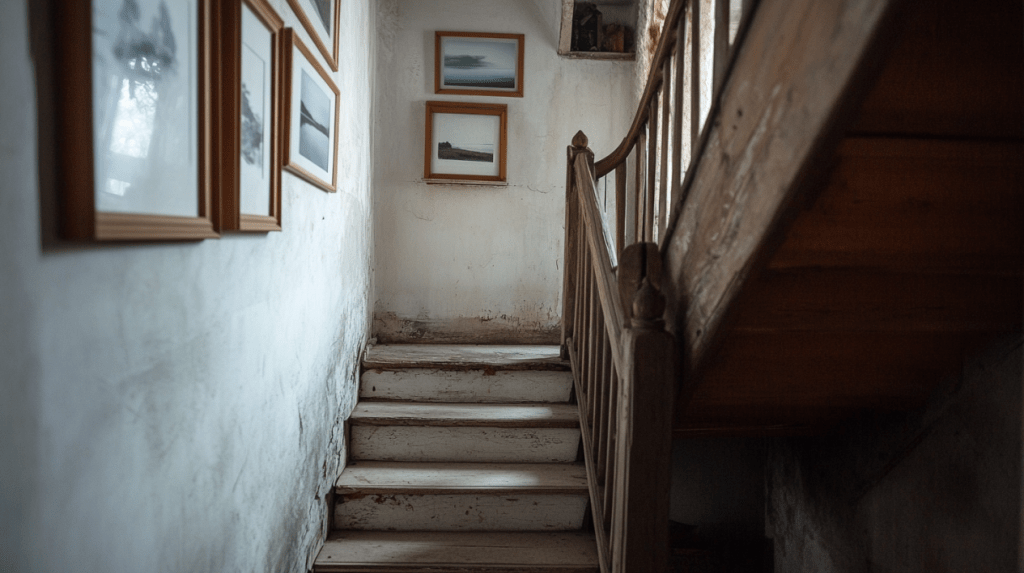
The staircase creaked faintly but felt solid. The hallway was narrow and quiet, lined with a few framed photos of local lakes in simple wooden frames.
Julia opened the door to her room first. The air inside smelled faintly of wood and freshly laundered linen.
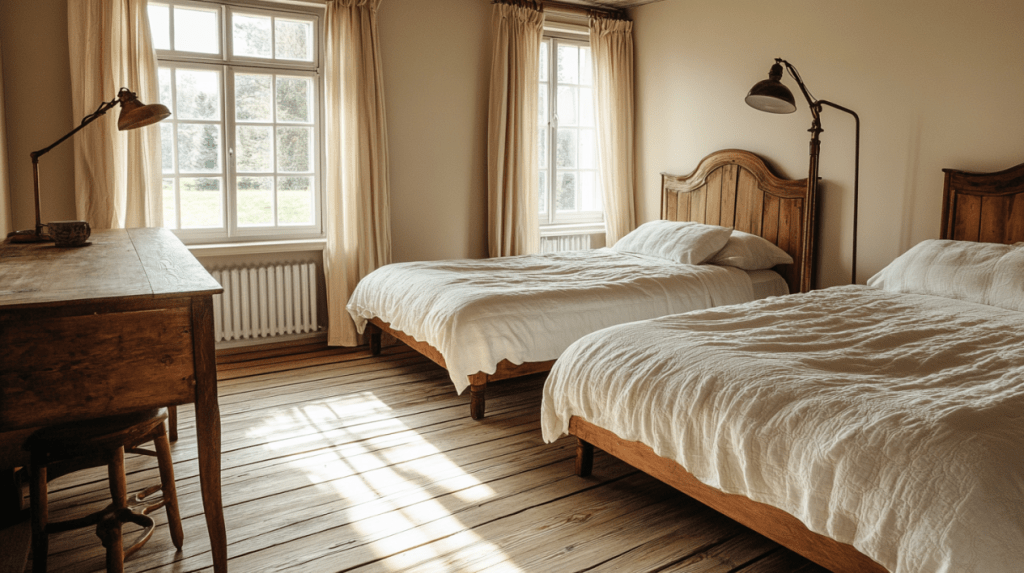
The walls were painted white, with a bed by the window, a small desk, and an old-fashioned standing lamp. The curtains were made of coarse linen. When she drew them back, slanted sunlight spilled across the wooden floor.
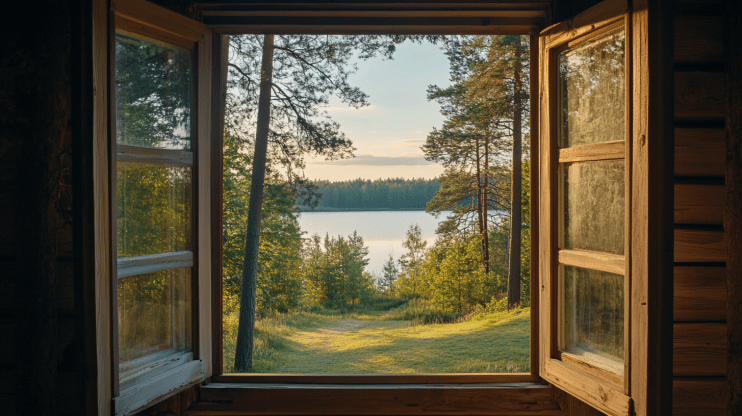
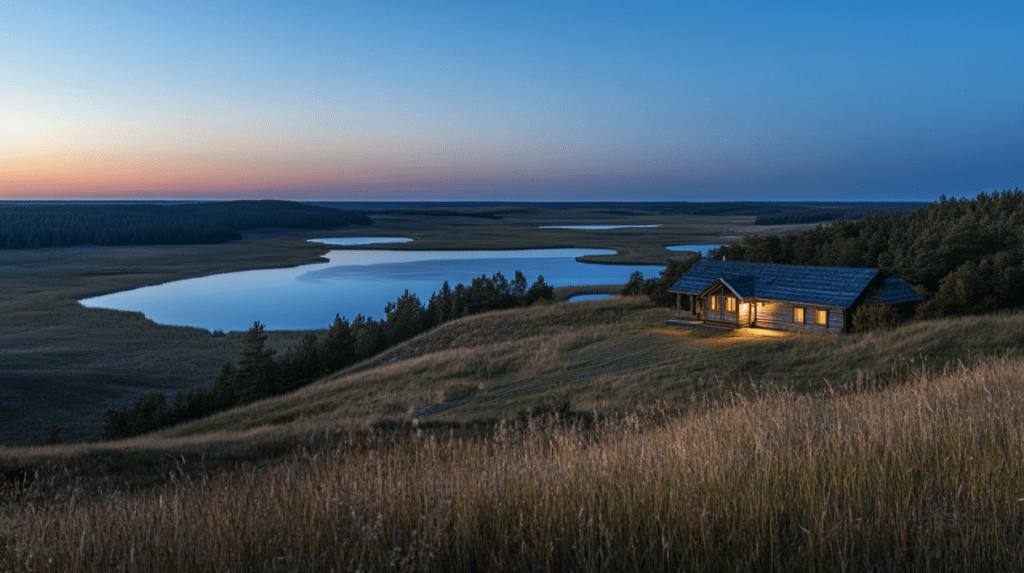
She turned the window latch and opened it with a soft click. Outside, a gentle slope led into the forest, and beyond that, the lake shimmered faintly. There was no wind, but the air felt cool, carrying the mixed scent of damp ground and pine.
Ben opened his window next door and leaned out. “Same view here. Great light, but colder than I expected.”
Emma stood in the hallway, listening. “The acoustics here are strange—it’s like sound doesn’t travel. You say something, and it just… stays with you.”
Tomas came up from downstairs holding a folded park map. “Dinner starts at seven. They said we can reach the Ladakalnis trail directly from here—just follow the path east into the woods.”
Renata stepped into her room last, looking over at the small radiator in the corner. “This is the kind of room that makes you go quiet. You don’t even have to do anything—it just makes you listen to yourself.”
入住
他們拿到鑰匙後各自拉著行李上樓。
樓梯是老式的木梯,有些微的聲音,但踩起來穩。旅館的走廊窄而安靜,牆上掛著幾幅當地湖泊的照片,用木框簡單地裝起來。

Julia 先推開房門,裡頭一股木頭混著洗過的亞麻布味道飄出來。
牆壁刷成白色,床鋪靠著窗,一旁有張小書桌和一盞老式立燈。窗簾是粗麻布做的,拉開後,陽光斜斜地灑在木地板上。

她轉開窗栓,窗戶咔一聲打開,外面是一片低坡與樹林,遠處湖水閃了一下。沒有風,但空氣是涼的,帶著濕地與針葉混合的氣味。
Ben在隔壁房間也打開窗,探頭出來:「我們房間看出去的方向是一樣的。光線很好,但感覺空氣比預期的冷一點。」

Emma站在走廊上環顧四周:「這裡的聲音很乾淨,幾乎沒有回音。你講一句話,它就停在你自己身邊。」
Tomas從樓下走上來,手上拿著一張園區地圖:「晚餐七點開始。他們說如果要走 Ladakalnis 的步道,可以直接從這裡往東邊的林徑接過去。」
Renata最後才進房,一邊看著牆角的小暖氣機,一邊笑著說:「這房間是會讓人想安靜下來的那種,不需要做什麼,就會聽自己在想什麼。」
Dinner
At seven sharp, they came down from their rooms and stepped into the small dining room on the first floor.
The space was modest but warm, clean, and inviting. Along one wall, a row of small windows let in the last of the daylight—just enough to catch a faint reflection of the lake. A few vintage wall lamps glowed amber against the wood-paneled walls.

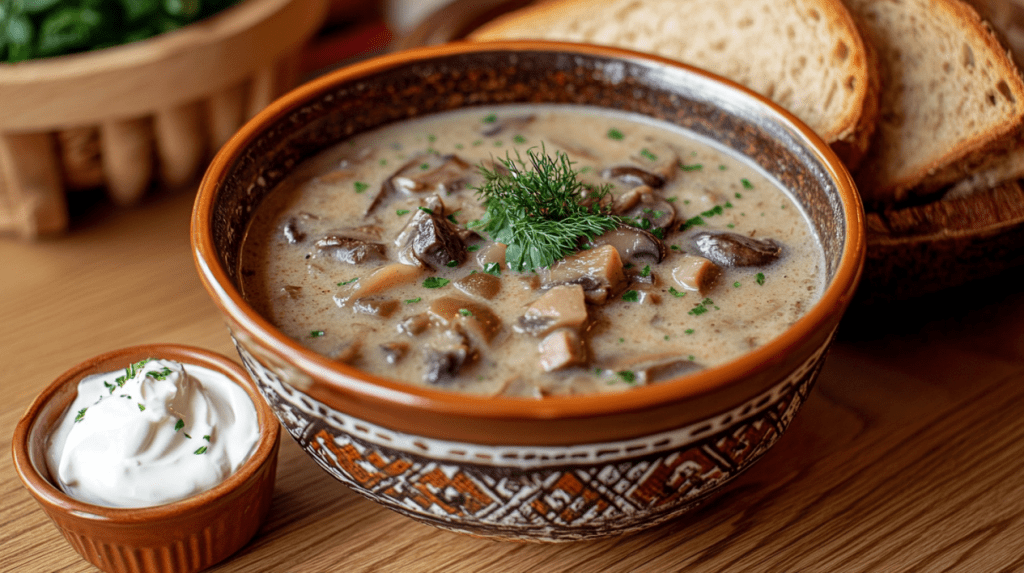
There was no menu. Dinner was a fixed meal prepared with local ingredients. Tonight’s main dish was rolled pork with buckwheat and stewed vegetables. It came after a bowl of mushroom soup, served with slices of dark rye bread and a small bowl of tangy cultured cream. Dessert was a modest piece of honey cake with house-made berry preserve.

Julia looked into her soup, noting the sprigs of dill. “The fungal biodiversity in these forests is surprisingly high. Some areas still run seasonal identification surveys.”
“Lithuanians seem to really care about mushrooms, right?” Emma asked between spoonfuls. “I saw so many types at the market last week.”
Tomas nodded. “Especially around old-growth reserves like these. In some zones, wild mushrooms can only be picked for personal use—not for commercial sale.”
Ben had just snapped a photo of the plate in front of him. “This kind of layout’s perfect for documentation. And look at the cream—the color’s deeper than what we usually see.”
Renata tasted the honey cake and smiled. “This must be buckwheat honey. Strong aroma, not too sweet.”
They ate slowly. No one hurried, and conversation faded into long pauses. Outside, the sky deepened into blue, and the silhouettes of trees merged with the lake’s edge. No music played—just the occasional clink of cutlery against wood.

Renata glanced at the mushrooms in her soup. “Are these cultivated, or are they foraged?”
Julia set down her spoon. “Most mushrooms here are foraged. Only a few types, like shiitake or king oyster mushrooms, are commercially grown in Lithuania. Things like porcini or morels—those usually come straight from the forest.”
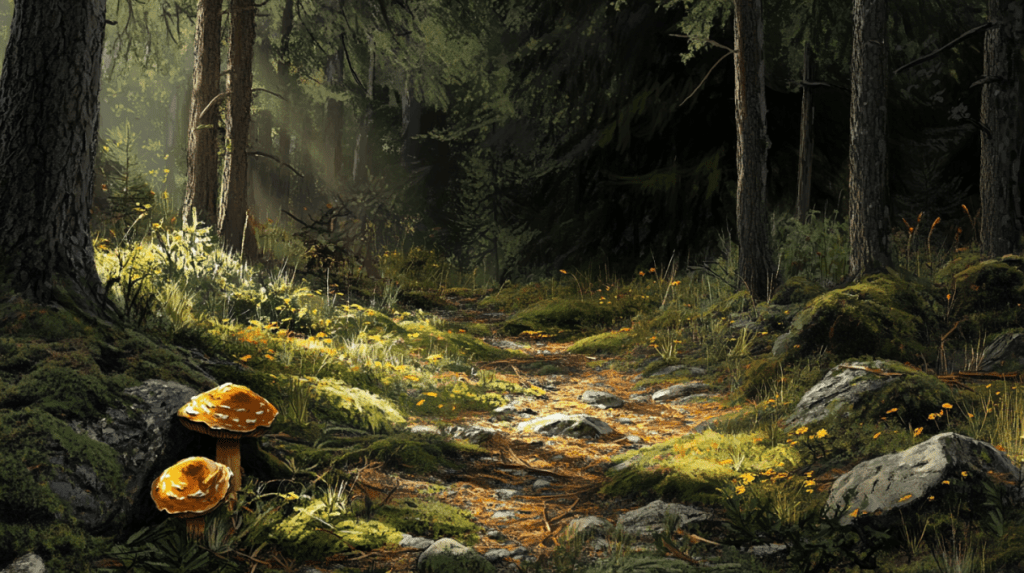
Tomas added, “Some villages even have informal zones for foraging. The wetlands near lakes tend to have rarer species. And lately, some NGOs have been promoting origin labeling and limits to prevent overharvesting.”
Emma nodded. “That would affect pricing too, right? Foraged varieties are less predictable, probably more expensive.”
Ben, snapping a final shot of the dish, grinned. “No wonder the soup tastes like it has a backstory.”
晚餐
七點整,大家從房間下樓,走進一樓的餐廳。
空間不大,但擺設得溫暖、乾淨。靠牆一側是一排小窗,窗外還有些微光,能隱約看到湖水的反射。屋內點了幾盞老式壁燈,光線微黃,映在木頭牆上。

餐廳不提供菜單,而是當地農家套餐。
今晚的主菜是捲豬肉佐蕎麥與燉蔬菜,前菜是蘑菇湯,搭配黑麥麵包和發酵奶油。甜點是一小塊蜂蜜蛋糕,附上自家釀的莓果果醬。

Julia看著湯碗裡漂浮著細碎的蒔蘿葉,說:「這一帶森林裡的菌種多樣性很高,有些地方還定期做真菌分類調查。」
「立陶宛人好像特別重視野菇吧?」Emma邊吃邊問,「我在市場看到過滿多品種。」

Tomas點頭:「尤其這區靠近幾個老森林保護帶。部分地區限定只能人工採集,不能商業性收購。」
Ben剛拍了一張剛上桌的餐盤照,低聲說:「這種簡單的盤面組合,很好記錄。你看這個發酵奶油的顏色,比我們一般見到的還濃。」
Renata嚐了一口蜂蜜蛋糕,眼睛一亮:「這個應該是加了蕎麥蜜,很香,但不膩。」
他們吃得慢,不急,也不太聊天。窗外天色慢慢暗下來,湖邊的剪影和樹影合成一片深藍。沒有背景音樂,只有餐具與木桌偶爾碰撞的聲音。

Renata看了一眼湯裡的蘑菇,問道:「這個是種出來的,還是去森林裡採的?」
Julia放下湯匙:「這裡的野菇絕大多數是天然採集的。種植的話,立陶宛目前只有少量香菇和杏鮑菇會商業化種植,但像這種牛肝菌或羊肚菌,通常都是從森林裡來的。」
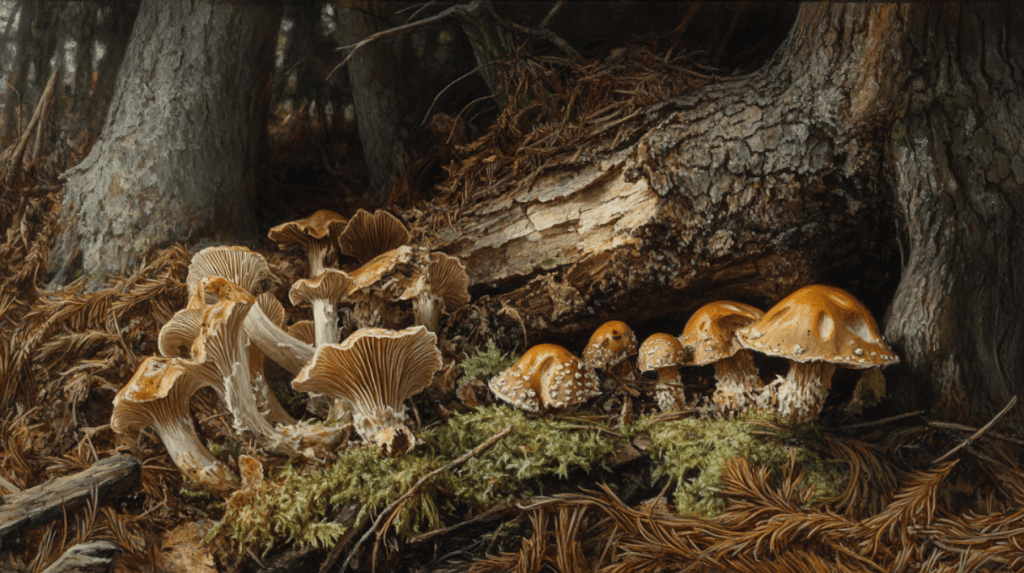
Tomas補充:「有些村落甚至會分區域採集,像靠近湖邊的濕地種類比較特別。最近幾年也開始有 NGO 在這一帶推動登錄蘑菇來源、避免過度採集。」
Emma點點頭:「那這樣的管理也會影響市場價格吧?天然的量不穩定,反而更貴。」
Ben一邊把餐盤拍好,笑著說:「難怪這邊的菇湯喝起來像是有背景一樣。」
Planning the Day Ahead
After dinner, they lingered at the table.
The host brought out some herbal tea and honey. They gathered around the window-side table, the darkness outside gradually thickening.

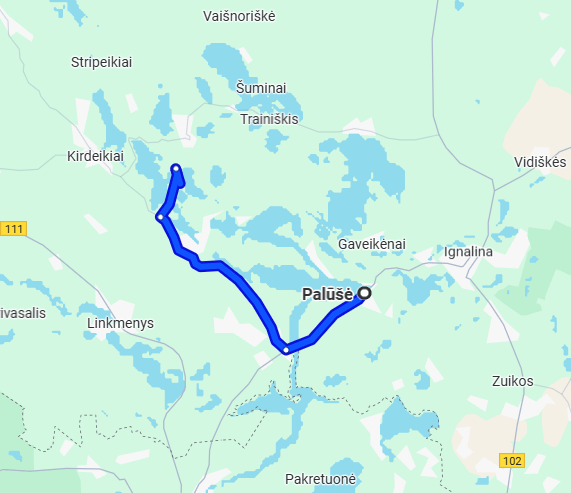
Tomas unfolded a map and spread it across the table. “We’re here in Palūšė. Tomorrow, we can follow this trail northeast—it’s about an hour’s hike up to Ladakalnis.”
“Is the elevation difficult?” Renata asked.
Julia looked over the topography. “It starts gentle, then climbs more steeply near the top. But it’s not high—only about 175 meters.”
“That’s the spot with the six-lake view, right?” Emma asked while sipping her tea.
Julia nodded. “Yes. You can see lakes in six directions from the summit. It’s classic kettle and moraine terrain—formed by glacial retreat. The views are best at low-angle light—morning or evening.”
Ben set down his cup. “So we need to get up early. I want to catch the reflection with that shallow light—once the sun’s high, it’s gone.”
Tomas smiled. “We can do that. Breakfast at 7:30, we leave by 8:15. Should put us at the top right around the first strong light on the lake.”
“Any spots to stop and shoot on the way?” Ben asked.
“There are openings between trees where you can see the lower lakes,” Julia added. “And the forest light changes fast—it’s an interesting trail, with layered glacial features if you look for them.”
Renata smiled. “I think I’ll bring my recorder. I want to try capturing how the forest sounds here.”
Emma looked out toward the lake, now completely dark. “It’s a different kind of journey—from old bricks to this.”
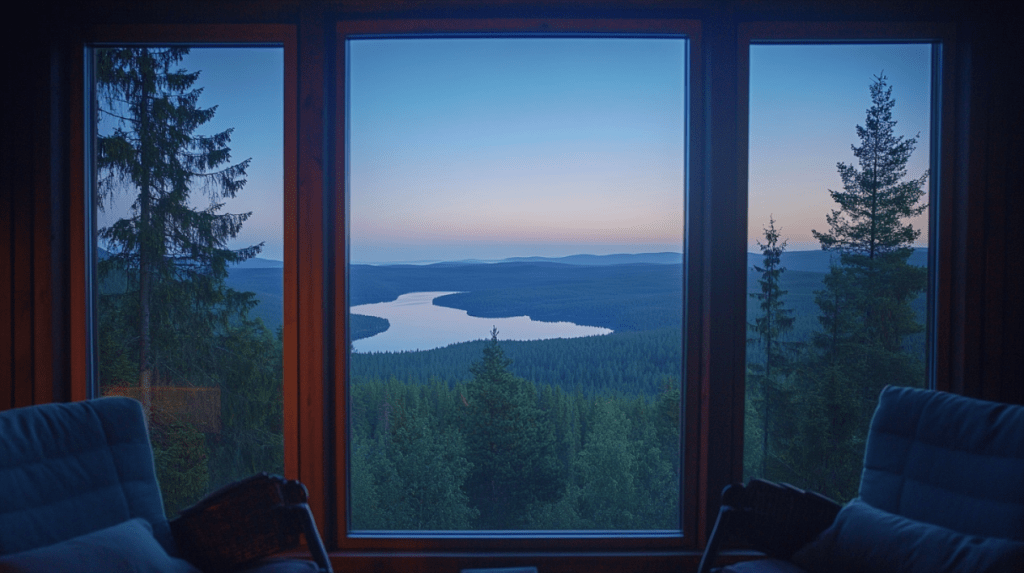
明天的路線與期待
飯後他們沒有馬上離開座位。旅館主人送來幾杯熱茶和蜂蜜,大家圍坐在窗邊的木桌旁,夜色從玻璃窗外慢慢擴散進來。

Tomas打開摺疊地圖,把它攤在桌上。「我們現在在這裡,Palūšė。明天可以走這條林徑,東北邊上坡,大概一個小時可以到 Ladakalnis。」
「地形起伏大嗎?」Renata問。
Julia往地圖上看了看,說:「前半段是緩坡,但接近高地的地方有一段比較急的上升。不過總體不高,大約175公尺而已。」
「Ladakalnis 是那個能看到六個湖的地方對吧?」Emma邊喝茶邊問。
Julia點點頭:「對。從那個點望出去,可以看到六個方向的湖面,排列方式很典型,是冰磧地形加上壺穴湖形成的地貌。視野很開,早上或傍晚的斜光會特別漂亮。」
Ben放下杯子:「那我們明天要很早起嗎?我想拍低角度光的湖面反射,太陽高了就沒戲了。」
Tomas笑著說:「可以。我七點半叫大家吃早餐,八點十五出發。走到山頂應該剛好能趕上第一輪陽光打到湖面。」
「途中有地方可以停下來拍照嗎?」Ben問。
「有幾個樹隙可以看見下面的湖,林中光線變化也不錯,」Julia補充,「我覺得這一段步道本身也有意思,能看到冰河退縮後留下的多層次地形。」
Renata微笑道:「我想帶錄音筆試著錄一段森林裡的聲音。」
Emma看著窗外已經全黑的湖面,輕聲說:「從老磚牆到這裡,不太一樣的旅程。」

 Virtual Travel | 虛擬旅行沉浸式英語學習
發表留言