
At the University Guesthouse
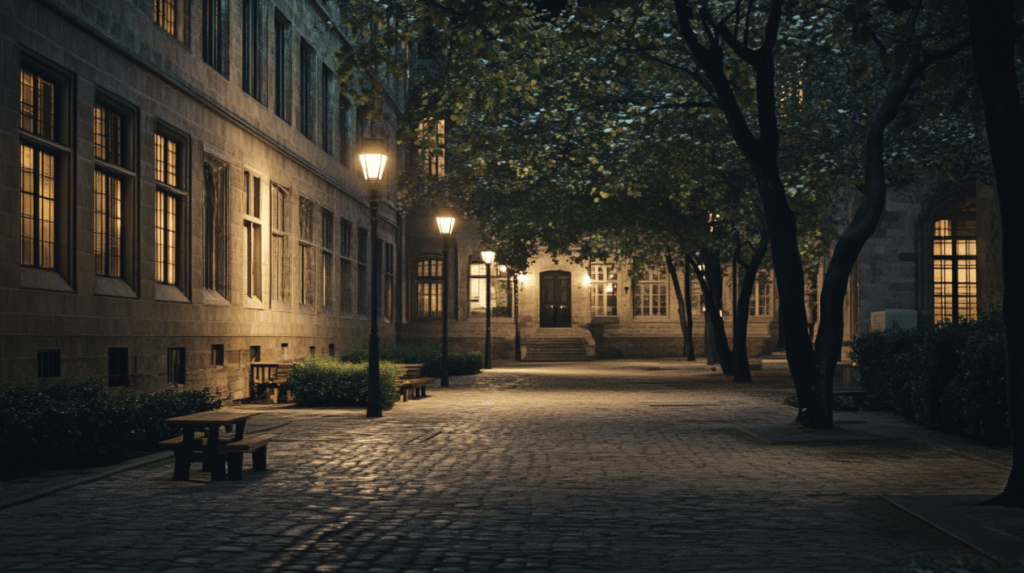
The university guesthouse was modest but inviting, with pale wooden floors, white curtains, and the faint smell of pine carried in from the courtyard.
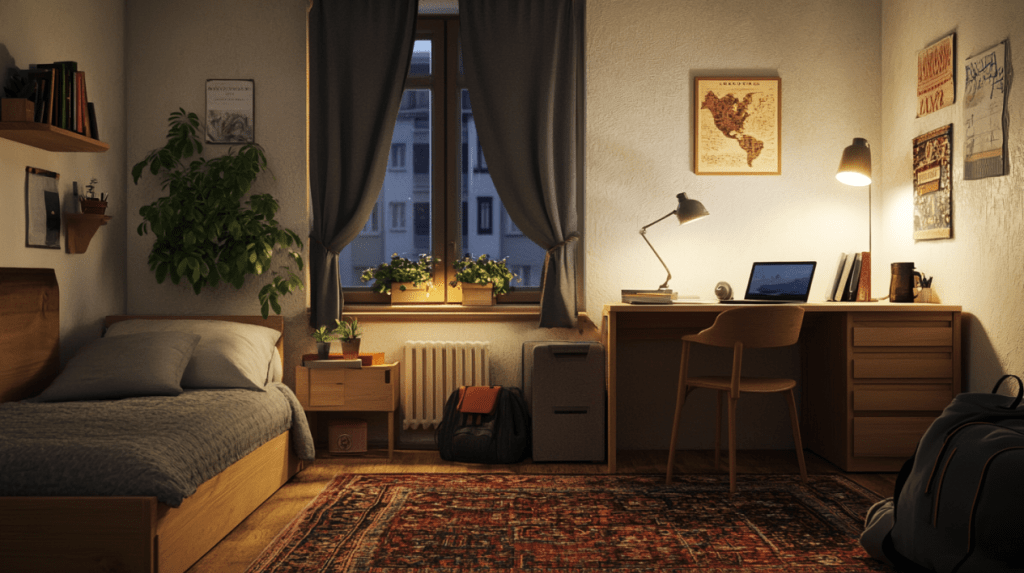
A kettle hissed softly on the desk, and the tall windows gave a partial view of Bergen harbor, its lights shimmering across the water.
Julia unfolded the glossy cruise brochure across the desk while Emma poured tea into two cups.
The academic sessions had ended hours ago, but their minds were still alert—only now turning toward a different kind of journey.
大學的招待所
大學的招待所樸實卻溫馨,淺色木地板、白色窗簾,空氣中還帶著院子裡飄進來的松木香。
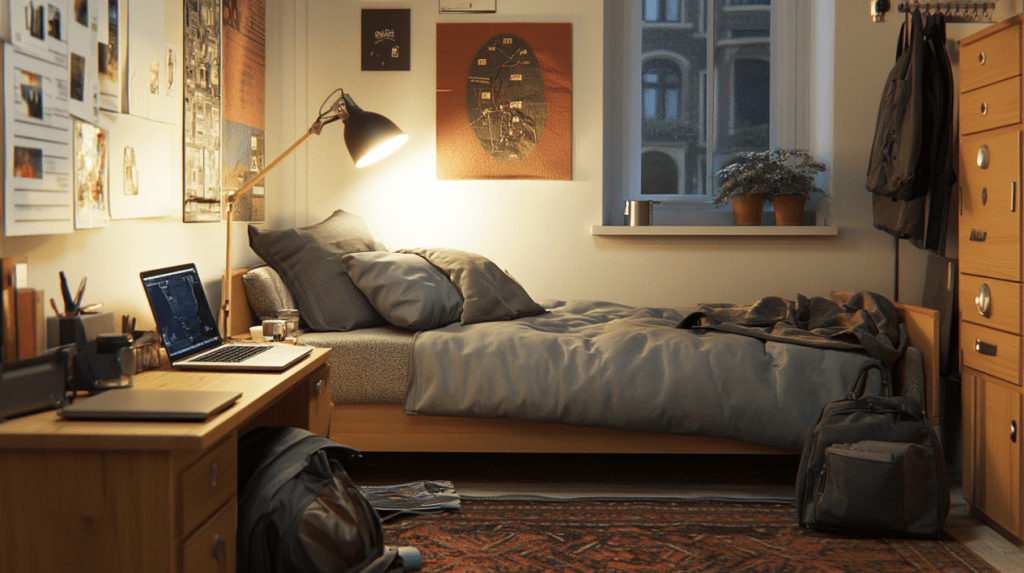
桌上的熱水壺輕輕發出嘶嘶聲,高大的窗戶透出卑爾根港口的夜景,燈火在水面上閃爍。
Julia 把精美的郵輪簡介攤開在桌上,Emma 則倒了兩杯熱茶。學術會議幾個小時前就結束了,但她們的心思依舊清醒——只是轉向了另一段旅程。
The Nature of the Cruise Lines

“These coastal cruises aren’t just for tourists,” Julia explained, tapping the brochure.
“Hurtigruten started more than a century ago as a postal and cargo route. Locals still use it to move between towns.”

Emma raised an eyebrow. “So we won’t just be on a floating hotel?”
Julia laughed. “No, more like a moving thread stitching Norway together. But yes, they’ve modernized—cabins, restaurants, even observation decks. And Havila, a newer line, competes on the same route, focusing on sustainability.”
郵輪的本質
這些沿岸郵輪並非單純為了觀光而存在。

Julia 指著簡介解釋:
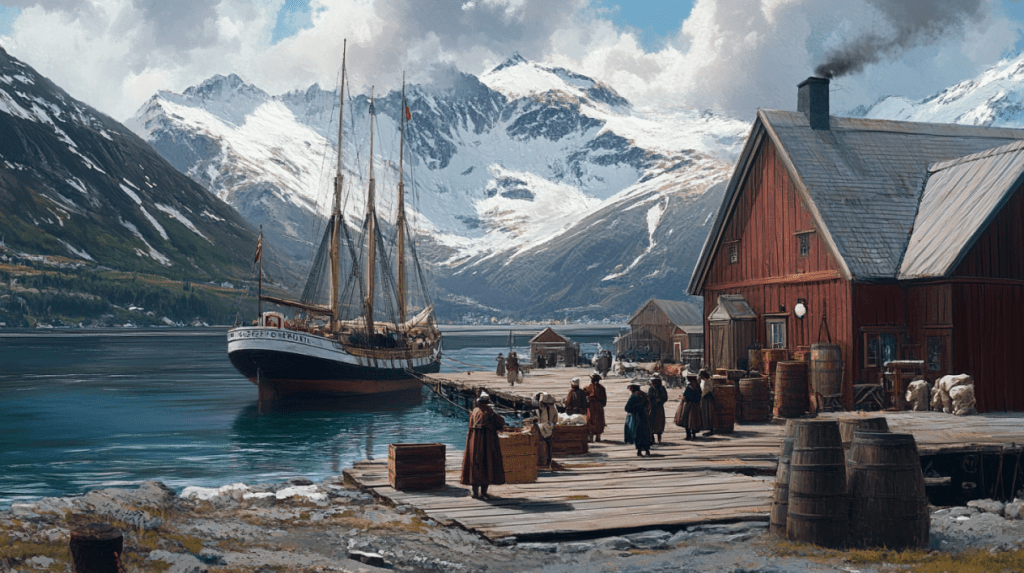
「海達路德郵輪早在一百多年前就已經航行,最初是郵政與貨運的航線,連接著一個個孤立的海岸城鎮。直到今天,挪威人依然會搭這條船在小鎮之間移動。」
Emma 聽了抬起眉毛:「所以我們不是要住在漂浮的豪華旅館裡?」
Julia 笑了笑,搖搖頭:
「不,這更像是一條縫合挪威的移動線索。只是現在它當然現代化了——舒適的艙房、餐廳、觀景甲板一應俱全。近年還出現了另一家新公司 Havila,也在同樣的航線上競爭,特別強調永續和環保。」
Charting the Route
They leaned over the map printed on the back page. The line began in Bergen, hugging the coast northward. “Ålesund, Trondheim, Bodø, Tromsø, and finally the North Cape before reaching Kirkenes,” Julia recited. “Each stop is short—sometimes just an hour, sometimes half a day.”

Emma traced the dots with her finger.
“It’s like a ladder of stories. Hanseatic trade in Bergen, Art Nouveau façades in Ålesund, the medieval archbishop’s seat in Trondheim, and then Tromsø—the ‘gateway to the Arctic.’”
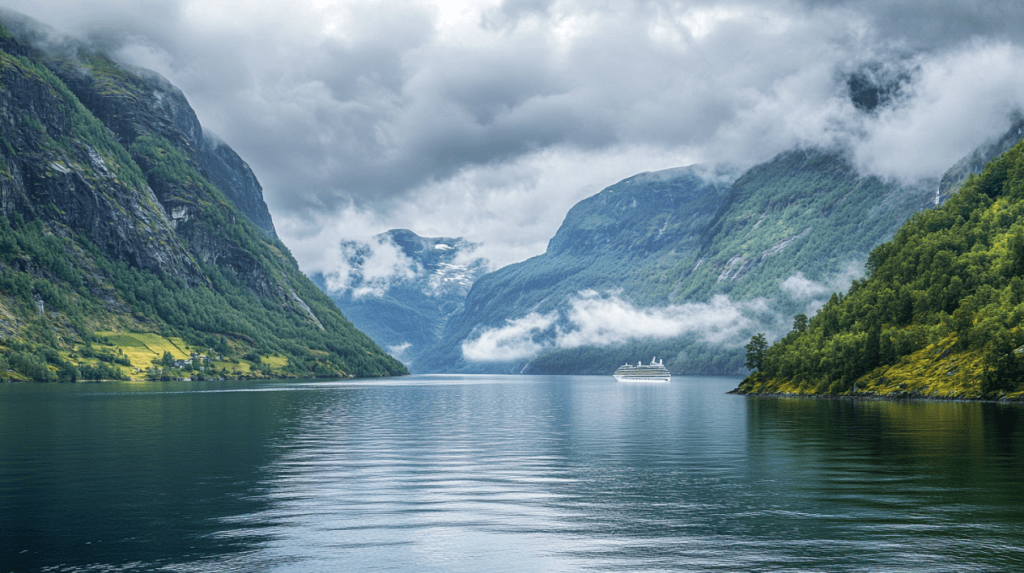
Julia nodded. “And geologically, it’s like reading a book of ice. Each fjord is a chapter carved by glaciers.”
郵輪路線的規劃
她們湊在一起看著簡介背面的地圖。
航線從卑爾根出發,沿著海岸一路往北。「奧勒松、特隆赫姆、博德、特羅姆瑟,最後到北角,再到希爾克內斯。」Julia 念著,「有些停靠只有一小時,有些則能待半天。」
Emma 用手指輕輕劃過地圖上的點:「這就像一部故事階梯。卑爾根的漢薩貿易、奧勒松的新藝術建築、特隆赫姆的中世紀大主教座堂,還有特羅姆瑟——『通往北極的大門』。」
Julia 點頭:「而在地質上,這又像一本冰雕刻成的書。每一個峽灣,都是冰川刻下的一章。」
Who Boards These Ships?
The brochure featured smiling passengers, but Julia explained further. “It used to be mostly Norwegians. Farmers, teachers, even doctors used the ships to travel when roads were impossible.
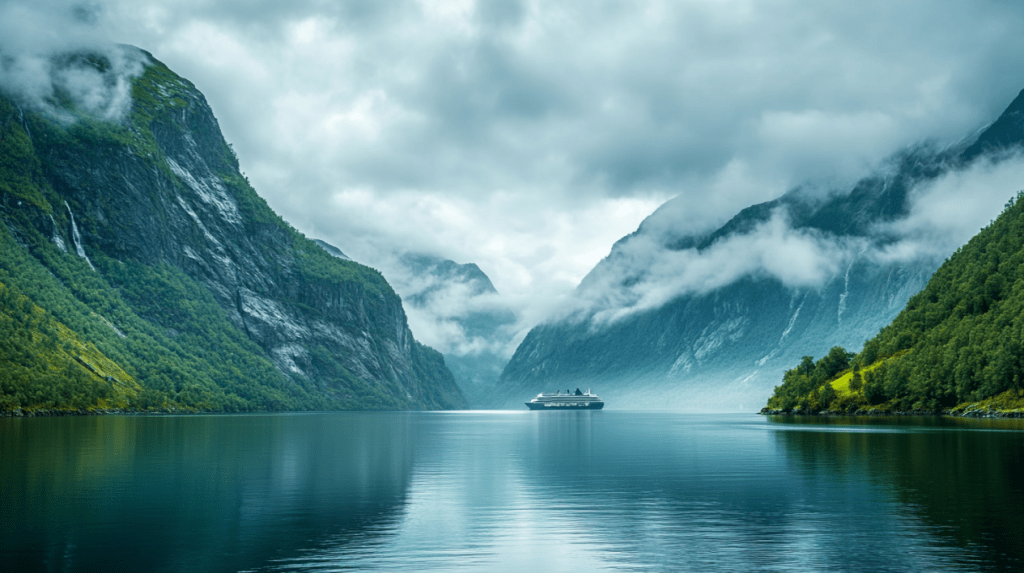
Now, more than half the cabins are booked by visitors—Germans, Brits, French, Americans, Japanese.”
Emma chuckled. “So two professors fit right in. We’ll just blend into this parade of travelers.”
郵輪上的遊客
簡介上的照片都是笑容燦爛的乘客,不過 Julia 補充說:「以前大部分都是挪威人。農夫、老師,甚至醫生都靠這些船移動,因為有些地方根本沒路。」
「現在超過一半的艙房都是外國人訂的——德國人、英國人、法國人、美國人,甚至還有日本人。」
Emma 笑了:「那兩個教授剛好也很搭。我們會無縫融入這場旅行隊伍。」
Packing for Two Worlds
Their list grew longer, shaped by the places they already imagined. A heavy parka for the Arctic nights near Tromsø, where the air could cut like glass.
Waterproof boots, because Julia was certain she would not resist stepping off the path to examine rock outcrops along the fjords.
A small backpack for notebooks and cameras—Emma insisted on both, saying, “Trondheim’s cathedral deserves sketches as much as snapshots.”
Julia smiled. “And in Ålesund, while most tourists admire the Art Nouveau façades, I’ll probably be crouching at the harbor wall, staring at stone patterns.”
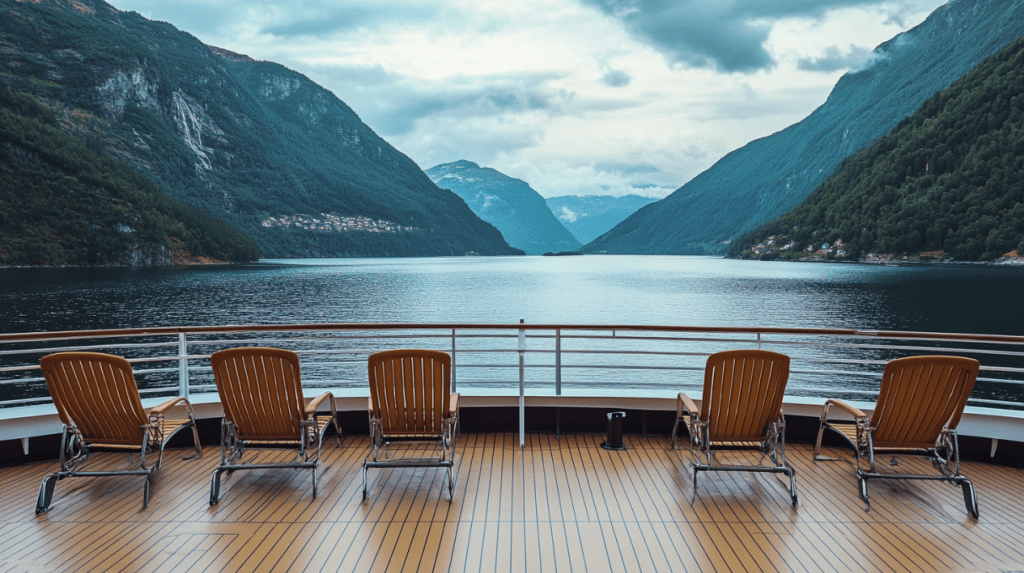
Emma laughed, pouring more tea. “And I’ll be taking notes at the dinner table. Imagine—reindeer stew as we near the North Cape, cloudberries for dessert in the summer light. My field notes will read more like a travel magazine than a conference report.”
整理行李
她們的清單越寫越長,也因為腦中已經浮現了那些景點的畫面。
厚重的羽絨外套,是為了在特羅姆瑟的北極夜裡抵擋如玻璃般銳利的寒風。
防水靴必不可少,因為 Julia 幾乎可以肯定自己會忍不住在峽灣的岸邊偏離路徑,去細看岩層。
還有小背包,用來放筆記本和相機——Emma 堅持要帶兩樣,她笑著說:「特隆赫姆的大教堂既值得拍照,也值得素描。」

Julia 微微一笑:「而在奧勒松,當大部分遊客都在欣賞新藝術風格的立面時,我大概會蹲在港口的石牆邊,研究岩石的紋理。」
Emma 忍不住笑出聲,替兩人添上茶:「而我會在餐桌上做筆記。想像一下——到北角時吃到的馴鹿燉肉,夏夜裡的雲莓甜點。我的田野筆記恐怕會更像一本旅遊雜誌,而不是會議報告。」
At the Edge of the Journey
Emma flipped to the last page of the cruise brochure. “It says the ship ends at Kirkenes. What then? Do we just fly back?”
Julia leaned over, thoughtful. “Kirkenes is more than a terminal. It’s a border town, with influences from Norway, Finland, and Russia. Some researchers come here for Arctic studies, especially climate and borderland culture.”
Emma’s eyes lit up. “So we could stay for a few days. It might be the far north, but perhaps there’s a small university center or a museum?”
Julia nodded. “The Barents Secretariat sometimes hosts talks on cross-border cooperation. And the local museum has archives on wartime history. It wouldn’t be a waste of time.”
Emma laughed. “So instead of rushing home, we could call it a post-conference field trip. You dig rocks, I dig archives.”
郵輪旅程的終點
Emma 翻到郵輪簡介的最後一頁:「船到希爾克內斯就結束了。那之後呢?直接飛回去嗎?」
Julia 靠過來,若有所思地說:「希爾克內斯不只是終點。它是個邊境城市,融合了挪威、芬蘭和俄羅斯的影響。有些研究者會來這裡做北極研究,特別是氣候和邊境文化。」
Emma 的眼睛亮了起來:「那我們可以在那裡住幾天。雖然是北極圈,但也許會有小型的學術中心或博物館?」
Julia 點點頭:「巴倫支秘書處有時會舉辦跨境合作的講座。當地的博物館也有二戰時期的檔案。其實待上幾天也很值得。」
Emma 笑了起來:「那我們就不算拖延回家,而是把它當成會議之後的田野考察吧。你研究岩層,我研究檔案。」
Anticipation of Departure
The clock ticked past midnight. Outside, the harbor lights shimmered through mist, and somewhere in the distance, a ship’s horn sounded. Emma closed the brochure. “So tomorrow we step from conference papers to cabin keys.”
Julia raised her teacup. “From lecture halls to the horizon.”

對旅途的期待
鐘聲已過午夜,窗外港口的燈光在薄霧中閃爍,遠方傳來船鳴。
Emma 合上簡介,輕聲說:「所以明天我們就要從論文走向艙房了。」
Julia 舉起茶杯:「從會議廳走向地平線。」


 Virtual Travel | 虛擬旅行沉浸式英語學習
發表留言