

Coffee Break on Board
After the safety drill, passengers were invited to the lounge for coffee and light refreshments.

Julia and Emma found a small table near the window: cinnamon buns, waffles with berry jam, slices of brunost—the caramel-brown cheese—beside a steaming pot of coffee.
The ship felt steady, the kind of movement that suggests distance without drama.
登船後的咖啡時間
安全演練後,乘客被請到休息室享用咖啡與小點。
Julia 和 Emma 坐在靠窗的小桌:肉桂捲、抹著莓果醬的鬆餅、切成薄片的焦糖色 brunost(棕色乳酪),旁邊是一壺熱騰騰的咖啡。

船身平穩,只有那種隱隱提醒距離正在展開的細微搖晃。
Season, Temperature & What to Wear
They had chosen late spring for the voyage—long daylight, calmer seas than winter, and air cool enough to carry a hint of sharpness without being harsh.
Inside the ship, the air was steady and warm, the sort that made a light sweater more than enough. But the moment they stepped out onto the deck, the wind pressed close, slipping through collars and sleeves, reminding them that these waters belonged to the north.

Scarves, wool hats, and windproof jackets were as common as cameras.
For dinner, passengers shifted easily into a relaxed smart-casual style: dresses with shawls, jackets over shirts, nothing too formal, but never careless.
旅行的季節與穿搭
她們選擇在晚春啟程——白晝悠長,比冬季更為平穩的海面,空氣帶著清冽卻不刺骨的涼意。
船艙內溫暖舒適,穿件薄毛衣就足以應付;可一旦踏上甲板,海風吹來,立刻鑽進衣領與袖口,提醒人們這片海域屬於北方。圍巾、毛帽、防風外套,和相機一樣常見。
至於晚餐,乘客們自然換上輕鬆的半正式穿著:洋裝搭披肩、襯衫配外套,不必盛裝,但也不隨便。

Dinner and Public Spaces
By evening the dining hall glowed with warm light.
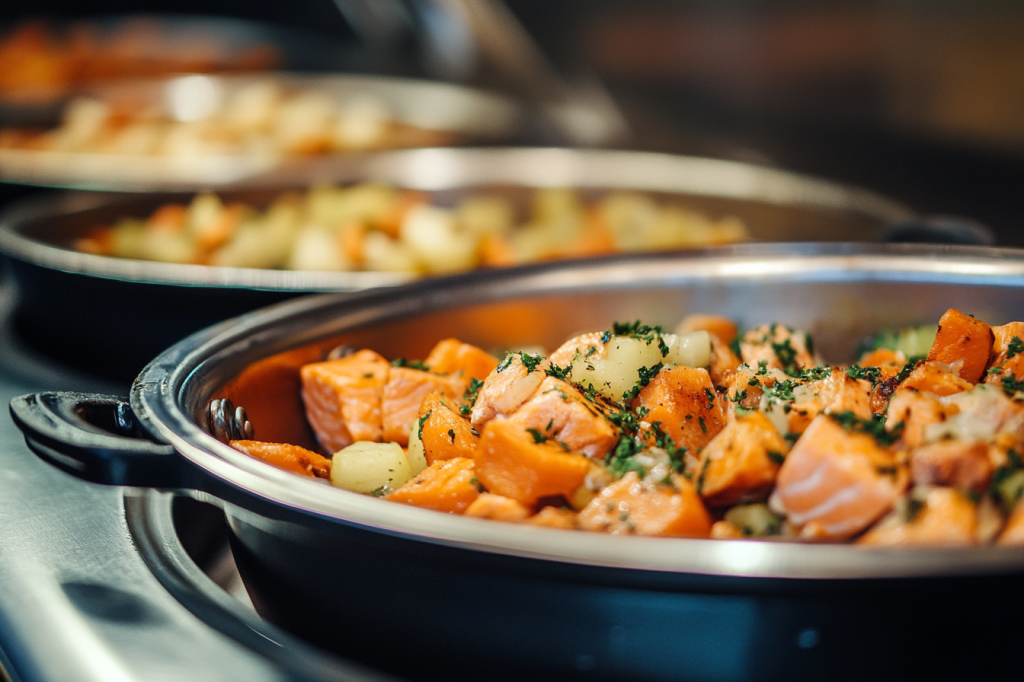
Large windows framed the darkening sea; the buffet offered salmon three ways, reindeer stew, root vegetables, and cloudberry mousse.
Passengers moved unhurriedly, jackets draped over chair backs, conversations weaving softly between tables.
Emma smiled into her cup.
“Years ago I did a Mediterranean ocean liner—crystal chandeliers, shopping decks, formal nights, thousands of passengers. You dressed up to be seen.”
She gestured at the wooden ceiling and the view beyond the glass.
“Here it’s different. Fewer people, local food, and the dress code seems to be ‘warm enough to step outside.’ It feels like traveling with the coast, not escaping from it.”
Julia nodded. “Less spectacle, more landscape. And space for notes between courses.”
After dinner they passed through the lounge.
A notice board announced: “Evening Talk: Life in the Fjords—Presented by Our Expedition Team.” They made a mental note before heading back to their cabin.
晚餐與船上設施
到了晚上,餐廳裡亮著溫暖的燈光。

大片窗戶框起漸暗的海面;自助檯上擺著三種做法的鮭魚、馴鹿燉肉、各式根莖蔬菜與雲莓慕斯。

乘客不趕不急,外套搭在椅背上,談話聲在桌與桌之間柔和流動。
Emma 捧著杯子笑道:「我以前坐過地中海的大型遠洋郵輪——水晶吊燈、購物甲板、正式晚宴,幾千名乘客。必須精心打扮,為了被看見。」
她指了指木質天花與窗外海面:「這裡很不一樣。人少、餐點本地化,穿著重點是『足夠保暖,能隨時走到甲板』。感覺像是與海岸同行,不是要逃離陸地。」
Julia 點頭:「少了表演,多了風景。而且菜與菜之間,還能寫幾行筆記。」
晚餐後,她們經過休息室,看到告示板上寫著:「晚間講座:峽灣生活——由探險團隊主講」。她們記在心裡,然後才回到艙房。
Balcony Conversation: What to Expect Ashore
Back in their cabin, they slid open the glass doors and stepped onto their private balcony.
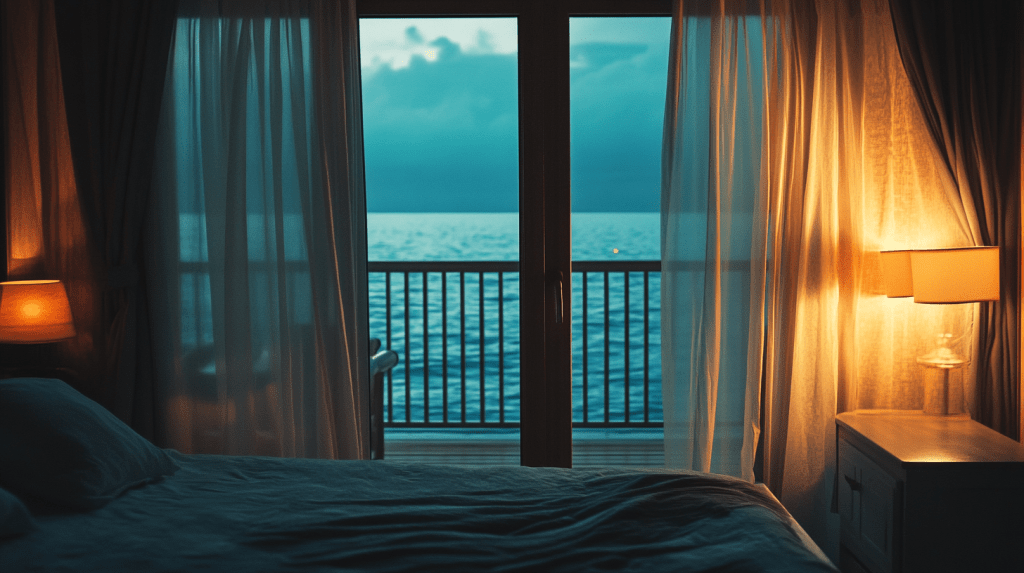
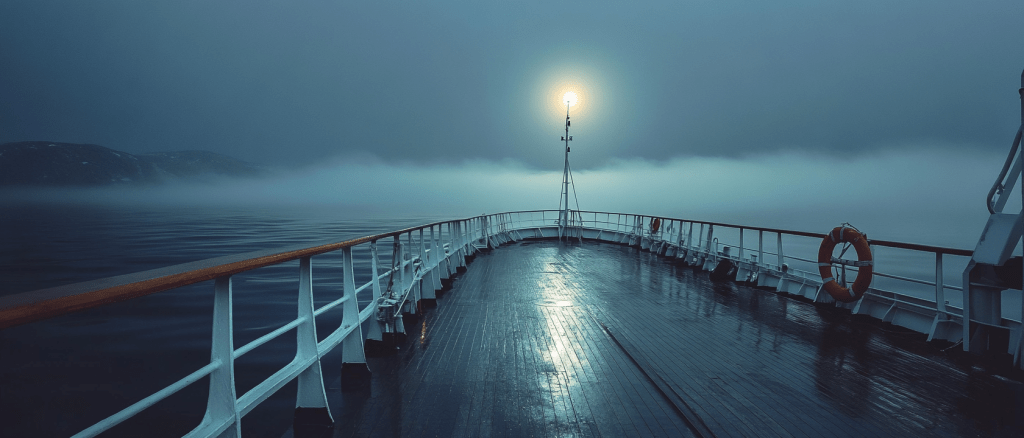
The wind pressed against their jackets, and distant islands showed faint beads of light along the horizon.
“So—what’s special about Ålesund?” Emma asked.
“Art Nouveau everywhere,” Julia said.
“After the 1904 fire, German and Norwegian architects rebuilt the town—curved lines, floral motifs, pastel façades. Passengers usually get three to four hours ashore: a loop through town, the Aksla viewpoint, maybe a small museum.”
Emma nodded. “Enough time for a story and a view.”
When the chill finally pushed them back inside, Emma smiled. “Shall we see that fjord lecture?” Julia agreed, and together they made their way to the lounge.
陽台上聊下個行程:奧勒松
回到艙房後,她們拉開落地玻璃門,走上私人陽台。
海風吹拂著外套,遠方的島嶼在地平線上閃著幾點微光。
Emma 問道:「那麼——奧勒松有什麼特別的嗎?」
Julia 說:「到處都是新藝術風格。在 1904 年那場大火之後,德國與挪威的建築師重建了整座城市——曲線、花卉圖案、粉彩外牆。乘客通常有三到四個小時上岸:繞城鎮一圈、登上 Aksla 觀景台,或者參觀一間小型博物館。」
Emma 點點頭:「足夠看風景,也足夠帶走一個故事。」
當寒意終於逼得她們回到室內時,Emma 微笑著說:「要不要去聽那場峽灣講座?」Julia 同意了,於是她們一同走向休息室。
Evening Talk: Life in the Fjords
The lounge had dimmed its lights, leaving the projection screen bright.
The speaker, a middle-aged crew member in a navy sweater, began without notes.

“In the fjords, winter is not an enemy—it’s the framework of life.
Villages learned to time their work by the seasons. In summer, fishing boats went out almost day and night, following the light. In winter, people repaired nets, mended houses, and shared food stores.”
A slide showed an old photograph: women salting cod on long wooden racks.
“Cod and herring were not just food.

They were the currency of survival, the reason trade routes linked Bergen to the Arctic north. Without them, these towns would never have held together.”
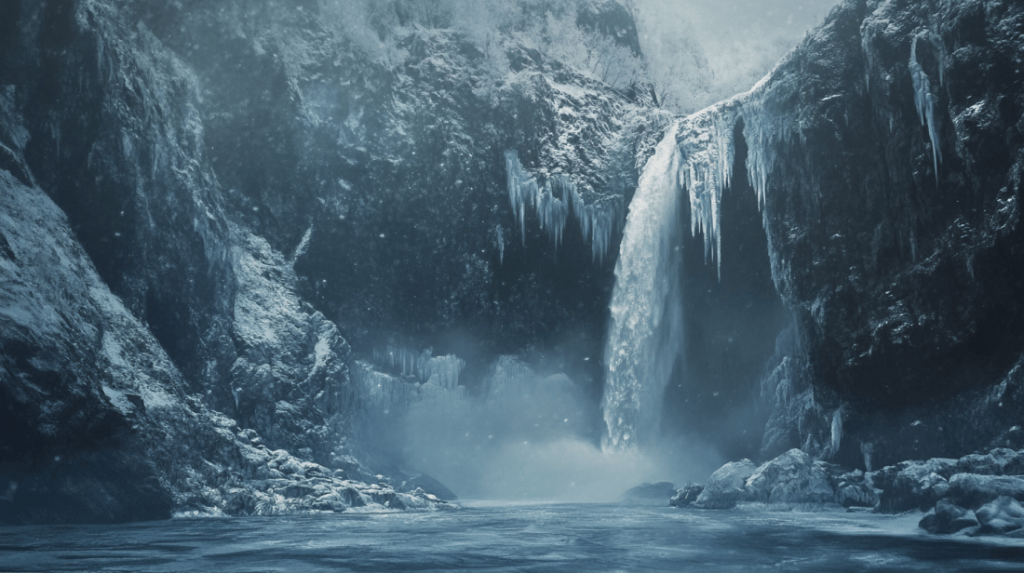
Another image filled the screen: a fjord in midwinter, frozen waterfalls shining silver against the rock.
“And yet, even here, the harbors rarely froze.

The Gulf Stream brought warmth that kept ships moving, year after year. That is why Norway remained a nation of sailors.”
Emma whispered, “That explains half the coastline economy.”
Julia, eyes on the photo of drying racks, added softly, “And it makes tomorrow’s architecture easier to understand—rebuilding after fire is just another version of enduring the winter.”
聽演講:峽灣生活
休息室的燈光暗下,只留下投影幕的亮光。
講者是一位穿著深藍毛衣的中年船員,他沒有講稿,直接開口。
「在峽灣,冬天不是敵人——它是生活的框架。村落學會依季節安排日子。夏天,漁船幾乎日夜出海,追隨長時間的日照;冬天,人們修補漁網、整修房屋,靠著儲存的食物共度嚴寒。」

投影幕上出現一張舊照片:女人們在長木架上醃製鱈魚。
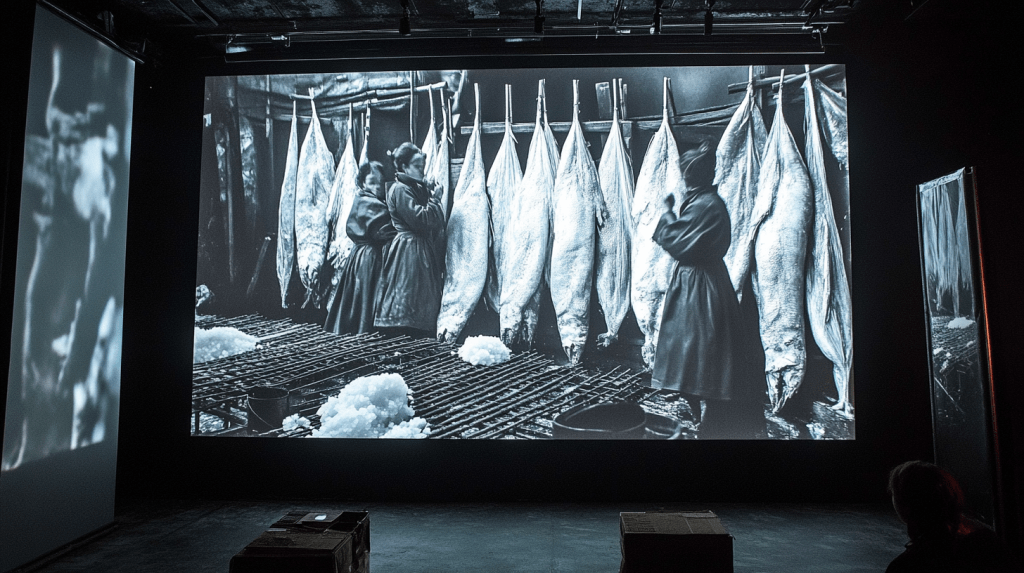
「鱈魚和鯡魚不只是食物,它們是生存的貨幣,是讓卑爾根與北極航線相連的理由。沒有它們,這些城鎮不可能維繫。」
下一張影像是一條冬季的峽灣,冰瀑在岩壁上閃著銀光。
「然而即便如此,這些港口很少結冰。墨西哥灣流帶來暖意,讓船隻能年復一年地繼續航行。這正是挪威能成為航海國度的原因。」
Emma 壓低聲音說:「這幾乎就是一半的海岸經濟。」
Julia 看著晾魚架的照片,輕聲補充:「而且也讓明天的建築更容易理解——一場大火之後的重建,只是另一種過冬。」

Evening in the Lounge
On the way back to their cabin, Julia and Emma peeked into the lounge.
The room glowed with amber lamps. Some passengers had settled in for the night with drinks. At one table, the young German couple laughed over pints of beer, their pamphlets forgotten.
Ingrid sat nearby with a small glass of red wine, her sketchbook open but untouched as she watched the dark sea outside.
At the bar, a chalkboard read Tonight’s special: Aquavit.

A pair of Norwegians in wool sweaters toasted quietly, sipping the amber spirit. Ben leaned against the counter with a half-empty glass of beer, already showing someone the long exposures he had taken on deck.
Emma smiled at the scene. “It’s like a floating village—everyone finding their own way to pass the night.”
Julia nodded. “Some drink, some sketch, some write. And tomorrow we all step into the same town, carrying different versions of it.”
夜晚的休息室
回艙房的途中,Julia 和 Emma 朝休息室望去。
那裡在琥珀色燈光下顯得格外溫暖。幾位乘客已經坐定,拿著飲料度過夜晚。

一張桌子上,那對德國年輕夫妻舉著啤酒大笑,行程小冊子早已被拋在一旁。
Ingrid 坐在靠窗的位置,手邊是一杯紅酒,素描本攤開卻沒動筆,只靜靜望著窗外的黑色海面。
吧台的黑板上寫著 Tonight’s special: Aquavit。兩位穿羊毛毛衣的挪威乘客舉杯小酌,杯中琥珀色的烈酒映著燈光。Ben 倚在吧台,手裡半杯啤酒,正給旁人看他在甲板上拍下的長曝光照片。
Emma 笑著說:「這就像一座漂浮的小村落——每個人都用自己的方式消磨夜晚。」
Julia 點頭:「有人喝酒,有人畫畫,有人寫字。明天,我們都帶著不同的版本走進同一座小鎮。」
Balcony at Night
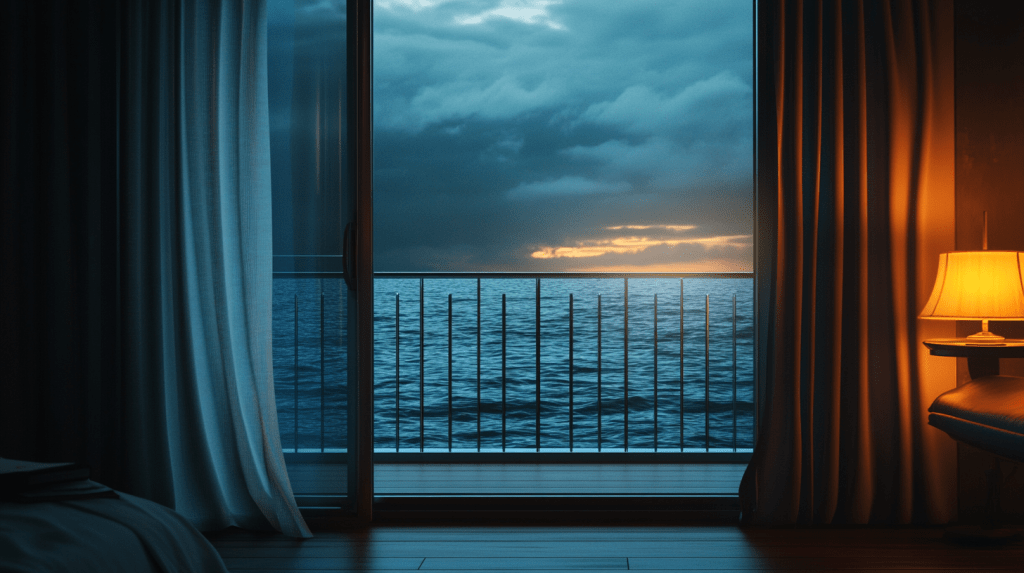
Later, back in their cabin, they slid open the balcony doors.
Wind rushed in, tugging at scarves and notebooks.
The sea was black, only a silver path of moonlight breaking the waves. The ship rolled more than in the day. Emma gripped the railing and laughed nervously.
“Do you think this counts as rough weather?”
Julia shook her head. “Not yet. But even fjords can surprise you. These ships are built for worse. Imagine winter—snow against the glass, ice on the railings.”
From a nearby balcony, the German couple’s voices carried faintly.
Above, Ben’s silhouette could be seen once again, his tripod steady against the gusts. The ship seemed to gather all these small obsessions into its movement—photographs, sketches, words—all headed toward the same coast.
艙房陽台
稍後,她們回到艙房,再度推開陽台門。
風猛地灌入,拉扯著圍巾與筆記本。海面漆黑,只有一道銀色的月光劃破波浪。船身的晃動比白天更為明顯。Emma 扶住欄杆,帶著一絲緊張的笑聲。
「這算是壞天氣嗎?」
Julia 搖頭:「還不算。不過峽灣也會突然發脾氣。這些船是為了更糟的情況而建造的。想像一下冬天——雪打在玻璃上,欄杆上結滿冰。」
隔壁陽台傳來德語交談的聲音;甲板上方,Ben 的身影再度出現,他的腳架在風中依舊穩固。
這艘船似乎收集了這些小小的執念——照片、素描、文字——一同朝向同一片海岸。
A Night’s Rest
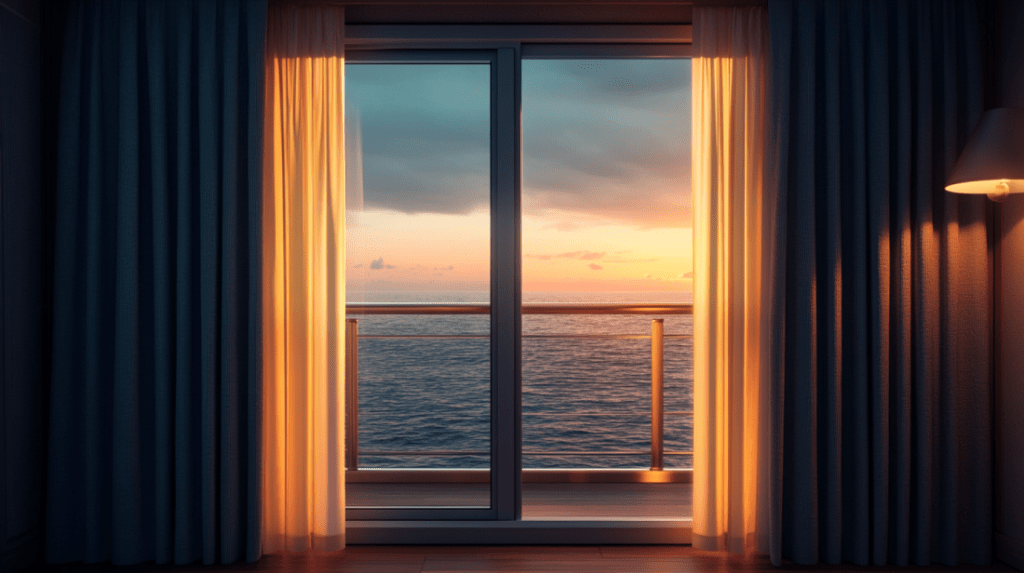
When the door shut, the cabin turned warm again.
The fruit bowl, the folded blankets, the steady hum of the engines—everything seemed to promise rest.
The sea’s rhythm became part of their breathing, and sleep came gently.
門一關上,艙房又恢復了溫暖。
水果碗、折好的毛毯、引擎的低鳴——一切都像在保證一夜安眠。
海浪的節奏融入呼吸,睡意慢慢浮現。
Breakfast Before Shore

By morning, the ship’s announcement blended with the smell of coffee.
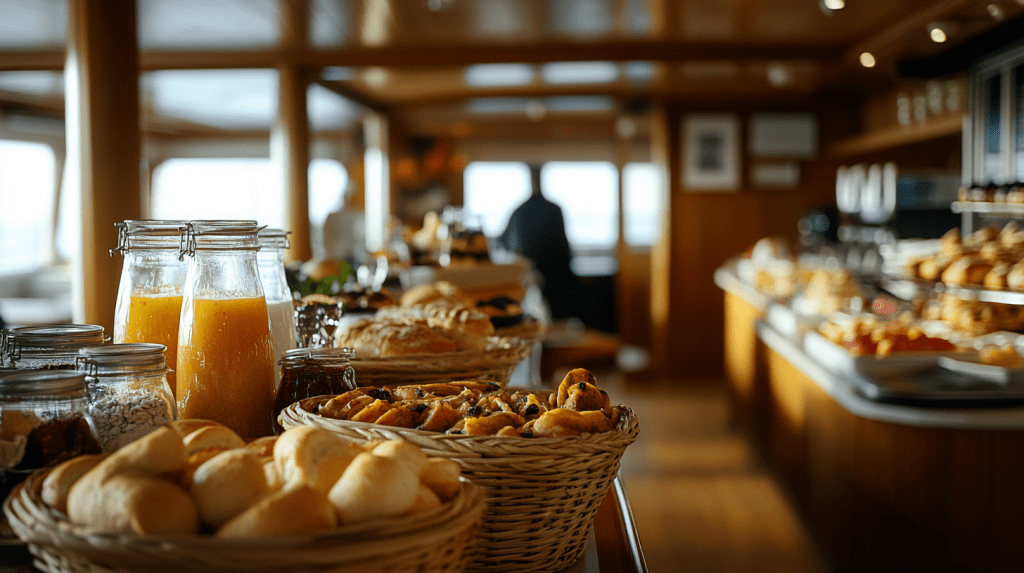
The dining hall offered baskets of rolls, smoked salmon, cloudberry jam, porridge, and pitchers of juice. Passengers filled their plates quickly, voices bright with anticipation.
Ben had his camera out at the window, capturing the first colors of dawn. Ingrid, with her tea, sketched rooftops from memory, adding notes about turrets and windows.
The German couple studied their leaflet, debating whether to join a guided tour or climb Aksla on their own.
Emma buttered her bread, watching them all. “It feels like everyone’s preparing their own Ålesund.”
Julia checked the itinerary.
“Four hours ashore—enough to walk through the town, climb Aksla, maybe step into the Art Nouveau museum. We’ll make ours the scholar’s version.”
登岸前的早餐
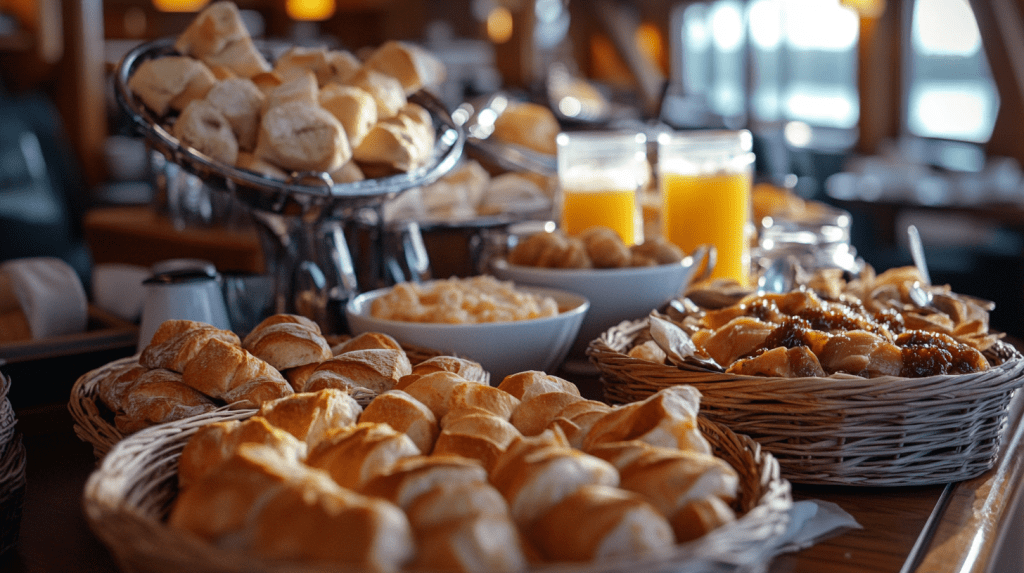
清晨時分,廣播聲與咖啡香同時響起。餐廳裡陳列著小麵包籃、煙燻鮭魚、雲莓果醬、熱粥和柳橙汁。
乘客們迅速裝滿餐盤,聲音裡透著抑不住的期待。
Ben 把相機對準窗外,捕捉黎明初現的色彩。
Ingrid 捧著茶,邊憑記憶素描屋頂,邊在旁邊註記塔樓與窗戶的形狀。那對德國夫妻低頭研究導覽冊,爭論要不要參加導覽團,還是自己登上 Aksla。
Emma 一邊抹著麵包,一邊看著大家,笑道:「感覺每個人都在準備屬於自己的奧勒松。」
Julia 打開航程表:「岸上四小時,足夠走遍城區、登上 Aksla,或許還能進新藝術博物館。我們的版本,就是學者的版本。」
The Harbor in View
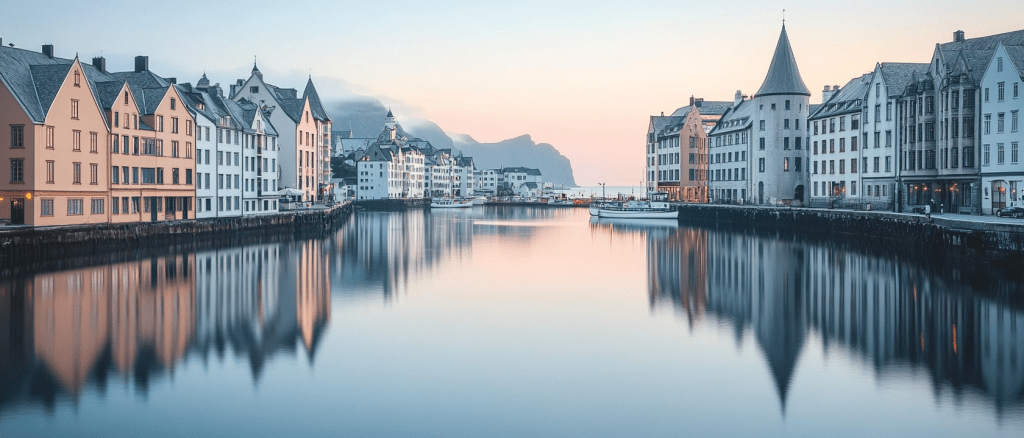
Through the windows, Ålesund came into focus: pastel façades, turrets, and spires reflected in still water.
Tugboats guided the ship toward the quay. Cups emptied, plates stacked, passengers readied their coats.
Julia placed her coffee down. “After breakfast, we’re not just looking at the painting—we’re stepping into it.”
透過窗戶,奧勒松的輪廓漸漸清晰:粉彩色外牆、塔樓與尖頂映在靜止的水面上。
拖船牽引著船靠向碼頭。杯子清空,盤子疊好,乘客們紛紛披上外套。
Julia 把咖啡放下:「早餐之後,我們就不只是看那幅畫,而是走進去。」

 Virtual Travel | 虛擬旅行沉浸式英語學習
發表留言