
Disembarkation
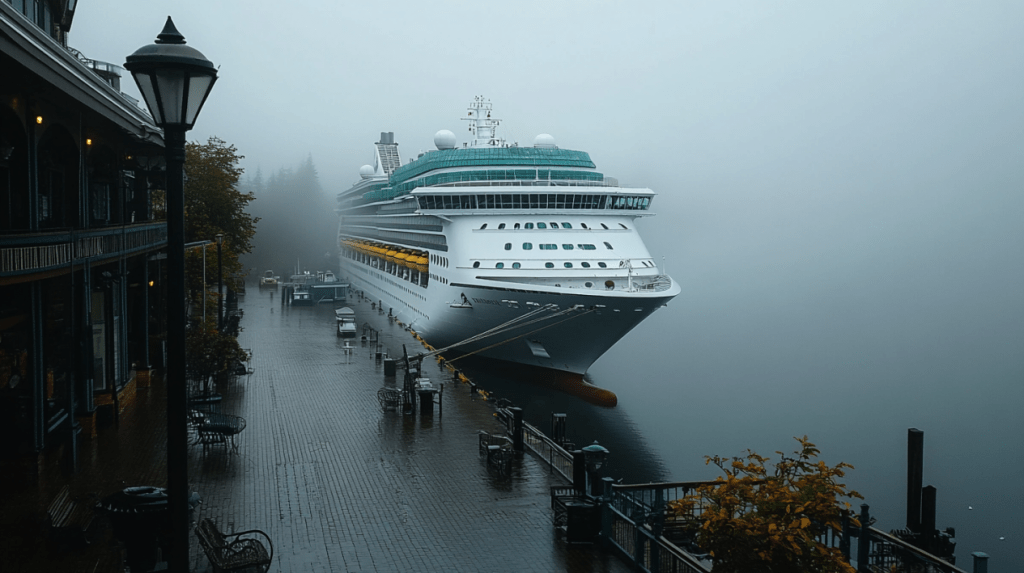
The gangway clanged into place, and passengers began to shuffle ashore. The morning air was crisp, carrying the mix of salt, diesel, and damp timber from the quay.
Across the harbor, pastel-colored houses—yellow, mint green, pale pink—stood in neat rows, their reflections trembling in the still water.
Ben walked fast, camera swinging at his side, eager to capture the town before it grew crowded. Ingrid stayed closer, her sketchbook tucked under her arm. “From the sea it looks small,” she remarked, “but once you’re inside, the streets feel endless.”
下船

登船橋在金屬聲中放下,乘客們緩緩走下岸。晨間的空氣清涼,混合著鹽味、柴油味和碼頭木材的潮氣。
港口對面一排粉彩色的房屋——黃色、薄荷綠、淡粉紅——整齊排列著,倒影在靜止的水面上顫動。
Ben 走得很快,相機甩在身側,顯然想在人潮擁入前先捕捉小鎮的樣貌。Ingrid 走在她們身邊,把素描本夾在臂下:「從海上看很小,但走進去時,街道卻會一直延伸。」
Opening Streets
By the time they reached the first row of shops, shutters were rattling upward. It was just after nine.
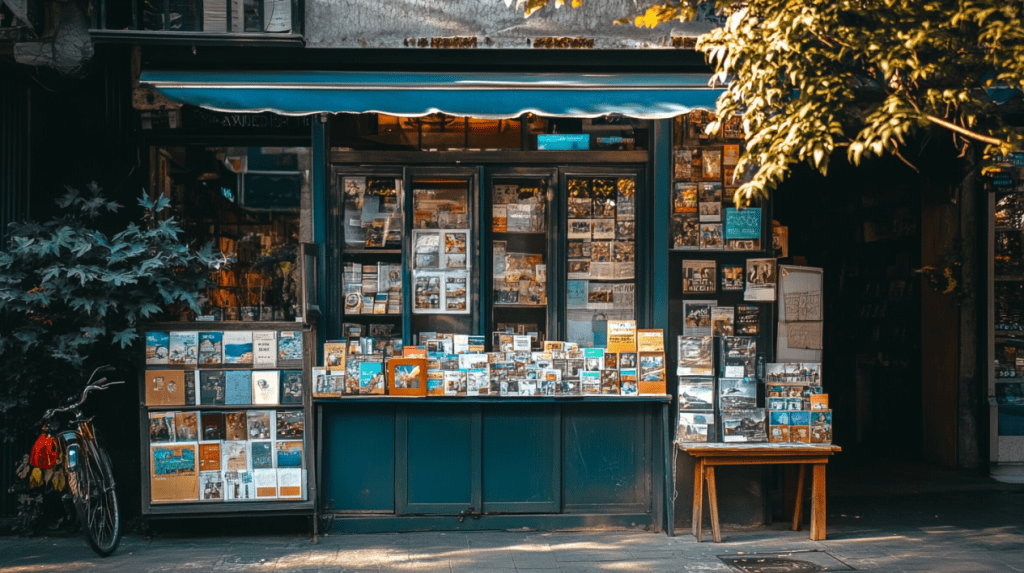
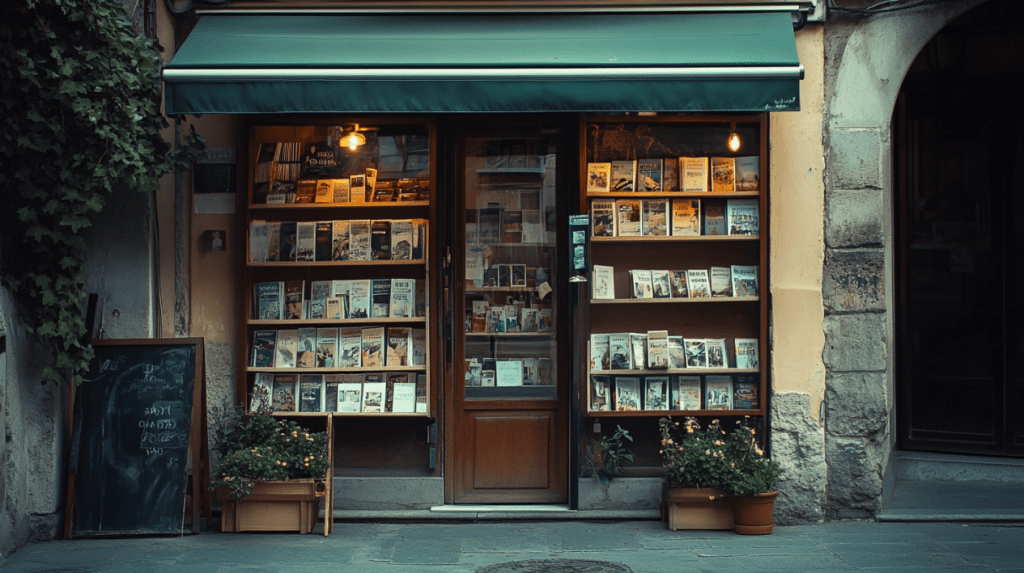
A bookstore displayed postcards of the town itself, while a glassware shop adjusted its lamps to catch the morning light on fragile vases.
The first cafés were already busy, the smell of coffee and fresh rolls drifting onto the street.
Emma slowed, taking it in. “So everything is timed with the ship’s arrival. They know a few hundred passengers will arrive hungry and curious.”

Julia nodded. “Tourism is part of it. But Ålesund wasn’t built for tourists—it was rebuilt after the 1904 fire. That’s why the whole town looks so consistent. German architects, Norwegian stone, all in Art Nouveau.”
醒來的街道
等她們走到第一排商店時,鐵門已經一扇扇拉起。時間剛過九點。
書店把印有當地街景的明信片擺到門口;玻璃工藝店開燈,讓花瓶在晨光下閃光。
最早營業的咖啡館裡已經坐了人,咖啡與新鮮麵包的香氣飄散在街道上。
Emma 放慢腳步觀察:「一切都配合船隻的時間。他們很清楚,幾百名乘客會同時餓著肚子,也正好想逛街。」

Julia 點頭:「觀光當然是一部分。但奧勒松不是為觀光而建,而是 1904 年大火後重建。這就是為什麼它看起來這麼統一。德國建築師的設計,挪威的石頭,新藝術風格隨處可見。」
Local Life
Further along, daily life showed itself. A group of schoolchildren in bright jackets hurried past with their teacher, books under their arms.
An elderly man stepped out of a bakery with a paper bag of warm rolls, nodding politely as he passed. The cafés weren’t only filled with tourists—locals sat with newspapers, beginning their day.
Emma smiled. “So it isn’t just a museum town. People really live here.”
Ingrid agreed. “Exactly. That’s what postcards hide—you forget it’s someone’s home.”
當地生活
再往前走,日常生活的氣息更明顯。
一群穿著鮮豔外套的學生在老師帶領下匆匆跑過,手裡夾著書本。

一位老人提著裝著剛出爐小麵包的紙袋從麵包店走出來,經過時還微微點頭致意。咖啡館裡不只有遊客,還有當地居民坐著看報紙,開始他們的一天。
Emma 笑著說:「所以這不只是明信片上的小鎮,人們真的在這裡生活。」
Ingrid 贊同:「沒錯。明信片會掩蓋這一點,讓人忘了這裡是別人的家。」
Remembering the Fire
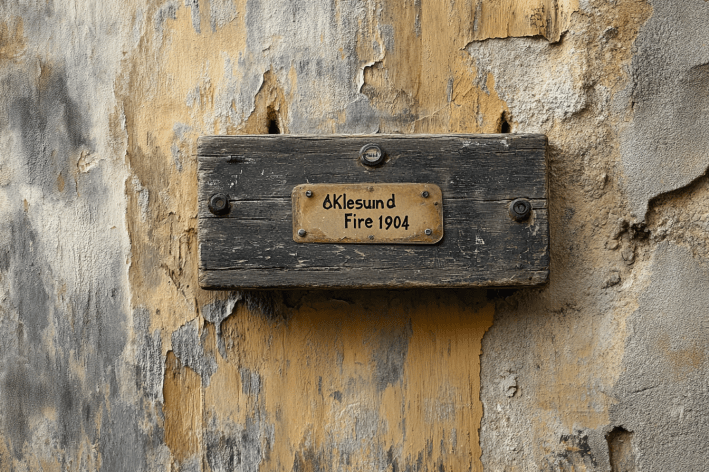
They stopped by a plaque on a wall: “Ålesund Fire, January 1904.”
Emma asked, “What caused it?”
Julia explained, “A wooden house caught fire late at night. That winter the wind was fierce—the flames jumped from roof to roof. Nearly the whole town burned in less than twenty-four hours. Over ten thousand people lost their homes, but only one person died. It’s called a miracle.”
Ingrid added, “Kaiser Wilhelm of Germany often visited Norway. After the fire, he sent ships of aid and architects. That’s why the rebuilt town carries so much German Art Nouveau influence.”
大火的記憶
她們停在一塊牆上的銘牌前,上面寫著:「奧勒松大火,1904 年一月。」

Emma 問:「是怎麼發生的?」
Julia 解釋:「一棟木造房子在深夜起火。那年冬天風勢強勁,火焰很快從屋頂竄到整個街區。不到二十四小時,小鎮幾乎全毀。上萬人失去家園,但只有一人死亡,被視為奇蹟。」
Ingrid 補充:「德國皇帝威廉二世經常來挪威。大火後,他派船送來援助和建築師。這就是為什麼重建後的小鎮充滿德國新藝術風格。」
The Climb to Aksla
From a small square, stone steps began to climb toward Mount Aksla. With each turn, the town shrank beneath them. Ben hurried ahead with his tripod, while Ingrid sketched between steps.

Halfway up, Emma leaned on the railing. “Norway’s small, but living standards here are among the highest in the world. How?”
Julia adjusted her scarf. “Fishing built the base, but oil and gas in the North Sea changed everything. The state controls most of the revenue, puts it into a sovereign wealth fund, and only spends the returns. Schools, hospitals, pensions—funded that way.”
Emma nodded. “So welfare isn’t generosity—it’s structure, backed by resources.”
Ingrid added, catching her breath, “And geography matters. Control of these waters has always been important—Russia to the east, Britain across the sea. Norway learned balance, and now it benefits.”
登上 Aksla
從小廣場開始,石階蜿蜒登上 Aksla 山。每往上一個轉角,小鎮就在腳下縮小。Ben 已經快步走在前頭架設三腳架,Ingrid 則邊走邊素描。

走到一半,Emma 扶著欄杆:「挪威這麼小,生活水準卻是全世界數一數二。為什麼?」
Julia 拉了拉圍巾:「基礎是漁業,但真正改變一切的是北海的石油和天然氣。國家掌握大部分收益,把錢放進主權基金,只花利息。學校、醫院、退休金,全靠這樣維持。」
Emma 點頭:「所以福利不是慷慨,而是有結構、靠資源支撐。」
Ingrid 邊喘氣邊補充:「地理位置同樣重要。掌握這片海域一直很關鍵——東邊是俄羅斯,海對岸是英國。挪威學會了平衡,現在因此受益。」
View from the Top
At the top, the panorama spread wide: islands scattered across the water, the harbor curving into the sea, pastel façades glowing in the sun. Fishing boats left faint wakes as they moved out to the horizon.

Emma pulled out her notebook. “So—wealth from the sea, discipline from the state, security from geography.”
Julia nodded. “Exactly. It looks simple, but behind it are history and planning.”
Ingrid rested her hands on the railing. “And remember—these pastel houses are younger than the town itself. Most are just over a century old, rebuilt after the fire. They look timeless, but they come from catastrophe.”
山頂觀景
到達山頂時,全景展開:島嶼散落在水面上,港口彎入大海,粉彩色的房屋在陽光下閃爍。漁船劃出細細的航跡,駛向遠方。

Emma 拿出筆記本:「所以——財富來自海洋,紀律來自國家,安全來自地理。」
Julia 點頭:「沒錯。表面看起來簡單,但背後是歷史與規劃。」
Ingrid 把手放在欄杆上:「別忘了,這些粉彩色房子比小鎮本身還年輕。大多只有一百多年,是大火之後重建的。看似永恆,其實源自災難。」
Descent from Aksla
The stone steps wound them back into the town. The climb down was easier, and the streets looked different after the wide panorama above. The houses no longer formed a pattern but stood as individuals: yellow plaster cracked by time, mint paint faded at the corners, windows filled with flower pots.

Ben stopped often, aiming his camera at doorways or reflections in puddles. Ingrid paused too, sketching a single tower this time rather than the whole skyline.
Emma remarked, “From above it’s geometry. Down here it’s life again.”
Julia agreed, “The same place, two scales.”
下山
石階蜿蜒帶他們走回小鎮。下山的路輕鬆許多,街道也因剛剛的全景而顯得不同。
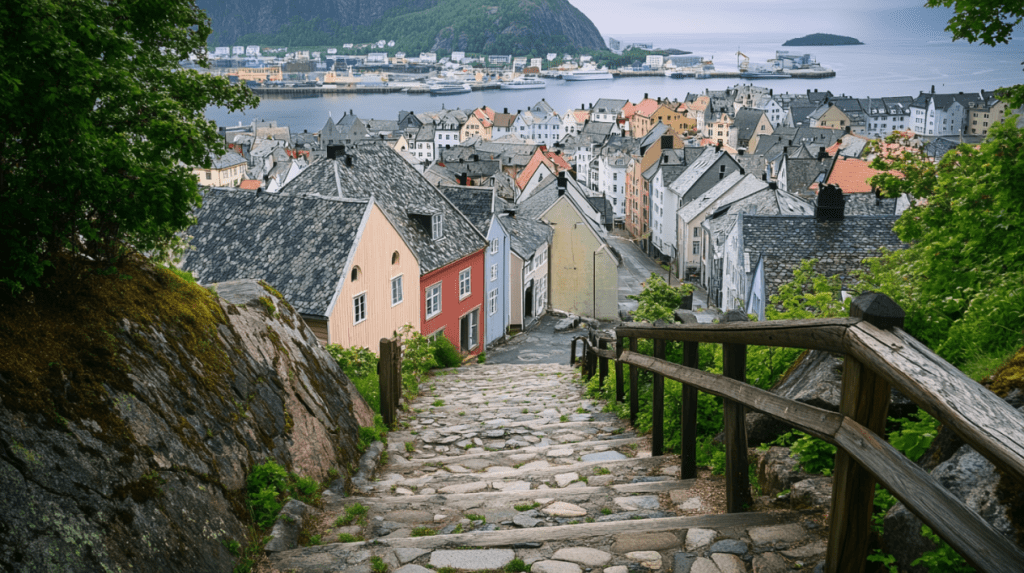
那些房子不再只是圖案,而是一棟棟各自獨立:黃色灰泥已有裂縫,薄荷綠的牆角略顯褪色,窗台上擺著花盆。

Ben 頻頻停下,對著門口或水窪中的倒影取景。Ingrid 這次則專注在一座塔樓,而不是整片天際線。
Emma 說:「在山頂看是幾何圖案,下來又變回生活。」
Julia 回應:「同一個地方,不同的尺度。」

A Pause at a Café
They chose a corner café with wide windows facing the canal.
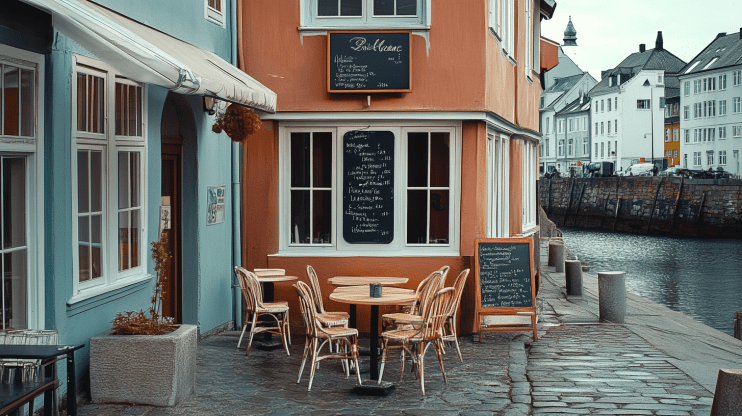
Inside, the air smelled of roasted beans and cinnamon. The counter displayed slices of brunost cheese, small rolls, and plates of waffles topped with lingonberry jam.

Locals sat with laptops or newspapers; a few tourists compared maps at the next table.
Emma ordered coffee and a roll. “So this is the real welfare state—affordable coffee for everyone,” she joked.
Julia smiled. “Not quite. But you can see it—no rush, people reading, working. The rhythm is supported by security. That’s what social systems give.”
Ingrid joined them at the table. “And here, cafés are like living rooms. Not just for tourists.”
咖啡館小憩
她們選了一家靠運河、有大窗戶的咖啡館。

室內飄散著烘焙咖啡豆與肉桂的香氣。櫃台上擺著幾片棕色乳酪、一些小麵包,以及淋上越橘果醬的鬆餅。

當地人坐著用筆電或看報紙,隔壁桌的幾位遊客正對著地圖討論。
Emma 點了咖啡和小麵包,開玩笑說:「這才是真正的福利國家吧——人人都能喝得起咖啡。」
Julia 笑了笑:「還不至於。但你可以看得出來——沒有人趕時間,人們在閱讀、工作。這樣的節奏背後是安全感。社會制度能提供這種支撐。」
Ingrid 坐下補充:「在這裡,咖啡館就像客廳,不只是給觀光客的。」
Street Observations
After coffee, they wandered again through narrow side streets.
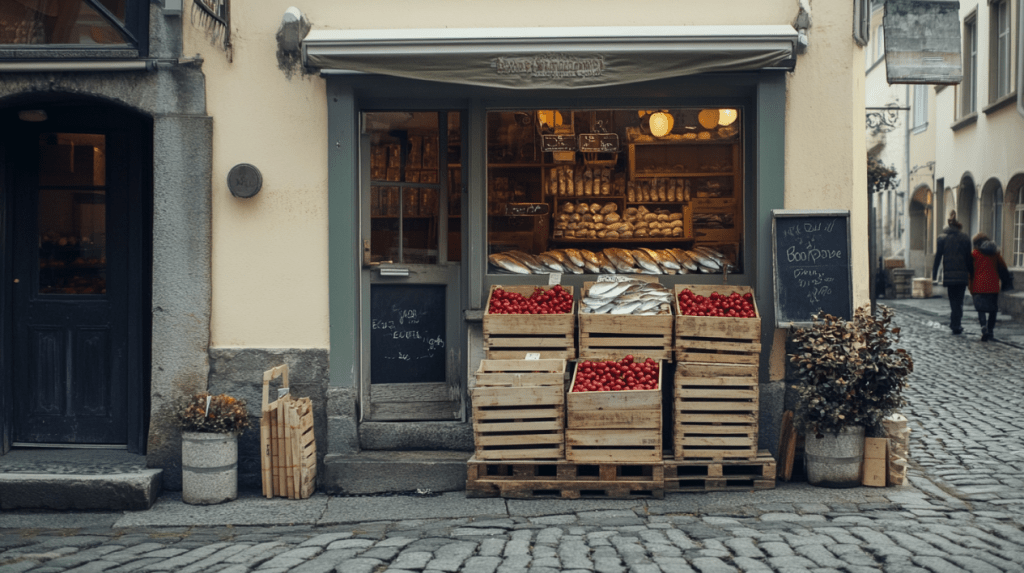
A small grocery displayed piles of apples and smoked fish at its entrance. A crafts shop offered knit sweaters patterned with snowflakes.

The German couple from the ship passed by with shopping bags, already looking pleased with their finds.
Emma noted, “It isn’t only souvenirs. People actually shop here.”
Julia agreed. “That’s the difference with bigger cruises. This is a town first, a port second.”
街道觀察
喝完咖啡後,她們又走進幾條狹窄的小街。

小雜貨店門口堆著蘋果和煙燻魚;一間工藝品店裡擺著雪花圖案的針織毛衣。

船上的那對德國夫妻提著購物袋走過,看起來已經滿意地買到心頭好。
Emma 說:「這不只是紀念品,居民真的會在這裡購物。」
Julia 點頭:「這就是和大型郵輪港口的差別。這裡首先是小鎮,其次才是港口。」
A Museum Stop
Julia and Emma chose the Fisheries Museum by the canal, housed in an old warehouse with timber beams still smelling faintly of salt.
Inside, nets hung from the ceiling, and glass cases displayed tools once used to gut cod and pack herring.
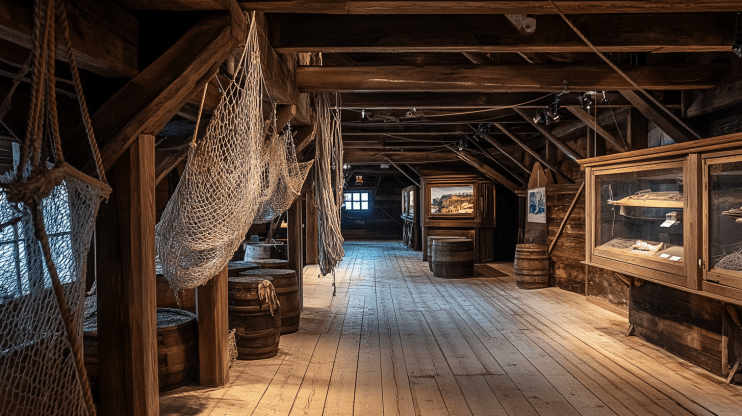
A guide explained in quiet English, “Fishing built Ålesund’s wealth long before tourism. Dried cod went to Spain, herring to Germany. These warehouses were global trade points.”

Emma scribbled quickly. “So this little town was international long before oil.”
Julia added, “Exactly. Fish was the first export currency. Oil only followed the same path—resources outward, money inward.”
博物館小訪
Julia 和 Emma 選擇走進運河邊的漁業博物館,建築是一棟老倉庫,木樑間仍帶著鹽味。
館內天花板上懸掛著漁網,玻璃櫃裡擺著過去用來剖鱈魚、包鯡魚的工具。

一位導覽員用簡單的英語解說:「在觀光業興起前,漁業就建立了奧勒松的財富。鱈魚出口到西班牙,鯡魚送到德國。這些倉庫曾是全球貿易的節點。」

Emma 快速記下:「所以這個小鎮在石油之前就已經是國際化的。」
Julia 補充:「沒錯。魚是最早的出口貨幣。石油不過是延續同樣的路徑——資源輸出,財富流入。」
Planning the Time
Back at the square, they checked the clock tower. “One hour left,” Julia said. Enough for one more stroll or to sit by the water.
Ben waved from across the street, his memory card nearly full. Ingrid closed her sketchbook. “Shall we regroup at the quay?”
Emma nodded. “Yes—let’s not miss the ship.”

時間安排
回到廣場時,她們抬頭看了看鐘樓。Julia 說:「還有一小時。」足夠再走一段街,或者坐在水邊休息。
Ben 從街角揮手,他的記憶卡幾乎滿了。Ingrid 收起素描本:「我們在碼頭會合吧?」
Emma 點頭:「好——別錯過船。」


 Virtual Travel | 虛擬旅行沉浸式英語學習
發表留言