After Dinner Silence
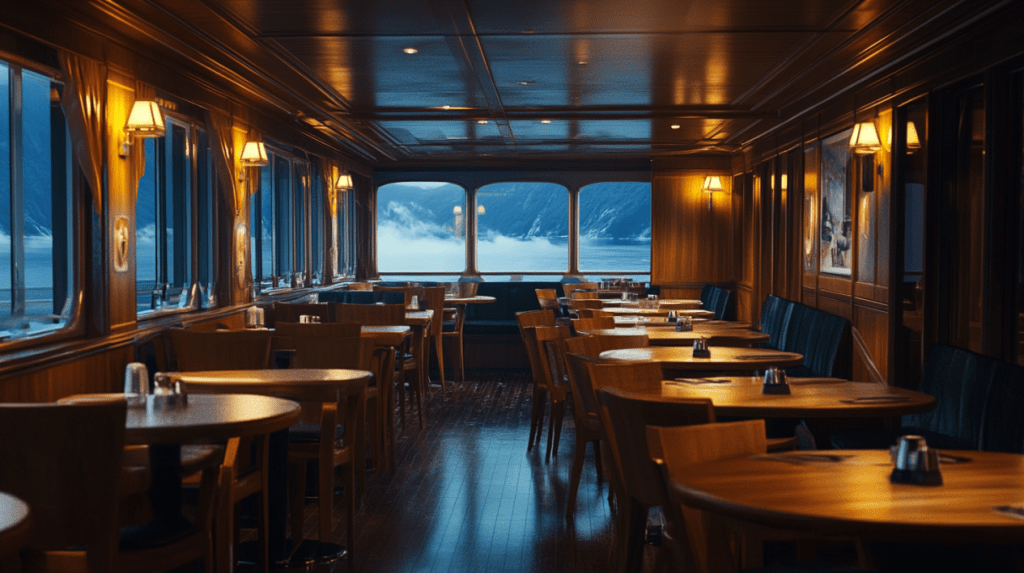
When the dining hall finally emptied, the ship carried only the hum of its engines and the soft shuffle of footsteps fading into cabins and lounges.
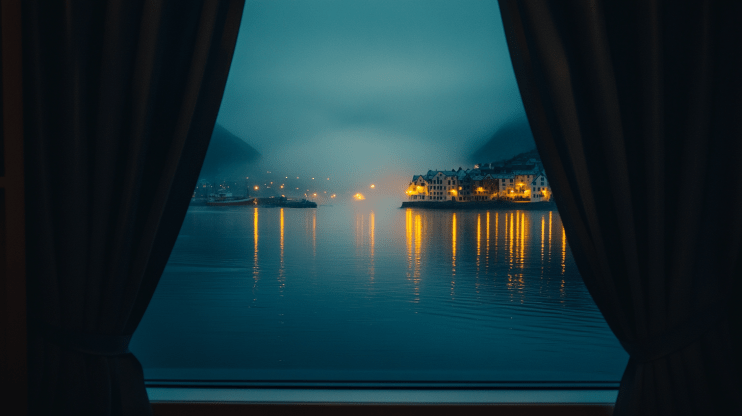
Outside the wide windows, Ålesund had already vanished into mist. The water was calm, yet streaked with reflections of the last boats returning to harbor. Their lamps swung gently like fireflies caught between sea and air.
Julia and Emma lingered briefly on Deck 5, zipping their jackets against the chill. The air carried both salt and damp moss, the reminder that even at sea one never left the land entirely.
“I thought the sea would be rougher,” Emma confessed.
Julia smiled. “We’re still inside the arms of the fjords. Once the coast stretches out, then you’ll notice the difference.”
晚餐過後的靜謐
餐廳逐漸清空,只剩下船隻低沉的引擎聲,以及腳步聲在甲板與走廊間慢慢消散。
大窗外,奧勒松已消隱在霧中,水面平靜,僅映著幾艘歸港漁船的微光。那燈火隨波晃動,宛如懸浮在海與空之間的螢火。
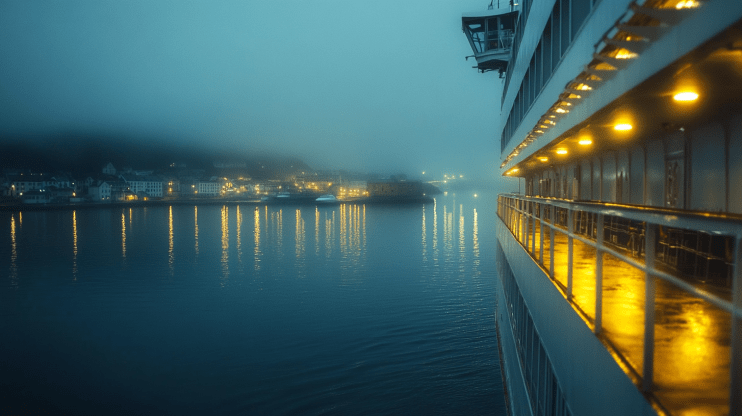
Julia 和 Emma 在五層甲板停留片刻,拉緊外套抵禦寒意。空氣裡同時有鹹味和苔蘚的氣息,提醒著即使航行在海上,也並未真正離開陸地。
「我還以為海會更顛簸。」Emma 坦言。
Julia 微笑道:「我們還在峽灣的懷抱裡。等海岸線變得開闊時,你就會察覺差別了。」
Gathering at the Bar
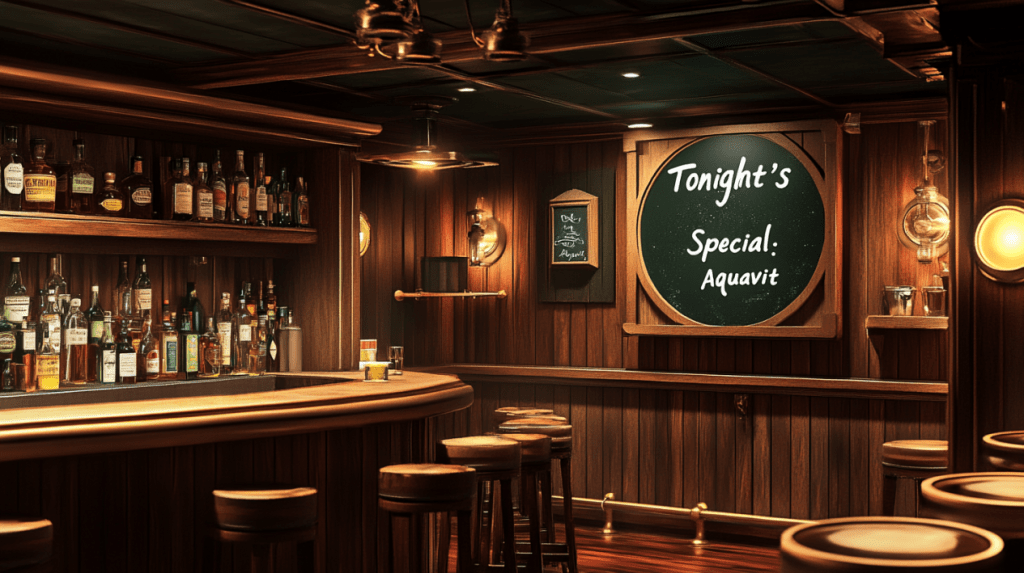
The bar glowed with amber light, carrying a faint scent of wood and spice.
A chalkboard announced tonight’s special: Aquavit. Two Norwegians in wool sweaters lifted their glasses quietly.
The gentle clink of glass sounded less like celebration and more like ritual.
Ben hunched over his camera, scrolling through the frames: blurred children running, puddles reflecting upside-down façades, a fisherman at the quay mending his nets.
Beside him, Ingrid shaded in the unfinished tower of Ålesund in her sketchbook, her pencil strokes steady but quick.
Emma pulled out a chair. “Tomorrow—Trondheim. What does it mean to each of you?”
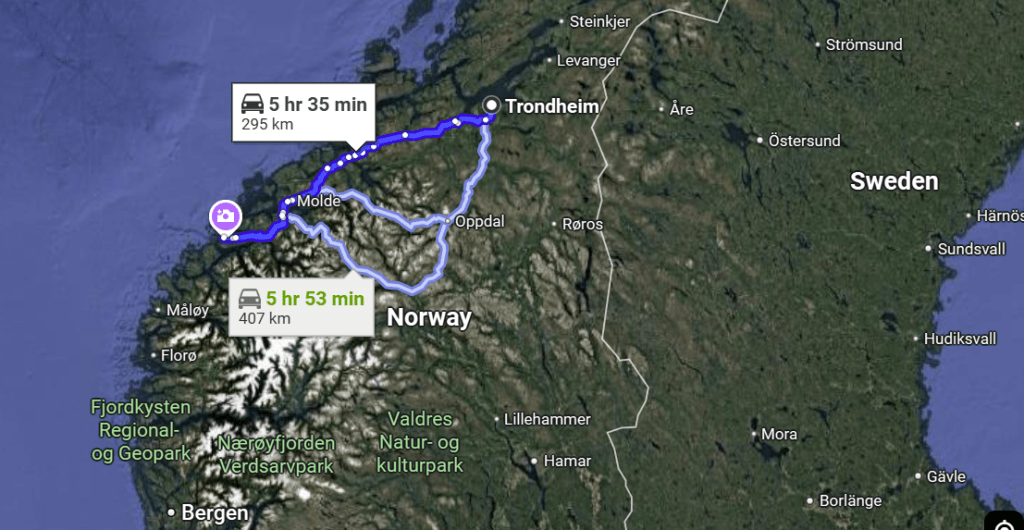
聚在酒吧
酒吧在琥珀色燈光下顯得溫暖,空氣裡帶著木頭和香料的氣息。
黑板上寫著今晚的特調:Aquavit。兩位穿羊毛衣的挪威乘客輕聲舉杯,那玻璃的碰撞聲更像是一種日常的儀式,而非慶祝。

Ben 彎著腰,盯著相機裡的照片:模糊的孩子奔跑,水窪裡倒映的外牆,碼頭邊補網的漁夫。旁邊,Ingrid 的素描本攤開,快速補上奧勒松那座塔樓的線條。
Emma 拉過椅子坐下:「明天要到特隆赫姆。對你們每個人來說,它代表什麼?」

Ingrid’s Memory
Ingrid paused, pencil resting.
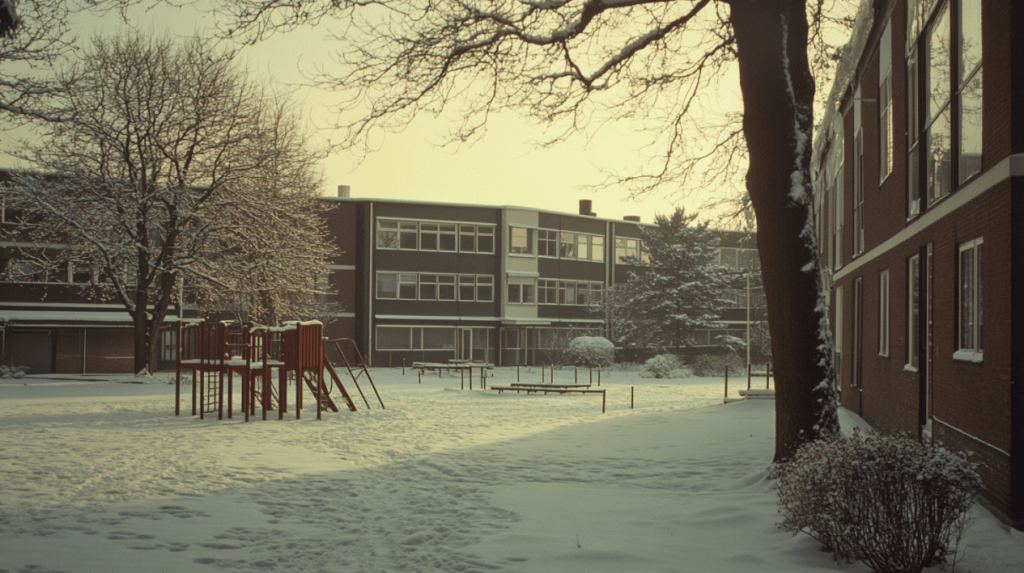
“I taught there in the seventies. My classrooms were always a mixture—students from the south, often farmers’ children, and from the north, mostly fishermen’s sons and daughters.
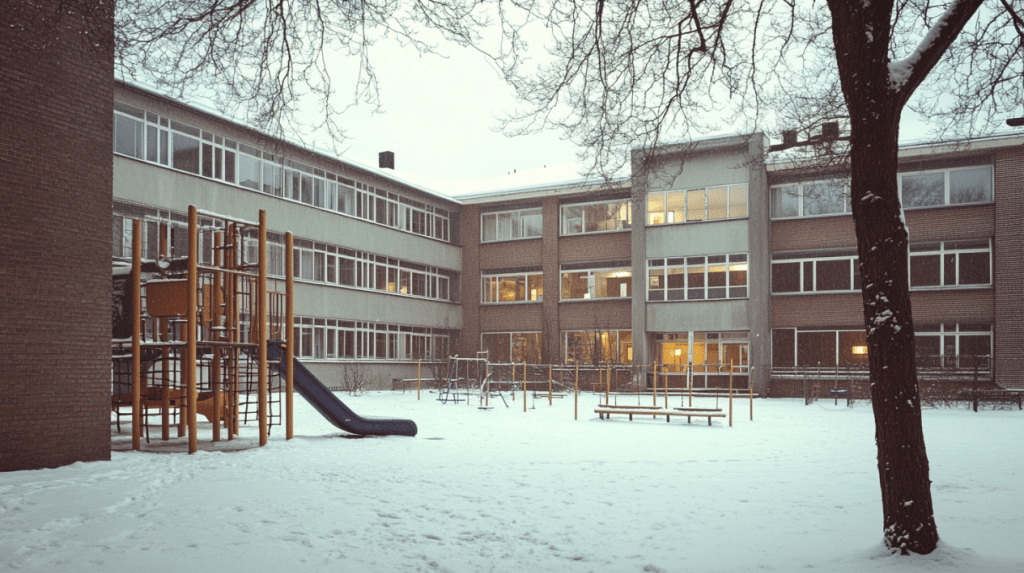
You could hear the differences in their accents, in how they talked about food, even in how they prepared for winter. Trondheim pulled those two Norways into the same room. That’s its character—it holds contrasts together.”
Ingrid 的記憶
Ingrid 停下鉛筆,若有所思地說:
「我七〇年代曾在那裡教書。
教室裡總是混合著不同背景的學生——南方來的多是農家子弟,北方的則多是漁民的孩子。
從他們的口音、談論食物的方式,甚至冬天的穿著,都能感覺出差異。特隆赫姆把這兩個挪威拉進同一個空間。這就是它的特質——把對比融為一體。」
Julia on Geography
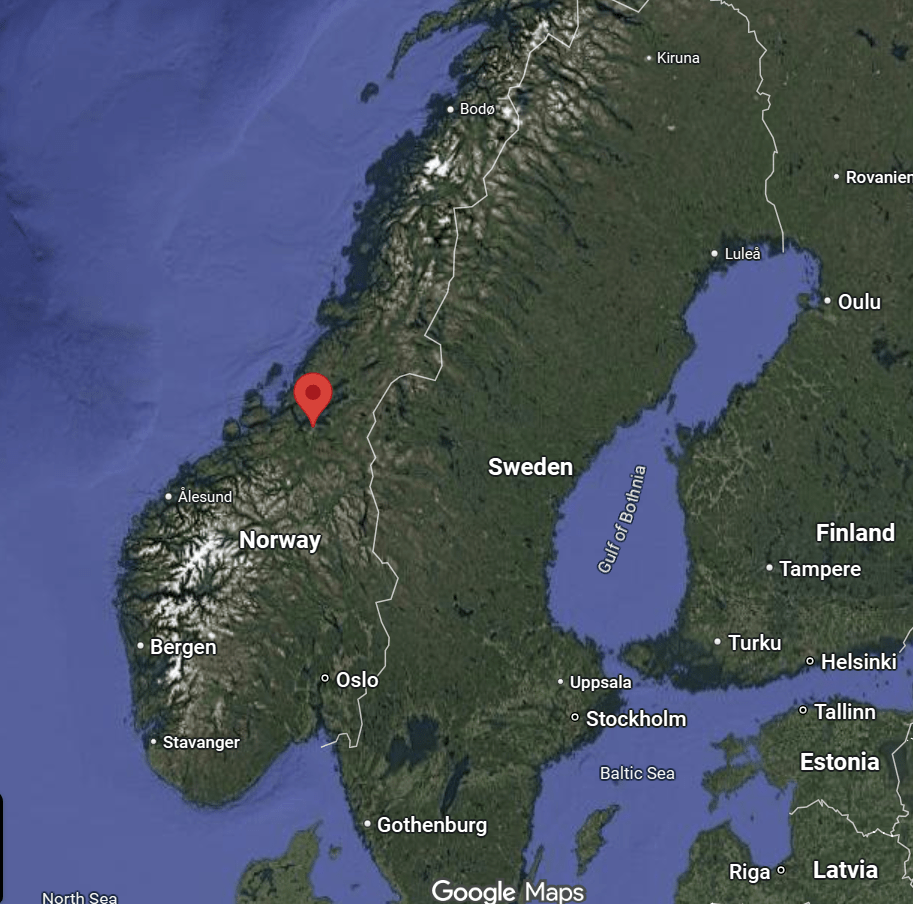
Julia leaned forward, notebook in hand.
“Geographically, Trondheim Bay is a crossroad. To the south, fertile valleys and routes to Europe. To the north, sparse fishing settlements and Arctic resources. Whoever controlled Trondheim connected both halves.
And it’s an ice-free harbor—ships could sail even in January. That gave it power larger than its size.”
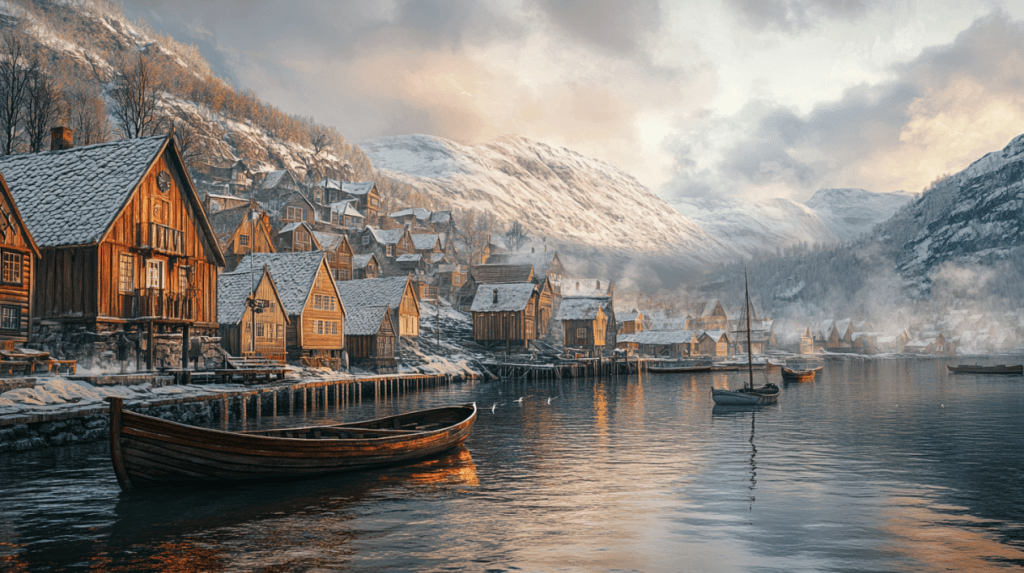
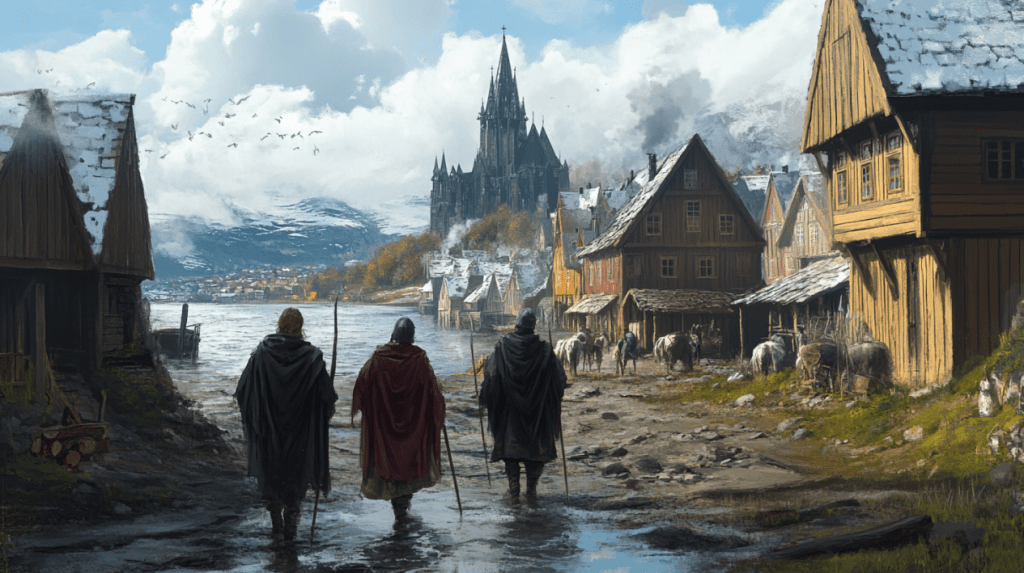
ancient Trondheim fjord bay, medieval Nordic harbor
Julia 的地理觀點
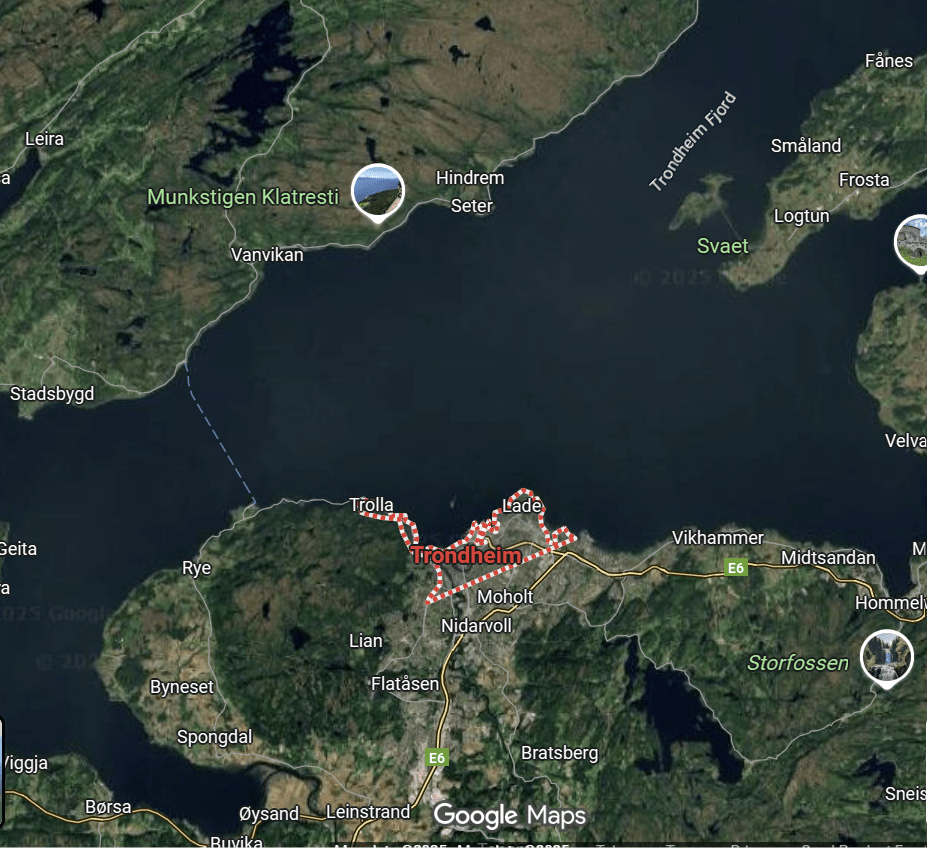
Julia 拿著筆記本往前傾身:「從地理來看,特隆赫姆灣就是天然的交會點。南邊是肥沃的山谷與通往歐洲的通道;北邊是稀疏的漁村和北極資源。
誰掌握特隆赫姆,誰就能連結這兩半個挪威。而且它是不凍港,即使是一月也能通航。這讓它的影響力遠超過城市本身的規模。」
Emma on History
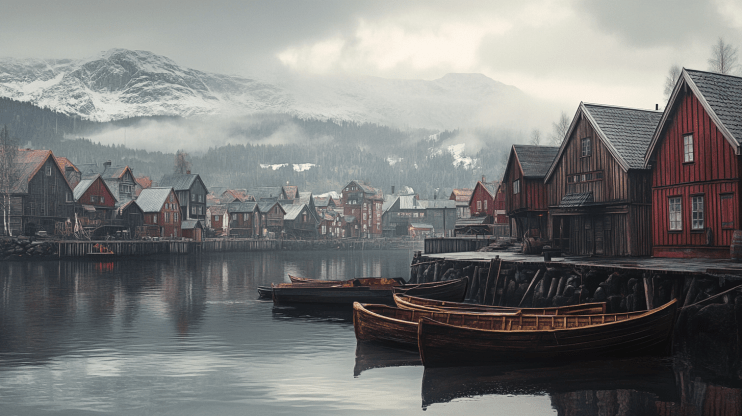
Emma lifted her glass of beer. “Historically, that mattered. Trondheim was once the capital, long before Oslo. Pilgrims crossed Europe to reach Nidaros Cathedral, shrine of St. Olav.
Emma leaned forward, her voice steady but thoughtful.
“St. Olav is more than a king in Norway’s chronicles—he became a symbol. After his death at Stiklestad in 1030, people claimed miracles at his grave. That’s why the Nidaros Cathedral was built, to hold his relics. For centuries, pilgrims walked all the way from across Europe, believing that visiting his shrine would heal both body and soul. In a way, Olav turned Trondheim into the spiritual heart of Norway, long before Oslo became the political one.”
Emma leaned forward, her voice steady but thoughtful.
“St. Olav is more than a king in Norway’s chronicles—he became a symbol.
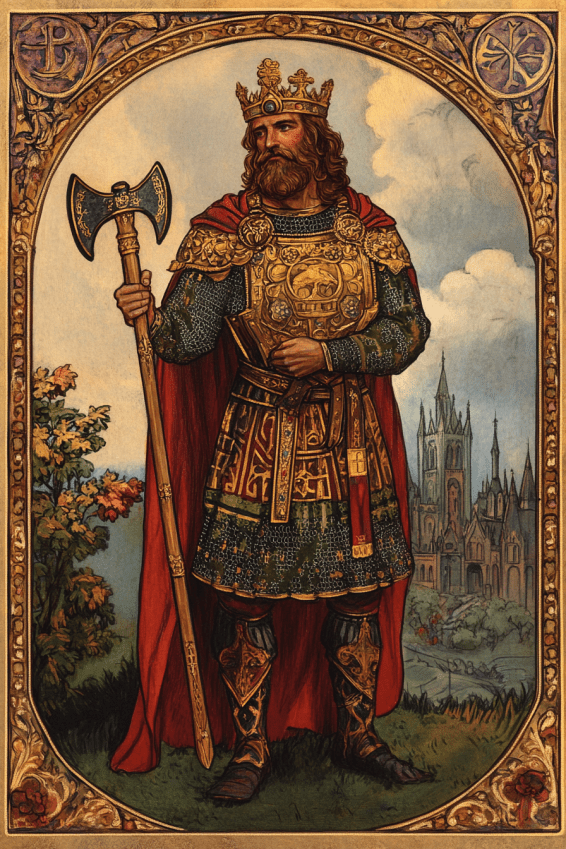
After his death at Stiklestad in 1030, people claimed miracles at his grave. That’s why the Nidaros Cathedral was built, to hold his relics.
For centuries, pilgrims walked all the way from across Europe, believing that visiting his shrine would heal both body and soul. In a way, Olav turned Trondheim into the spiritual heart of Norway, long before Oslo became the political one.”
That pilgrimage gave Norway visibility on the continent. Even after Oslo rose, Trondheim kept symbolic weight—like a reminder that Norway’s heart beats further north than politics suggest.”
Emma 的歷史補充
Emma 舉起啤酒杯:
「歷史上,這一點至關重要。特隆赫姆曾是首都,早在奧斯陸之前。朝聖者從歐洲各地跋涉而來,只為到尼達洛斯大教堂瞻仰聖奧拉夫。
Emma 身子微微前傾,語氣平穩卻帶著思索:
「聖奧拉夫不只是挪威史冊中的一位國王——他成了一個象徵。
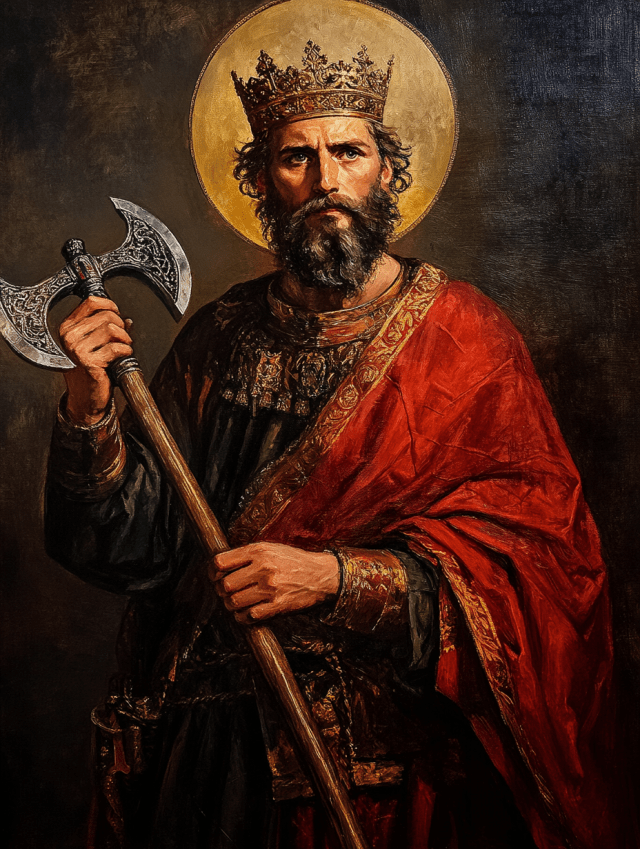
1030 年在斯提克萊斯塔戰死後,人們聲稱在他的墳前出現了奇蹟。
這也是為什麼要建造尼達洛斯大教堂,用來安置他的遺物。幾個世紀以來,朝聖者從歐洲各地長途跋涉而來,相信來到這座聖地能醫治身心。某種程度上,奧拉夫讓特隆赫姆成為挪威的精神心臟,遠在奧斯陸成為政治中心之前。」
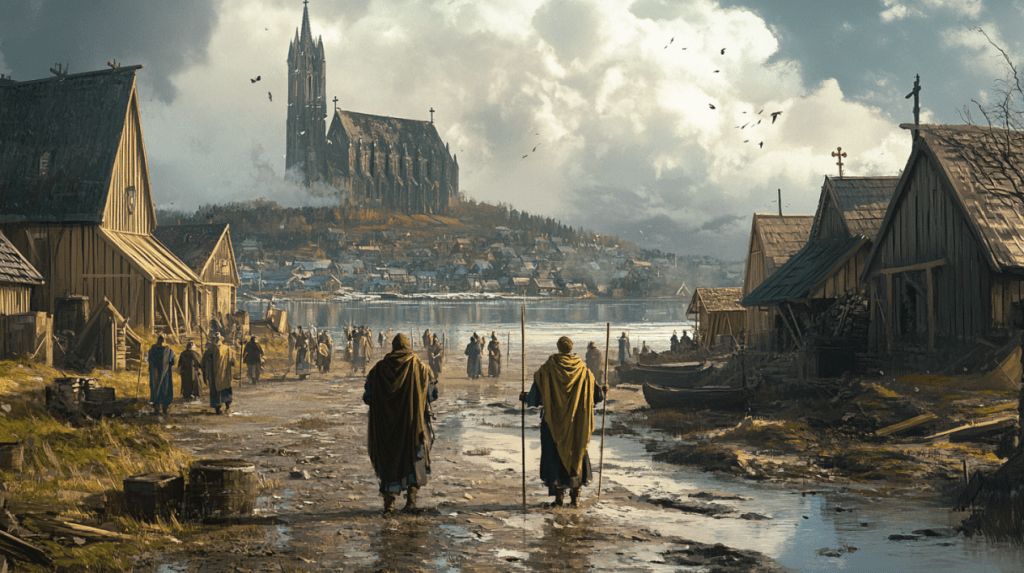
這樣的朝聖讓挪威在歐洲大陸上有了能見度。
即使奧斯陸後來崛起,特隆赫姆依舊保有象徵性的重量,就像一個提醒:挪威的心臟跳動在比政治版圖更北的地方。」
Ingrid on Today’s Norway
Ingrid sipped her Aquavit. “That was the past. Today Norway is unusual. Oil and gas changed everything, yes, but the wealth didn’t stay in Oslo or Stavanger. Through taxation and redistribution, towns as far as Tromsø or Kirkenes gained hospitals, schools, cultural centers.

Wages differ—engineers earn more than fishermen—but socially, the welfare net smooths it out. Retirement pensions, free healthcare, subsidized travel for students. Those things stop the country from tearing apart. Each region keeps its culture, but daily life is more equal than it looks.”
Ben finally closed his camera.
“Hearing all this gives me direction. South, north, past, present—it all meets in Trondheim. I don’t need to capture everything, just the tension: stone rising upward, water stretching outward, people carrying both memory and change. That’s the photograph I’ll look for.”
Ingrid 談今日的挪威
Ingrid 啜了一口 Aquavit:「那是過去。今天的挪威也很特別。石油和天然氣確實改變了一切,但財富並不只留在奧斯陸或史塔萬格。透過稅收與再分配,即使遠在特羅姆瑟或希爾克內斯的小鎮,也能擁有醫院、學校、文化中心。
收入當然不同——工程師賺得比漁夫多——但社會安全網把差距抹平了。退休金、免費醫療、學生交通補助,這些制度防止國家分裂。各地依舊保有文化差異,但日常生活其實比外表看來更平均。」
Ben 合上相機:「聽完你們的話,我才知道該找什麼。南與北、過去與現在,都在特隆赫姆匯合。我不用拍下所有東西,只要捕捉那種張力:石頭向上、水面向外,而人們同時承載記憶與變遷。這就是我要找的照片。」
Closing the Night
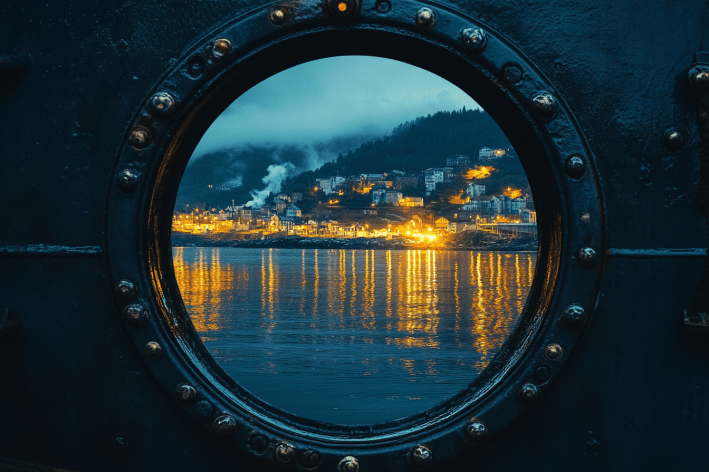
By midnight, the bar thinned out. Through the portholes, coastal villages shimmered faintly, their lights like beads on a dark thread of shoreline. The ship’s horn sounded once, marking the turn northward.
Ingrid closed her sketchbook. “Tomorrow isn’t just another port. It’s the heart of old Norway.”
The others nodded, each carrying their vision of the city: classrooms and students, rising spires, harbor lines, and the map that bound them all.

午夜的尾聲
午夜時分,酒吧安靜下來。舷窗外,沿岸村莊的燈火在黑色海岸線上閃爍,如同一串串光珠。船鳴低沉響起一次,象徵著船身轉向北方。
Ingrid 合上速寫本:「明天不只是普通的一站,而是古老挪威的心臟。」
其他人點頭,各自心裡懷抱著對這座城市的想像:課堂與學生、拔起的尖塔、港口的線條,以及將一切串聯起來的地圖。

 Virtual Travel | 虛擬旅行沉浸式英語學習
發表留言