
Scene 1: At Langlois Bridge – Discussing Van Gogh’s Inner Struggles and the Contrast in His Art
Julia: “This is the Langlois Bridge! I remember seeing this in one of Van Gogh’s paintings—he captured such an ordinary scene, but it feels so vivid and alive.”
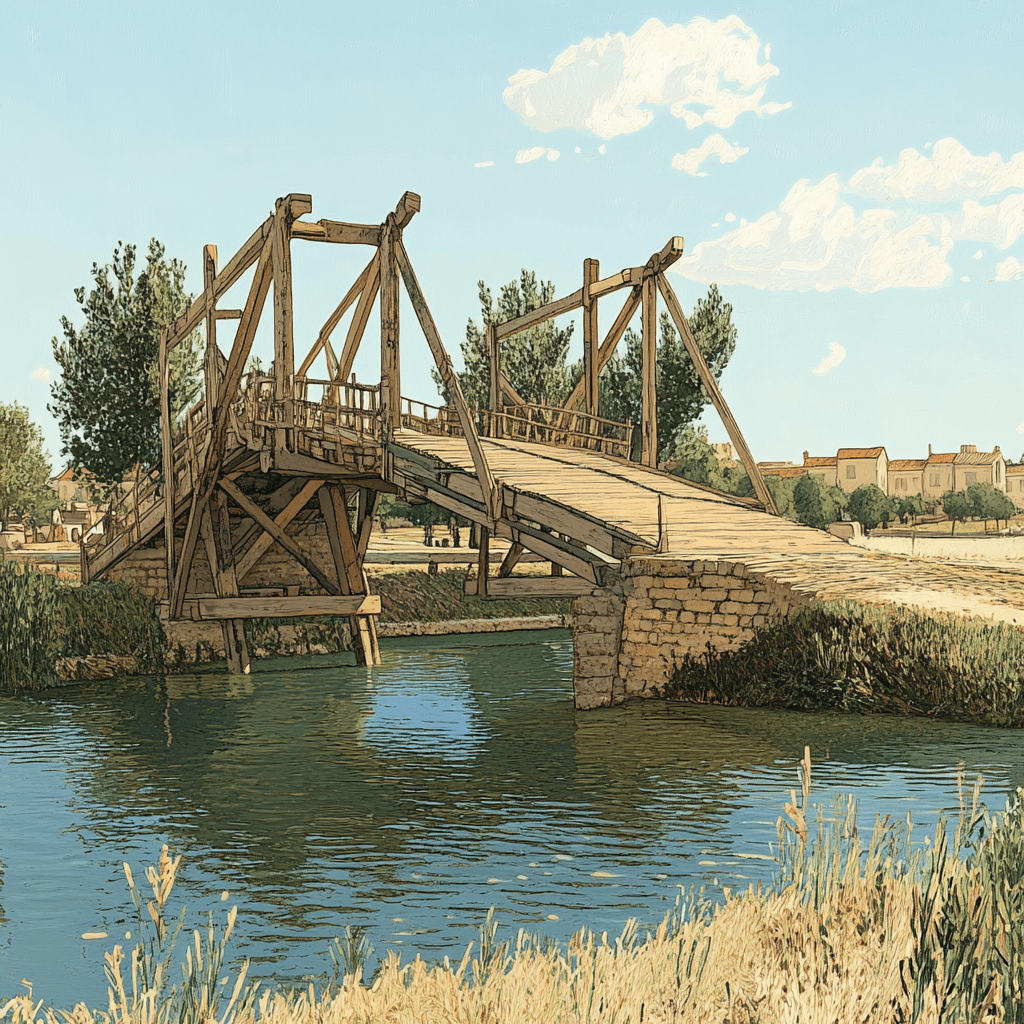
Emma: *“Yes, the *Langlois Bridge at Arles* is a fascinating piece. It reflects his fascination with everyday life, but more than that, it’s a rare moment of calm in his turbulent time here. The bridge, the women doing laundry by the river—it all feels so peaceful, yet Van Gogh was already grappling with severe emotional struggles when he painted it.”*
Julia: “It’s hard to imagine. The bright blues, greens, and the stillness of the scene—it almost hides the inner chaos he was experiencing. But even in this calm, you can sense a certain tension, like something is brewing beneath the surface.”
Emma: “That’s exactly it. Van Gogh’s time in Arles was one of intense contrast. He was searching for peace, for inspiration in the Provençal countryside, but his mental health was steadily declining. The bridge symbolizes connection, but for Van Gogh, it may have also reflected his isolation. He often felt disconnected from others, despite his desire to build an artist community here.”
Julia: “Right, he invited Gauguin to join him, didn’t he? I heard that was a turning point for him—when things really began to unravel.”
Emma: “Yes, Gauguin came for a short time, but their relationship was volatile. The two of them had completely different artistic visions. For Van Gogh, painting was deeply emotional, almost a way to capture his soul on canvas, while Gauguin approached art more intellectually. The tension between them eventually led to Van Gogh’s mental breakdown, the infamous ear incident.”
Julia: “That must have been devastating for him, especially since he longed for connection. It’s tragic that even in this place of beauty, he couldn’t find the peace he was seeking.”
Emma: “Exactly. The Langlois Bridge represents that fragile balance between calm and chaos in Van Gogh’s life. It’s serene on the surface, but the turmoil he was feeling comes through in the thick, expressive brushstrokes. Even in the midst of this beautiful landscape, he couldn’t escape his inner demons.”
場景 1:在朗格盧瓦吊橋 – 討論梵谷的內心掙扎與作品的對比
茱莉亞:「這就是朗格盧瓦吊橋!我記得在梵谷的畫作裡見過這座橋——他描繪了一個普通的場景,卻如此生動有力。」
艾瑪:「是的,《阿爾勒的朗格盧瓦吊橋》* 是一幅非常有趣的作品。它反映了他對日常生活的迷戀,但更重要的是,這是一個他混亂時期中難得的平靜瞬間。橋、河邊洗衣的女人——這一切都感覺如此寧靜,但梵谷在創作這幅畫時,內心已經在經歷嚴重
的情感掙扎。」*
茱莉亞:「很難想像。他使用的鮮亮藍色、綠色和畫中的靜謐幾乎掩蓋了他內心的混亂。但即使在這平靜之中,你也能感受到某種緊張感,就像表面下隱藏著某些東西。」
艾瑪:「這就是關鍵。梵谷在阿爾勒的時期充滿了強烈的對比。他在尋找平靜,尋找普羅旺斯鄉村的靈感,但他的精神健康卻在逐漸惡化。這座橋對他來說象徵著連接,但對他而言,這可能也是孤獨的象徵。他經常感到與他人脫節,儘管他渴望在這裡建立一個藝術社群。」
茱莉亞:「對,他邀請了高更一起來,不是嗎?我聽說那是他生活中的一個轉折點——事情開始真正失控了。」
艾瑪:「是的,高更確實短暫地來了,但他們的關係非常緊張。他們對藝術的理解完全不同。對梵谷來說,繪畫是情感的表達,幾乎是在畫布上捕捉靈魂,而高更則更理智地看待藝術。這種緊張最終導致梵谷精神崩潰,發生了著名的割耳事件。」
茱莉亞:「這對他來說一定是毀滅性的,尤其是他渴望與人建立聯繫。很悲哀,即使在這樣一個美麗的地方,他還是無法找到他所追求的平靜。」
艾瑪:「正是如此。朗格盧瓦吊橋代表了梵谷生活中的那種脆弱的平衡。它看起來很平靜,但他內心的動盪通過他那厚重而富有表現力的筆觸表現出來。即使在這美麗的景觀中,他也無法擺脫內心的惡魔。」
Scene 2: Visiting Saint-Paul-de-Mausole Asylum – Exploring Van Gogh’s Emotional State and Creativity
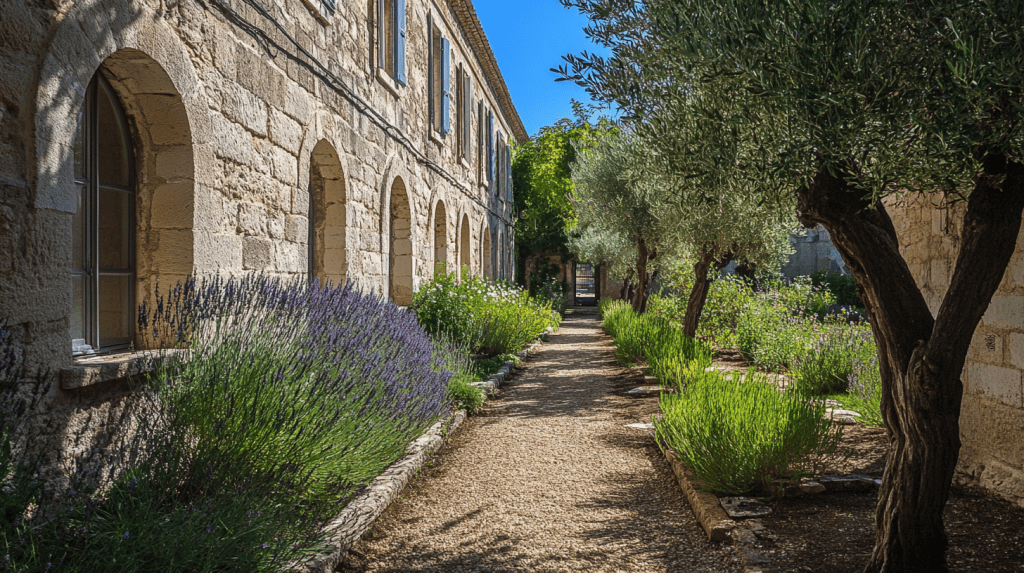
Julia: “Standing here in Saint-Paul-de-Mausole, I can hardly believe Van Gogh produced so many masterpieces while he was in such a fragile mental state. Over 150 paintings—how did he manage to create so much while battling his illness?”

Emma: “It’s astonishing, isn’t it? After the ear incident, he admitted himself here in 1889, hoping to recover. And although his time in the asylum was marked by intense mental distress, it also sparked a period of remarkable creativity. Being in this peaceful setting, surrounded by nature, allowed him to channel his emotions into his art. He painted *The Starry Night* right here, from the view outside his window.”
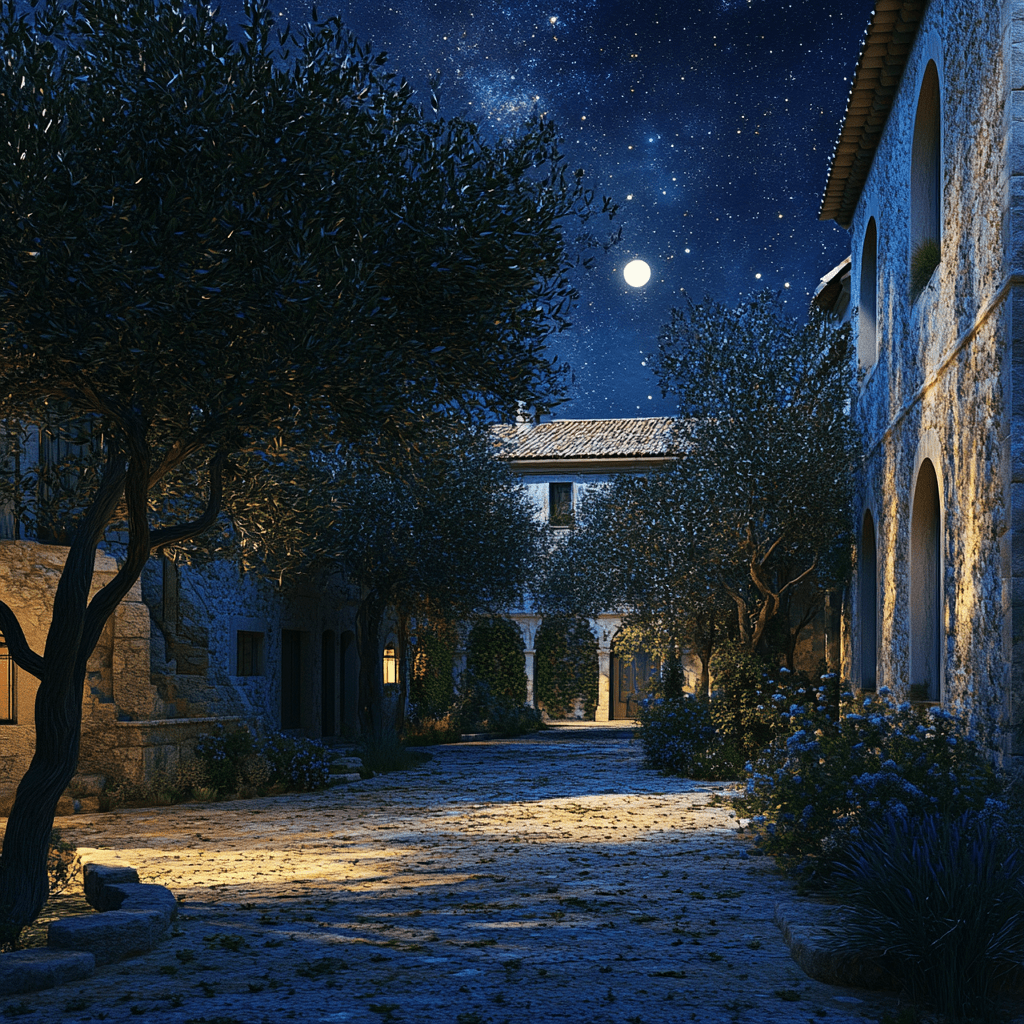
Julia: “That painting is extraordinary. It’s as if the sky is alive, swirling with energy and emotion. It’s not just a night scene—it feels like it’s capturing the turbulence inside him.”
Emma: “That’s exactly how Van Gogh painted—his work was always an expression of what he was feeling. *The Starry Night* is often seen as a reflection of his inner turmoil. The cypress trees, the swirling stars, and the almost fluid movement of the sky all mirror the emotional chaos he was experiencing at the time. Yet, even in that chaos, there’s a sense of beauty and awe.”
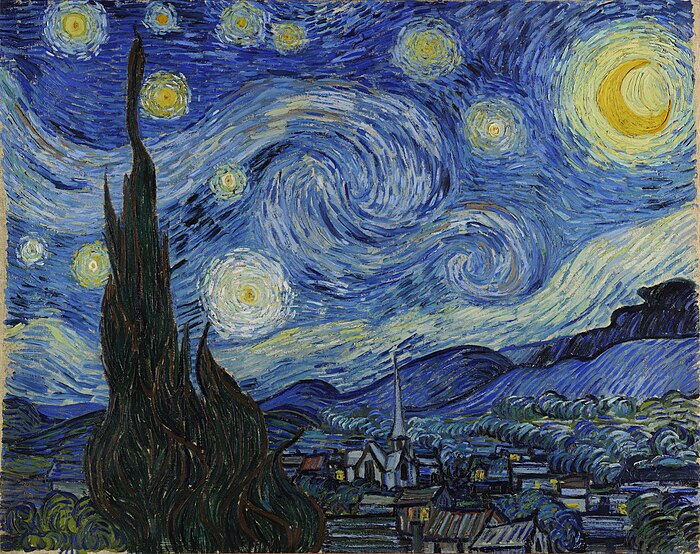
The Starry Night by Van Gogh (1889)
Julia: “It’s interesting how nature became a way for him to express those feelings. Even in his *Olive Trees* and Cypresses series, you can see the intensity of his emotions. The trees almost seem to move, like they’re alive and reacting to the world around them.”
Emma: “Absolutely. He wasn’t just painting what he saw—he was painting what he felt. The olive groves, the wheat fields, and the cypress trees all became extensions of his own emotional state. Even though he was confined in the asylum, his mind was free to wander through the landscapes of Provence. In some ways, these surroundings gave him the space to process his inner turmoil through art.”
Julia: “It’s almost as if the asylum provided him with a sense of structure—something he could rely on when everything else felt unstable. And yet, his paintings are so full of movement and life, it’s like he was breaking free through his art.”
Emma: “That’s a great way to put it. The structured life of the asylum allowed him to focus on his work, even as his mental state fluctuated. And the environment—the fields, the mountains, the quiet—gave him a sort of peace, even if it was fleeting. His art was his way of finding control in the chaos.”
場景 2:參觀精神病院 – 探索梵谷的情感狀態與創作

茱莉亞:「站在這裡,聖保羅·德·莫索勒,我很難相信梵谷在這裡身處脆弱的精神狀態下竟然創作了如此多的傑作。超過150幅畫作——他是如何在與疾病作鬥爭的同時創作出這麼多作品的?」
艾瑪:「這真是令人驚嘆,不是嗎?在割耳事件後,他於1889年自願住進了這裡,希望能夠康復。雖然他在精神病院的時間充滿了劇烈的心理痛苦,但這也激發了一段創造力的高峰期。置身於這樣一個寧靜的環境中,被大自然包圍,讓他能夠將情感注入到他的藝術中。他就是在這裡的窗外畫下了《星夜》。」
茱莉亞:「那幅畫太非凡了。彷彿天空是活的,充滿了能量和情感。這不僅僅是一個夜景——感覺像是捕捉到了他內心的動盪。」
艾瑪:「這正是梵谷繪畫的方式——他的作品總是表達他當時的感受。《星夜》經常被視為他內心混亂的反映。柏樹、旋轉的星星和幾乎流動的天空都反映了他當時經歷的情感風暴。然而,即使在那種混亂中,也有一種美感和敬畏。」
茱莉亞:「有趣的是,他通過大自然來表達這些感受。即使在他畫的《橄欖樹》和《柏樹》系列中,你也能看到他情感的強烈。那些樹彷彿在移動,像是在與周圍的世界作出反應。」

柏樹 1889
艾瑪:「完全正確。他不僅僅是在畫他所見的,而是在畫他所感受的。橄欖樹、麥田和柏樹都成為了他情感狀態的延伸。儘管他被困在精神病院中,但他的思想在普羅旺斯的景觀中自由徜徉。在某種程度上,這些自然景觀給了他一個通過藝術來處理內心混亂的空間。」
茱莉亞:「感覺精神病院給了他一種結構感——當一切都感覺不穩定時,他可以依賴的某種秩序。然而,他的畫作充滿了動感和生命力,彷彿他通過藝術在尋找自由。」
艾瑪:「這是一個很好的觀點。精神病院的有序生活讓他能夠專注於他的作品,即使他的精神狀態波動很大。而周圍的環境——田野、山脈、寧靜——給了他某種短暫的平靜。對他而言,藝術是他在混亂中尋找控制的一種方式。」
Scene 3: The Night Café – A Dark Reflection of Van Gogh’s Inner Struggles
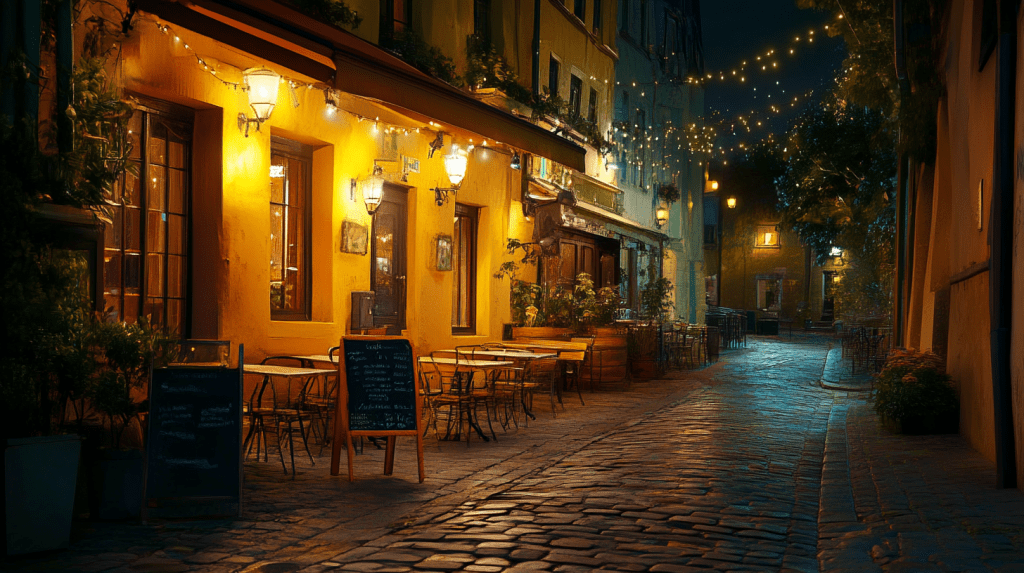
Julia: *“This is the *Night Café. It’s strange to think that a place like this could inspire one of Van Gogh’s most unsettling works. He described it as a place of ruin—‘a place where one could go mad.’”
Emma: “That’s right. *The Night Café* is unlike most of his other works in Provence. The colors are harsh—those reds and greens create a sense of unease, almost discomfort. He wasn’t painting beauty here, but something much darker. Van Gogh wanted to capture the emotions he associated with this place—loneliness, despair, even madness.”

Café Terrace at Night (1888)
Julia: “It’s such a contrast to his landscapes. Here, everything feels tense and claustrophobic. The way the tables are scattered, the harsh lighting—it feels like a place of emotional unrest.”
Emma: *“Exactly. Van Gogh once said that he wanted to show the ‘terrible passions of humanity’ in this painting. He used color to convey those feelings—the vibrant yellows and reds aren’t warm; they’re oppressive. It’s a completely different use of color from his bright, sunny landscapes. In *The Night Café, the colors overwhelm you, much like the emotions he was struggling with at the time.”
Julia: “It’s fascinating how he could use the same colors—yellows, reds, greens—but in such a different way. In his other works, they’re vibrant and full of life, but here, they’re almost suffocating.”
Emma: “That’s one of Van Gogh’s gifts—his ability to use color to convey emotion. In *The Night Café, he was painting his isolation, his inner conflict. The distorted perspective, the harsh angles—they all add to that feeling of unease. It’s a reflection of his mental state, just as much as his peaceful landscapes reflect his longing for calm.”
Julia: “It’s a reminder of how deeply personal his art was. Whether it was the peaceful fields or the tense atmosphere of the café, everything he painted was a window into his soul. You can feel the weight of his struggles here.”
Emma: “Yes, Van Gogh’s life was full of contrasts—between peace and chaos, light and darkness. And his time in Provence was a reflection of that. Even in this beautiful place, he couldn’t escape the intensity of his emotions. But through his art, he found a way to express it all.”
場景 3:夜間咖啡館 – 梵谷內心掙扎的暗影

茱莉亞:「這就是《夜間咖啡館》的地方。很奇怪,這樣一個地方竟然激發了梵谷最讓人不安的作品之一。他曾說過這是‘一個人可能毀掉自己、發瘋或犯罪的地方’。」
艾瑪:「沒錯。《夜間咖啡館》完全不同於他在普羅旺斯的其他作品。顏色非常刺眼——那些紅色和綠色給人一種不安感,幾乎是不舒服的感覺。他並不是在畫美麗的東西,而是畫出了他與這個地方相關聯的情感——孤獨、絕望,甚至是瘋狂。」
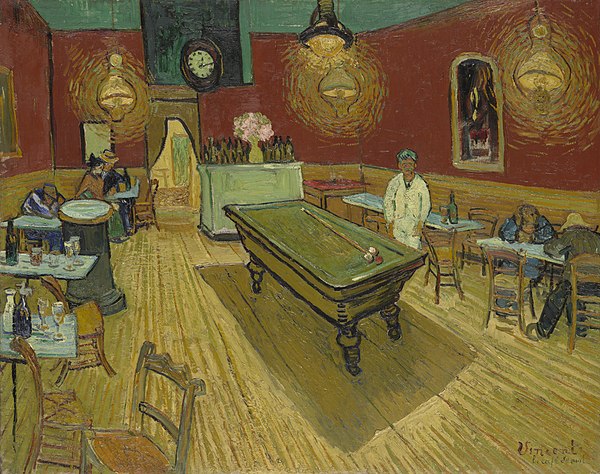
夜間咖啡館 by 梵谷 1888
茱莉亞:「這與他的風景畫形成了鮮明的對比。在這裡,一切感覺緊張而壓抑。那些散落的桌椅,刺眼的燈光——這裡感覺像是一個情感不安的場所。」
艾瑪:「沒錯。梵谷曾說過他想通過這幅畫展示‘人類的可怕激情。他用顏色來傳達那些感受——鮮亮的黃色和紅色並不溫暖,而是壓迫性的。這與他明亮的、陽光燦爛的風景完全不同。在《夜間咖啡館》中,顏色讓人感到窒息,這就像是他當時情感的寫照。」
茱莉亞:「有趣的是,他能用相同的顏色——黃色、紅色、綠色——卻能創造出完全不同的效果。在他的其他作品中,這些顏色充滿活力,而在這裡,卻幾乎讓人窒息。」
艾瑪:「這就是梵谷的天賦之一——他能夠用顏色來表達情感。在《夜間咖啡館》中,他在畫他的孤獨和內心的矛盾。那些扭曲的視角、刺眼的角度——都增強了那種不安感。這幅畫就像是他的精神狀態的反映,正如他平靜的風景反映了他對平靜的渴望一樣。」
茱莉亞:「這讓人想起他的藝術是多麼個人化的表達。不論是那些平靜的田野還是這家充滿緊張氣氛的咖啡館,他所畫的每一幅畫都是他靈魂的窗戶。在這裡,你能感受到他內心掙扎的重量。」
艾瑪:*「是的,梵谷的一生充滿了對比——平靜與混亂、光明與黑暗。而他在普羅旺斯的時光正是這些對比的縮影。即使在這樣一個美麗的地方,他也無法擺脫強烈的情感波動。但通過他的藝術,他找到了表達這一切的方式。」*

 Virtual Travel | 虛擬旅行沉浸式英語學習
回覆給The Virtual World Explorer 取消回覆