
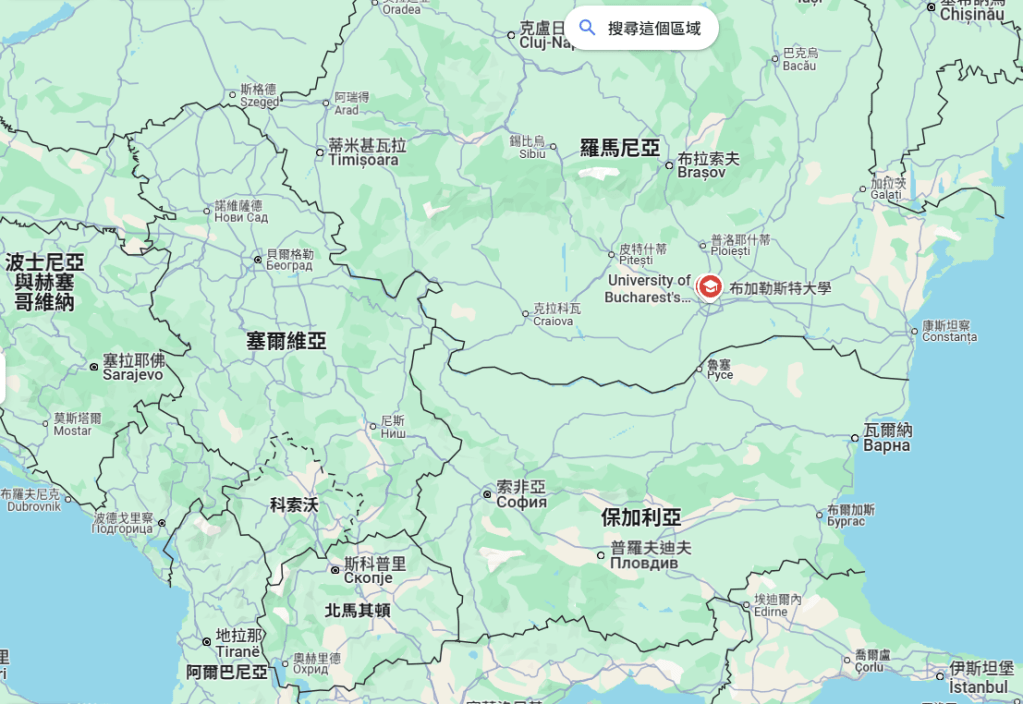
An Academic Conference Amidst the History of Bucharest
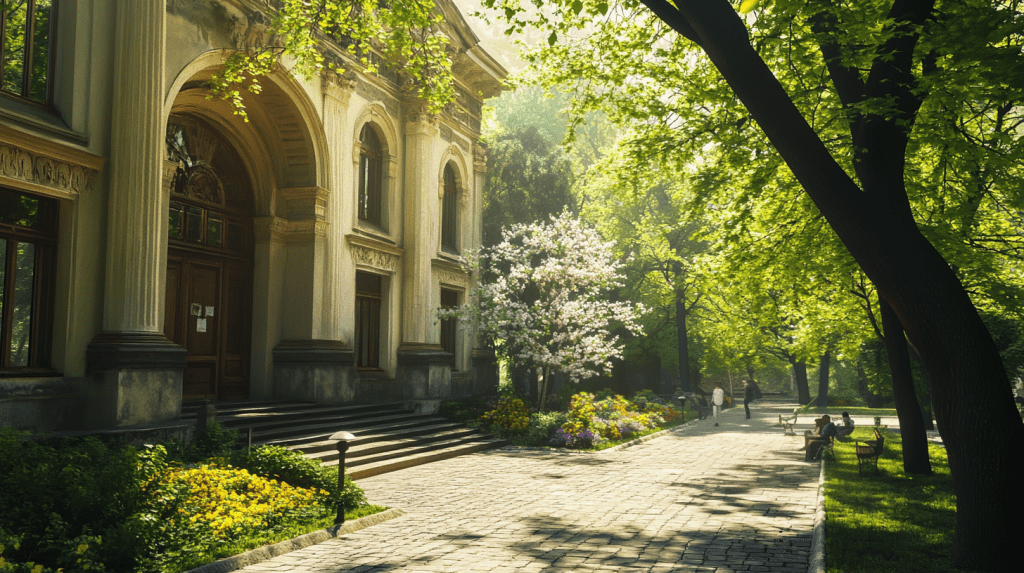
Springtime, inside the university’s historic conference hall. Sunlight filters through tall arched windows, illuminating bookshelves filled with historical and geographical texts. Outside, the city is shedding its winter stillness, with early spring buds beginning to appear on the trees.
Emma: (Tapping the wooden table) There’s something about this place—it still carries the weight of 19th-century academia.
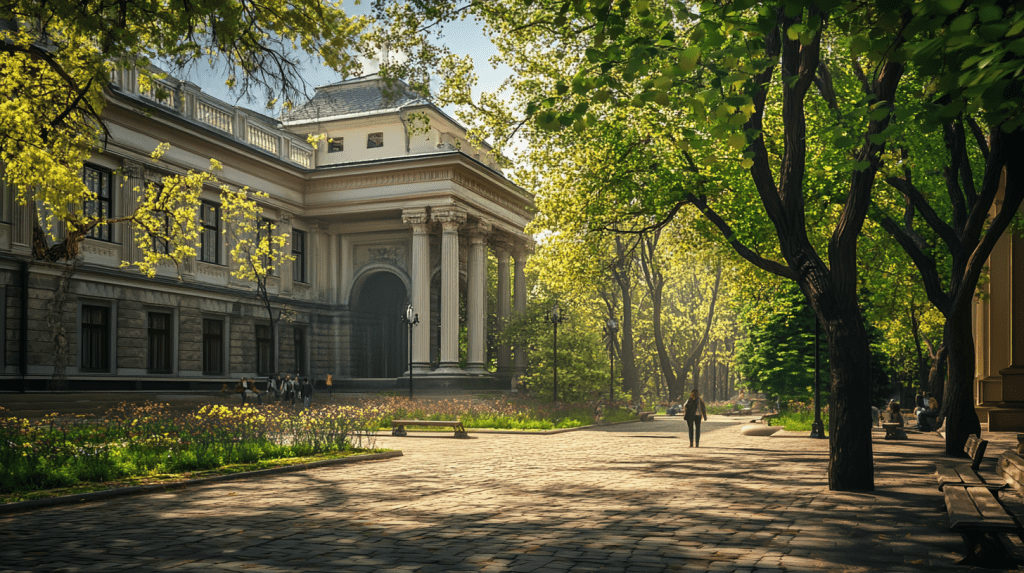
Julia: That’s because it does. This university was established in 1864, right when Romania was starting to assert its independence from Ottoman influence. At the time, building a university wasn’t just about education—it was a political statement.
Emma: (Nods) That reminds me of Serbia’s universities—created as part of cultural resistance under Ottoman rule.
Julia: Exactly. But Romania’s position was different. It was caught between Ottoman and Habsburg influences, and it had stronger Western European ties earlier than Serbia.
Emma: (Smiling) You know, ever since we left Tara National Park, I keep noticing a pattern—everywhere we go, we find a history of empires shaping these lands: the Ottomans, the Habsburgs, the Byzantines, even Russia.
Julia: That’s the Balkans for you—always a contested crossroads. And Bucharest itself is a perfect example of that.
Emma: You mean in terms of architecture?
Julia: Yes. Look at this university building—it’s classical, European, very much in the French-inspired neoclassical style. But if we walk through the old town later, we’ll still see Ottoman influences in the market layouts and small courtyards.
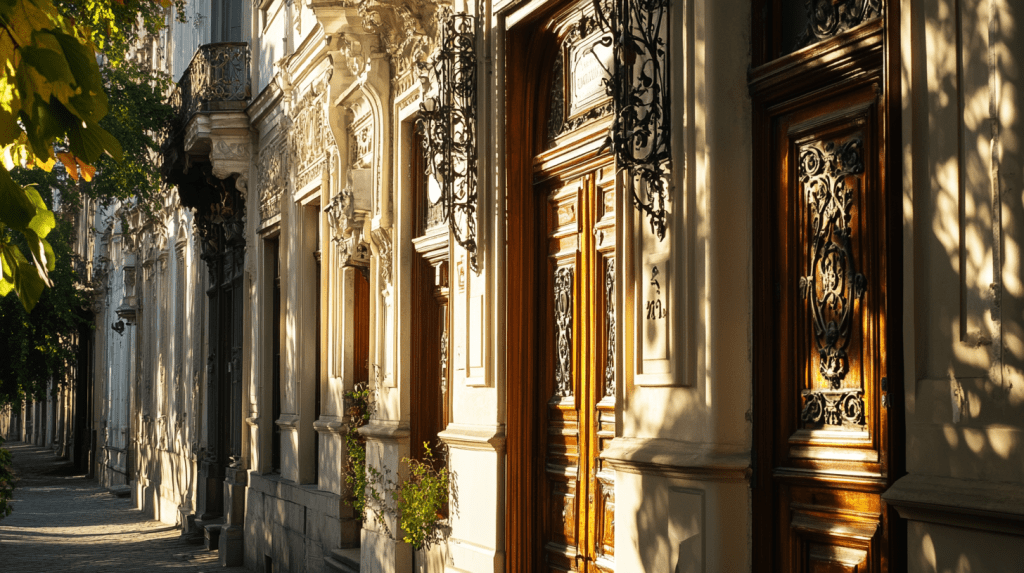
A historic street in Bucharest’s Old Town, Romania, where Ottoman-era wooden facades blend with 19th-century neoclassical buildings.
Emma: I heard that Bucharest was once called the “Little Paris."
Julia: (Nods) That’s right—especially in the late 19th and early 20th centuries. Romania wanted to modernize, and Bucharest modeled its boulevards and buildings after Paris. But then… (pauses)
Emma: (Tilting her head) But then what?
Julia: After World War II, the communist government changed everything. Nicolae Ceaușescu’s modernization efforts were extreme—huge parts of the old city were demolished to make way for Soviet-style buildings.
Emma: (Sighs) That sounds familiar. Belgrade has some of the same contradictions—grand, historic European-style buildings next to stark, imposing communist-era structures.
Julia: Exactly. Bucharest became a forced experiment in modernization. The People’s Palace—the colossal government building—was built while the country was going through economic hardship.
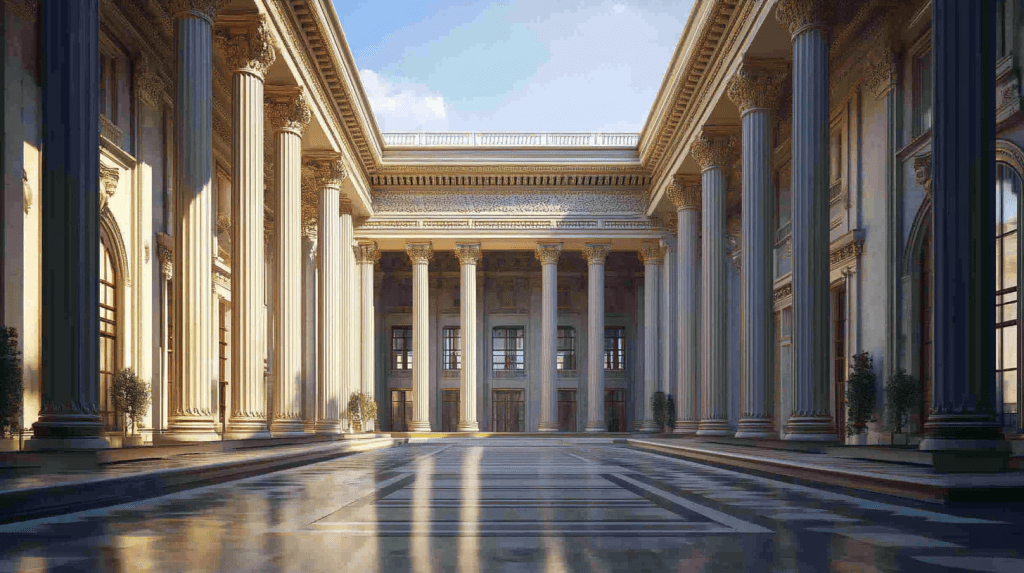
The People’s Palace
Emma: (Raises an eyebrow) I heard it’s bigger than Versailles?
Julia: (Chuckles) And one of the most controversial buildings of its time. Imagine spending a fortune on a palace while your country struggles with food shortages.
Emma: (Thoughtful) It’s ironic, isn’t it? From Parisian-style elegance to brutalist Soviet influences—Bucharest feels like a city constantly reinventing itself.
Julia: And that’s exactly why it’s the perfect place for this conference. It’s a city shaped by geography, politics, and the weight of history—just like the subjects we study.
會議開始——布加勒斯特大學內的歷史氛圍
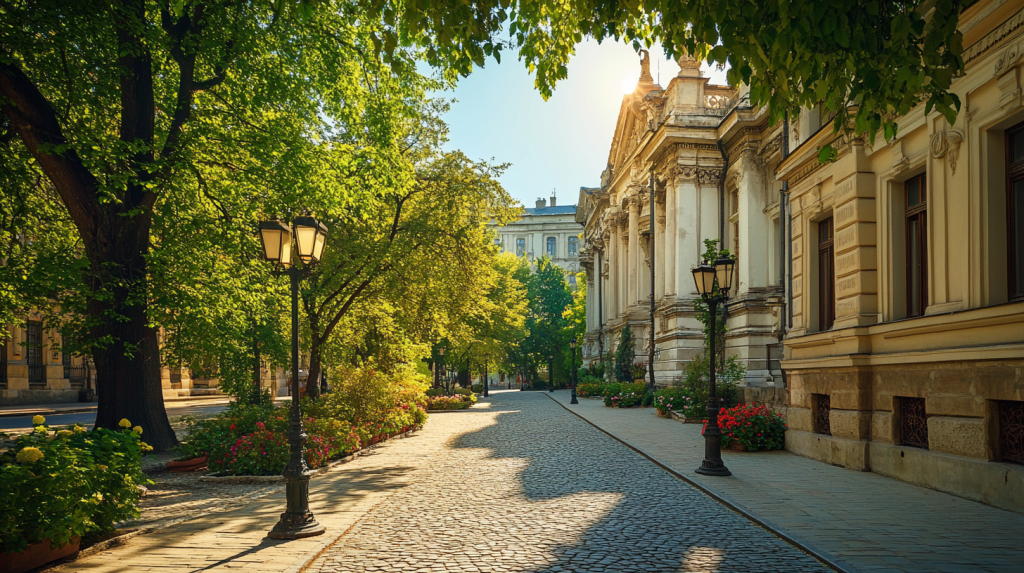
布加勒斯特大學(University of Bucharest)主樓,會議室內。
新古典主義風格的外牆,高聳的石柱,外牆上雕刻著19世紀的細緻裝飾。會議廳內掛著布加勒斯特大學創校以來的歷史畫像,四周是深色木質的書櫃,擺滿了關於巴爾幹半島的歷史與地理書籍。透過高高的拱形窗戶,可以看到布加勒斯特的城市景色——遠方是老城區的紅瓦屋頂與修復中的歷史建築,街道上,行人來來往往,偶爾還能聽到電車緩緩駛過的聲音。春天剛剛到來,校園內的樹木仍帶著冬天的蕭瑟,但已有新芽在枝頭冒出,空氣中帶著濕潤的微風,預示著即將回暖的氣候。
Emma 和 Julia 坐在會議廳的一側,會議剛結束,參與者陸續離開,她們繼續聊了起來。
Emma: (輕輕敲了敲桌面) 這棟建築真是氣派,還帶著19世紀的學術氣息。
Julia: 是啊,這裡建於1864年,正好是羅馬尼亞開始擺脫奧斯曼影響、逐步現代化的時期。那時候,建立大學不僅是為了教育,更是象徵民族意識的崛起。
Emma: (點頭) 聽起來有點像塞爾維亞大學的創立背景——在奧斯曼帝國的統治陰影下,教育變成了一種文化抵抗的方式。
Julia: 沒錯,羅馬尼亞當時的狀況跟塞爾維亞相似,但這裡更接近哈布斯堡的影響,受歐洲的影響更早一些。
Emma: (笑) 我發現,這趟旅程從塔拉山到這裡,我們一路上看到的歷史幾乎都是被大帝國影響過的——奧斯曼、哈布斯堡、拜占庭……還有俄國。
Julia: 這就是巴爾幹半島的宿命吧?一個被不同勢力爭奪的交匯點。其實布加勒斯特本身也是如此——這座城市幾乎像是歐洲和東方文化的一個交界點。
Emma: 你是指這裡的建築風格嗎?
Julia: 是的,你看這棟大學的建築,外觀是標準的歐洲新古典主義風格,帶著法國影響,但如果你去布加勒斯特的老城區,還能看到奧斯曼時期留下的小型宮殿與市集結構。
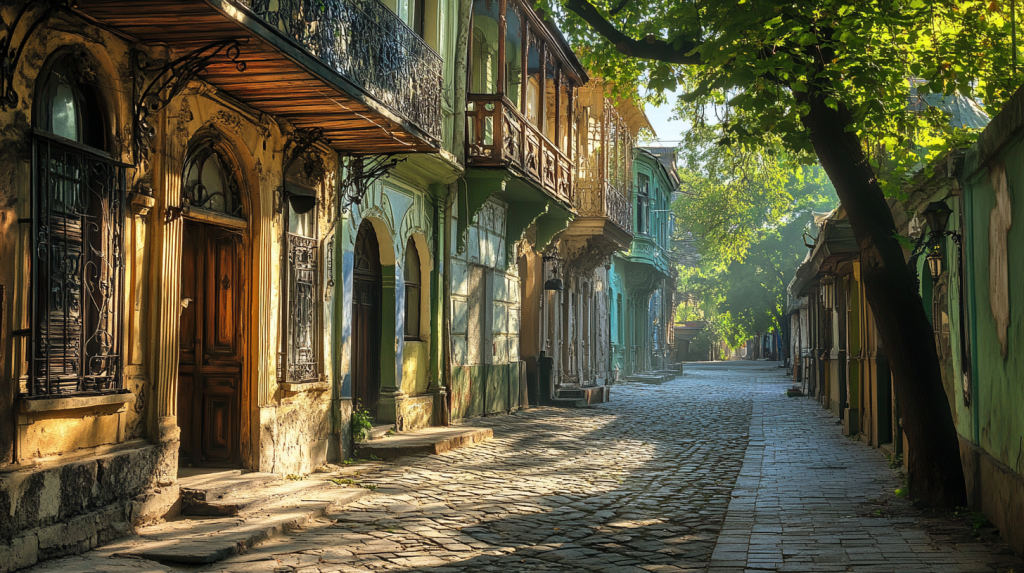
布加勒斯特老城區的一條歷史街道,奧斯曼時期的木質立面與19世紀的新古典建築風格相融合。
Emma: 我聽說這裡還有「小巴黎(Micul Paris)」的稱號?
Julia: (點頭) 對,19世紀末到20世紀初,布加勒斯特開始現代化,模仿巴黎的都市規劃,還修建了許多豪華的宮殿和林蔭大道,但後來……(停頓)
Emma: (歪頭) 但後來怎麼了?
Julia: 二戰之後,共產政權上台,一切都改變了。尼古拉·齊奧塞斯庫(Nicolae Ceaușescu)推行極端的現代化計畫,許多老城區的建築被拆除,取而代之的是巨大的蘇聯式建築。
Emma: (嘆氣) 這倒是跟貝爾格勒的某些地方有點像……所以說,布加勒斯特等於經歷了一次「強制現代化」?
Julia: 沒錯,而且影響很大,這也讓布加勒斯特變成了一座風格混雜的城市——你會看到法式宮殿、奧斯曼遺跡、蘇聯式公寓、還有極度浮誇的齊奧塞斯庫時期建築,比如人民宮(Palace of Parliament)。
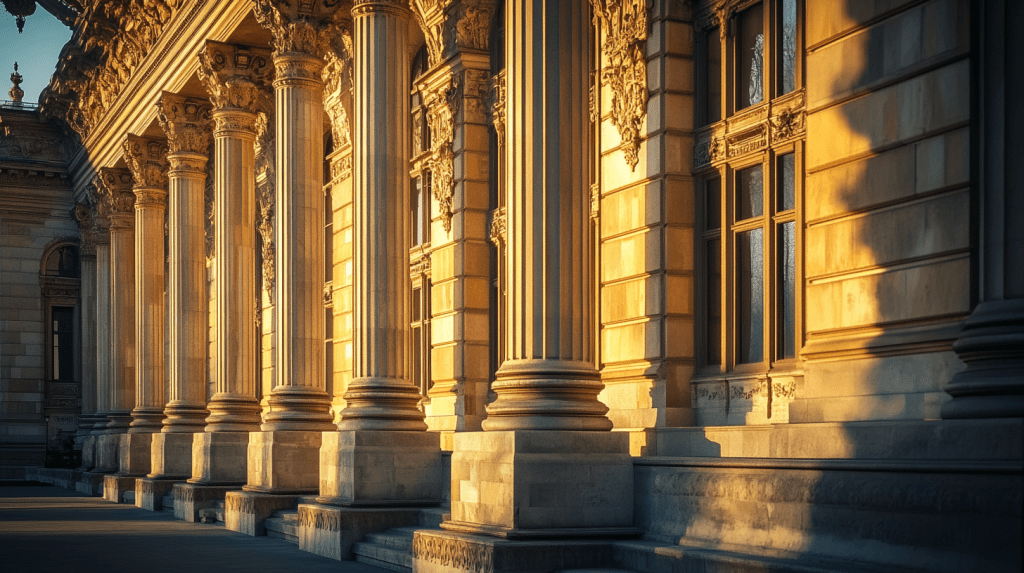
人民宮
Emma: (挑眉) 我聽說那座建築比整個凡爾賽宮還大?
Julia: (苦笑) 而且是共產時期最具爭議的建築之一。你能想像嗎?當時羅馬尼亞的經濟幾乎崩潰,但齊奧塞斯庫還是砸下巨資建造這座宮殿。
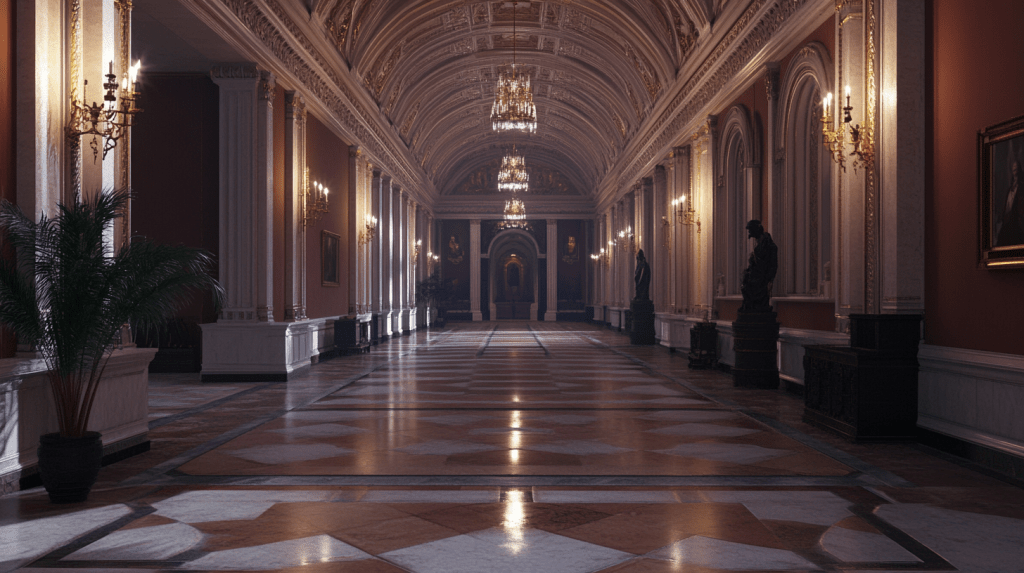
Emma: (思考) 這確實是歷史的一種諷刺……從巴黎風格到蘇聯風格,布加勒斯特就像是一個文化實驗場。
Julia: 所以這裡特別適合我們的會議,因為這座城市本身就是一個歷史與地理變遷的縮影。
The Conference and the Historical Atmosphere of Bucharest
Inside a grand hall at the University of Bucharest, a long oval table is set with notebooks, maps, and historical documents. The room’s tall windows allow soft natural light to filter in, revealing the cityscape beyond—red-tiled rooftops, old buildings undergoing restoration, and the occasional sound of a tram rolling through the streets. Though spring is arriving, there’s still a crisp chill in the air, and the city is slowly shaking off the remnants of winter.
Chairperson: Thank you all for attending today’s discussion at the University of Bucharest. Our topic is “The Influence of the Danube and the Carpathians on Romania’s History and Culture.” We will explore how this great river has shaped regional history, trade, and urban development, while also analyzing how the mountains have influenced national identity and geopolitics.
Scholar 1: The Danube has always been a bridge between East and West, not just a trade route but also a strategic military and political corridor. During Roman times, it marked the empire’s frontier; in the Ottoman era, it was a passage to Central Europe.
Scholar 2: At the same time, the Carpathian Mountains played a different role—they acted as a natural barrier, allowing certain ethnic groups to preserve their culture. The Principalities of Wallachia and Moldavia, for example, maintained some level of autonomy under Ottoman and Habsburg pressure.
Emma: That reminds me of Serbia’s geography. We have the Dinaric Alps as our boundary, while Romania has the Carpathians. It seems that these mountain ranges profoundly shaped national histories.
Julia: Not just history—geography also affects economic development. Have you noticed how towns along the Danube tend to develop faster than those in the mountains? Cities like Galați and Brăila became major trade hubs under Ottoman rule.
Scholar 3: That’s a crucial point. Mountain regions foster more isolated lifestyles, whereas the Danube corridor has always been open to external influences. This is why Bucharest, rather than a mountain town, evolved into a commercial and cultural crossroads, heavily influenced by France.
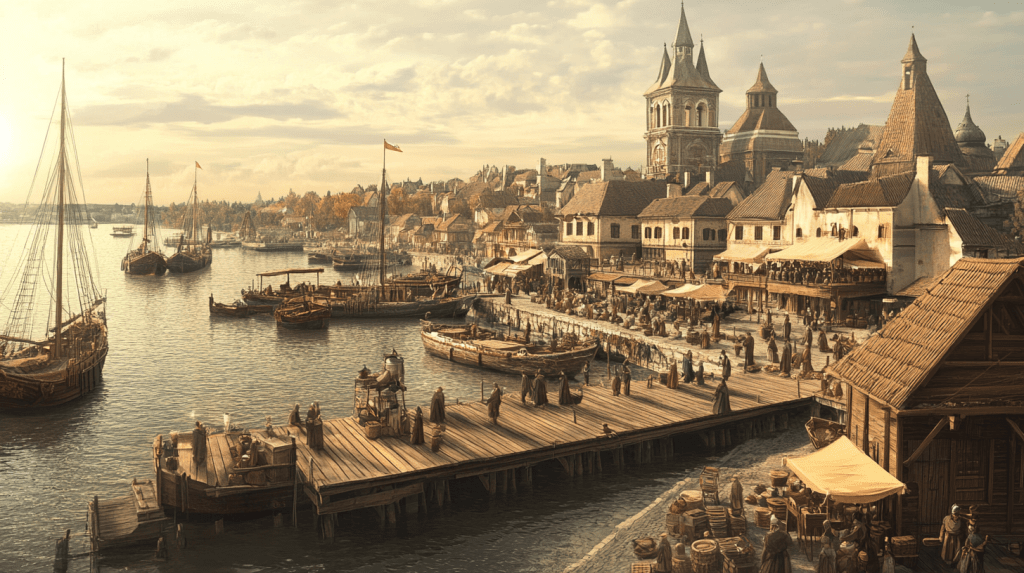
A historical 19th-century view of Brăila, Romania, during its peak as a Danube trading hub.
Chairperson: That brings us to a key question—how did geography create cultural distinctions within Romania? Can we say that the Danube region is more Central European, while the mountains are more Balkan?
Julia: That’s exactly what I wanted to discuss! If we compare Serbia’s Tara Mountains and Romania’s Carpathians, we see that local traditions, dialects, and even cuisine remain distinct from the larger cities.
Emma: (Nods) And these mountain cultures are often deeply intertwined with folklore, religion, and the natural environment. For example, the Dracula legend is rooted in the Carpathians.
Chairperson: That’s an interesting perspective. Later, we’ll visit the Institute of Geography at the Romanian Academy to see how researchers study these geographical and cultural interactions.
學術會議的正式討論
會議廳內,長長的橢圓形桌子上擺滿了筆記本、地圖與歷史文獻,來自不同國家的學者們正在討論。窗外透進微光,天氣仍帶著些許春寒,但街道上的行人已經少了冬天的匆忙,多了一點悠閒的氣息。
主持人: 感謝各位來到布加勒斯特大學參加這場討論,今天的主題是「多瑙河與喀爾巴阡山對羅馬尼亞歷史與文化的影響」。我們將探討這條偉大的河流如何塑造區域歷史、貿易與城市發展,並分析山區如何影響民族構成與地緣政治。
學者 1: 多瑙河一直是東西方文化交匯的橋樑,它不僅是貿易路線,更是軍事與政治的戰略要道。在羅馬時期,這條河成為帝國的邊界,而奧斯曼時期,它則是一條通向中歐的通道。
學者 2: 但與此同時,喀爾巴阡山脈也扮演了另一種角色——它成為天然屏障,讓某些民族能夠保留自己的文化。瓦拉幾亞和摩爾達維亞公國便因為這些山脈,在奧斯曼與哈布斯堡的壓力下仍能維持一定程度的自治。
Emma: 這讓我想到塞爾維亞的地理條件。我們的邊界有迪納里克阿爾卑斯山,而羅馬尼亞則有喀爾巴阡山。看來這些山脈都對國家的歷史進程有深遠影響。
Julia: 不只是歷史,地理也影響了經濟發展。你們有沒有注意到,多瑙河沿岸的城鎮往往比山區發展得更快?例如加拉茨(Galați)和布勒伊拉(Brăila) 這些港口城市,在奧斯曼時期就是貿易中心。
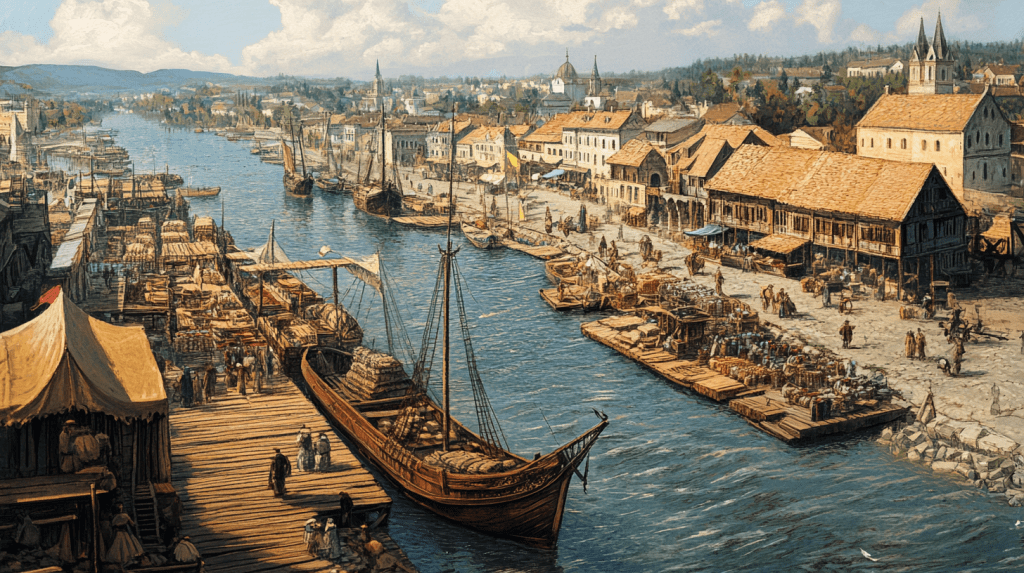
19 世紀布勒伊拉(Brăila),作為多瑙河貿易中心的繁榮景象。
學者 3: 這確實是一個關鍵點。山區的生活方式更為獨立,較少受外來影響,而多瑙河流域則是開放的,因此布加勒斯特發展成為商業與文化交匯點,受法國影響較深。
主持人: 這也是我們今天希望深入探討的問題之一——在地理的影響下,這些地區如何產生文化上的區隔?是否能說,多瑙河流域的文化更接近中歐,而山區則更接近巴爾幹?
Julia: 這正是我想討論的!如果我們比較塞爾維亞的塔拉山區與羅馬尼亞的喀爾巴阡山脈,我們會發現當地的民俗傳統、語言方言,甚至飲食都有極大的保留,與大城市截然不同。
Emma: (點頭) 而且這些山區文化往往與傳說、宗教和自然環境緊密結合,例如德古拉傳說的發源地就與喀爾巴阡山脈相關。
主持人: 這是一個很好的切入點——稍後我們可以參觀羅馬尼亞科學院地理學研究所,來看看他們如何研究這些地理特徵對文化的影響。
The Institute of Geography in Bucharest – Unlocking the Secrets of the Carpathians
Institute of Geography, Romanian Academy, Bucharest
(Mid-morning. The institute is housed in a historic early 20th-century Neo-Renaissance building, its stone facade adorned with intricate carvings. Inside, the atmosphere is both scholarly and inviting—high wooden bookshelves line the walls, filled with old atlases, field journals, and geological reports. The air smells of aged paper and polished wood, and large windows allow natural light to stream in, revealing a view of Bucharest’s rooftops with the distant silhouette of the Carpathians on the horizon.)
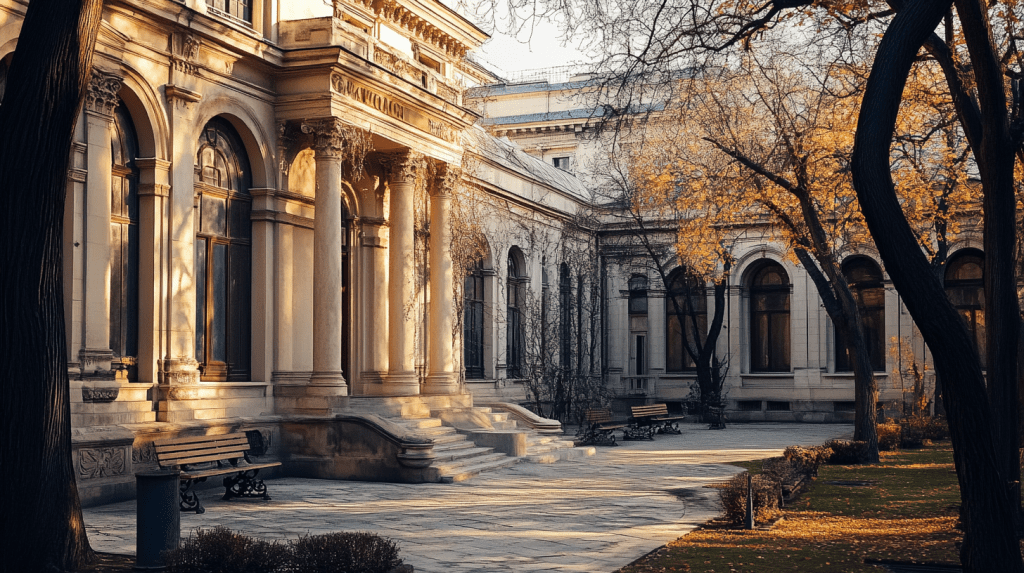
Emma: (Looking around) This place feels more like a museum than a research institute. I was expecting something more modern.
Julia: (Nods) It has that old-world charm, doesn’t it? But it’s fascinating—most geography departments are part of larger universities, but this institute operates independently.
Researcher: (Smiling) That’s because Romania’s geography is so complex that we needed an institution dedicated solely to studying it. The Carpathians, the Danube, the Black Sea—we cover everything from highland erosion patterns to coastal changes.
Emma: So, this isn’t just about mountains and rivers?
Researcher: No, it’s about how those landscapes shape human civilization. We don’t just study the land—we study how it affects agriculture, urban development, and even history.
Julia: (Gesturing to a map) That explains why this institute exists separately from the university. Romania isn’t just one uniform landscape—it’s a mix of very different regions.
Researcher: Exactly. Romania is like a miniature continent. In just a few hours’ drive, you go from fertile plains to alpine meadows to marshlands by the sea.
(The group walks over to a large relief map of Romania, mounted on the wall, showing the elevations and river systems of the country.)
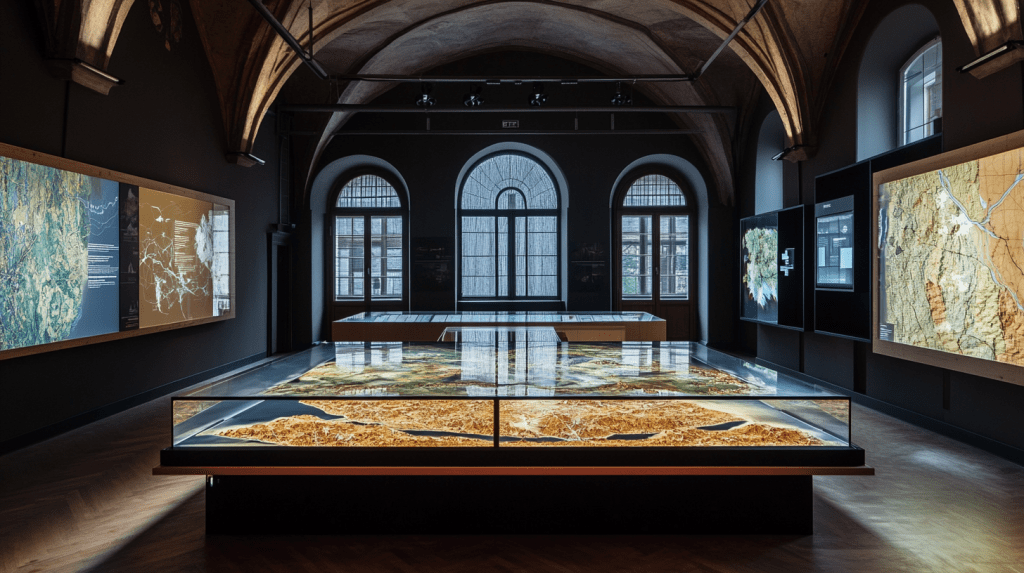
Emma: (Tracing a ridge on the map) The Carpathians are massive. How do they compare to the Alps?
Researcher: They’re not as high, but they’re older—millions of years older. That’s why their slopes are more eroded, but their valleys are much deeper.
Julia: And the rivers behave differently too, right?
Researcher: Exactly. Unlike Alpine rivers that are fed by glaciers, many Carpathian rivers are fed by rainfall and underground springs. Some even disappear underground and re-emerge miles away.
Emma: (Eyes widening) So, there are hidden underground rivers running through these mountains?
Researcher: Absolutely. The limestone landscape here creates karst formations—some of our rivers vanish beneath the ground and pop up miles away. That’s why Romania has so many natural springs.
Julia: (Smiling) That reminds me of Tara National Park in Serbia. We saw similar limestone formations there.
Emma: So, are there a lot of caves here too?
Researcher: Thousands. Some hold prehistoric remains, others are known for their ice formations—like Peștera Scărișoara, which has a glacier inside.
Emma: (Laughing) A glacier inside a cave? I have to see that.
(They step out onto a small terrace. The view stretches over Bucharest’s rooftops, with the faint outline of the Carpathians in the distance.)
Emma: (Leaning against the railing) It’s funny—on one side, we have this sprawling city, and on the other, the mountains.
Julia: That’s what makes Romania unique—it’s like a puzzle of landscapes. You have the mountains, the plains, the river valleys, and the Black Sea, all in one country.
Researcher: And because of that, life in each region is very different. In the Carpathians, people live more isolated, relying on traditional agriculture and livestock. Near the Danube, trade and commerce dominate.
Emma: So, geography still defines culture today?
Researcher: Absolutely. Even in modern Romania, you can feel the difference. In the mountains, time moves slower—traditions are preserved. But in Bucharest or the Black Sea coast, life feels much more European and cosmopolitan.
Julia: (Smiling) That explains why every few hours on the road, it feels like entering a different world.
Researcher: Exactly. Romania is a land of contrasts.
(Back inside the institute, they examine a series of climate maps and satellite images.)
Emma: You mentioned earlier that the Black Sea’s water level is rising—how much has it changed?
Researcher: Over the past 30 years, it has risen by about 15 centimeters. It doesn’t sound like much, but for coastal cities like Varna and Constanța, it’s already causing erosion problems.
Julia: And the Carpathians—do they experience earthquakes?
Researcher: Yes, especially in the Vrancea seismic zone. Unlike Turkey, where quakes are more surface-level, most of ours happen deep underground. But when they do occur, they can be felt as far as Bucharest.
Emma: (Concerned) And how does that affect these old buildings?
Researcher: Some, like the Palace of Parliament, have been reinforced. But in the Old Town, many historic buildings are still vulnerable.
(The researcher pours them fresh cups of strong Romanian coffee.)
Researcher: Where are you heading next?
Julia: Sibiu, then into the Carpathians.
Researcher: That’s a perfect route. Sibiu is a cultural gem, and the Carpathians will show you Romania’s wilder side. I’d recommend visiting one of the old mountain villages—some still live much like they did centuries ago.
Emma: (Grinning) Sounds like exactly what we’re looking for.
探索布加勒斯特的地理學研究所——喀爾巴阡山的秘密
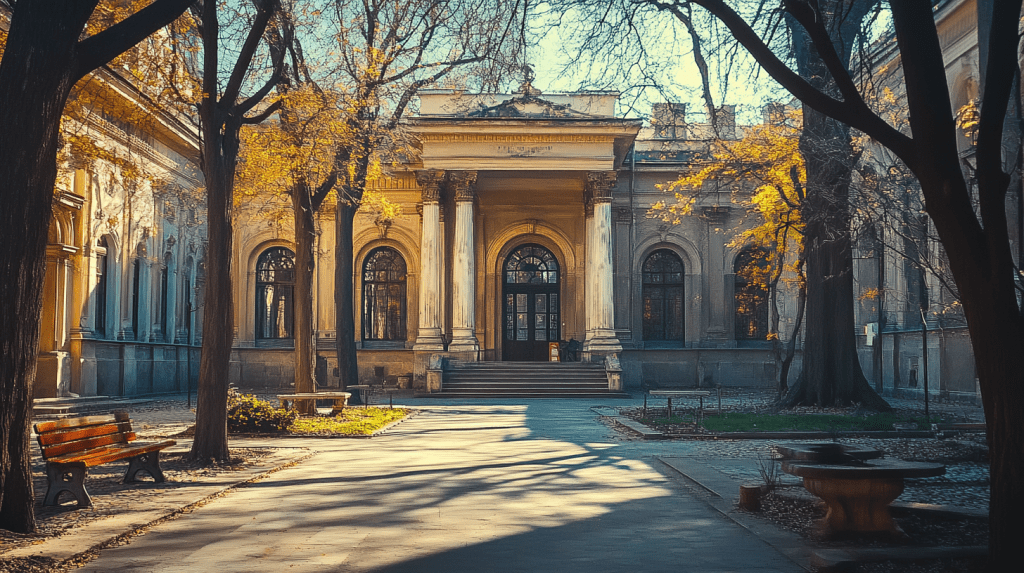
羅馬尼亞科學院地理學研究所
羅馬尼亞科學院(Romanian Academy)於 1866 年 成立,專注於歷史、語言、自然科學等領域。地理學研究所於 20 世紀初 獨立運作,因為當時的科學家認為羅馬尼亞的地貌與水文系統過於複雜,需要一個專門的機構來研究 喀爾巴阡山、多瑙河、黑海沿岸的地質與氣候變遷。這裡不僅研究地理學,還研究人文地理與區域發展,這使得它成為學者們進行跨學科合作的重要場所。
羅馬尼亞的地理變化劇烈,擁有喀爾巴阡山、黑海沿岸、多瑙河三種截然不同的地理區域,科學家需要專門研究每個地區的影響。農業、城市發展與氣候研究的關聯性 使得這個研究所不僅是學術機構,也為政府與環境政策提供科學支持,例如防止洪水、山地開發與黑海海岸侵蝕的監測。
研究所參觀與地理討論
研究所內,Julia 和 Emma 由一位地理學者(Researcher)帶領參觀,走過滿是舊書籍和地圖的走廊,進入一個擺滿 3D 地形模型的展示廳。
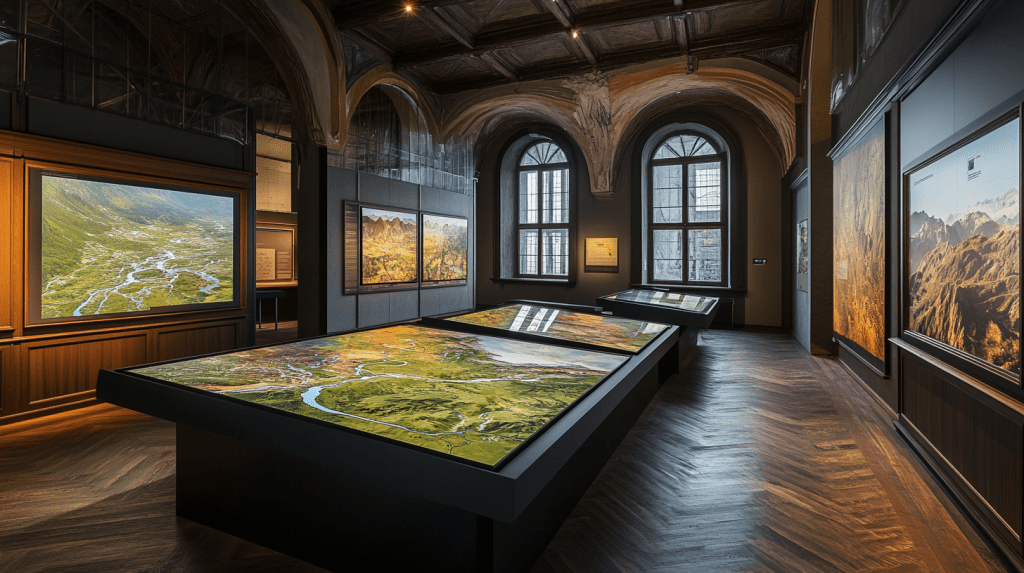
Emma: (環顧四周) 這地方比我想像的還要有歷史感,感覺像是進入了一座地理學的博物館。
Julia: (點頭) 這棟建築比許多大學還要老。你有沒有注意到,這裡不只是地理學,還有人文地理、氣候學和環境管理的研究?
Researcher: (微笑) 沒錯,這就是我們獨立於布加勒斯特大學的原因。我們不只是研究地形,還要分析地理如何影響經濟、文化和生態系統。
Emma: (指著牆上的地圖) 這張地圖是什麼?看起來不像是一般的地形圖?
Researcher: 這是我們長期監測的氣候變遷數據。你可以看到過去 50 年來,喀爾巴阡山的降雪量逐年下降,而黑海沿岸的水位正在上升。
Julia: 這是全球暖化的影響?還是其他自然變遷的結果?
Researcher: 兩者都有。喀爾巴阡山不像阿爾卑斯山那樣高,但它仍然擁有大片寒帶森林和高原氣候。當這些地區變暖,雪線上升,水循環就改變了。
Emma: (思考) 這也會影響當地的農業吧?
Researcher: 沒錯。例如,羅馬尼亞的葡萄種植區正在慢慢北移,因為南部變得太熱,而以前寒冷的區域現在更適合種植高品質的葡萄。
Julia: (笑) 那麼黑海呢?你剛才說水位在上升,這對羅馬尼亞的海岸城市有什麼影響?
Researcher: 瓦爾納(Varna)和康斯坦察(Constanța)已經開始受到侵蝕問題的影響。我們的數據顯示,過去 30 年黑海水位上升了約 15 公分,雖然看起來不多,但對沿岸的生態與城市結構是個挑戰。
Emma: (歪頭) 這裡也有地震的影響嗎?
Researcher: 有的,尤其是在喀爾巴阡山的南部斷層帶。這裡不像土耳其那樣頻繁發生大地震,但深層地震時有發生,影響範圍甚至能到達布加勒斯特。
Julia: 所以,這意味著布加勒斯特的歷史建築其實是地震高風險區?
Researcher: (點頭) 正是如此。像人民宮(Palace of Parliament)這樣的建築其實有做地震補強,但老城區的某些建築就比較脆弱。
研究所的陽台,俯瞰布加勒斯特市區,遠處隱約可見喀爾巴阡山的輪廓。
Emma: (靠在欄杆上) 這裡的風景真有趣,一邊是城市,另一邊是山脈。
Julia: 這就是羅馬尼亞最特別的地方——它像是一個地理拼圖,有平原、山區、河流和海岸線,所有地形都擠在一個國家裡。
Researcher: (點頭) 這也影響了當地的生活方式。在喀爾巴阡山,人們仍然以畜牧和傳統農業為主,但在多瑙河流域,經濟模式更現代化,甚至有國際貿易。
Emma: (笑) 聽起來像是兩個不同的國家。
Researcher: 你們接下來要去哪裡?
Julia: 錫比烏(Sibiu),然後進入喀爾巴阡山。
Researcher: 太好了,那裡是羅馬尼亞文化與自然交會的地方。我建議你們去看看當地的山區村莊,那裡的人們仍然保持著中世紀的傳統生活方式。
Emma: (興奮) 這聽起來太有趣了!
Coffee and Conversations in Bucharest’s Old Town
In A traditional café in Lipscani, the heart of Bucharest’s Old Town
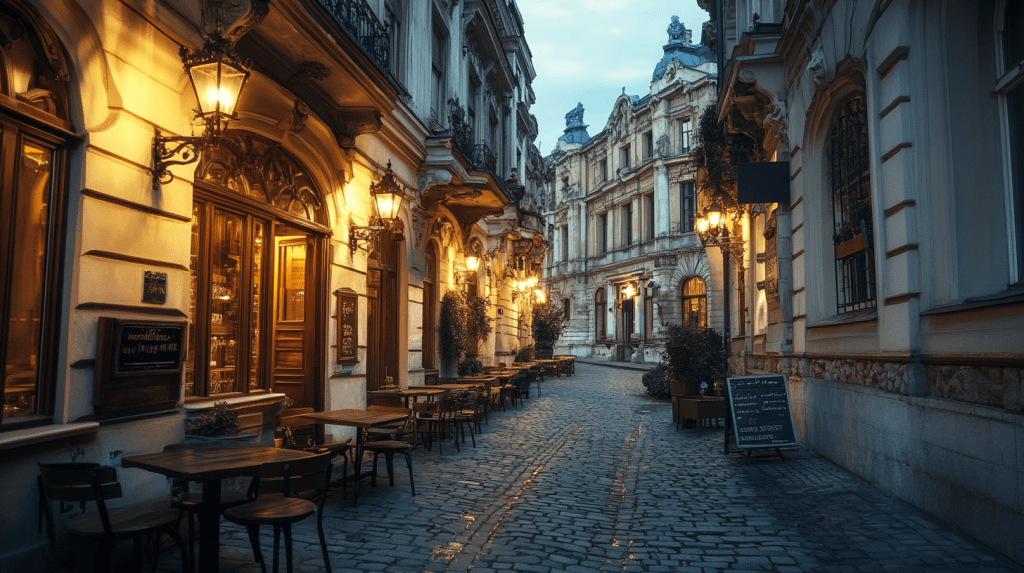
(Late afternoon. Julia and Emma are seated at a rustic wooden table in a cozy café with exposed brick walls, antique chandeliers, and the faint aroma of freshly brewed coffee and sweet pastries. The café is tucked away in a historic Ottoman-era building, a reminder of the city’s layered past. Outside, the cobbled streets of Lipscani are bustling with pedestrians, as street musicians play soft melodies. The golden afternoon light filters through the large windows, casting long shadows across the room.)
Emma: (Stirring her coffee) You know, this place is charming, but it also feels… incomplete? Like it’s caught between two identities.
Julia: (Nods) That’s exactly it. Bucharest’s Old Town is both one of the most historic parts of the city and one of the most reconstructed. A lot of these buildings were nearly abandoned for decades.
Emma: What happened?
Julia: A mix of things. Earthquakes, neglect during the communist era, and misguided urban planning. Some buildings from the Ottoman and early Romanian periods survived, but others were either left to decay or demolished.
Emma: And now they’re restoring it?
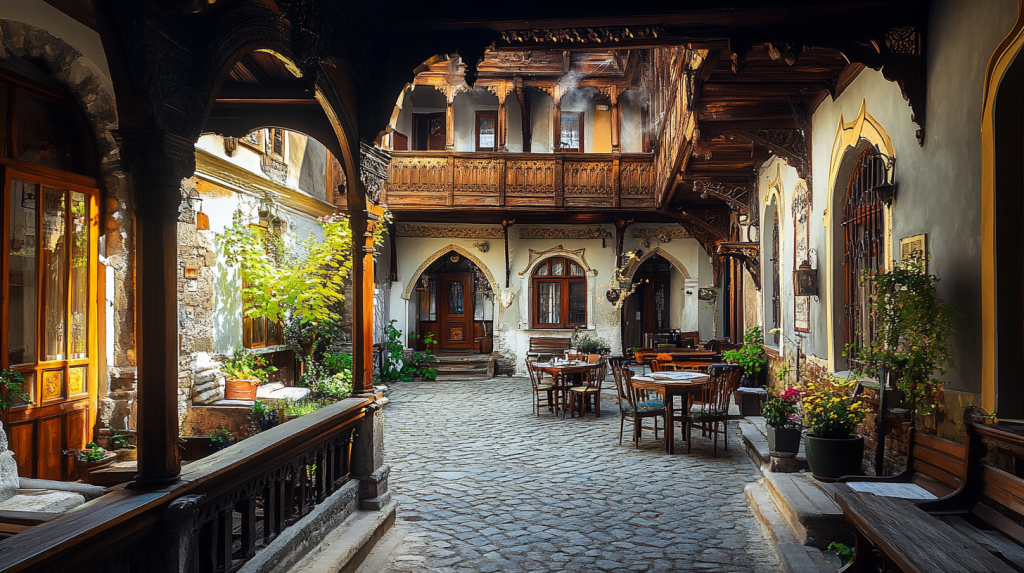
Julia: Sort of. Some places have been beautifully renovated, like the old Hanul lui Manuc inn, but others… well, some people say the new restorations feel too artificial. It’s like they’re trying too hard to recreate an image of the past rather than preserving what was really there.
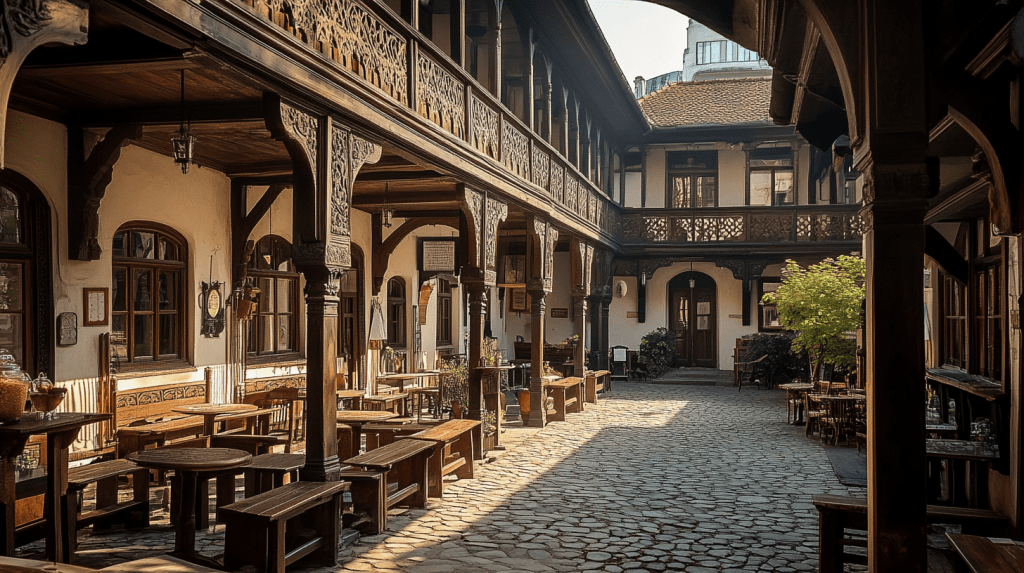
Hanul Lui Manuc Inn
Emma: (Looking outside) That explains why some of these streets feel like a mix of authentic old buildings and modern, touristy shops. It’s like walking through a city trying to remember its own history.
Julia: (Smiling) That’s a good way to put it. But despite all that, this area still holds a lot of the city’s soul.
Emma: Romania feels like a country made up of different pieces. Bucharest is very European, but the countryside we’re about to visit is something entirely different.
Julia: That’s because Romania was never a single unified state until modern times. It used to be three separate regions—Wallachia, Moldavia, and Transylvania—each influenced by different empires.
Emma: (Thinking) So Wallachia and Moldavia were under Ottoman rule, while Transylvania was part of the Habsburg Empire?
Julia: Exactly. That’s why Transylvania has more Germanic and Hungarian influences, while Wallachia and Moldavia have a stronger Balkan and Ottoman legacy.
Emma: And yet, they all came together to form modern Romania.
Julia: Yes, but even today, you can still feel the differences. People in Transylvania tend to have a more Central European mindset, while those in Wallachia are more connected to the Balkans.
Emma: (Smirking) So does that mean people here argue about which part of Romania is the best?
Julia: (Laughs) Oh, absolutely. Transylvanians think Bucharest is too chaotic, people in Wallachia think Transylvanians are too reserved, and Moldavians… well, they get left out of the debate most of the time.
Emma: (Looking at the cathedral in the distance) Romania seems more religious than Serbia. You see Orthodox churches everywhere here.
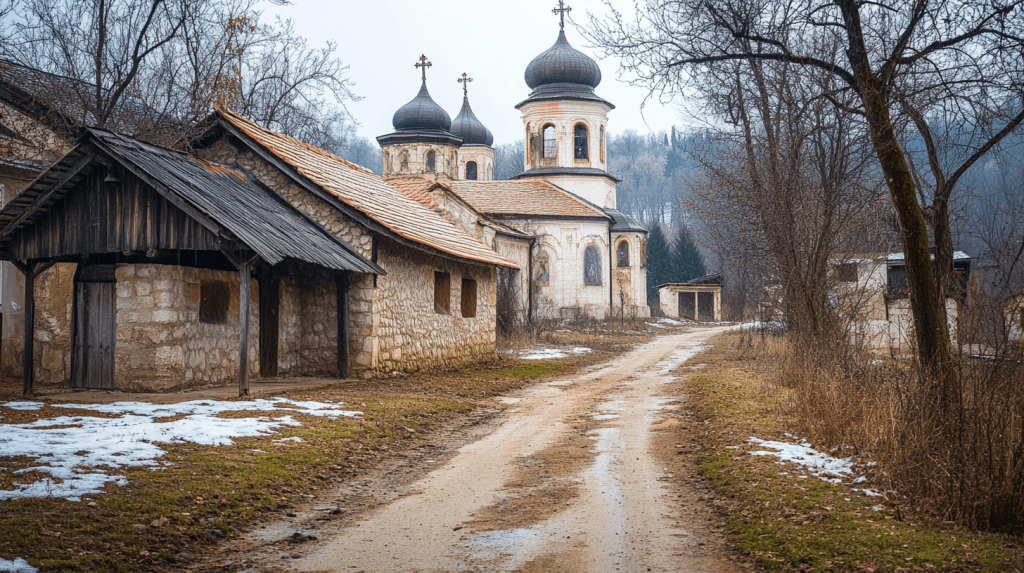
Julia: Yes, Orthodoxy plays a big role in daily life. Even young people who aren’t deeply religious still celebrate saints’ days and follow traditions.
Emma: But didn’t the communist government try to suppress religion?
Julia: They did, but not as aggressively as in the Soviet Union. Many churches were demolished, but people still practiced their faith privately. When communism fell, religion came back into public life very quickly.
Emma: That’s interesting. In Serbia, Orthodoxy is also a strong part of identity, but I feel like in Romania, it’s even more visible.
Julia: That’s because Romanian Orthodoxy is deeply tied to national identity. Unlike Serbia, which was under Ottoman rule for centuries, Romania managed to keep a sense of autonomy, partly through its religious institutions.
Emma: (Noticing a menu) The Romanian language is so different from everything else in the Balkans. It looks more like Italian or French than Serbian.
Julia: That’s because Romanian is a Romance language, descended from Latin. But it has a lot of Slavic and Turkish words mixed in.
Emma: So even language reflects Romania’s history as a crossroads.
Julia: Exactly. In Transylvania, you’ll also hear Hungarian and German influences. And in the Danube region, you’ll find people speaking Bulgarian, Serbian, and even some Turkish.
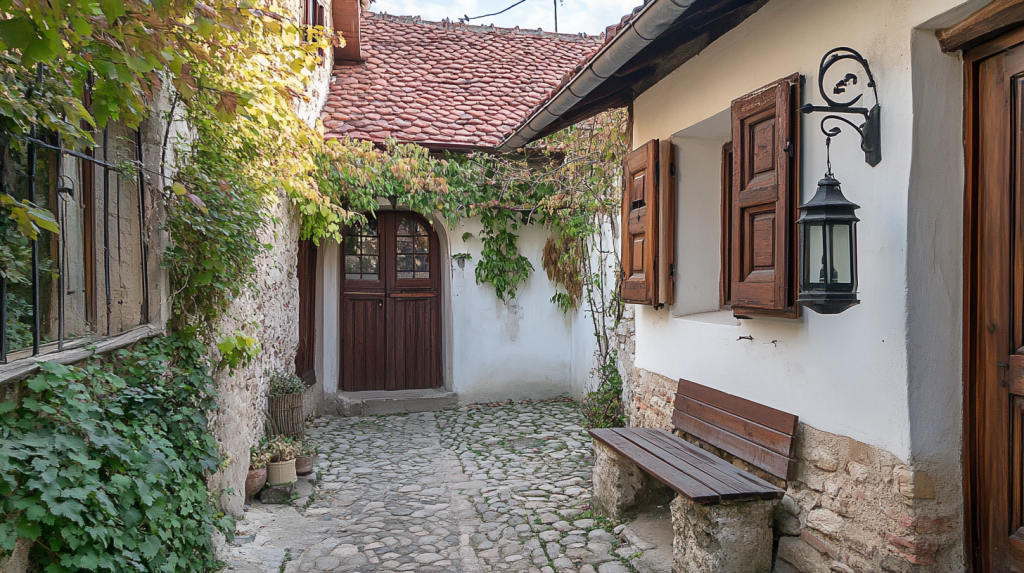
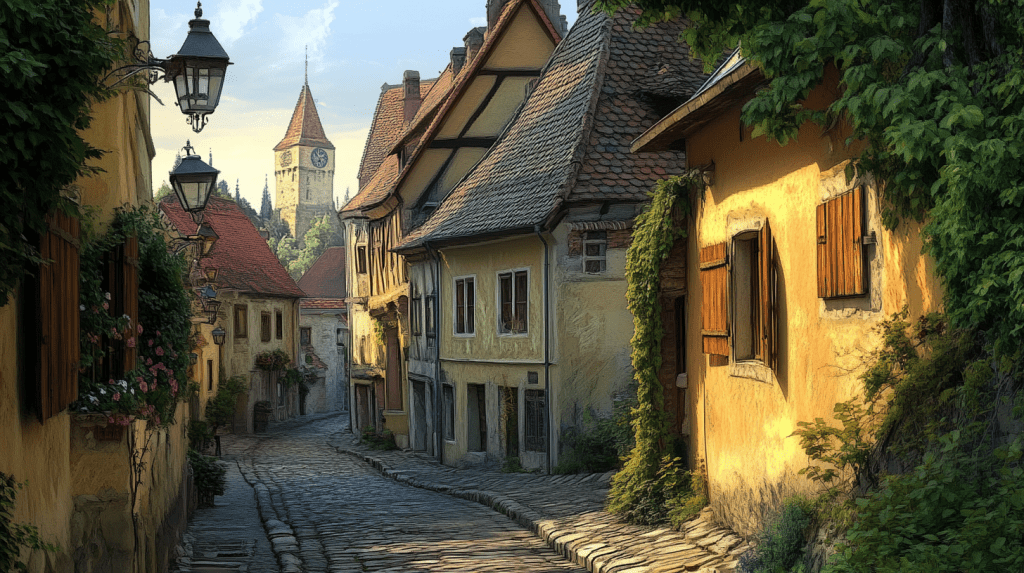
A quiet corner in a traditional Transylvanian town, Romania.
Emma: (Smiling) It’s fascinating how every country in the Balkans is like a cultural puzzle. Nothing is purely one thing.
Julia: That’s what makes this region so special. It’s layered, complex, and always changing.
Emma: So, after this, we’re heading to Sibiu, right?
Julia: Yes. Sibiu is one of the most well-preserved medieval towns in Romania. You’ll love it—it feels like stepping back into Central Europe.
Emma: (Grinning) And after that?
Julia: Into the Carpathians, of course. Time to leave the cities behind and see the wilder side of Romania.
Emma: (Raising her coffee cup) To the mountains, then.
Julia: (Clinking cups) To the mountains.
布加勒斯特老城區 Lipscani 的傳統咖啡館
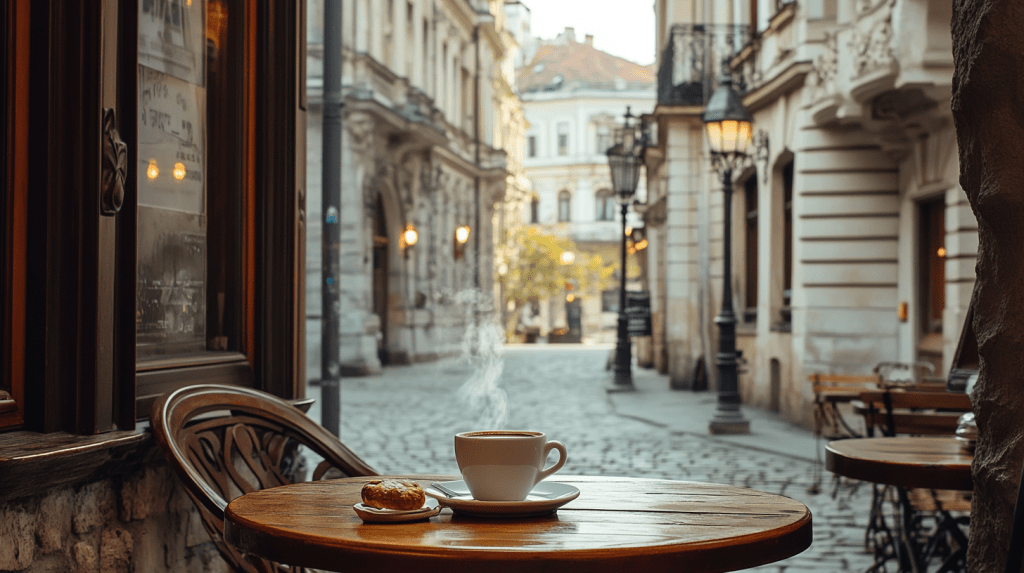
(下午時分,Julia 和 Emma 坐在一間布加勒斯特老城區的小咖啡館內。牆上掛著老照片和舊報紙,深色木質桌椅帶著歲月的痕跡,黃銅燈飾散發出柔和的光芒。窗外,鵝卵石街道上行人來來往往,一旁有街頭藝人在彈奏小提琴,古老與現代在這片城市交錯。空氣中飄散著濃郁的咖啡香,還有剛出爐的糕點甜味。)
Emma: (攪拌著咖啡)這地方真的很有氣氛,但我總覺得……有點奇怪?像是它不太確定自己的身份。
Julia: (點頭)沒錯,布加勒斯特的老城區一直在變。這裡是這座城市最古老的地方,但也可能是變化最快的地方。
Emma: 是因為共產時期的影響嗎?
Julia: 一部分是。你知道這裡原本是商業區嗎?奧斯曼時期,這裡有許多手工藝坊和市場。後來,19 世紀時,這裡開始西化,變成了一個繁華的金融與文化中心。但二戰後,共產政權不太關心歷史建築,許多老房子被忽視甚至拆除。
Emma: 然後現在又開始修復了?
Julia: 是的,但問題是,有些修復很成功,像 Manuc’s Inn(馬努克客棧),那是一座奧斯曼時代的商隊驛站,現在變成了一間傳統餐廳。但其他地方的修復就……有點過度商業化,變成迎合遊客的景點,而不是讓這裡保持真實的歷史感。
Emma: (看向窗外)這也難怪,有些地方感覺很正宗,但有些地方又像是剛被「重新包裝」過。這座城市還在試圖找回它的過去。
Julia: (微笑)說得沒錯。這也反映了布加勒斯特的本質——它一直在不同時代之間來回擺盪。
Emma: 羅馬尼亞的城市與鄉村差異很大,感覺像是不同的國家。
Julia: 這是因為羅馬尼亞本來就是三個不同的地區:瓦拉幾亞(Wallachia)、摩爾達維亞(Moldavia)、和特蘭西瓦尼亞(Transylvania)。這三個地方直到 19 世紀才統一。
Emma: 所以瓦拉幾亞和摩爾達維亞長期受奧斯曼影響,而特蘭西瓦尼亞則屬於哈布斯堡帝國?
Julia: 沒錯,這就是為什麼特蘭西瓦尼亞的城鎮看起來更像中歐,而布加勒斯特或雅西(Iași)則更有巴爾幹的影子。
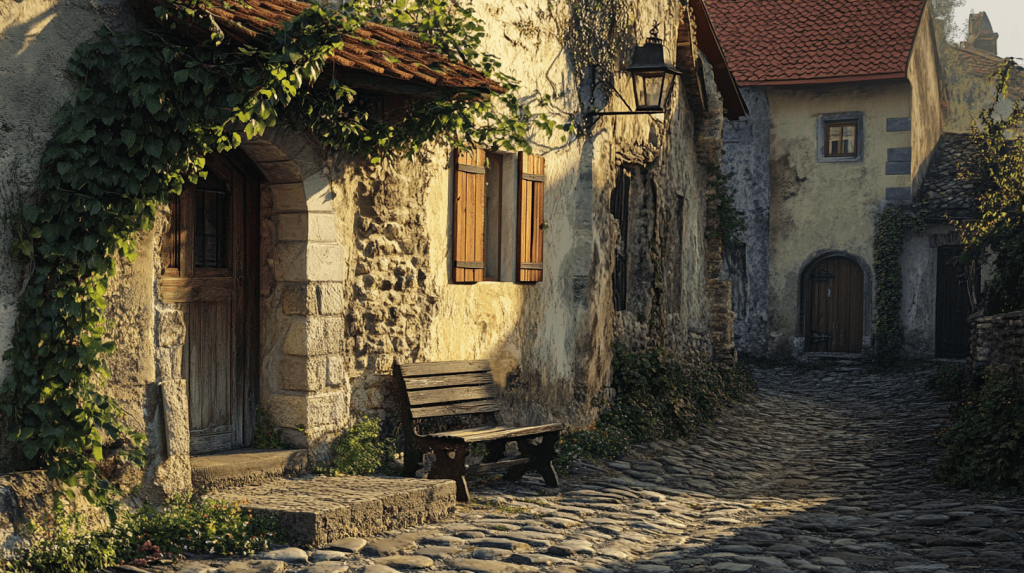
羅馬尼亞特蘭西瓦尼亞小鎮的一處靜謐角落。
Emma: 但即便這樣,他們最後還是成為了同一個國家。
Julia: 是的,但即使到了今天,不同地區的人仍然有不同的文化習慣。特蘭西瓦尼亞的人更有歐洲大陸的影響,而瓦拉幾亞則更有巴爾幹風格。
Emma: (笑)所以這裡的人會彼此比較嗎?
Julia: (笑)當然。特蘭西瓦尼亞的人覺得布加勒斯特太混亂,而布加勒斯特的人則覺得特蘭西瓦尼亞太沉悶。摩爾達維亞則覺得自己總是被忽略。
Emma: (看向遠處的大教堂)我發現羅馬尼亞比塞爾維亞的宗教氣息更濃厚,幾乎每條街上都能看到東正教教堂。
Julia: 羅馬尼亞的宗教一直是國家身份的一部分。即便是現在,年輕人不一定會去教堂,但他們還是會慶祝聖徒節,遵循某些傳統。
Emma: 可是共產政府不是打壓過宗教嗎?
Julia: 的確,但不像蘇聯那樣激烈。雖然有些教堂被拆毀,但很多人仍然私下信仰。當共產政權垮台後,宗教馬上就重新回到了公共生活中。
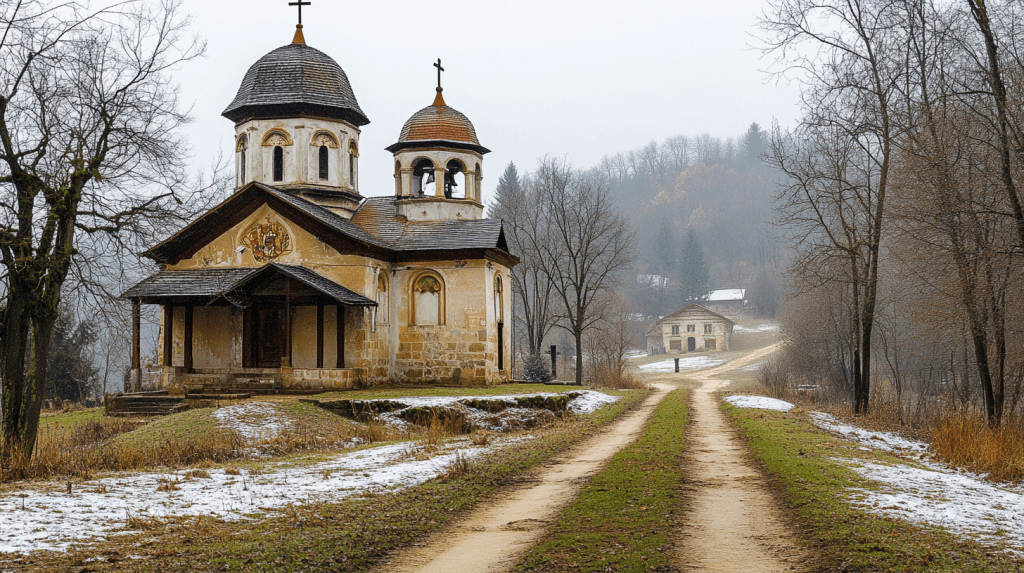
羅馬尼亞的東正教堂
Emma: 這跟塞爾維亞有點像,不過羅馬尼亞的東正教似乎在日常生活中更明顯一些。
Julia: 這可能是因為羅馬尼亞歷史上一直保持某種程度的獨立,而不像塞爾維亞那樣長時間完全處於奧斯曼帝國的控制之下。
Emma: (看著菜單)羅馬尼亞語和其他巴爾幹語言完全不一樣,看起來更像義大利文或法文。
Julia: 羅馬尼亞語是拉丁語系,但因為歷史上的影響,它吸收了很多斯拉夫語、土耳其語、甚至希臘語的詞彙。
Emma: 所以這個語言本身就像是歷史的縮影?
Julia: 沒錯。在特蘭西瓦尼亞,你還能聽到很多匈牙利語,而在多瑙河沿岸,有些社區仍然使用塞爾維亞語或保加利亞語。
Emma: (笑)這就是巴爾幹的特色,沒有一個國家是單一文化的,每個地方都是拼圖的一部分。
Julia: 正是如此,這也是為什麼這裡的文化這麼豐富,每座城市、每個村莊都有不同的故事可講。
Emma: 所以下一站是錫比烏(Sibiu)?
Julia: 是的,那是一座保存最完好的中世紀城市之一,等你到了那裡,你會覺得像是進入了歐洲童話世界。
Emma: (笑)那之後呢?
Julia: 當然是進入喀爾巴阡山,看看羅馬尼亞最原始的自然風光。
Emma: (舉起咖啡杯)敬山脈!
Julia: (舉杯)敬冒險!
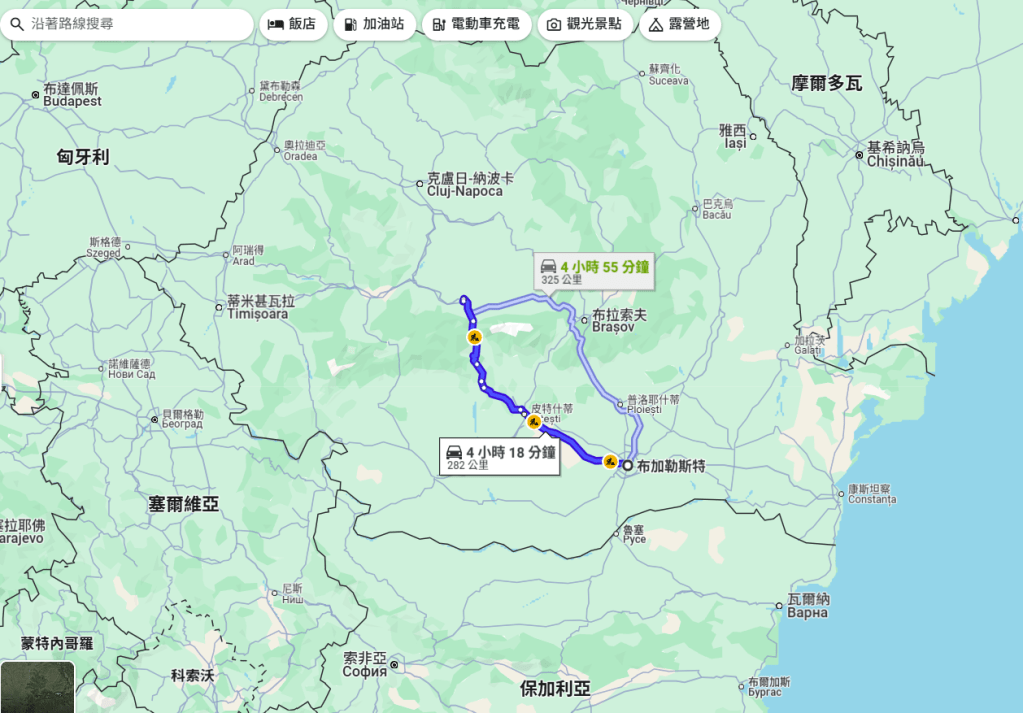
布加勒斯特往西北到錫比烏
A Journey from Bucharest to Sibiu, Passing Through Rural Romani
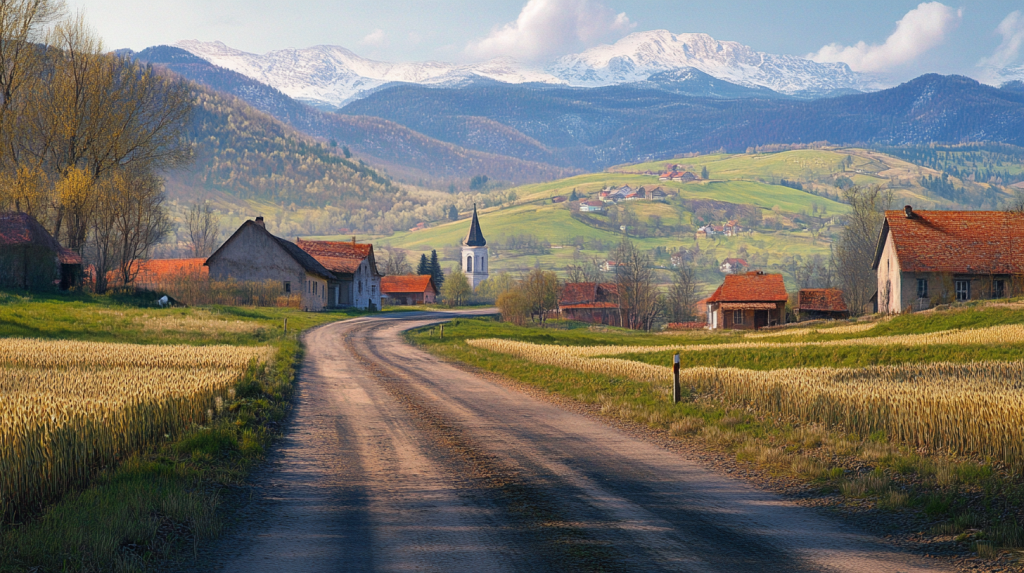
🚗 Route: Departing from Bucharest → Crossing the Wallachian Plains → Climbing into the Carpathian Foothills → Arriving in Sibiu
🌿 Season: Early Spring (Fresh green fields in the plains, blooming trees in the foothills, melting snow on the high peaks)
🏡 Encounters: A roadside shepherd, a small village café stop, an old woman selling handmade crafts
(Emma and Julia are in a rental car, leaving Bucharest behind as the cityscape fades into rolling plains. The highway is lined with fields of wheat just beginning to turn green, scattered villages with red-roofed houses, and roadside stalls selling fresh honey and cheese.)
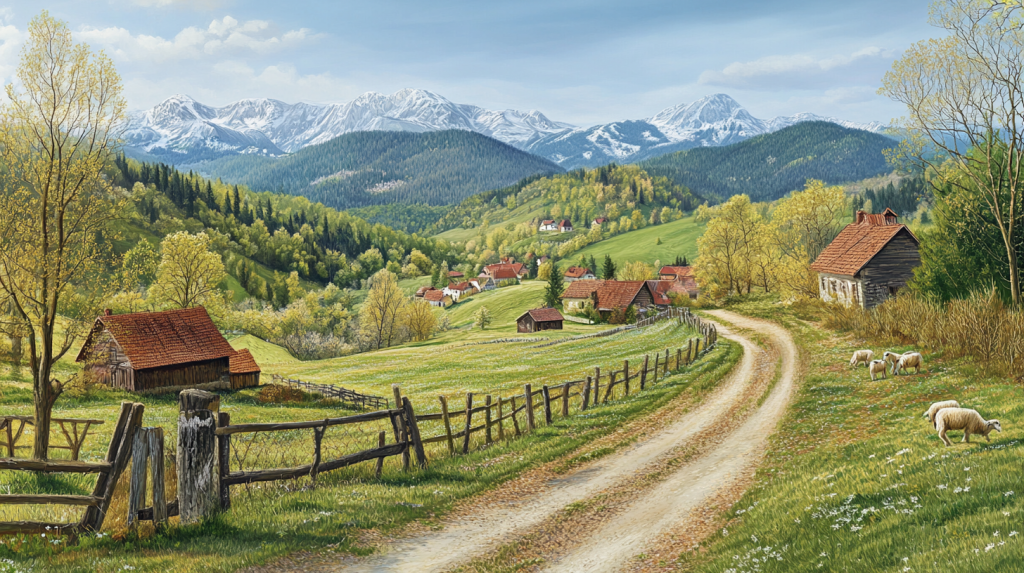
Emma: (Looking out the window) It’s amazing how quickly the scenery changes. Just a few minutes ago, we were surrounded by city traffic, and now it feels like we’re in another world.
Julia: That’s Romania for you. One moment, you’re in a bustling capital, and the next, you’re in the middle of farmland. This region—Wallachia—is the agricultural heart of the country.
Emma: (Noticing a field) Those sheep look so relaxed. Life here must be much slower than in Bucharest.
Julia: Absolutely. People in rural Romania still follow the rhythms of nature. Many still farm the way their grandparents did—small plots, traditional methods, and lots of time spent outdoors.
Emma: (Smiling) It reminds me of parts of Serbia. In the mountains, people live similarly, though maybe with a bit more rakija involved.
(They pass a small roadside stall where a woman sells jars of golden honey and fresh cheese wrapped in leaves. Julia slows down, considering stopping.)
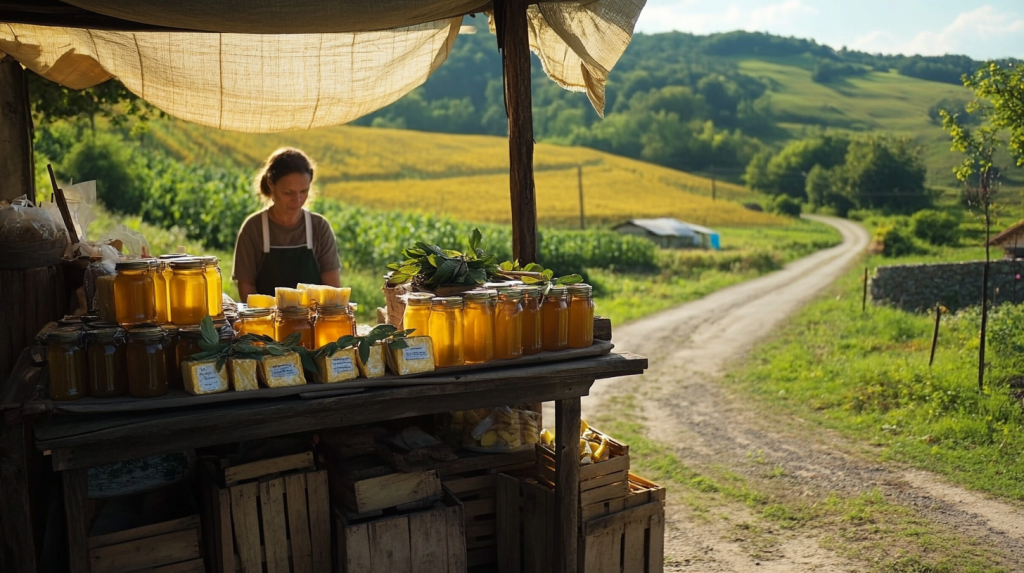
(They pull over at a small roadside market. An elderly woman, dressed in a patterned wool shawl, smiles as she arranges fresh cheeses and honey on her wooden stand.)
Vendor: (Cheerfully) Buna ziua! (Good day!) Would you like to try some?
Julia: (Smiling) Yes, please! Your honey looks amazing.
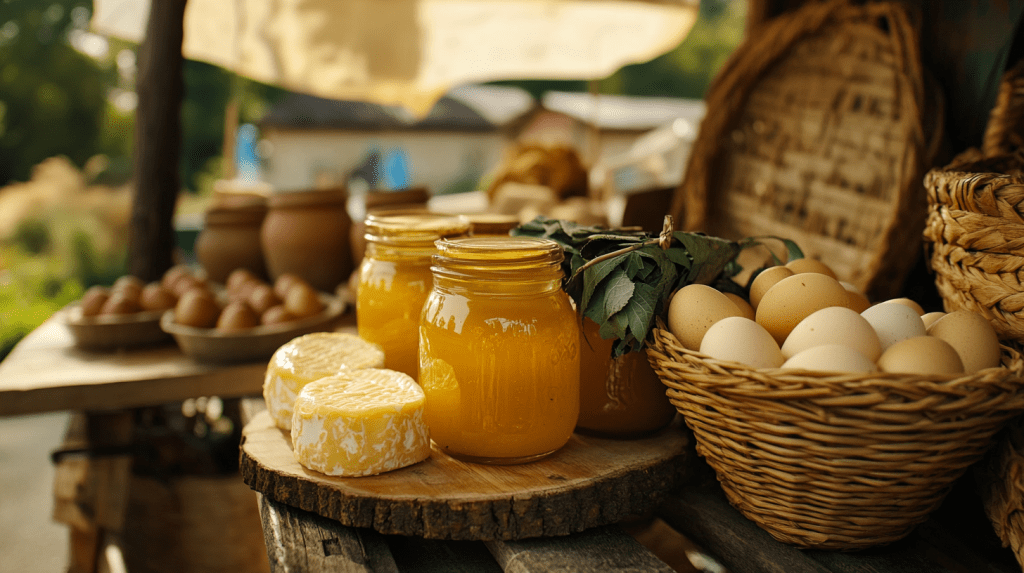
Vendor: It’s fresh from the mountains—my grandson keeps the bees near Sibiu. Here, have a taste. (She hands them a small wooden spoon with thick, golden honey.)
Emma: (Tasting) Oh wow, it’s so rich! This is much more flavorful than store-bought honey.
Vendor: That’s because it’s real. Not mixed with sugar like the ones in the supermarkets. (She gestures to the cheese) And this—brânză de burduf. It’s a soft sheep’s cheese, aged in pine bark.
Julia: (Nods) This is a very traditional Romanian cheese. It’s strong but delicious.
Emma: (Laughs) I like strong cheese. Give me a piece!
(They buy a small portion of cheese and a jar of honey before getting back on the road.)
(As they leave the flatlands behind, the road begins to wind through rolling hills. The trees are still bare at higher elevations, but wildflowers bloom in the valleys, and small villages dot the landscape. Smoke rises from chimneys, and wooden fences line the pastures.)
Emma: (Taking a deep breath) The air is so much fresher here.
Julia: (Nods) That’s what happens when you leave the cities behind. We’re getting close to the Carpathians now.
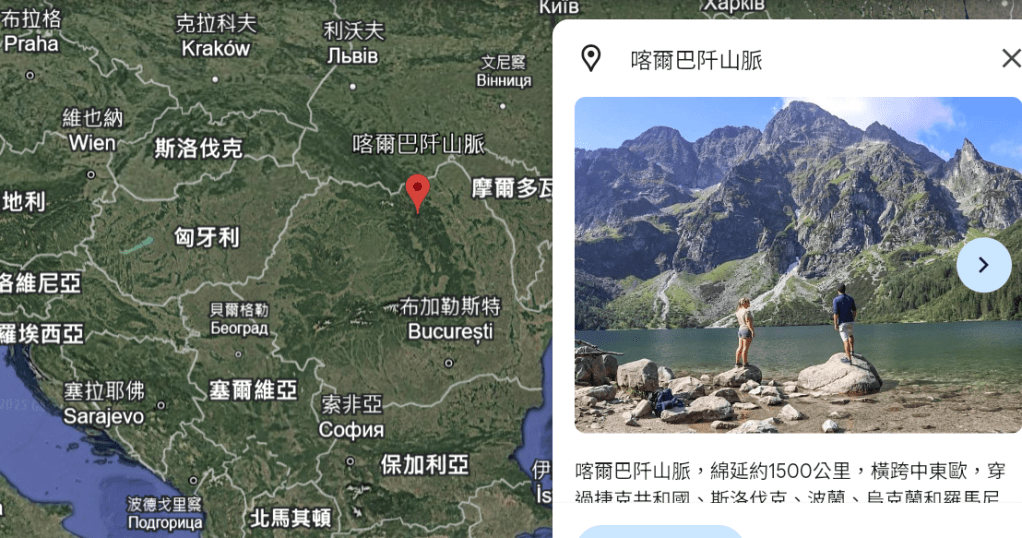
Emma: (Looking at the mountains in the distance) It’s funny to think that these mountains separate so many cultures—Wallachia from Transylvania, Romania from Hungary…
Julia: That’s why mountain passes have always been strategic. The Ottomans tried to push into Transylvania through these valleys, and before them, the Romans built roads through the same routes.
Emma: (Thoughtful) Geography shapes history. These mountains didn’t just block armies; they also preserved cultures. That’s why Transylvania still has such a strong German and Hungarian influence.
Julia: Exactly. And in the villages up ahead, you’ll still hear people speaking Hungarian and even some German.
(As they turn a bend, they slow down—on the road ahead, a shepherd is guiding a flock of sheep across the pavement. Julia stops the car and watches as the man, wearing a thick wool coat and a traditional fur hat, waves at them with a smile.)
Shepherd: (Calling out) Don’t worry, ladies, they’ll move quickly!
Emma: (Rolling down the window) No rush, we’re enjoying the view!
Shepherd: (Chuckles) You should see this place in summer—it’s all green hills and wildflowers. But now, the snow is still melting in the highlands.
Julia: Do you take your sheep up into the mountains in summer?
Shepherd: Of course! That’s the way it has always been—every summer, we take them higher, to the fresh pastures. Then we make cheese and come back before the first snow.
Emma: (Smiling) Sounds like a peaceful life.
Shepherd: (Shrugs) It’s simple, but good. No rush, no noise—just the mountains and the animals.
(The sheep finish crossing, and the shepherd waves them on. They continue their drive, now fully surrounded by mountains.)
(As they approach Sibiu, the road straightens, and the landscape changes. The town appears like a medieval postcard—colorful Baroque buildings with steeply pitched roofs, narrow cobbled streets, and church spires rising above the rooftops.)
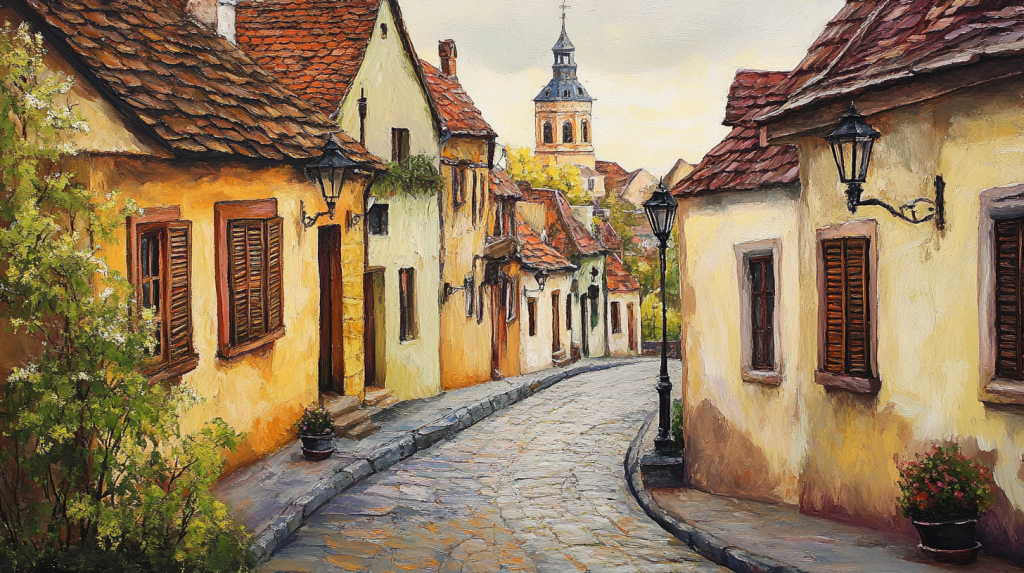
Emma: (Excited) Wow. This looks nothing like Bucharest!
Julia: (Grinning) Welcome to Transylvania. Sibiu was part of the Austro-Hungarian Empire for centuries, and it still feels like an old Central European town.
Emma: It looks so… orderly. Almost too perfect.
Julia: (Laughs) Transylvanians take great pride in their cities. Everything is well-preserved.
Emma: I can’t wait to explore.
Julia: First, let’s check into our hotel. Then we’ll find a nice local restaurant—Sibiu has some of the best food in Romania.
Emma: (Grinning) Cheese, honey, and now a full meal? I like how this trip is going.
Julia: (Laughs) You’ll love it. Let’s go!
前往錫比烏的旅程——春日風景與當地人的故事
🚗 路線: 離開布加勒斯特 → 穿越瓦拉幾亞平原 → 進入喀爾巴阡山麓 → 抵達錫比烏
🌿 季節: 初春(平原上開始轉綠,山麓間樹木發芽,高山仍殘留部分積雪)
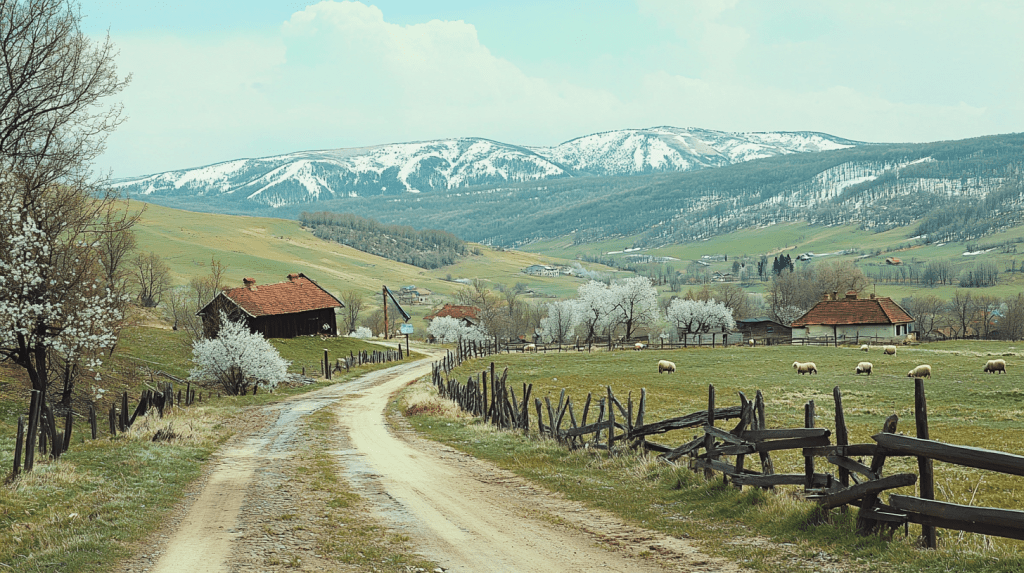
(Emma 和 Julia 開著租來的車離開布加勒斯特,城市的高樓逐漸被廣闊的平原取代。道路兩旁是剛發芽的麥田,零星的村莊散落其中,紅瓦屋頂在陽光下閃耀。路邊偶爾可以看到攤販販售新鮮的蜂蜜和奶酪。)
Emma:(望向窗外)這裡的景色變化好快,幾分鐘前我們還在車水馬龍的市中心,現在卻完全是另一個世界。
Julia:(點頭)這就是羅馬尼亞的特色,一轉眼就從都市進入大自然。瓦拉幾亞平原是全國最重要的農業區。
Emma:(看到田野裡的羊群)這裡的生活節奏一定比布加勒斯特慢很多。
Julia:的確。這裡的人還是以傳統農業為主,很多農場仍然保持著祖父輩的耕作方式,幾乎沒有工業化。
Emma:(微笑)這讓我想起塞爾維亞的山區,人們的生活方式也很傳統,但可能喝更多的 rakija(水果燒酒)。
(她們經過一個小型市集,一名老婦正在攤位上擺放剛收割的蜂蜜和羊奶酪,Julia 放慢車速,考慮是否停車。)
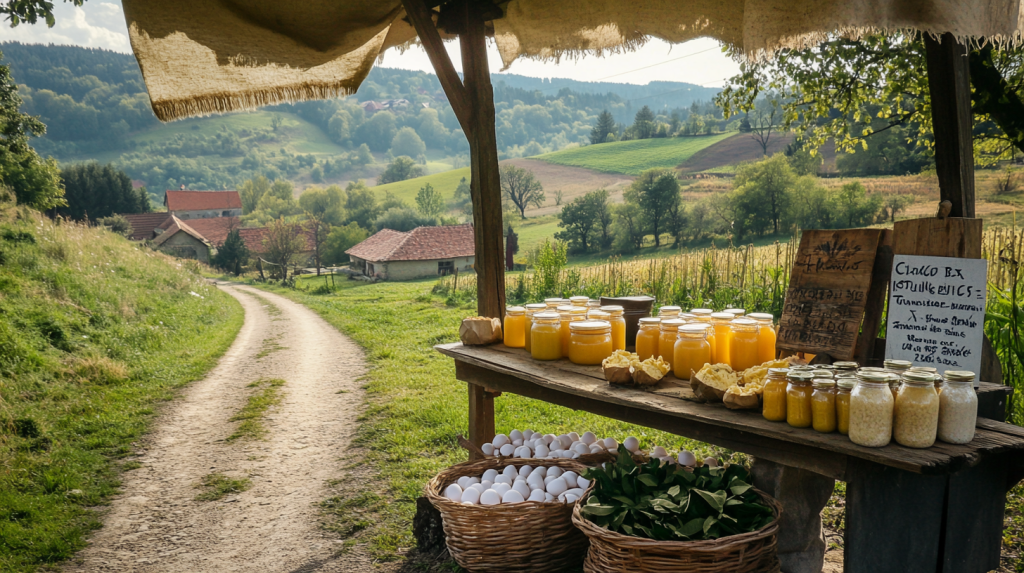
(她們停車,走向攤位。一位穿著傳統羊毛披肩的老婦微笑著整理她的蜂蜜罐和奶酪。)
攤販老婦:(熱情地)Bună ziua!(你好!)要試試看嗎?
Julia:(微笑)當然!你的蜂蜜看起來很棒。
攤販老婦:這是我孫子在錫比烏附近養的蜂群採的蜜,來,試試看。(遞上一小匙濃稠的金色蜂蜜。)
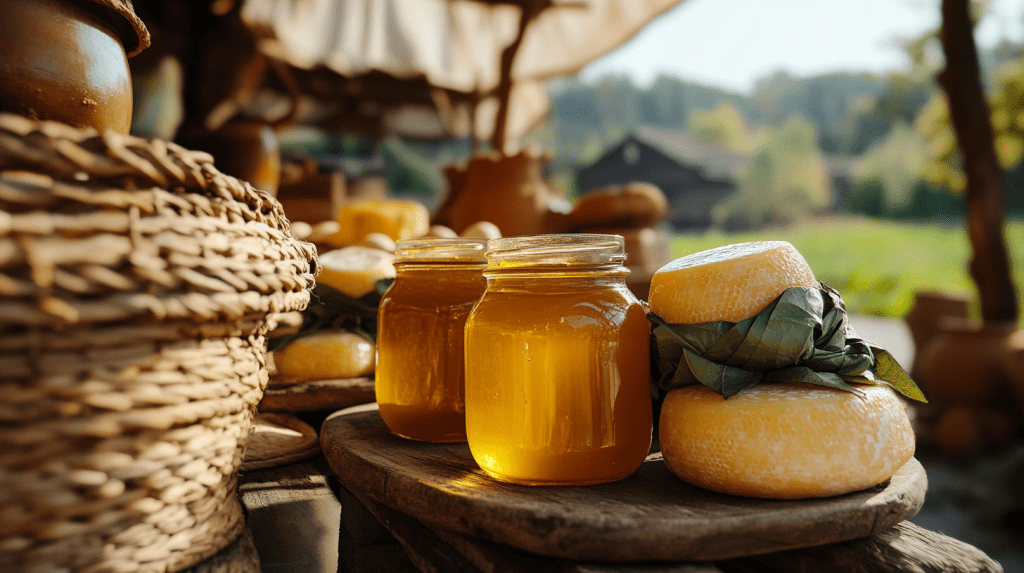
Emma:(品嚐後驚訝)哇,味道好濃郁!比一般的蜂蜜香氣更強烈。
攤販老婦:這是真正的蜂蜜,不像超市裡賣的那些摻了糖漿的假貨。(指向奶酪)這是 brânză de burduf,一種用松樹皮熟成的綿羊奶酪,味道很濃烈。
Julia:(點頭)這是羅馬尼亞非常傳統的奶酪,味道很特別,但搭配麵包很好吃。
Emma:(笑)我喜歡濃烈的奶酪,來一塊吧!
(她們買了一小塊奶酪和一瓶蜂蜜,然後繼續上路。)
(隨著她們離開平原,路開始蜿蜒穿過起伏的丘陵。樹木的枝頭開始發芽,山谷裡的野花開始綻放,遠處仍可見殘雪覆蓋的高峰。)
Emma:(深吸一口氣)這裡的空氣清新多了!
Julia:(點頭)當然,離開城市後就完全不同了。我們現在已經接近喀爾巴阡山脈的山麓。
Emma:(望向遠方的山脈)這些山脈在歷史上應該扮演過重要角色吧?
Julia:當然,這些山脈不只是天然屏障,也是文化的分界線。奧斯曼帝國曾多次試圖穿越這些山谷進入特蘭西瓦尼亞,而更早之前,羅馬人也曾在這裡建立道路。
Emma:(若有所思)所以,地理形勢不只是影響軍事,也影響了文化發展?
Julia:沒錯。這些山脈讓特蘭西瓦尼亞保留了更強的日耳曼和匈牙利影響,而瓦拉幾亞則與巴爾幹文化更接近。
(她們轉過山路的彎道,突然減速——前方有一位牧羊人正帶著羊群穿過馬路。他穿著傳統的羊毛長袍和皮帽,朝她們揮手致意。)
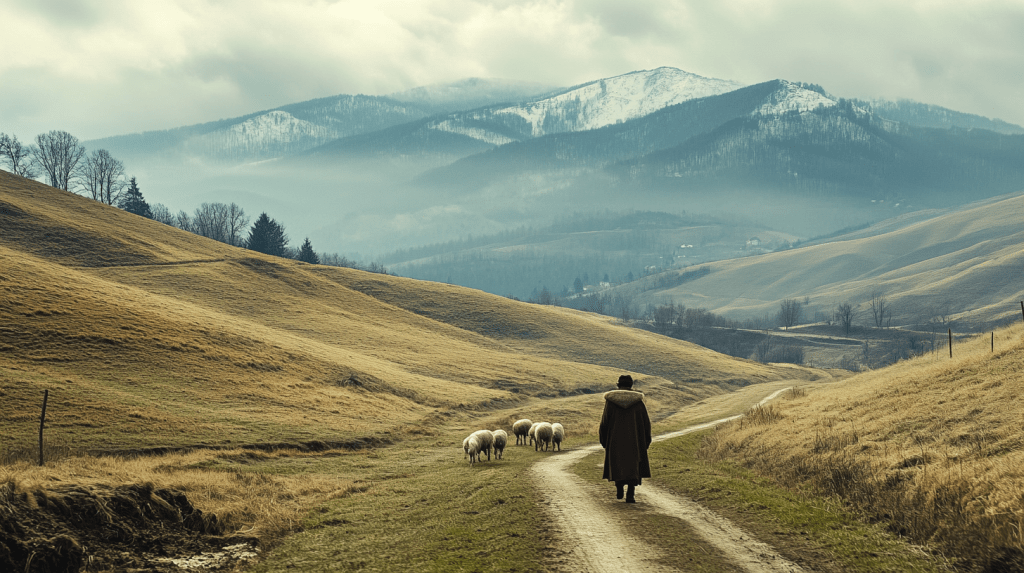
牧羊人:(大聲喊)別擔心,女士們,牠們很快就會過去!
Emma:(搖下車窗)沒關係,我們剛好可以欣賞風景!
牧羊人:(笑)你們應該夏天再來,那時候整片山丘都是綠油油的,還有野花開滿山谷。但現在高處還有些積雪。
Julia:你們夏天會把羊群趕到更高的山上嗎?
牧羊人:當然,這是我們世世代代的傳統。每年夏天我們上山,讓羊群吃最嫩的草,然後製作奶酪,秋天再回來。
Emma:(微笑)聽起來是很平靜的生活。
牧羊人:(聳肩)簡單,但很美好。沒有喧囂,只有大山和羊群。
(羊群緩緩通過,牧羊人向她們揮手道別,她們繼續前進,周圍的景色已完全變為山區。)
(她們進入特蘭西瓦尼亞地區,山谷逐漸展開,遠處出現了一座中世紀風格的城鎮——錫比烏。彩色的巴洛克建築、蜿蜒的鵝卵石街道、高聳的教堂尖塔,彷彿是一幅歐洲古典畫。)
Emma:(驚嘆)哇!這裡和布加勒斯特完全不同!
Julia:(微笑)歡迎來到特蘭西瓦尼亞。這裡曾經是哈布斯堡帝國的一部分,所以建築和文化都帶有濃厚的中歐風格。
Emma:(環顧四周)這裡看起來井然有序,像是一座童話小鎮。
Julia:(笑)沒錯,特蘭西瓦尼亞的城鎮保存得很好,一會兒我們可以先去旅館放行李,然後去找一家當地餐廳嚐嚐傳統美食。
Emma:(興奮)聽起來很棒!
Exploring Sibiu – A Town Blending Medieval European Charm and Local Traditions
🏰 Exploration Stops:
- Piața Mare (The Grand Square) – The historic central square surrounded by Baroque and Gothic architecture
- Podul Minciunilor (The Bridge of Lies) – A bridge shrouded in legend, said to curse those who lie on it
- Holy Trinity Cathedral – A magnificent Orthodox church blending Baroque and Byzantine influences
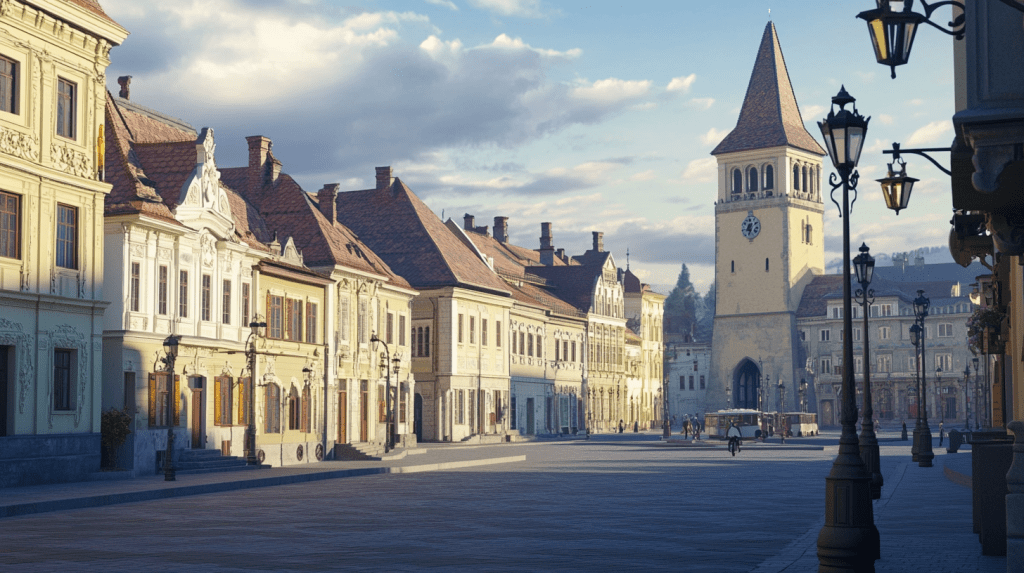
Sibiu’s Grand Square
(Emma and Julia walk through Sibiu’s Grand Square, a cobblestone plaza surrounded by colorful Baroque buildings. The spring air carries the sound of a street musician playing a traditional Romanian violin tune, while locals sip coffee at outdoor cafés.)
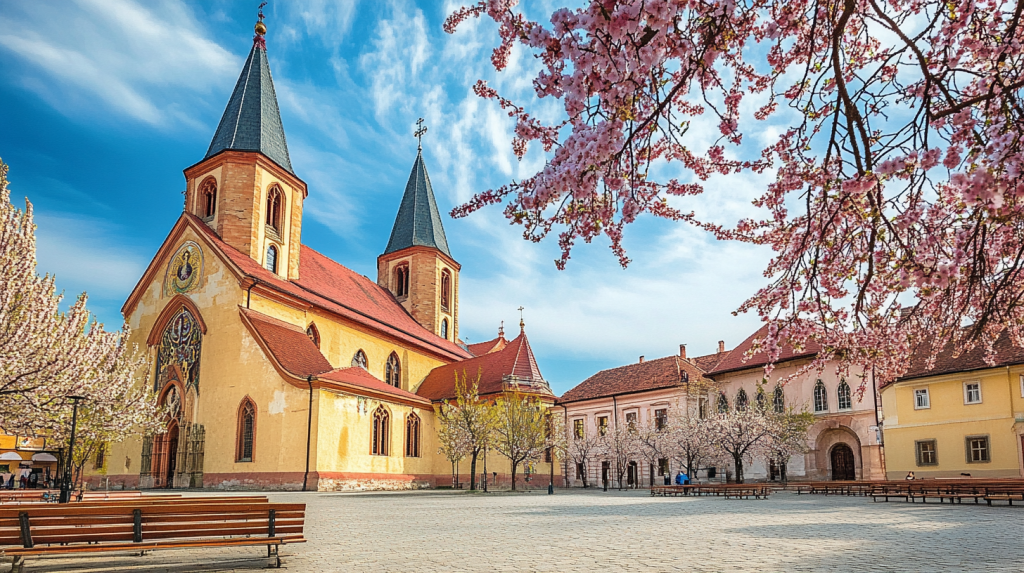
Holy Trinity Cathedral
Emma: (Looking around) This place feels like it stepped right out of an 18th-century European painting. It’s nothing like Bucharest.
Julia: (Nods) That’s because Sibiu was one of the major Saxon settlements in Transylvania. The German influence is still visible in the architecture, culture, and even the local dialects.
Emma: (Pointing at a tall tower) What’s that building?
Julia: That’s the Council Tower, originally built in the 13th century as part of the city’s fortifications. You can climb to the top for an amazing view of the city.
(They continue walking, arriving at an old stone bridge with intricate iron decorations.)
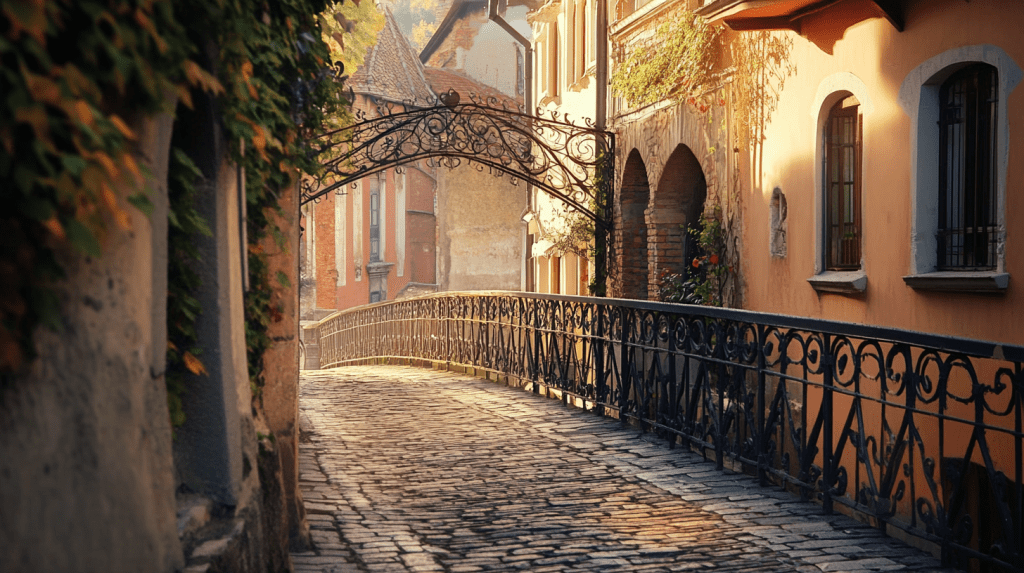
Emma: (Examining the bridge) This looks like an ordinary bridge. Why is it so famous?
Julia: (Smiling) This is the Bridge of Lies (Podul Minciunilor). They say if someone tells a lie while standing on it, the bridge will shake or even collapse.
Emma: (Raising an eyebrow) So is this a superstition, or is there a real story behind it?
Julia: There are many versions. Some say soldiers and lovers used to meet here, swearing promises they never kept. Others believe the name comes from the bridge’s structure—it was one of the first iron bridges in Romania, and “lying" could refer to how it “rests" on its foundation.
Emma: (Stepping onto the bridge) “I never get lost!” (Pauses, then grins) Well, the bridge isn’t collapsing, but I know that’s a lie!
(They both laugh and continue towards a historic bookshop nearby.)
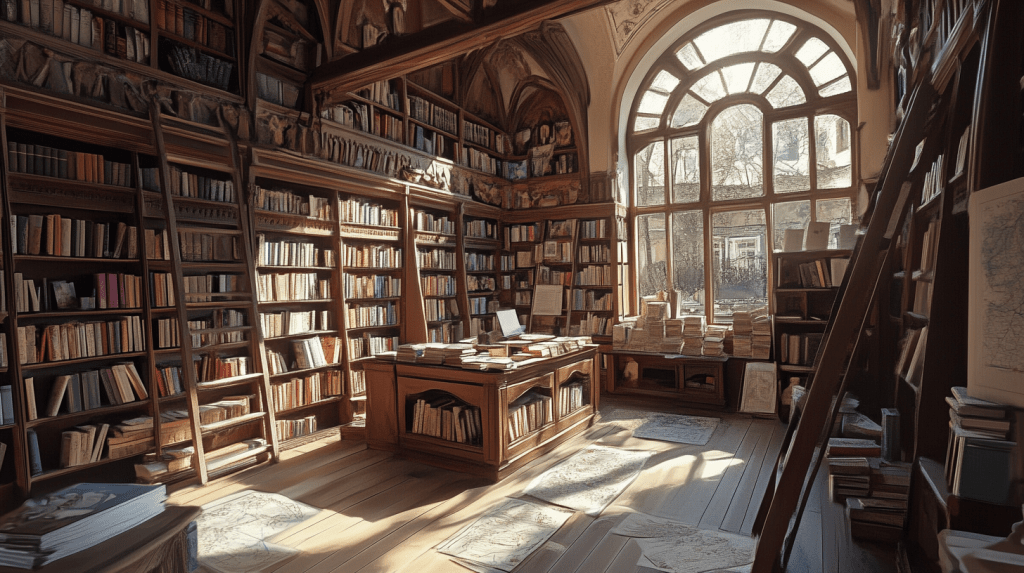
(They enter a cozy old bookstore, filled with wooden bookshelves stacked with antique volumes. The air smells of aged paper and polished wood. A bookstore owner, an elderly man with round glasses, is arranging books on a shelf.)
Bookstore Owner: (Smiling) Welcome! You must be visitors?
Julia: Yes, we’re exploring Sibiu’s history. The architecture here is stunning.
Bookstore Owner: (Nods) This city’s history goes back to the 12th century when Saxon settlers built it. They constructed defensive walls, towers, and trading squares.
Emma: (Flipping through an old map) So this city was built like a medieval German town?
Bookstore Owner: Exactly. The Saxons retained their culture here for centuries, even as rulers changed. Many eventually returned to Germany, but their influence remains strong.
(After browsing, they buy a few hand-drawn maps before heading to the local craft market.)
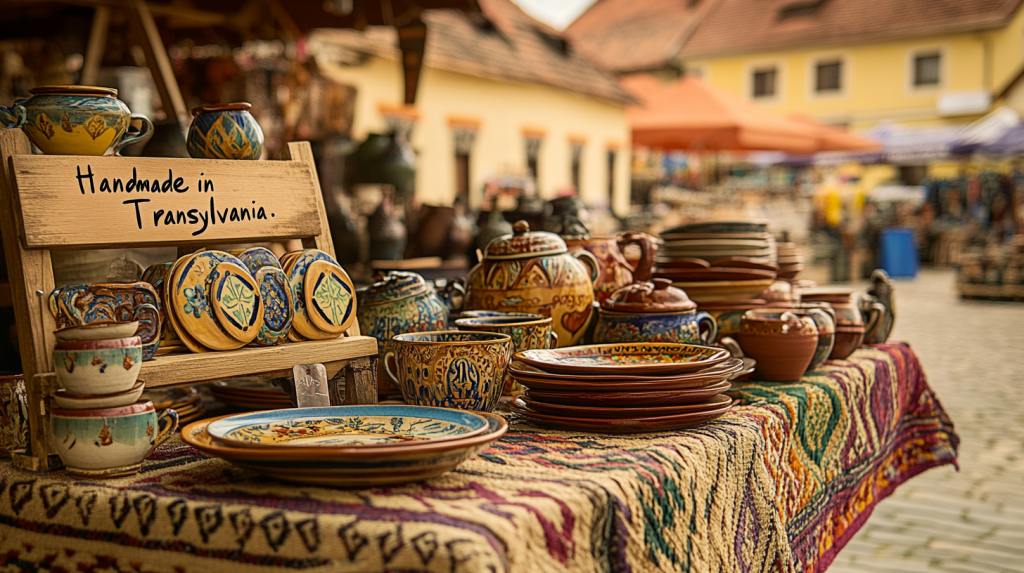
(The market is filled with colorful handmade goods—embroidered textiles, carved wooden icons, and traditional ceramic pots. A craftsman is carefully carving a small wooden church model.)
Emma: (Watching him work) Is this a local craft tradition?
Artisan: (Nods) This is a Transylvanian woodcarving tradition inspired by our wooden churches. In the mountains, wood was more accessible than stone, so many churches were built entirely of wood.
Julia: So even the crafts here are shaped by geography?
Artisan: Of course! People here have adapted to their surroundings for generations.
(They buy a few small wooden carvings before heading to a traditional restaurant.)
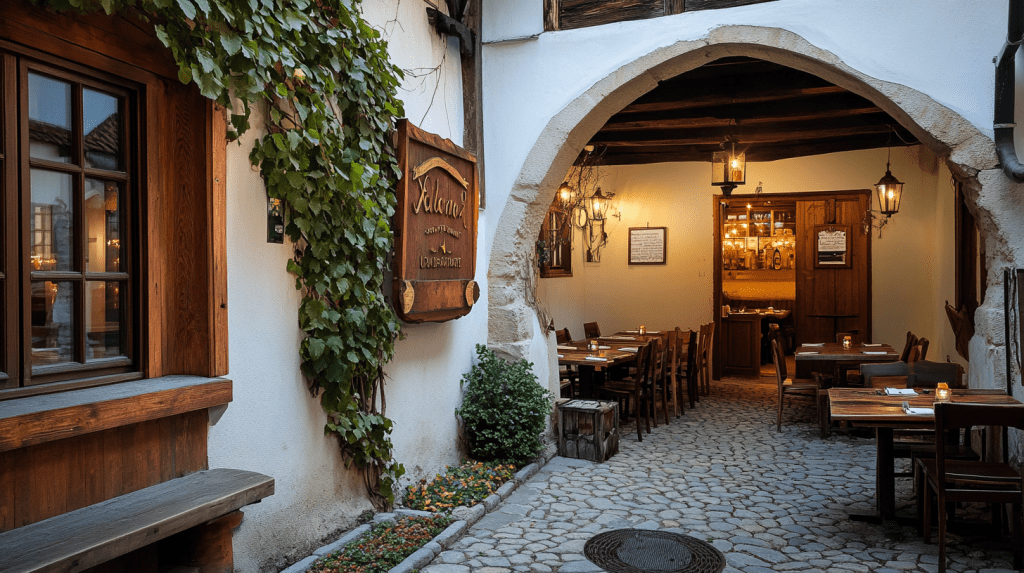
(They sit at a traditional restaurant, ordering sarmale (stuffed cabbage rolls) and mămăligă (polenta). The restaurant owner personally serves their meal.)
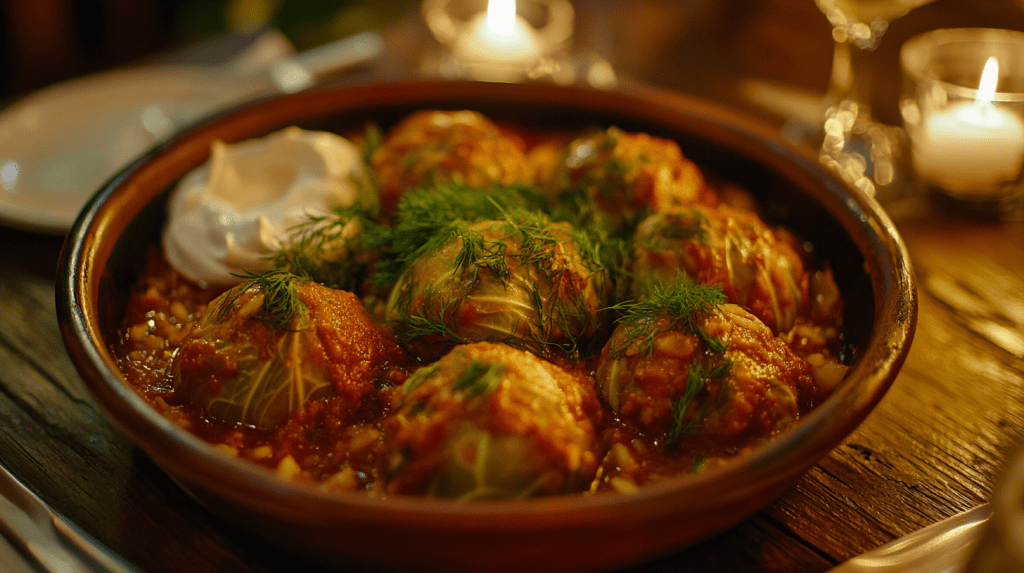
Sarmale (stuffed cabbage rolls)
Restaurant Owner: (Smiling) Welcome to Sibiu! First time here?
Emma: It’s even more European than I expected. It feels like Austria or Germany.
Julia: But the food has strong Balkan flavors—it’s an interesting contrast.
Restaurant Owner: (Laughs) That’s Transylvania for you! A mix of many cultures, but with its own distinct traditions.
(They enjoy their meal, reflecting on how Sibiu combines medieval charm with modern life.)
探索錫比烏(Sibiu, Romania)—融合中世紀歐洲風情與當地傳統的城鎮
🏰 探索地點:
- 大廣場(Piața Mare) – 歷史悠久的中央廣場,周圍是巴洛克與哥德式建築
- 謊言橋(Podul Minciunilor) – 據說站在這座橋上說謊的人會被詛咒
- 聖三一大教堂(Holy Trinity Cathedral) – 一座融合東正教與巴洛克風格的壯麗教堂
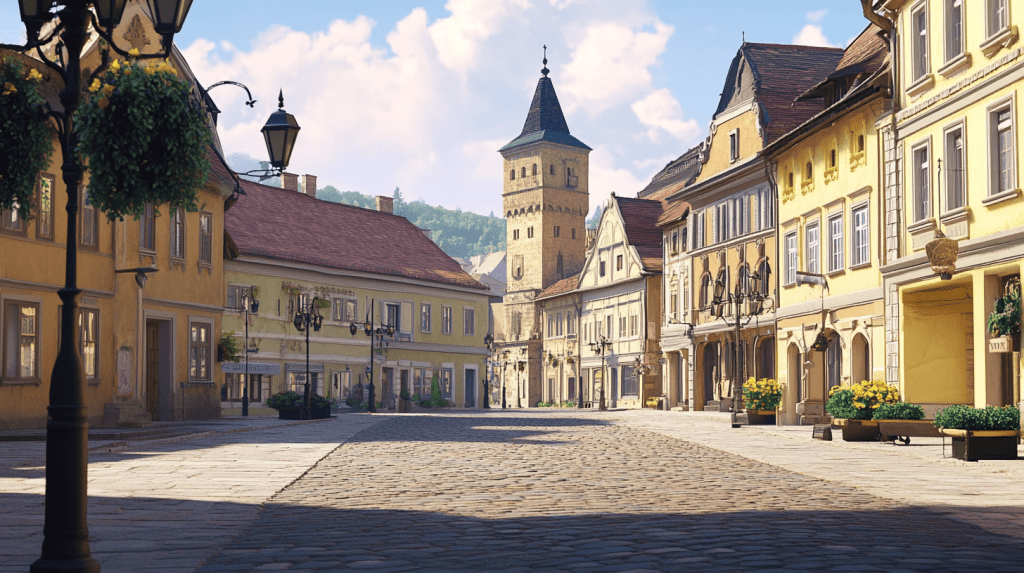
錫比烏的大廣場
(Emma 和 Julia 走在錫比烏的大廣場,鵝卵石鋪成的街道延伸至色彩繽紛的巴洛克建築。春天的微風拂過,廣場上傳來街頭藝人演奏羅馬尼亞傳統小提琴曲的聲音。當地人悠閒地坐在露天咖啡館喝著咖啡。)
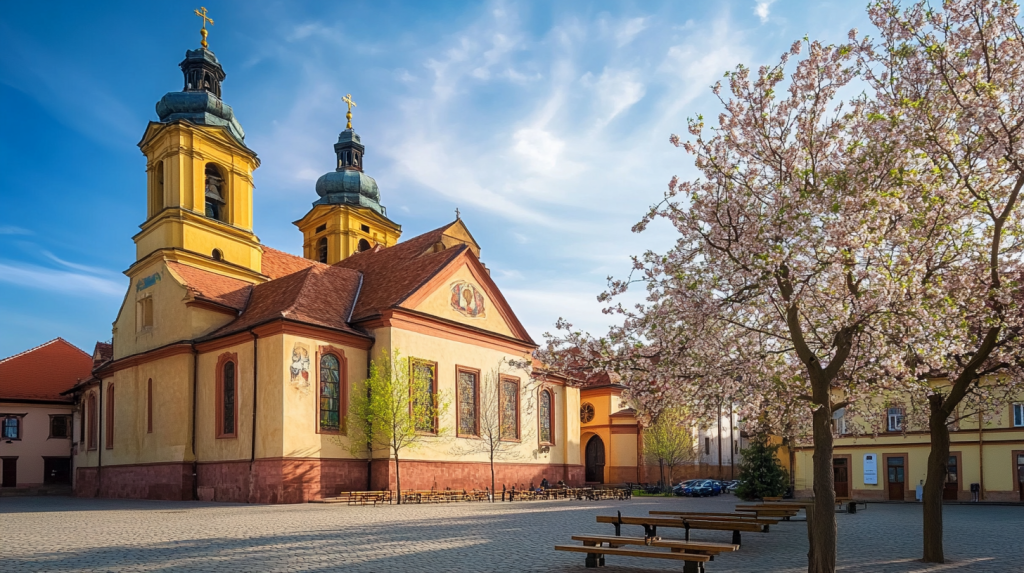
聖三一大教堂
Emma:(環顧四周)這裡真的像是直接從 18 世紀的歐洲畫作裡走出來的,跟布加勒斯特完全不同。
Julia:(點頭)因為這裡曾是特蘭西瓦尼亞的中心之一,過去主要是薩克森人(Saxons,德意志移民)居住的地方,他們的文化和建築風格一直保留到今天。
Emma:(指著一座高塔)那棟建築是什麼?
Julia:那是 鐘樓塔(Council Tower),建於 13 世紀,最初是城牆的一部分,後來變成市政廳的一部分。你可以爬上去俯瞰整座城市。
(她們慢慢穿過廣場,看到一座古老的石橋,上面雕刻著鐵製裝飾。)
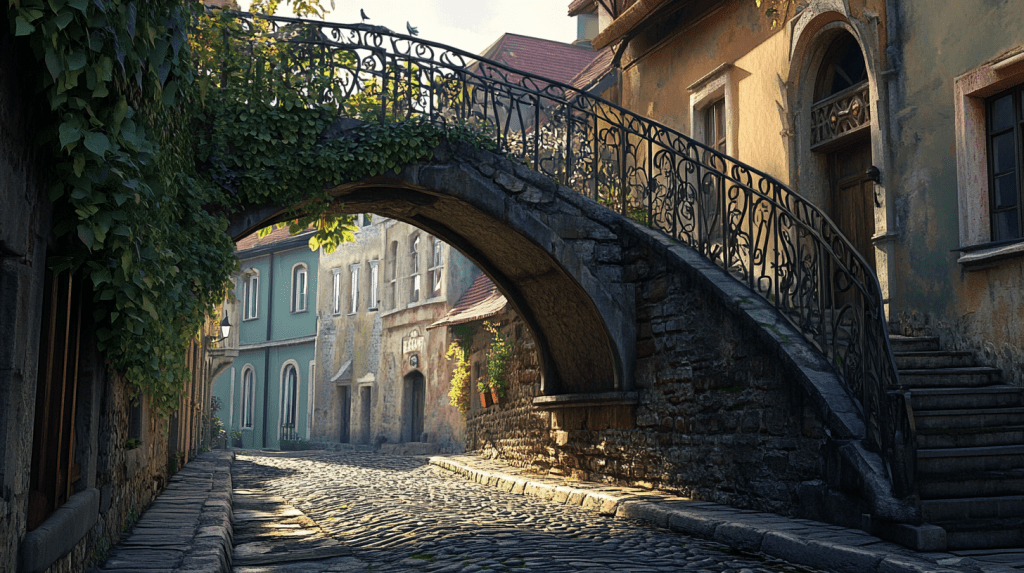
Emma:(好奇地看著橋)這座橋看起來很普通,為什麼這麼有名?
Julia:(笑)這是 「謊言橋」(Podul Minciunilor),據說如果你站在橋上說謊,橋就會震動甚至倒塌。
Emma:(挑眉)這是個迷信,還是這裡真的有故事?
Julia:傳說這座橋曾是士兵和戀人們的秘密約會地點,很多人在這裡許下承諾,後來卻沒兌現,因此才有「謊言橋」的說法。也有人說,這是因為這座橋是羅馬尼亞第一座鐵橋,結構容易震動,所以才誕生了這個傳說。
Emma:(站上橋,開玩笑地說)「我從來不會迷路!」(橋毫無動靜)看來這座橋知道我在說謊!
(兩人笑著走下橋,準備進入一家歷史悠久的書店。)
(她們走進一家小書店,店內擺滿了老舊的書籍,空氣中瀰漫著紙張與木頭的香氣。一位戴著圓框眼鏡的老闆正在整理書架。)
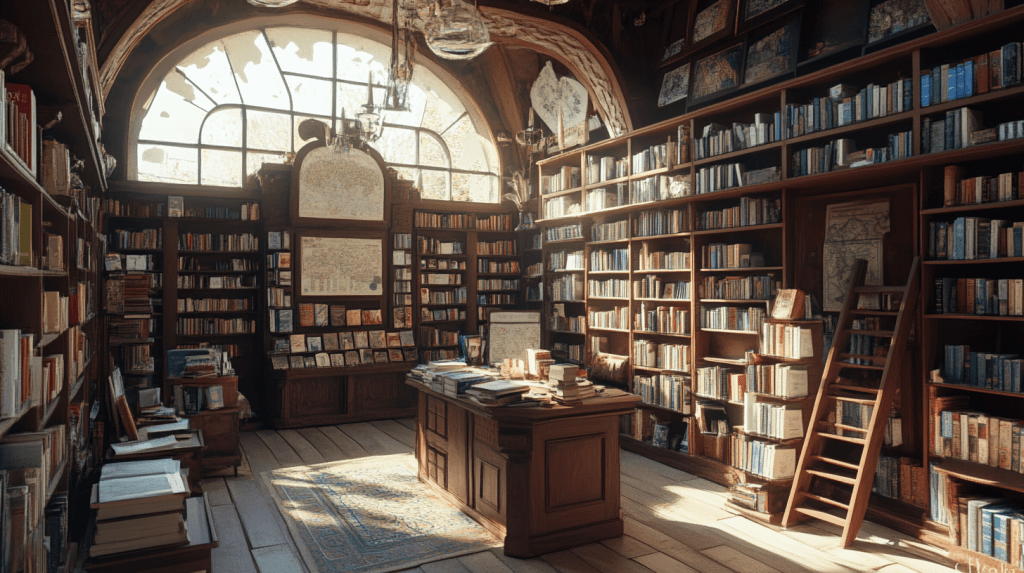
書店老闆:(微笑)歡迎光臨,你們是來旅遊的嗎?
Julia:沒錯,我們在探索錫比烏的歷史。這裡的建築真的讓人驚嘆。
書店老闆:(點頭)這座城市的歷史可以追溯到 12 世紀,當時是德意志薩克森移民建立的。他們在這裡建造了防禦城牆、鐘樓和商業廣場。
Emma:(翻開一本舊地圖)所以這裡和德國的中世紀城市很像?
書店老闆:正是如此。特蘭西瓦尼亞的薩克森人一直保留著自己的文化,直到 20 世紀後期,許多人才返回德國,但他們的影響仍然深遠。
(兩人買了幾張手繪地圖後,繼續前往手工藝市集。)
(市集裡擺滿了手工刺繡、木雕、陶器等傳統工藝品。一名老工匠正在雕刻一座小型的木製教堂。)
Emma:(好奇地看著工匠雕刻)這是當地特有的工藝嗎?
工匠:(點頭)這是我們 特蘭西瓦尼亞的木雕工藝,靈感來自我們的木製教堂。在山區,木頭比石頭更容易取得,所以過去很多教堂都是用木頭建的。
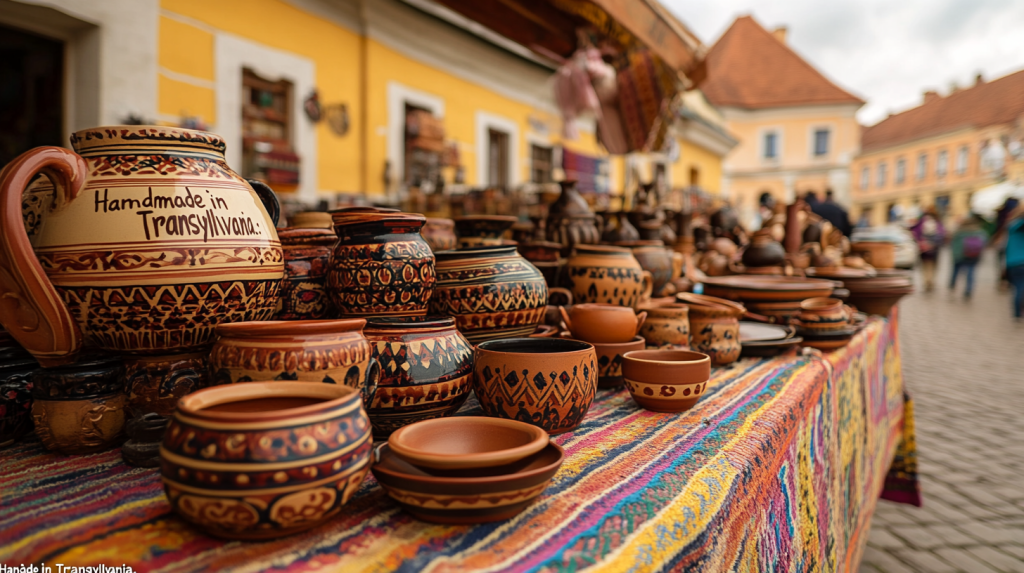
Julia:所以這些手工藝也是受地理環境影響的?
工匠:當然,這裡的人世世代代適應這片土地,發展出屬於自己的技藝。
(她們買了幾個木雕紀念品,準備前往餐廳。)
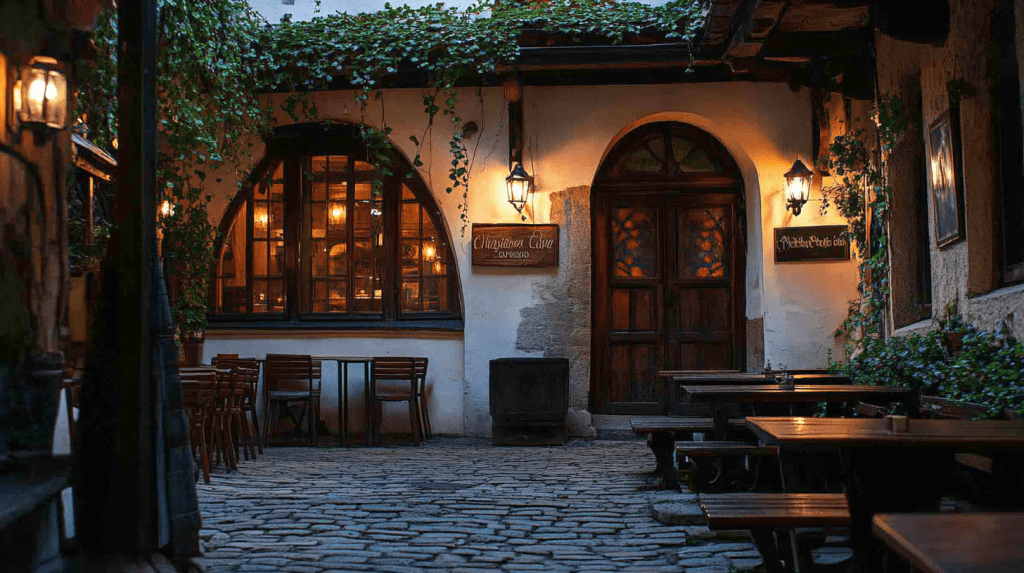
(她們坐在一家傳統餐廳內,點了當地的 sarmale(羅馬尼亞酸菜捲) 和 mămăligă(玉米糊),餐廳老闆親自為她們上菜。)

mămăligă(玉米糊)
餐廳老闆:(微笑)歡迎來到錫比烏,你們第一天來這裡,覺得怎麼樣?
Emma:這裡比我想像的還要有歐洲大陸的風格,我甚至覺得自己在奧地利或德國。
Julia:但食物卻充滿巴爾幹特色,這是一個很有趣的對比。
餐廳老闆:(笑)這就是特蘭西瓦尼亞,我們融合了很多文化,但又保留自己的味道。
(她們享用著美食,感受錫比烏如何在歷史與現代之間取得平衡。)


發表留言