From the Wetlands to the Forest Guesthouse
They left the observation platform as the sun began to slide lower, casting long shadows across the reeds. The light had softened, taking on a pale golden tone that gave everything a quiet, suspended feeling.
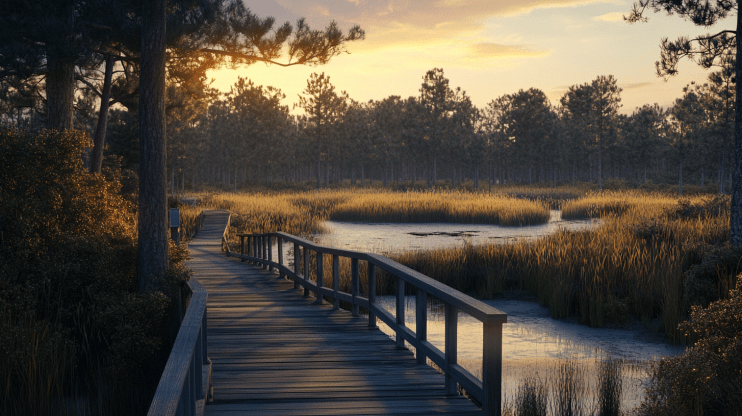
Back in the car, they drove in silence for a while, letting the forest swallow the road. The landscape changed subtly — pine trees grew taller and denser, and occasional pools of still water reflected the sky. A light mist hung low in the hollows.
Tomas was driving. He glanced at the rearview mirror and said, “We’ll stay at a guesthouse I’ve used a few times during field trips. It’s simple, but close to the forest edge — easy to access trails and protected zones.”
“You booked it already?” Renata asked.
“Called them yesterday,” Tomas replied. “They know we’re coming.”
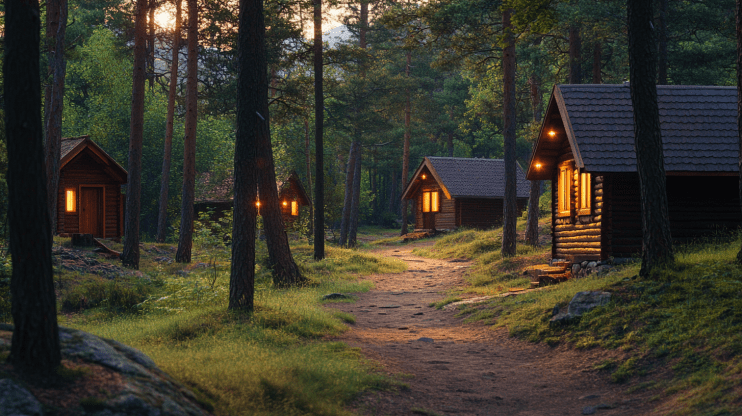
They passed a wooden sign half-hidden by moss, then turned onto a narrow gravel road. After a few more minutes of gentle curves through the trees, the guesthouse came into view — a cluster of small wooden buildings tucked among the pines, with soft yellow lights glowing through the windows.

從濕地到住宿地的過程
當他們離開觀景台時,太陽已經開始往下沉,斜斜地灑在蘆葦叢上,影子被拉得長長的。光線變得柔和,泛著淡淡金色,整個空氣像是被輕輕地托住,靜而不沉。

回到車上後,他們先安靜了一會兒,讓森林的節奏慢慢包圍他們。沿途的風景變了些——松樹越來越高、越來越密,偶爾會經過水窪,平靜地倒映著天光。低窪處甚至飄著一層薄霧。
Tomas開著車,透過後視鏡看了一眼大家,說:「我們今晚會住在一間我過去做田野調查時常住的民宿。不豪華,但離森林邊很近,走路就能進保護區。」
「你已經訂好了?」Renata問。
「昨天打電話確認過了,」Tomas點點頭。「主人知道我們會來。」
他們開過一塊被苔蘚覆蓋一半的木牌,轉進一條碎石林道。又彎了幾個彎之後,民宿出現在樹林之間——幾間深色木屋錯落地藏在松林中,窗戶裡透出柔柔的黃光。

Dinner and an Unexpected Meeting
Inside the main house, the dining room was simple but inviting. Wooden tables lined the room, and the air was filled with the scent of baked bread and herbs. A few other guests were already seated, speaking in low voices.

They chose a table near the window. As they settled in, Renata noticed two people sitting at a corner table — a man and a woman, both with outdoor jackets draped over their chairs, a rolled-up map and a few sample containers stacked neatly on the floor beside them.
Tomas glanced their way and murmured, “Probably researchers. Looks like they’ve been out in the field.”
The host, a woman in her sixties with a kind face, came over carrying bowls of steaming barley soup.
“They’re ecologists from Finland,” she said in a mix of Lithuanian and English, smiling. “Studying wetlands, like many who stay here.”
Hearing this, the Finnish woman looked up and caught Tomas’s eye.
“Are you from Vilnius University?” she asked in English.
Tomas smiled modestly. “Yes. Biosciences Institute. We’ve been surveying a few wetland sites nearby.”
The man at the other table leaned over with interest. “Small world! We’re here to monitor amphibian populations. Mainly Rana arvalis — the moor frog. We’re comparing breeding patterns across different parts of the Baltic region.”
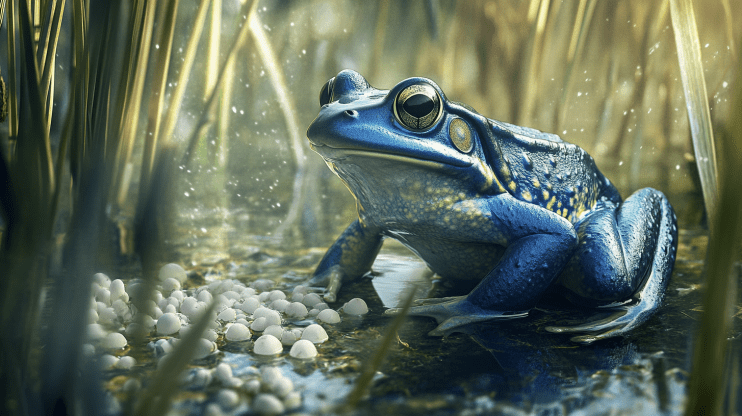
春季繁殖期雄蛙會變成淡藍色 (The moor frog (Rana arvalis) appears in brownish-gray coloration)
Renata’s eyes lit up. “We saw a lot of frogspawn today in the marshes.”
And just like that, a new conversation unfolded, full of notes on field methods, observations, and the quiet excitement of finding common ground, far from any city, deep in the woods.
晚餐與相遇
主屋裡的餐廳簡單而溫暖。木質桌椅整齊排列,空氣中飄著烘焙麵包和香草的氣味。已經有幾位旅客低聲交談著坐好。
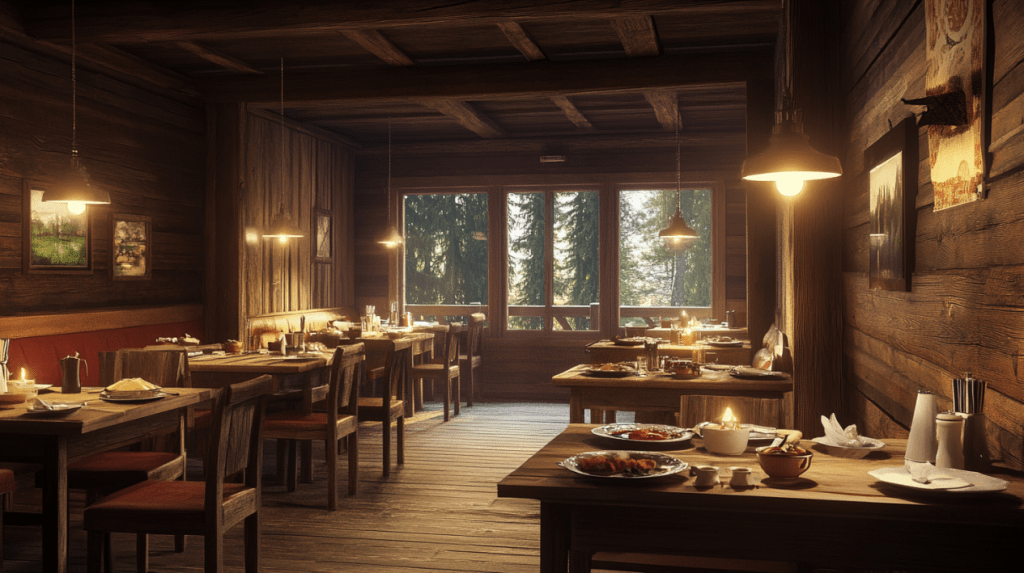
他們選了靠窗的一桌坐下。剛安頓好,Renata便注意到角落裡坐著兩個人——一男一女,外套搭在椅背上,地上整齊放著一張捲起來的地圖和幾個採樣瓶。
Tomas看了一眼,低聲說:「大概也是研究人員,看樣子剛從外頭回來。」
這時,女主人端著熱騰騰的薏仁香菇湯走過來,用立陶宛語和英文混合地說:「他們是從芬蘭來的生態學家,也是在研究濕地的,這裡常有這樣的客人。」
聽到這話,那位芬蘭女性抬起頭,正好對上Tomas的視線。
「您是維爾紐斯大學的嗎?」她用英文問。
Tomas微微一笑,語氣平靜地回答:「是的,生物科學研究所。我們最近在附近幾個濕地做調查。」
角落的那位芬蘭男子也興致勃勃地轉過頭來:「真巧!我們來這裡是為了監測兩棲類的族群,主要是歐洲澤蛙(Rana arvalis)。我們正在比對波羅的海不同區域的繁殖情況。」

歐洲澤蛙呈現棕灰色 (In its normal phase, the moor frog (Rana arvalis) has a brownish-gray color)
Renata的眼睛亮了起來:「我們今天在濕地也看到好多青蛙卵呢!」
就這樣,一場新的對話自然展開了——討論田野調查的方法、彼此的觀察紀錄,以及那種即使在遠離城市、隱進森林深處,依然能找到共同語言的靜靜喜悅。
A Conversation Over Dinner
As the conversation drifted between wetlands, amphibians, and migration patterns, the Finnish researcher asked casually, “So, Tomas, are you mainly working in ecology?"

Tomas shook his head slightly, smiling. “Not exactly. My background is in physical geography — landscape evolution, wetland and river systems. I also study how historical human activities have shaped these environments."
The Finnish man nodded thoughtfully. “Ah, environmental history. Very important. You can’t understand wetlands today without knowing how people have used and altered them."
“Exactly," Tomas said. “In places like Dzūkija, the landscape carries layers of both natural and cultural history. It’s a fascinating place to study long-term change."
Emma listened quietly, then asked, “So when we were walking through the forest earlier today, you could read not just the ecology, but also the human traces?"
Tomas smiled. “Sometimes. Old drainage ditches, abandoned paths, even certain plant patterns — they all tell parts of the story."
The conversation deepened, moving easily between scientific methods and the quiet poetry of landscapes remembered and altered over time.
餐桌上的交流
談話從濕地生態、兩棲類動態、遷徙路線,一路輕鬆地延伸開來。這時,芬蘭的男研究者隨口問道:「托馬斯,你的專業主要是生態學嗎?」
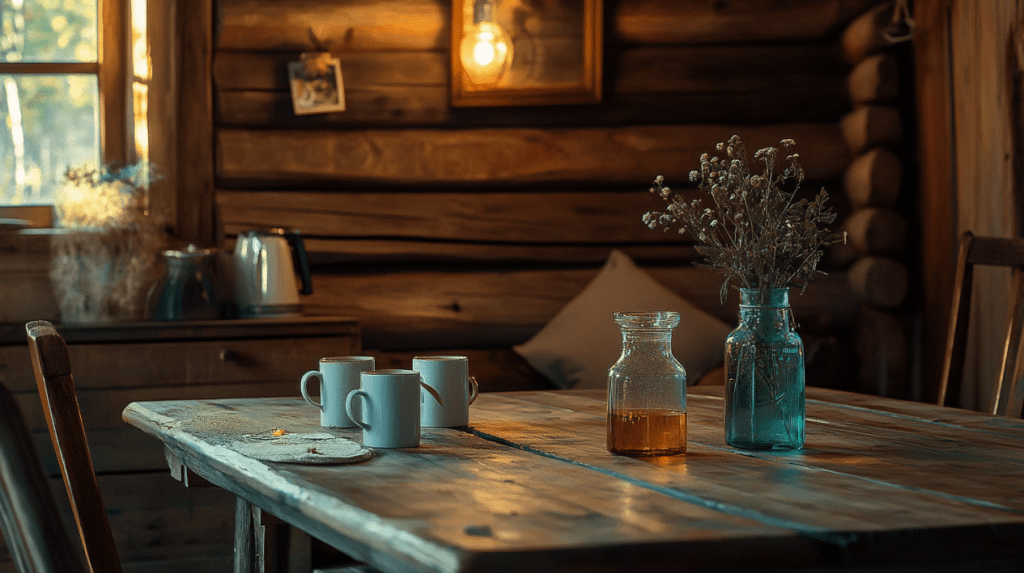
托馬斯輕輕搖頭,帶著微笑回答:「不完全是。我的背景是自然地理學,研究地貌演變、濕地與河流系統。我也關注歷史上人類活動如何影響這些環境。」
芬蘭人點點頭,露出認同的表情:「啊,環境史。這非常重要。不了解人怎麼使用與改變濕地,就無法真正理解今天的濕地樣貌。」
「正是如此,」托馬斯說。「像Dzūkija這樣的地方,地景本身就同時承載了自然與人文的痕跡。從長時間尺度去看,非常迷人。」
艾瑪一邊聽,一邊若有所思地問:「那我們今天在森林裡走的時候,你其實也能看出不只是生態,還有人留下的痕跡?」
托馬斯笑了笑。「有時候可以。像是舊的排水溝、廢棄的小徑,甚至是某些植物分佈的異常模式——它們都是故事的一部分。」
餐桌上的氣氛漸漸安靜了些,話題在田野調查的方法與那種緩慢被記憶、被改變的地景詩意之間,自然地流動著。
An Evening Walk After Dinner
After dinner, the group lingered a while at the table, sipping herbal tea made from wild mint and meadow herbs. The Finnish researchers excused themselves early — they had an early start planned for the next day.

Outside, the evening air was cool and filled with the scent of pine and damp earth. Without really discussing it, Tomas, Renata, Ben, Emma, and Julia wandered out toward the open field beside the guesthouse.
The sky was deep blue, with the last traces of daylight fading at the horizon. A few stars were already appearing, trembling faintly above the dark line of trees.
They walked slowly, without much talking. Somewhere far off, an owl called once, then again. The forest around them felt vast but gentle — a presence rather than a weight.
Julia tilted her head back, whispering, “It feels like the air itself is alive here."
Tomas smiled quietly, hands in his pockets. “It is. Especially on nights like this."
After a while, the chill began to settle in. They turned back toward the warm light of the guesthouse windows, their steps naturally falling into rhythm.

Inside, the rooms were simple but welcoming — wooden walls, thick wool blankets, small windows looking out into the night.
Emma sat by her window for a while before bed, watching the slow drift of stars through the branches, listening to the soft breathing of the forest.
It was the kind of night that asked nothing of them except to be still.
晚餐後的夜晚森林散步
晚餐過後,他們在桌邊多坐了一會兒,喝著由野生薄荷和草原香草煮成的溫熱花草茶。芬蘭的研究者們提早告辭了,明天一早還有新的行程。
外頭,夜晚的空氣涼爽,飄著松針和濕潤泥土的味道。他們沒特別約定,卻自然地一同走向民宿旁邊的開闊草地。

天空深藍,地平線上殘留著最後一點淡淡的亮光,幾顆星星已經在樹梢上方微微閃爍。
他們緩緩地走著,幾乎沒什麼交談。遠遠的地方傳來貓頭鷹短促的叫聲,四周的森林既遼闊又溫柔——像是一種陪伴,而不是壓迫。
茱莉亞仰起頭,低聲說:「這裡的空氣,像是活著的。」
托馬斯輕輕一笑,雙手插在口袋裡。「的確是。尤其是這樣的夜晚。」
過了一會兒,微微的寒意開始滲入,他們便慢慢轉身,踏著自然的步伐,走回民宿那片溫暖的燈光裡。
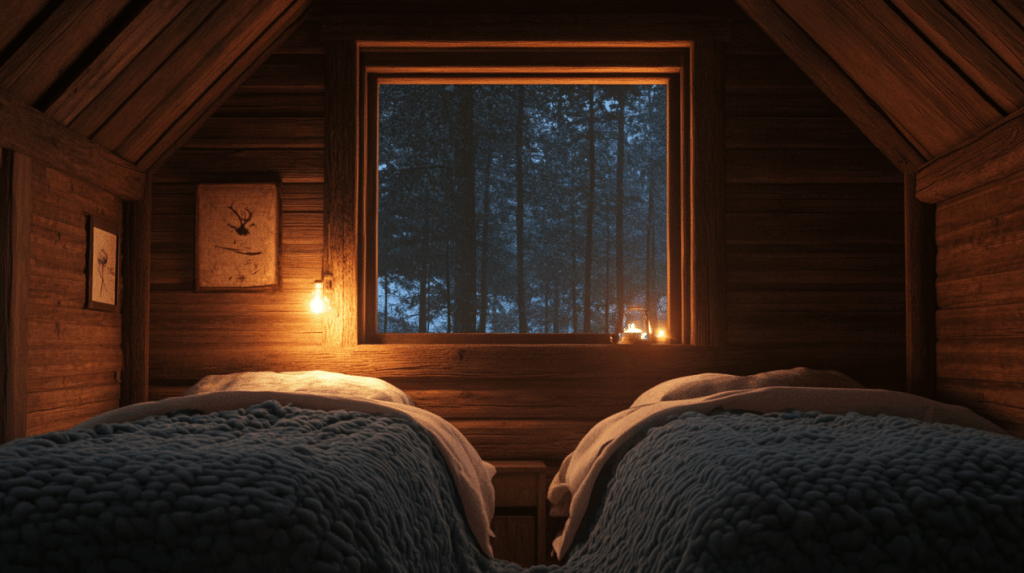
屋內的房間簡單而溫暖——木頭牆面、厚實的羊毛毯、小窗戶正對著靜靜的夜色。
艾瑪睡前坐在窗邊,看著星星在樹梢間緩緩移動,耳邊是森林緩慢而深長的呼吸聲。
這樣的夜晚,不需要他們做任何事,只要安靜地存在就夠了。
Ben’s Night with the Stars
The house had grown quiet. The others had already gone to their rooms, the lights dimmed one by one. Ben slipped on his jacket, quietly picked up his camera bag and tripod, and stepped outside.
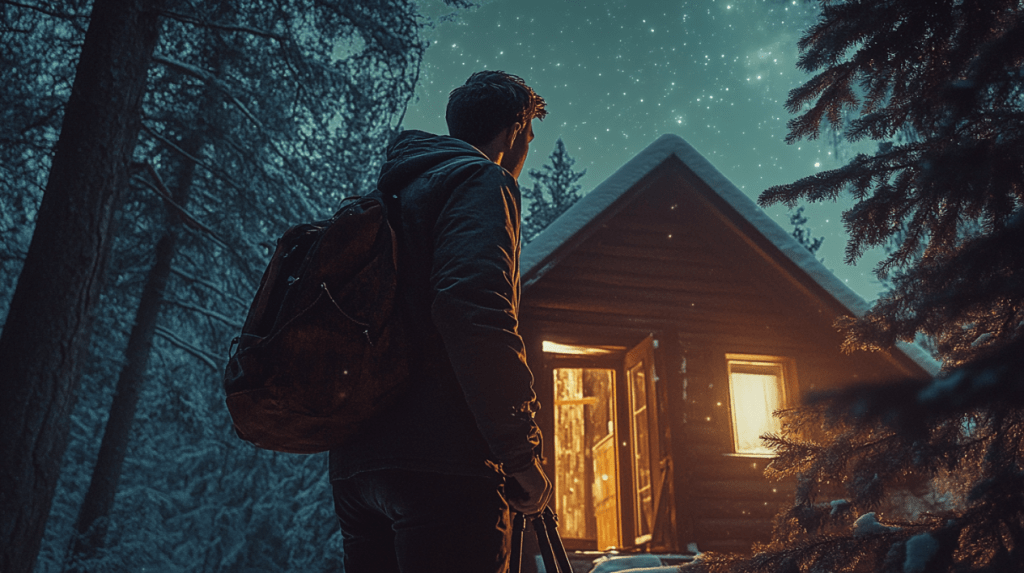
The night air was cold, with a hint of pine and damp earth. He walked a little past the guesthouse, to where the trees opened into a narrow clearing. There, the sky felt immense — deep and endless.
Ben moved calmly, like someone who had done this many times. He unfolded his tripod, fixed the wide-angle lens, and adjusted the camera settings: f/2.8, ISO 3200, 15-second shutter. He knew the drill. Focused manually to infinity, tested the first frame. The stars appeared slowly on the preview screen, tiny but clear.
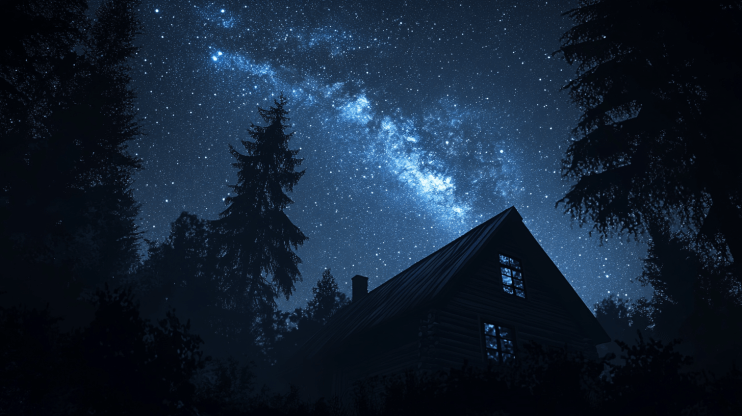
He tried a few angles — one with the roofline of the guesthouse, another with the dark silhouettes of pine trees crossing the Milky Way. The sky tonight was sharp and dry; he could even see faint bands of starlight mirrored in a nearby puddle.
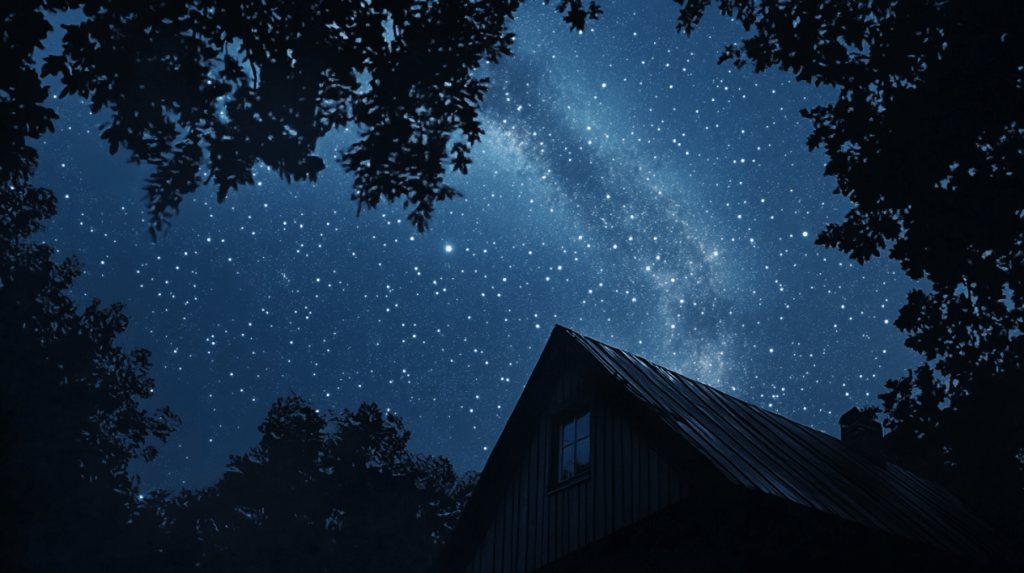

There was no wind, no insects, only his breath and the quiet click of the shutter every few minutes.
It wasn’t just about the photographs. It was about listening — to a sky that didn’t rush, to time that moved differently here.
And when he finally sat down on a cold stone, letting the camera run on interval shots, he felt something that was neither excitement nor awe, but the calm of being exactly where he needed to be.
Ben 的星空時刻
屋內已經安靜下來,大家各自回到房間,燈光一盞接一盞地熄滅。
Ben披上外套,悄悄拿起他的相機包和三腳架,走出門外。
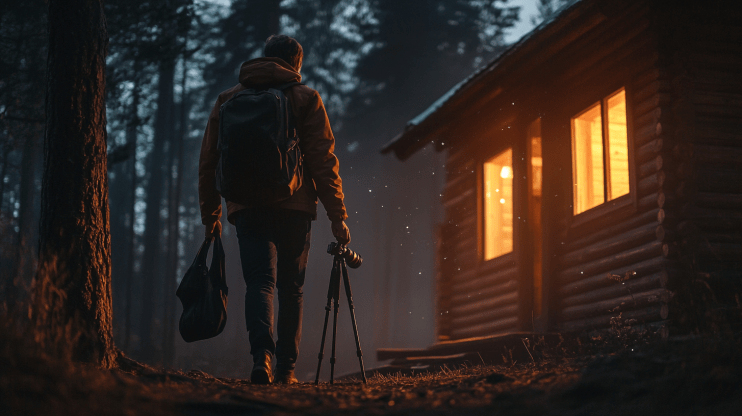
夜晚的空氣清冷,混著松針與濕土的氣味。他往民宿後方走了一段路,走到一片林間的空地,那裡的天空顯得特別開闊——深沉、寧靜,像是沒有盡頭。
Ben的動作沉穩,顯然做過很多次這樣的事。他展開三腳架,裝上廣角鏡頭,調整好設定:f/2.8,ISO 3200,快門 15 秒。他手動對焦到無限遠,按下第一張快門。預覽畫面中,星點慢慢浮現,微小但清晰。
他換了幾個角度拍攝——有一張帶到民宿的屋頂線條,另一張是松樹的剪影穿過銀河。今晚的天空乾淨、穩定,連不遠處一灘積水裡都隱約倒映出星光。
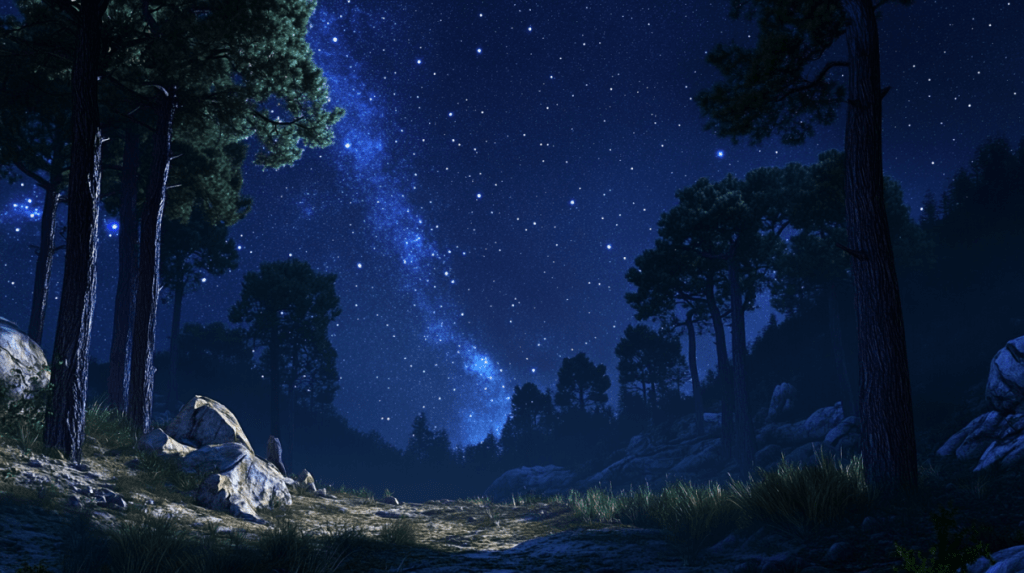
沒有風,沒有蚊蟲,只有他自己的呼吸聲,和每隔幾分鐘一次快門的輕響。
他不是為了照片本身而拍。他是在聆聽——一片不催促的天空,一段在這裡流動方式不同的時間。
最後他坐在一塊冰冷的石頭上,讓相機持續拍著間隔曝光。他感受到的,不是興奮,也不是敬畏,而是一種「此刻剛剛好」的平靜。

 Virtual Travel | 虛擬旅行沉浸式英語學習
回覆給The Virtual World Explorer 取消回覆