
Morning in The Second Day
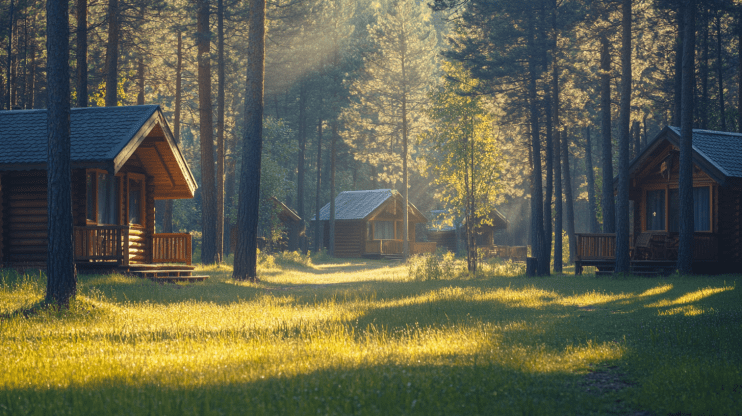
The morning air was still cool. Light fog hovered just above the grass, and the sky was pale but clear. From inside the room, Emma could hear birds calling in short, echoing bursts through the pine forest.
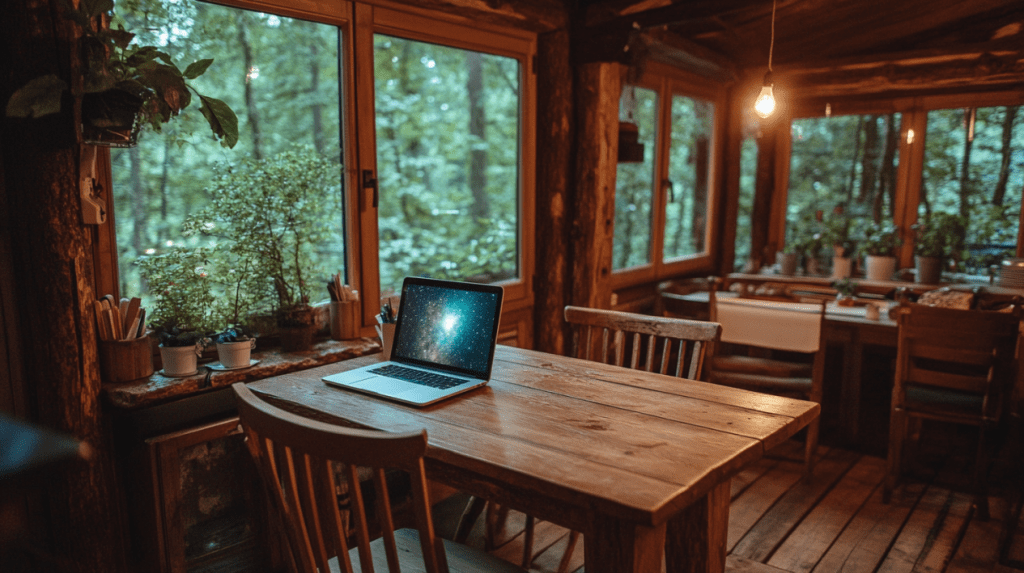
Ben was already up, sorting through the photos he had taken. He had chosen a few favorites. At breakfast, he placed his laptop on the table and turned it toward the others.
“This one came out better than I expected,” he said, pointing to the image of the Milky Way rising behind the roofline and pine silhouettes.

Julia leaned forward. “You could see that many stars with the naked eye?”
Ben nodded. “Yeah, up here it’s much easier. Less light pollution, higher latitude. And it’s spring — the Milky Way’s getting higher every night.”
Tomas added, “In summer, it cuts straight across the sky. That’s when the core is fully visible. But even now, you can already get really clean views.”
Emma studied the photo again. “It’s strange to think this is the same sky we don’t notice back in the city.”
Tomas sipped his tea. “Same stars. Very different conditions.”
He glanced out the window. “We’ll take it slow today. There’s a forest trail nearby — it passes through older growth pine and some open mossy areas. If we’re lucky, we might see remnants of old charcoal pits.”
Renata added, “And maybe some wild thyme or yarrow. This forest usually has plenty by late spring.”
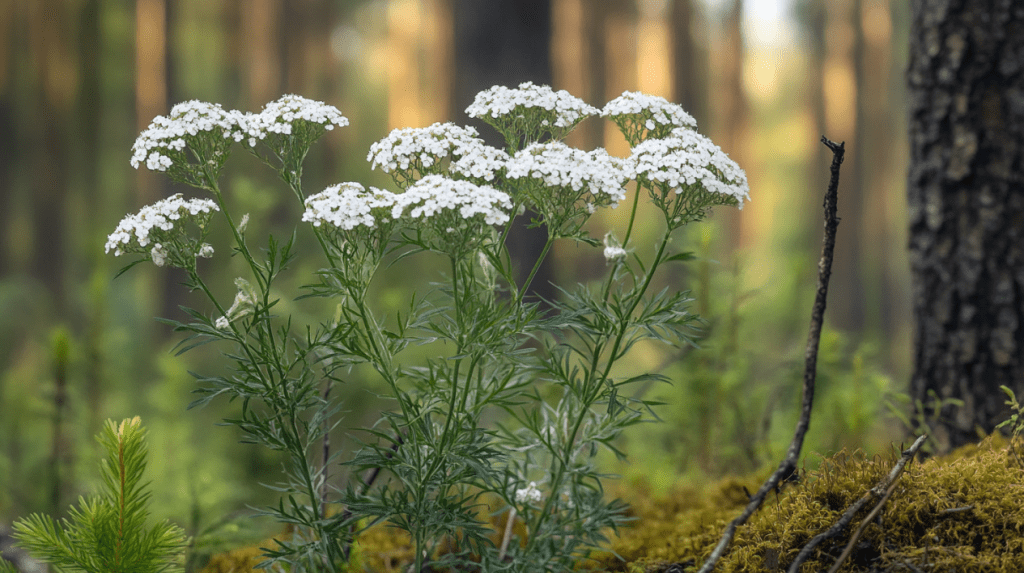
yarrow
The sky outside was brightening. Beyond the window, the forest looked steady, quiet, ready for the day.
第二天早晨
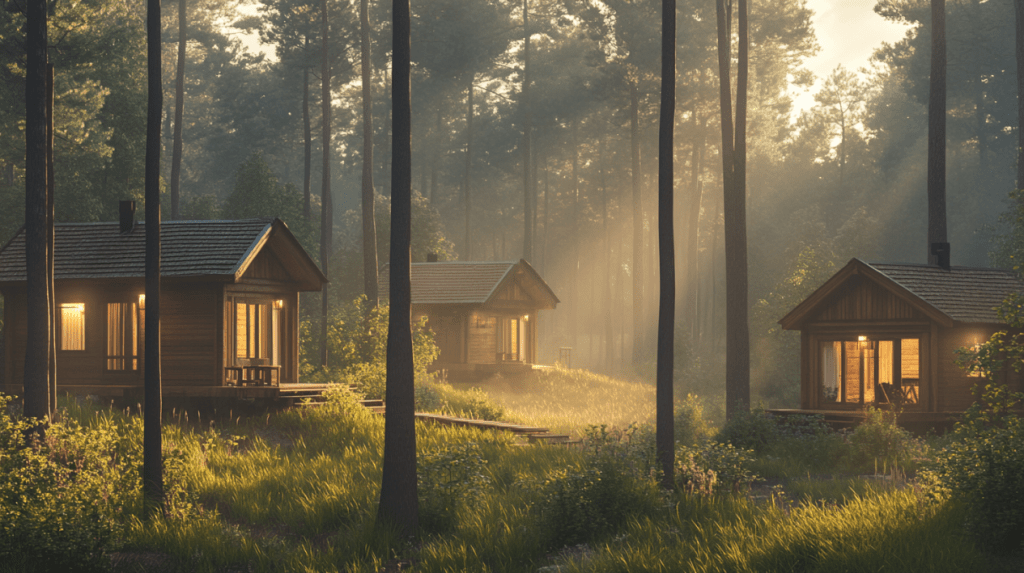
早晨的空氣仍然帶著些微寒意。草地上浮著一層薄霧,天空泛著淡淡的光。從房間裡,艾瑪聽見幾聲短促、清亮的鳥鳴,在松林間回響。
Ben早就起床,正在整理昨晚拍的照片。他挑出幾張,等大家坐下吃早餐時,把筆電轉向桌中央。
「這張比我預期的清楚,」他一邊說,一邊指著那張銀河從屋頂和松樹剪影後方升起的照片。
茱莉亞湊近看了一眼:「用肉眼真的看得到這麼多星星?」
Ben點點頭:「在這裡可以。光害少,而且緯度比較高。這季節銀河越來越高,到了夏天會橫越整個天空。」
托馬斯補充:「夏天的時候可以看到銀河核心直接穿過頭頂。現在雖然還早,但拍起來已經很乾淨了。」
艾瑪又看了一眼照片:「很難想像,這跟我們平常城市裡看不到的夜空,其實是同一片。」
托馬斯喝了一口茶說:「一樣的星星,不一樣的環境條件。」
他轉頭看向窗外:「今天我們慢慢來。附近有條步道,會穿過一片比較老的松林,有些地區還長著青苔。如果運氣好,可能會看到舊炭窯的遺跡。」
雷娜塔補充:「路上如果有野百里香或西洋蓍草,我想採一些。這個時節應該會有。」
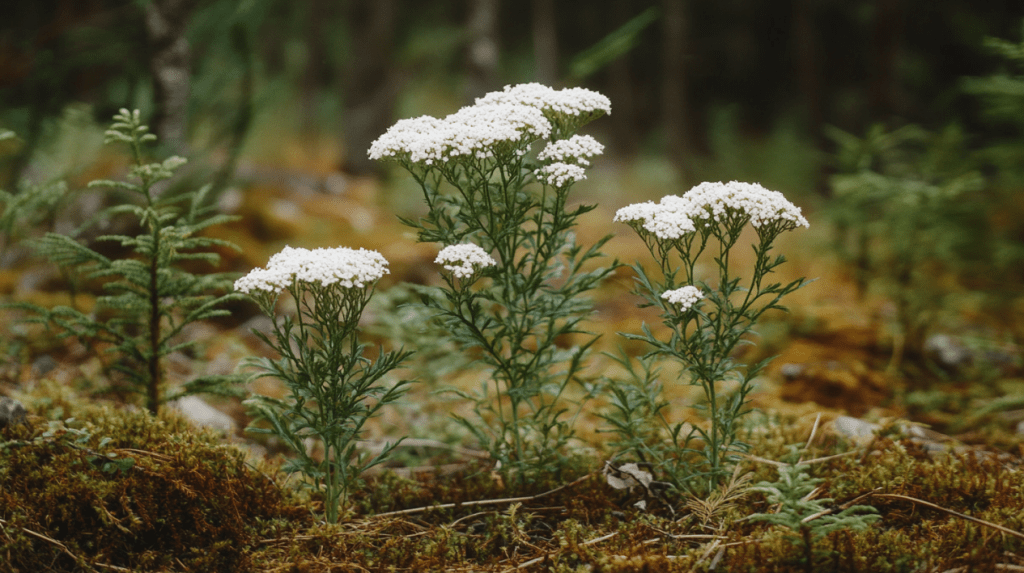
西洋蓍草 (yarrow/Achillea millefolium)
窗外的天色漸亮,森林在遠方靜靜地站著,準備迎接這一天。
Into the Forest Trail
They set out after breakfast, walking past the guesthouse and into the edge of the forest. The air still held a bit of last night’s coolness, but the sun was rising steadily, casting patches of light between the trees.
Tomas led the way. “This trail is not officially marked, but we’ve used it during fieldwork. You’ll notice the pine trees are taller here — these are mostly Scots pine, at least seventy to eighty years old.”
Renata slowed down near a patch of open mossy ground. She crouched to examine a cluster of small green stems.
“Wild thyme,” she said, taking out a small clip-on microphone and adjusting her phone. “This smells amazing, and it grows low and strong. Perfect for drying or infusing in oil.”
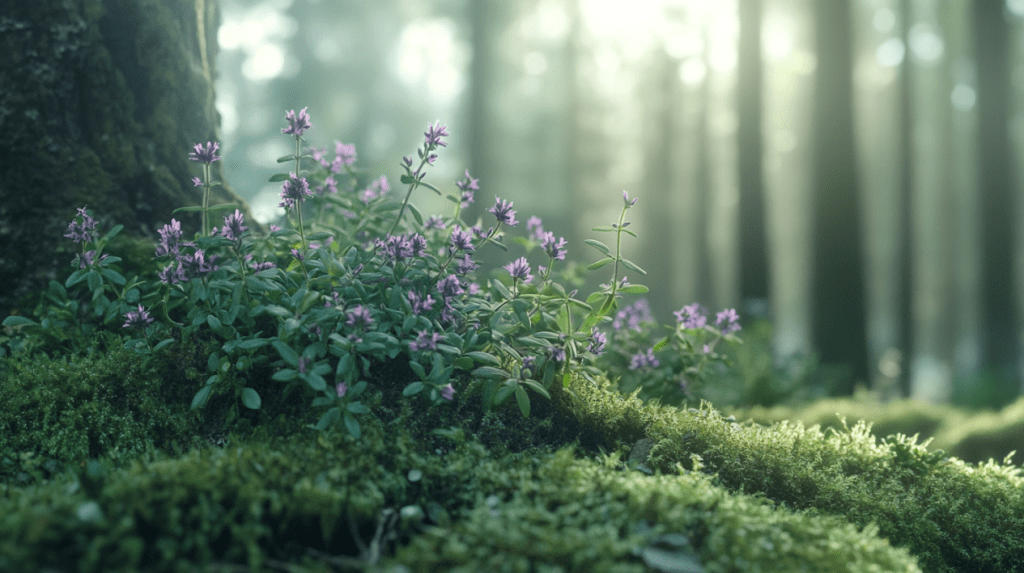
Wild thyme
Ben stayed a few steps behind, capturing the way sunlight hit the moss and the way Renata moved with practiced ease through the undergrowth.
“Filming already?” Julia asked, amused.
Renata smiled but didn’t look up. “Always. I promised my viewers a spring series on forest herbs. Today’s perfect.”
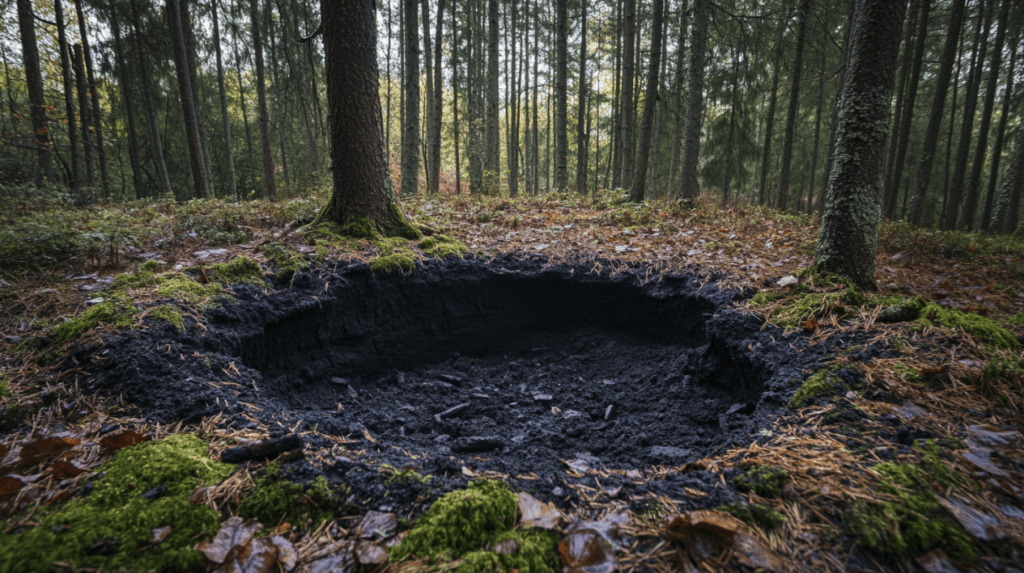
Tomas pointed ahead. “See that shallow depression? That used to be a charcoal pit. In the 1800s, this whole area was used for small-scale charcoal burning. If you dig a little, you might still find blackened soil.”
Emma took out a notebook. “So this forest hasn’t always been ‘natural’?”
“No,” Tomas said. “What we see now is regrowth. Nature returned, but it remembers what happened here.”
The trail was quiet, just the sound of shoes brushing leaves and the distant knock of a woodpecker. They moved slowly, each in their own rhythm — collecting, observing, recording, and sometimes simply looking up through the branches.
進入森林小徑
吃完早餐後,他們出發了,從民宿旁的小徑走進森林邊緣。空氣中還殘留著昨夜的涼意,但太陽已經慢慢升高,陽光從樹隙間灑落,照出斑駁的光影。
托馬斯走在前頭。「這條小徑雖然沒有正式標記,但我們做田野調查時常常走。你們會發現這一帶的松樹比較高,大多是蘇格蘭松,至少有七、八十年的樹齡。」
雷娜塔在一處長滿青苔的開闊地放慢了腳步。她蹲下來觀察一叢矮矮的小綠葉。「野百里香,」她說,一邊拿出小型夾式麥克風,把手機調整好。「這味道很好,長得低又緊實,適合曬乾或泡油。」
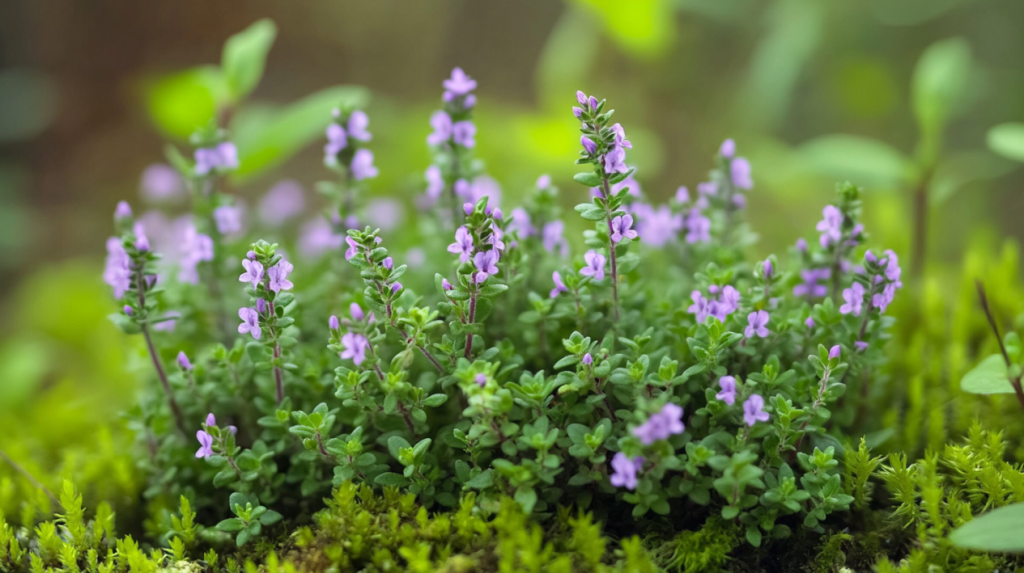
野百里香
Ben走在她後面幾步,鏡頭捕捉著陽光落在青苔上的角度,以及雷娜塔熟練地在地面穿梭的身影。
茱莉亞笑著問:「你已經開始拍了?」
雷娜塔沒抬頭,只是笑了笑:「當然。我跟觀眾說過要做春季森林香草系列,今天正好。」
托馬斯指向前方:「看到那邊那個淺淺的凹地嗎?那以前是炭窯。十九世紀時,這一帶曾經是小規模燒炭的區域。現在土壤裡還能挖出一些黑色的炭屑。」
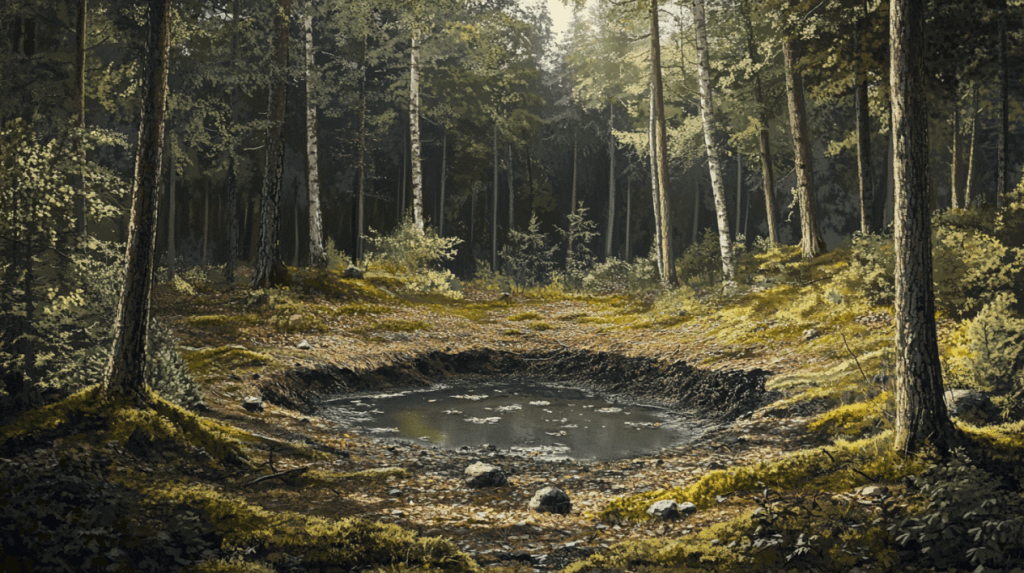
艾瑪拿出筆記本:「所以這片森林,其實不是一直都『自然』的?」
「不是,」托馬斯回答。「我們現在看到的是再生林。自然回來了,但這片地還記得人類曾經在這裡做過什麼。」
小徑上很安靜,只有鞋底輕踏落葉的聲音,遠處偶爾傳來啄木鳥的敲擊。他們走得不急,每個人都有自己的節奏——有人採集、有人觀察、有人拍攝,也有人只是靜靜地抬頭看著樹影之間的天空。
Lunch Talk
By noon, they were back at the guesthouse. The forest trail had left them pleasantly tired, and the cool spring air had sharpened everyone’s appetite.
Lunch was simple but filling: beet soup with potatoes, a warm cabbage bake, and slices of dense dark rye bread. They sat at the long wooden table in the dining room, light pouring in through the windows, and steam rising gently from their bowls.
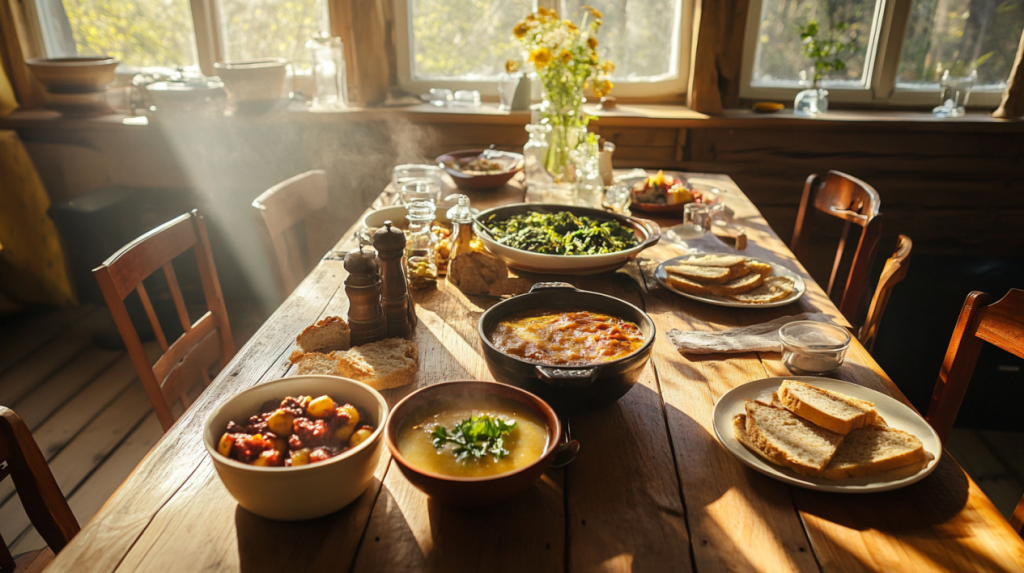
Julia stirred her soup. “I wonder what this place looks like in winter.”
Tomas leaned back slightly. “Very different. The forest gets quieter, of course — the frogs disappear, the birds thin out. But the snow transforms everything. When it settles on the pine branches, the whole place becomes almost geometric. Clean lines. White and dark green.”
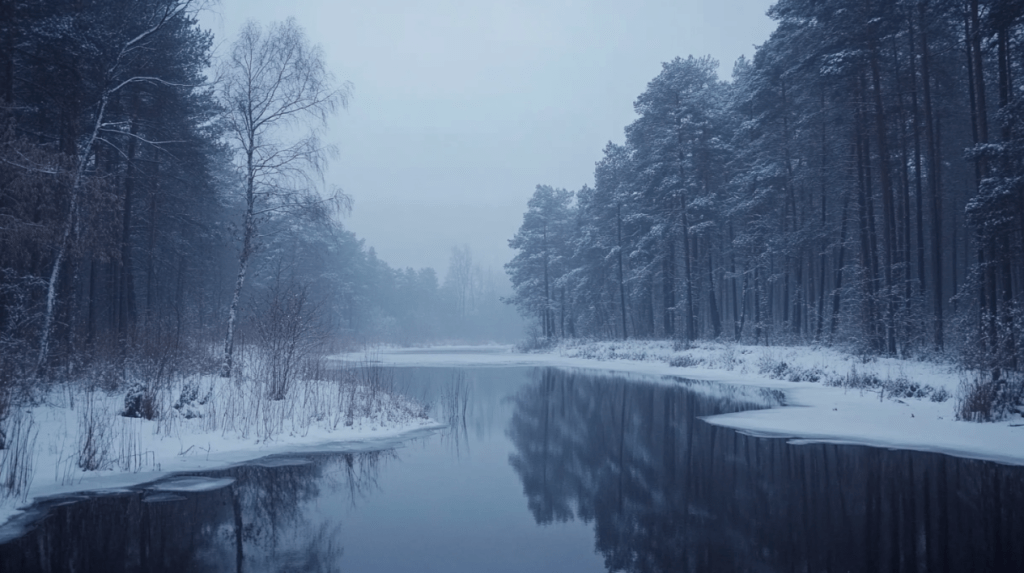
Renata asked, “Do people still go hiking here in the snow?”
“Some do,” Tomas said. “Mostly locals, and a few visitors looking for silence. It’s not commercial, so there are no ski resorts here. Just trails and stillness.”
Ben looked out the window. “So you don’t see wildlife much in winter?”
“You still can,” Tomas said. “If you’re lucky — fox tracks, maybe deer. And you can hear owls more clearly. The snow carries sound differently.”
Emma glanced at the ceiling. “I’d imagine staying here in a snowstorm would be intense.”
Tomas smiled. “It is. Especially if the power goes out.”
They all laughed quietly. Outside, the afternoon light had turned golden, and the pine forest stood still beyond the window, as if remembering what they had just described.
午餐對話
中午時,他們回到民宿。走完森林步道後,大家都有些微微疲憊,春天的涼爽空氣也讓人更覺得餓。
午餐簡單但有份量:甜菜馬鈴薯湯、焗烤高麗菜,搭配幾片厚實的黑麥麵包。他們圍坐在餐廳那張長長的木桌旁,窗外灑進自然光,湯碗冒著溫熱的蒸氣。
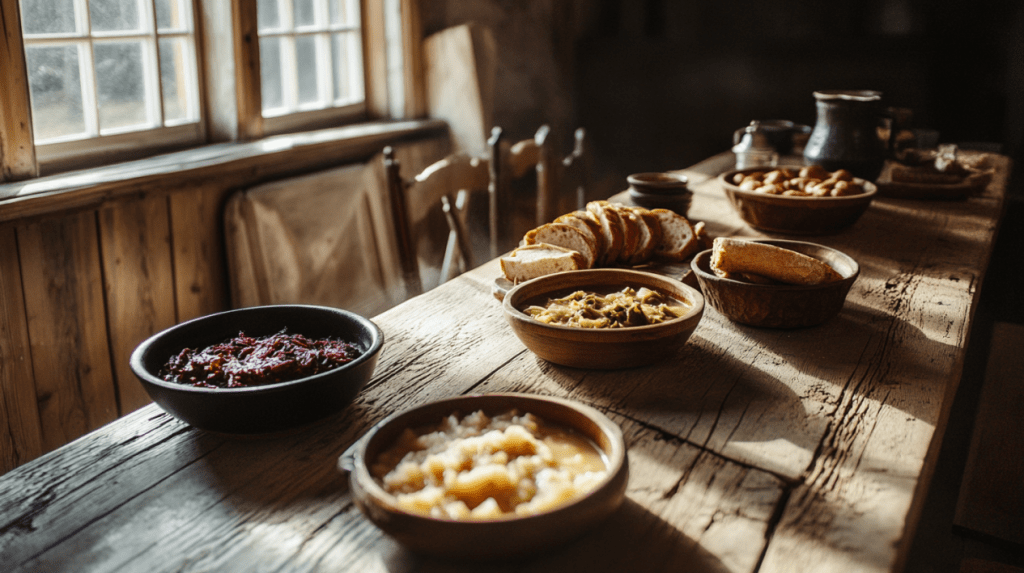
茱莉亞一邊攪著湯,一邊說:「我很好奇,這裡冬天會是什麼樣子?」
托馬斯微微往後靠了靠。「完全不同了。森林會安靜很多——青蛙不見了,鳥也少了。但雪會改變一切。落在松樹枝上的雪,會讓整片森林看起來像是被畫過一樣,線條清晰,顏色只有白與墨綠。」
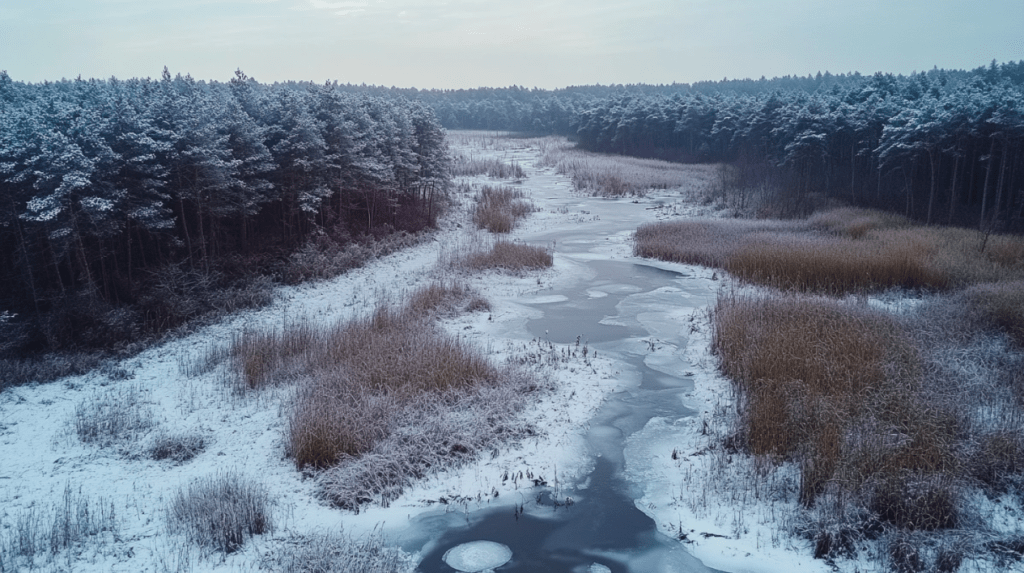
雷娜塔問:「下雪天還有人來這裡健行嗎?」
「有,」托馬斯點頭說。「大多是當地人,還有少數專門來尋求寧靜的旅客。這裡不商業化,沒有滑雪場,只有小徑和寂靜。」
Ben看著窗外說:「那冬天是不是幾乎看不到野生動物?」
「偶爾還是能看到,」托馬斯回答。「如果運氣好,會看到狐狸的腳印,或是鹿。有時候能聽到貓頭鷹叫。雪會改變聲音的傳播,反而聽得更清楚。」
艾瑪抬頭看了一眼天花板,說:「在這種木屋裡遇到雪暴感覺應該會很有畫面感。」
托馬斯笑了一下:「會的,尤其是停電的時候。」
大家輕輕笑了起來。窗外,午後的陽光泛著金色,松林靜靜地站著,彷彿也在回應他們剛剛的描述。
Visit Zervynos
In the early afternoon, they got back into the car and headed out toward Zervynos, a small village tucked deep within the forest. The road narrowed into a gravel path, winding through tall pines and small clearings. It took less than half an hour to arrive.

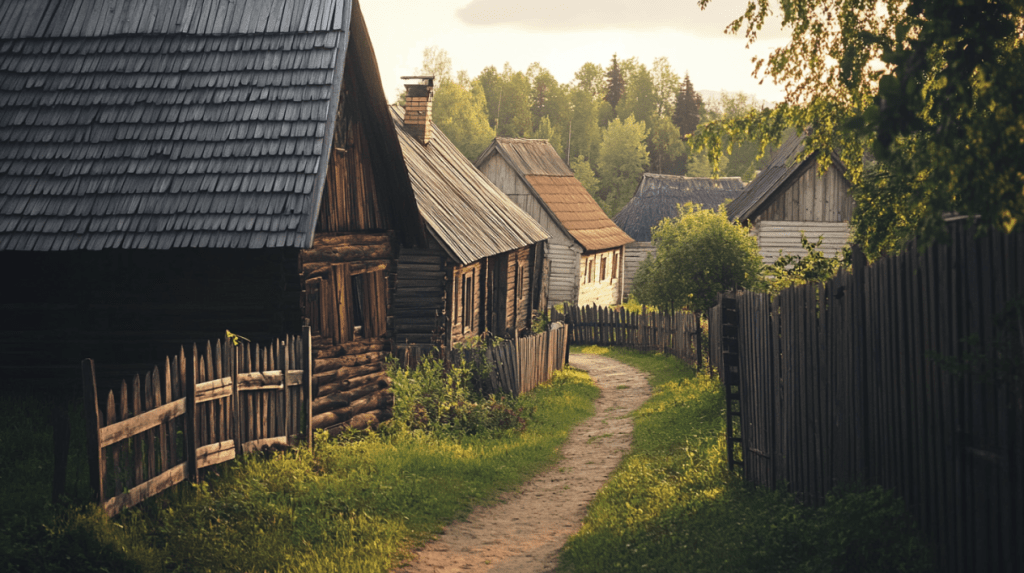
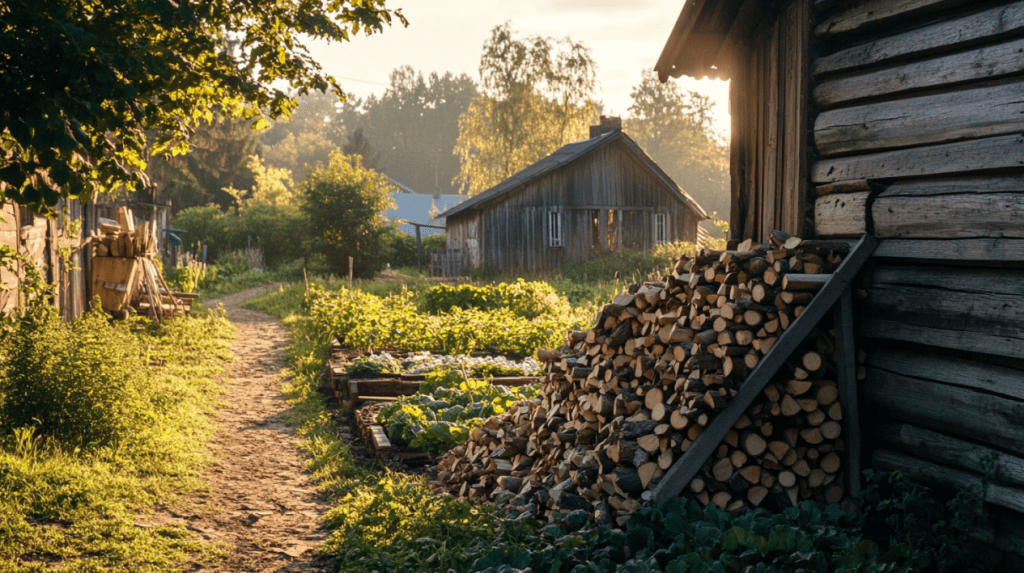
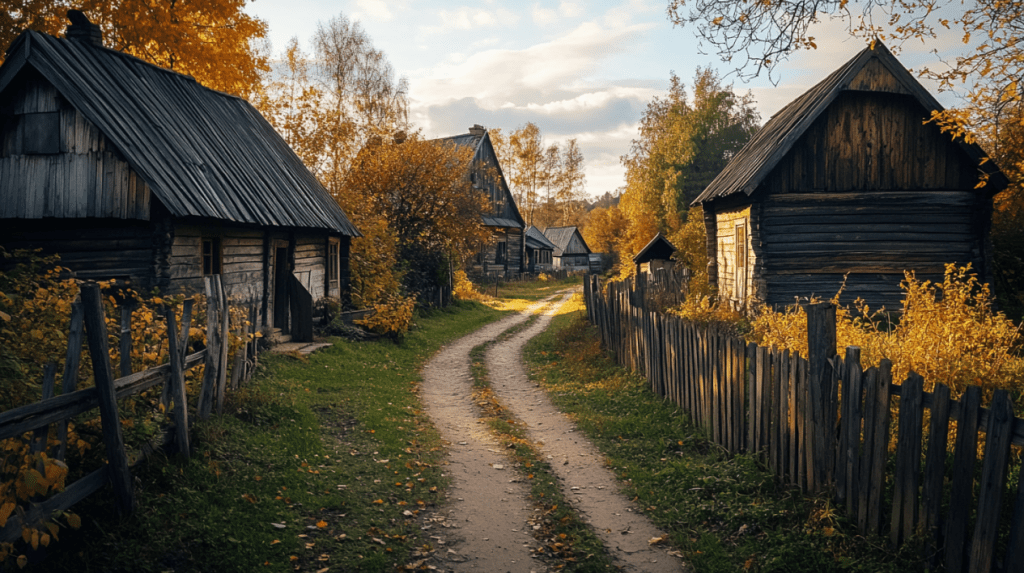
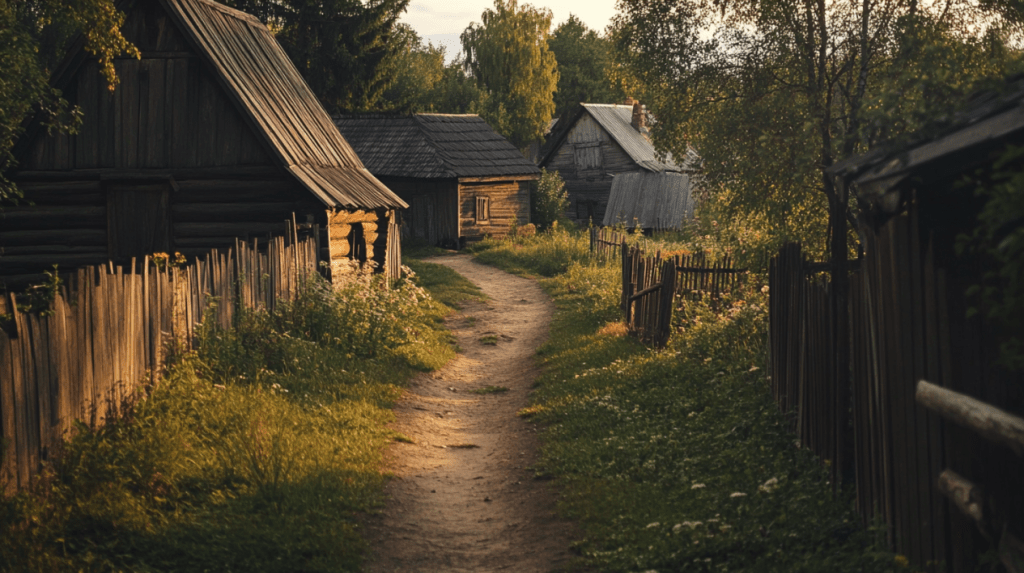
Zervynos was quiet. Wooden houses with steep roofs stood behind low fences, some decorated with weathered carvings or old tools hung along the walls. There were no shops in sight — just smoke rising from a few chimneys and a dog sleeping under a tree.
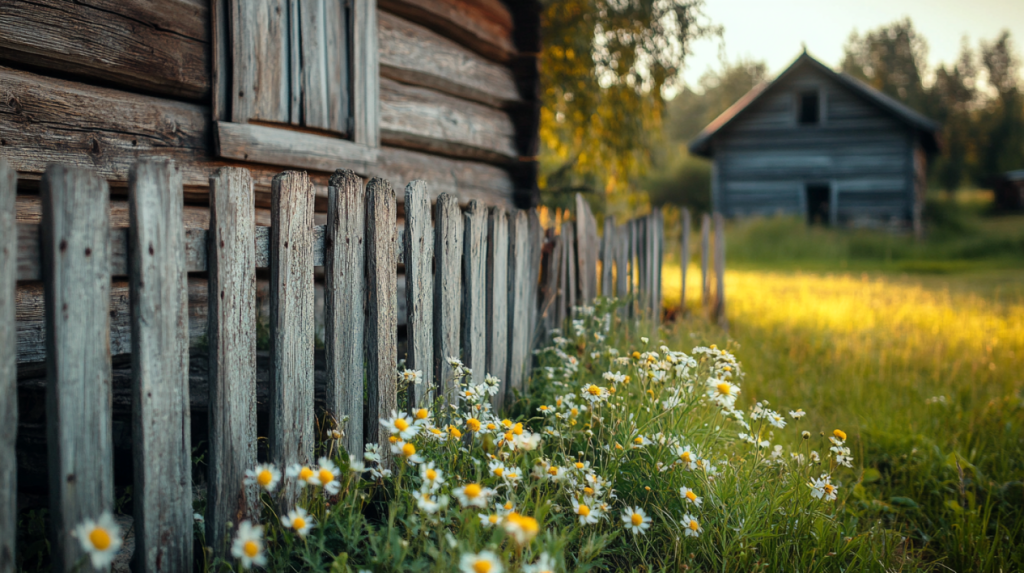
“This place is considered one of the best-preserved ethnographic villages in Lithuania,” Tomas explained. “People still live here, but the lifestyle is modest. It’s surrounded by the forest — literally — and that shaped everything, from architecture to food.”
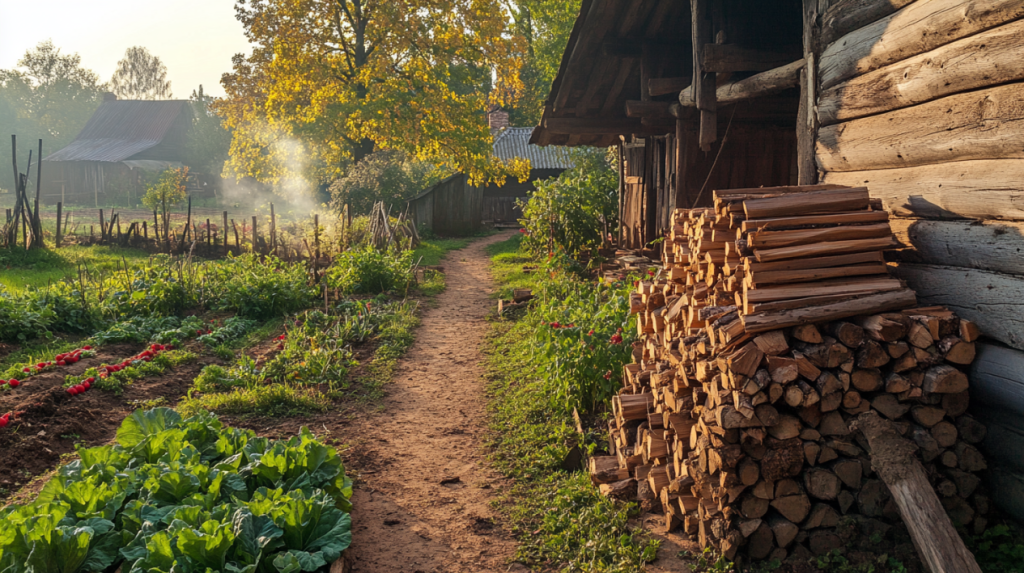
They walked slowly down the main path. Renata turned on her camera and began filming short clips, speaking softly in Lithuanian about the buildings, the garden fences, the stacks of chopped wood by the doorways.
A man passed by on a bicycle and nodded politely. Julia looked at the old window frames and murmured, “Even the glass looks handmade.”
Emma added, “It’s quiet, but not abandoned. Just… real.”
Tomas pointed to a low wooden structure near the stream. “That used to be a smokehouse. People here smoked fish from the Merkys River. They still do — some of them.”
Near the edge of the village, an older woman was tending to herbs drying in the sun. Renata gently asked if she could film her hands working. The woman nodded, saying, “As long as you show how things used to be done, not just how they look.”
前往 Zervynos 村落
下午早些時候,他們再次上車,前往 Zervynos ——一座深藏在森林中的小村落。道路逐漸變窄,變成碎石小路,兩旁是高大的松樹與間或出現的小空地。開不到半小時就到了。
Zervynos 很安靜。木造房子一棟棟排列在矮籬笆後,有些屋外牆上掛著舊工具,或保留著風化的木雕裝飾。看不到什麼商店,只有幾戶冒煙的煙囪與一隻狗蜷睡在樹下。
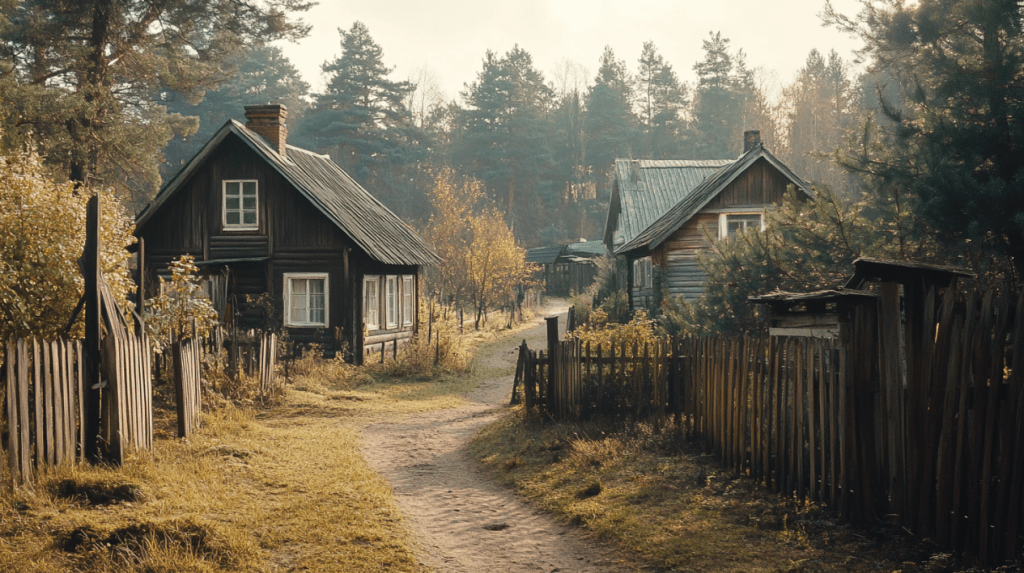
「這是立陶宛保存得最完整的民族志村落之一,」托馬斯一邊走一邊說。「還是有人住,但生活方式很樸實。整個村落都被森林包圍,這種地理環境影響了他們的建築、食物、生活方式。」
他們沿著主要小路慢慢走著。雷娜塔拿出相機,開啟錄影,輕聲用立陶宛語介紹眼前的房屋、木籬笆、門邊疊好的劈柴。
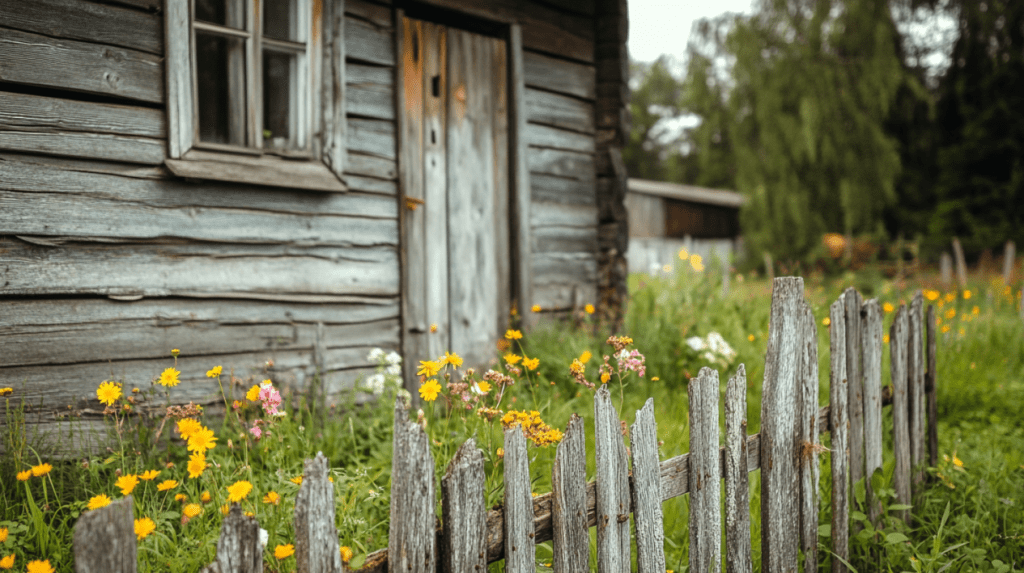
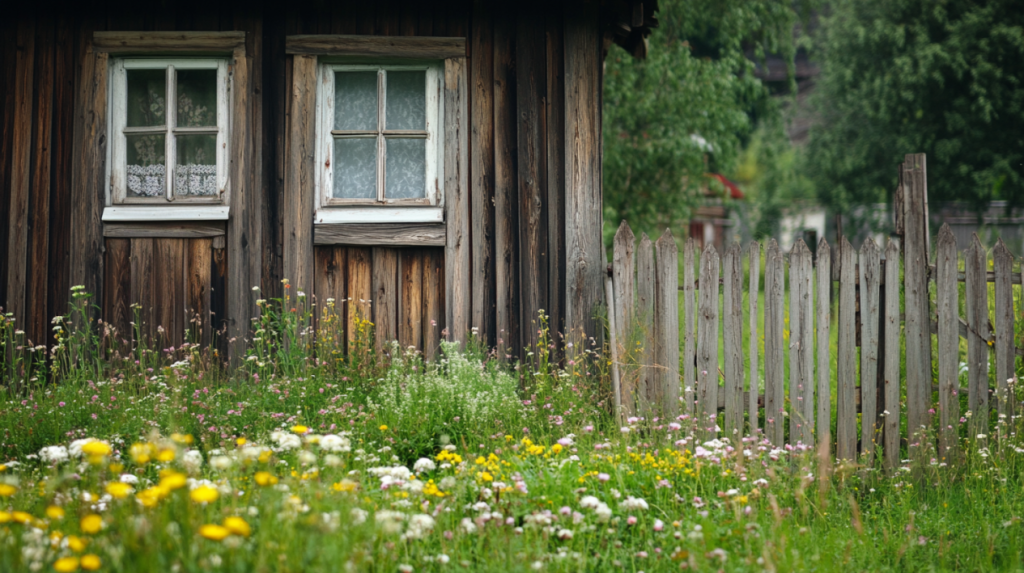
一位老人騎著腳踏車經過,點點頭。茱莉亞看著窗框小聲說:「連窗玻璃看起來都是手工吹的。」
艾瑪補了一句:「這裡很安靜,但不是荒廢……是真的有人生活的地方。」
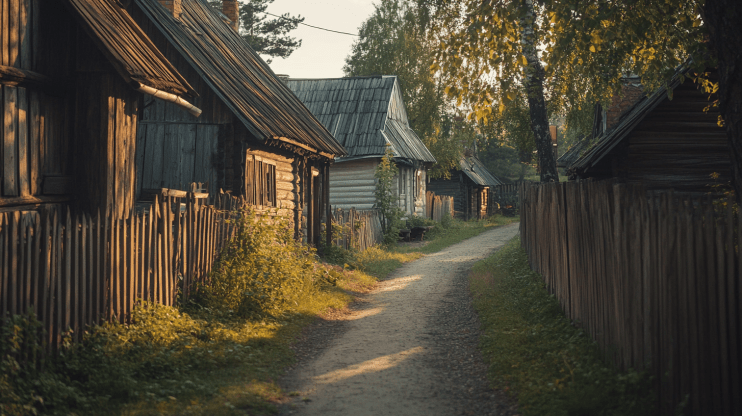
托馬斯指著溪邊的一座矮木屋:「那以前是煙燻小屋。這裡的人會用來燻 Merkys 河裡的魚。有些人現在還在做。」
村子邊緣,一位老太太正在曬藥草。雷娜塔輕聲問她能否拍攝她曬草藥的雙手。那位女士點點頭說:「只要你不是只拍好看的,而是要讓人知道我們以前是怎麼做的,就行。」
Invited Inside for Tea
Near the edge of the village, an older woman stood by a wooden bench, tying bundles of dried herbs with linen string. Renata slowed down and greeted her politely in Lithuanian. After a brief exchange, the woman gestured toward her house.
“Come in for tea, if you have time,” she said.
They hesitated for a second, then smiled. “We’d love to,” Tomas replied.
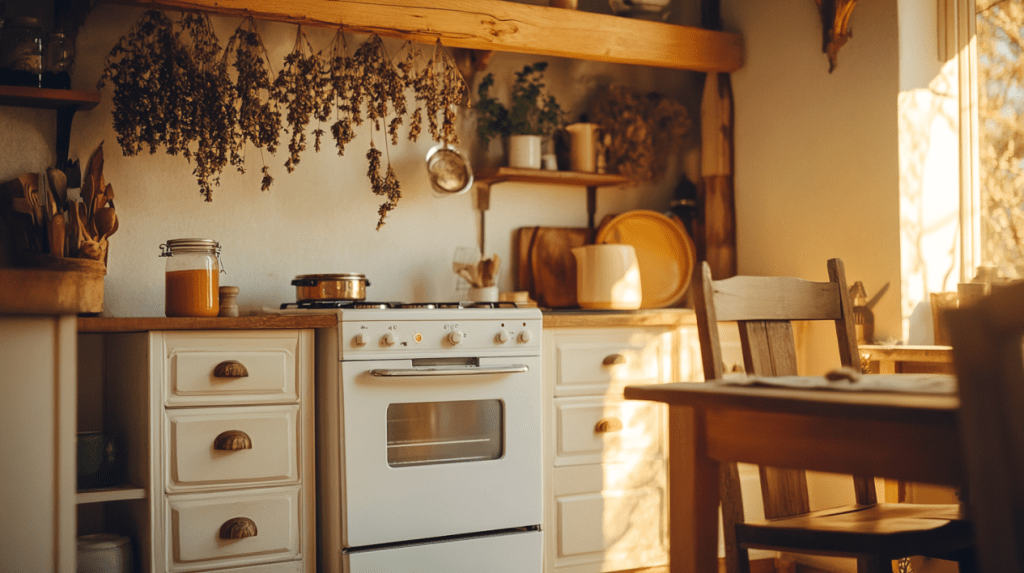
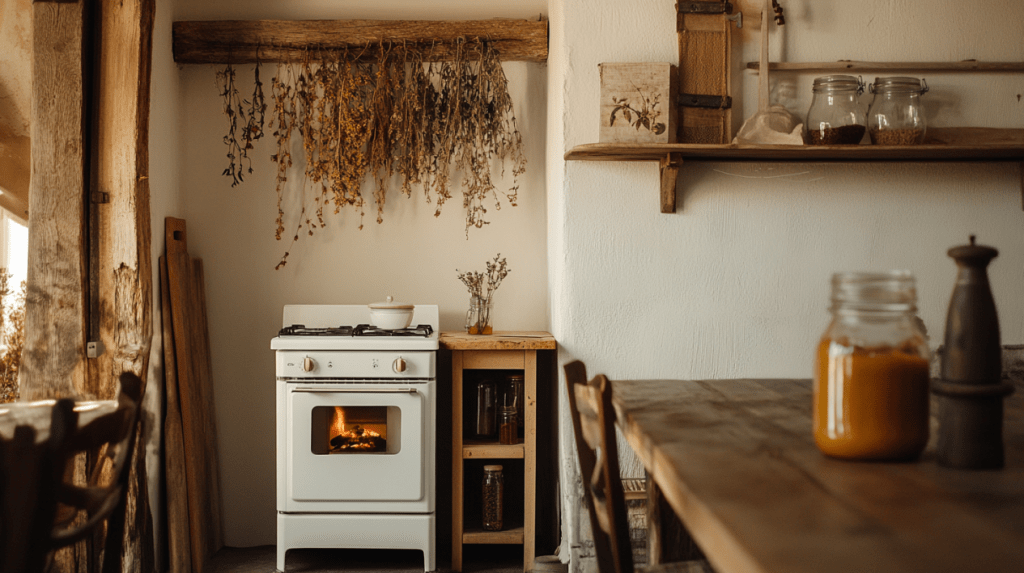
Inside, the wooden house was warm and quiet. A white ceramic stove stood in the corner, faintly warm to the touch. Dried herbs hung from a beam, and a jar of honey sat open on the table. The woman poured hot water into a clay teapot filled with yarrow, wild thyme, and a few slices of dried apple.
“It’s what we drink all winter,” she said. “No sugar needed.”
They sat down at a round table. The tea smelled earthy and slightly sweet.
Ben looked at the stove. “You still use wood to heat the house?”
“Of course,” she said. “It holds heat through the night. You just have to know when to feed it.”
Emma glanced around. “Do you have internet here?”
The woman smiled. “My grandson fixed it. It works most days. We don’t stream things, just talk or read the news.”
Julia asked, “Do people still watch TV here?”
“Sometimes. But when the snow comes, you sleep more. The day ends earlier.”
Tomas added gently, “And do many young people return?”
“Some do. Not many. But a few come back to take care of their parents. Or they come for the quiet.”
She looked at Renata. “You’re filming, aren’t you? That’s good. Just don’t forget — this life isn’t about what it looks like. It’s about how it feels to stay.”
被邀請進屋喝茶
在村子的邊緣,一位老婦人坐在木頭長椅旁,正在用麻繩綁起曬乾的藥草。雷娜塔放慢腳步,用立陶宛語和她打了聲招呼。簡單聊了幾句後,老婦人朝屋子一指。
「有空的話,進來喝杯茶吧。」她說。
他們停頓了一下,然後微笑。托馬斯回答:「那我們很榮幸。」
木屋裡安靜而溫暖。角落是一座白色陶製的柴火爐,手摸上去還有餘溫。橫梁上掛著乾草藥,桌上放著一罐已開封的蜂蜜。老婦人往陶壺中倒入熱水,裡頭是西洋蓍草、野百里香,還有幾片曬乾的蘋果。
「我們整個冬天都喝這個,」她說。「不用糖,自然就有味道。」
他們圍坐在圓桌邊,茶香有點土氣又帶點微甜。
Ben看了一眼火爐:「妳們還是用木柴取暖嗎?」
「當然啊,」她點頭。「這種爐子整晚都保暖,只要會掌握補柴的時機就行。」
艾瑪掃了一眼屋內:「這裡有網路嗎?」
老婦人笑了:「我孫子幫我裝的。大多數時間都能用。我們不看影片,只是用來看看新聞,和人說說話。」
茱莉亞問:「這裡還會看電視嗎?」
「有時會。但冬天一到,人會比較早休息。天黑得早,日子短,人就慢下來。」
托馬斯補充:「那年輕人呢?還有人願意回來嗎?」
「有一些。不多。但有的會為了照顧父母回來,也有的是想找安靜的地方住。」
她轉向雷娜塔,眼睛帶著一種知道的溫柔:「妳在拍影片對吧?很好。只是別忘了——這種生活,不是拍出來的樣子,而是住下來的感覺。」
Talking on the Way Back
The sun was beginning to lower behind the treetops as they walked back toward the car. The gravel road glowed faintly in the evening light, and the air had cooled just enough to remind them the day was ending.
No one spoke for a while. The silence wasn’t awkward — it felt like the kind that settles after something meaningful.
Emma was the first to break it. “What she said… about how the life here isn’t about what it looks like, but how it feels. That stuck with me.”
Julia nodded. “I kept thinking how everything here is slow, but not outdated. Just… deliberate. They choose how to live.”
Ben added, “And quiet doesn’t mean empty. She knew exactly what mattered to her.”
Renata held her camera loosely in one hand. “I keep filming, but now I’m wondering — am I just showing what things look like, or am I saying something real?”
Tomas looked ahead toward the forest. “That’s always the hard part. The outside is easy to capture. What stays with you… is harder.”
The trees swayed gently in the evening breeze. Somewhere behind them, the smoke from a chimney curled into the fading sky.
回程途中對話
太陽慢慢沉到樹梢後,他們走回停車的地方。碎石路在傍晚的光線中泛著淡淡的光,空氣也微微變涼,提醒著他們這一天將近尾聲。
一開始沒有人說話。這沉默不是尷尬,而是那種在經歷某些重要交流後自然產生的安靜。
艾瑪先開口:「她說的那句——生活不是看起來的樣子,而是住下來的感覺。我一直在想這句話。」
茱莉亞點點頭:「整個村子節奏很慢,但一點也不落伍。只是……很清楚自己要過什麼樣的生活。」
Ben接著說:「而且安靜不代表空白。她很清楚自己在意什麼。」
雷娜塔一手拿著相機,輕輕晃了晃。「我一直拍,但現在開始在想,我拍的只是樣子,還是也有傳達到一點什麼?」
托馬斯望著前方的森林說:「這一直是最難的。外表很好記錄,可是會留在你心裡的東西……比較難。」
風輕輕吹過樹稍,林邊晃動著淺淺的光影。他們身後,某戶人家的煙囪還冒著煙,捲進逐漸暗下來的天空。
Dinner at the Guest House
By the time they returned to the guesthouse, the forest was already sinking into dusk.
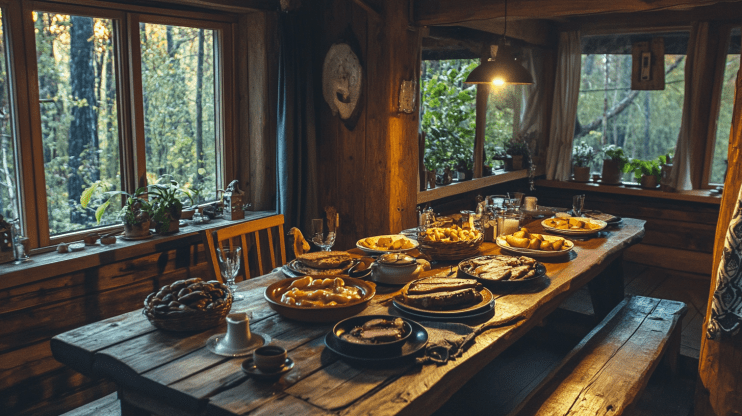
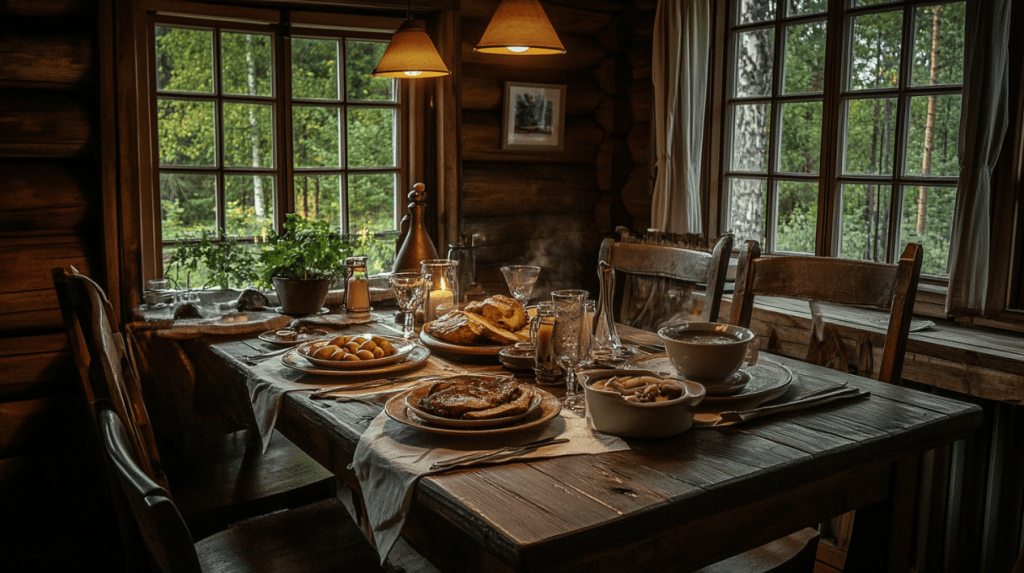
A warm meal was waiting — mushroom soup, boiled potatoes, slices of roasted pork, and dense dark rye bread.
The dining room smelled of wood smoke and herbs. They gathered around the wooden table, steam rising from their plates.
Ben cut into the pork and smiled. “I’m glad there’s some meat. I wasn’t sure if soup and potatoes would be enough after today."
He paused, then asked, “Is this from hunting?"
The guesthouse owner, who was setting down a pot of tea, laughed lightly. “No, no. This is from the market in Varėna. Locally raised, but not hunted. Wild game is special — it’s not something you get every day."
Tomas added, “Hunting is a tradition here, but most meals are still made with farm meat. It’s steadier."
Emma tasted the soup and nodded. “It’s simpler than city meals. Less seasoning, but the flavors are real."
Renata said, “Everything feels heavier, but in a good way. Like it’s meant to last through cold days."
As they ate, Julia glanced out the window at the darkening trees. “We’re quite close to the border, right?"
Tomas wiped his hands and nodded. “Yes. The Belarusian border is not far. This area has always been a place between worlds."
Ben asked, “Do many still speak Belarusian?"
“Among the older generation, yes," Tomas said. “Not officially, but in songs, family talk, everyday habits."
Renata leaned on the table. “And the food? It feels a little different too."
Tomas smiled. “Pickled vegetables, mushroom dishes, dumplings — a lot of that comes from cross-border traditions."
Emma stirred her tea slowly. “Borders on a map are clean, but real life is always messy."
Tomas looked around the wooden room, the heavy beams above them. “Here, the border lives in habits more than in lines."
Outside, night had fallen completely. Inside, the meal’s warmth and the quiet rhythm of the conversation wrapped around them like another layer of shelter.
民宿的晚餐
回到民宿時,森林已經沉浸在暮色中。
一頓熱騰騰的晚餐擺在桌上——蘑菇湯、水煮馬鈴薯、烤豬肉片,以及厚實的黑麥麵包。
餐廳裡瀰漫著木柴煙味和草本植物的香氣。他們圍坐在木桌旁,盤中蒸氣緩緩升起。
Ben切了一塊豬肉,笑著說:「有肉真好。我還以為今天只有湯和馬鈴薯,應該吃不飽了。」
他頓了一下,接著問:「這是打獵來的肉嗎?」
正在端茶壺的民宿主人輕輕笑了笑:「不是啦,這是從Varėna市場買的,本地飼養的豬肉,不是打獵的。打獵來的野味可不是每天都有喔。」
托馬斯補充:「這裡有狩獵傳統,但平常吃的還是農場的肉,畢竟比較穩定。」
艾瑪嚐了一口湯,點點頭說:「跟城市裡吃的不太一樣。調味很淡,但味道很真。」
雷娜塔說:「整體感覺比較重,但那種重量感,反而讓人覺得很踏實,好像真能撐過寒冬。」
吃著吃著,茱莉亞看向窗外愈來愈黑的森林,小聲問道:「這裡離邊境很近吧?」
托馬斯擦了擦手,點點頭說:「對,離白俄羅斯邊界不遠。這一帶的人一直生活在兩個文化世界的交界上。」
Ben好奇地問:「現在還有人講白俄羅斯語嗎?」
「老一輩的人會,」托馬斯回答。「在家裡,在唱歌時,在日常裡自然地用,不是官方語言,但深深地融在生活裡。」
雷娜塔靠在桌上說:「難怪這裡連食物都感覺有點不太一樣。」
托馬斯笑了笑:「像醃製蔬菜、蘑菇料理、某些餃子,就是融合了邊界那一邊的傳統。」
艾瑪慢慢攪著杯中的茶說:「地圖上的邊界劃得那麼清楚,但現實生活總是混合交融在一起。」
托馬斯抬頭看了看屋頂上粗重的木樑,輕聲說:「在這裡,邊界活在人們的習慣裡,而不是紙上的線條。」
外面的夜色已經深沉,屋內的茶香與餐後的餘溫靜靜包圍著他們的談話。

 Virtual Travel | 虛擬旅行沉浸式英語學習
回覆給The Virtual World Explorer 取消回覆