Arrival at the Campus

Bergen woke that morning to a soft blend of sea air and the distant cry of gulls circling the harbor.
The city stretched between steep green hills and the water, its old wooden wharf houses still standing as a reminder of its Hanseatic past.
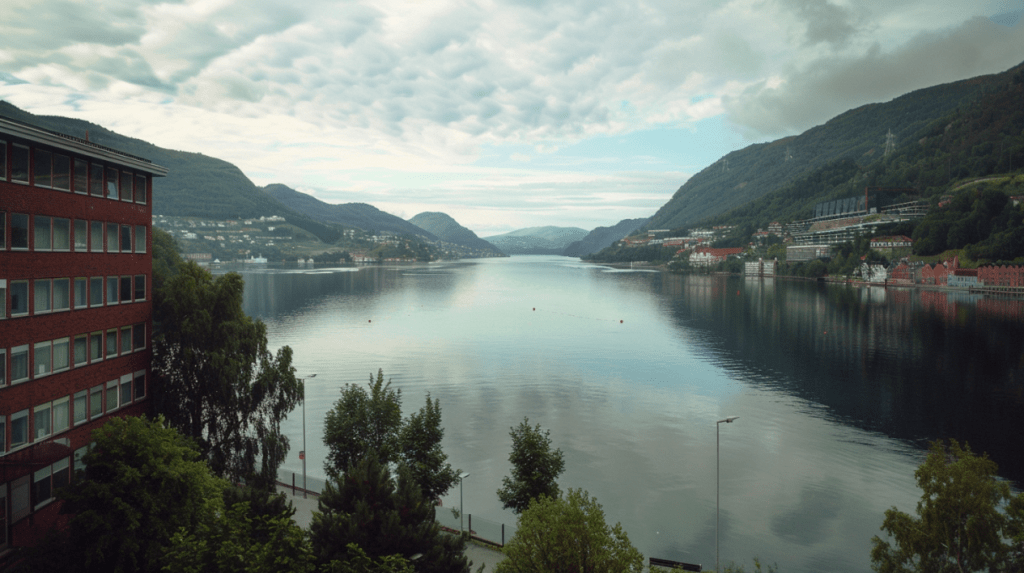
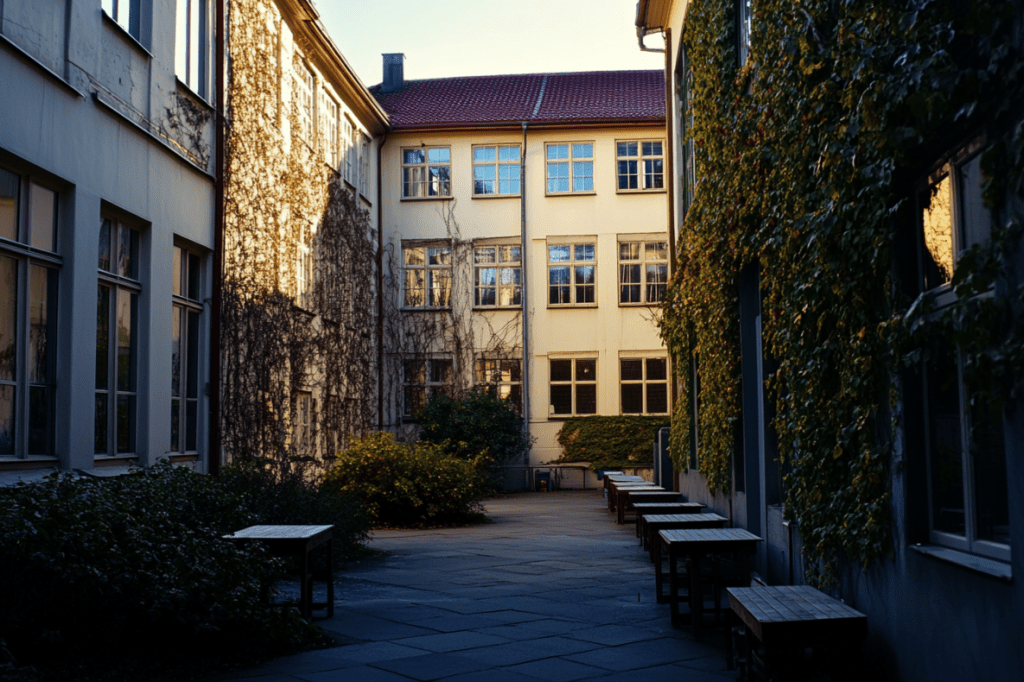
Just beyond the city center, the University of Bergen rose with its pale façades and quiet courtyards, overlooking a view that seemed to marry mountains and sea in equal measure.
Banners for the international conference fluttered in the coastal breeze, announcing sessions on geology, hydrology, historical studies, and statistical methods.
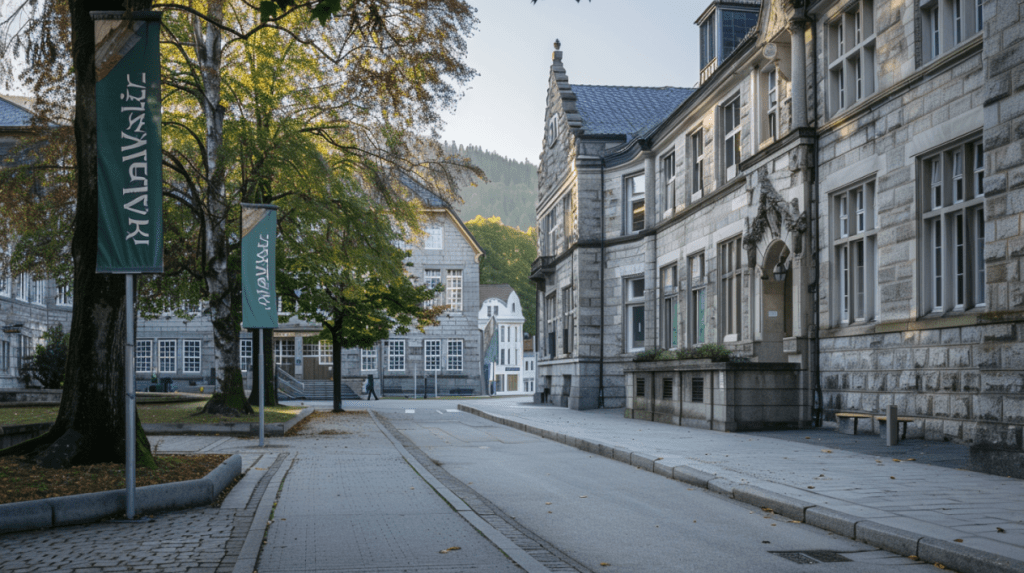
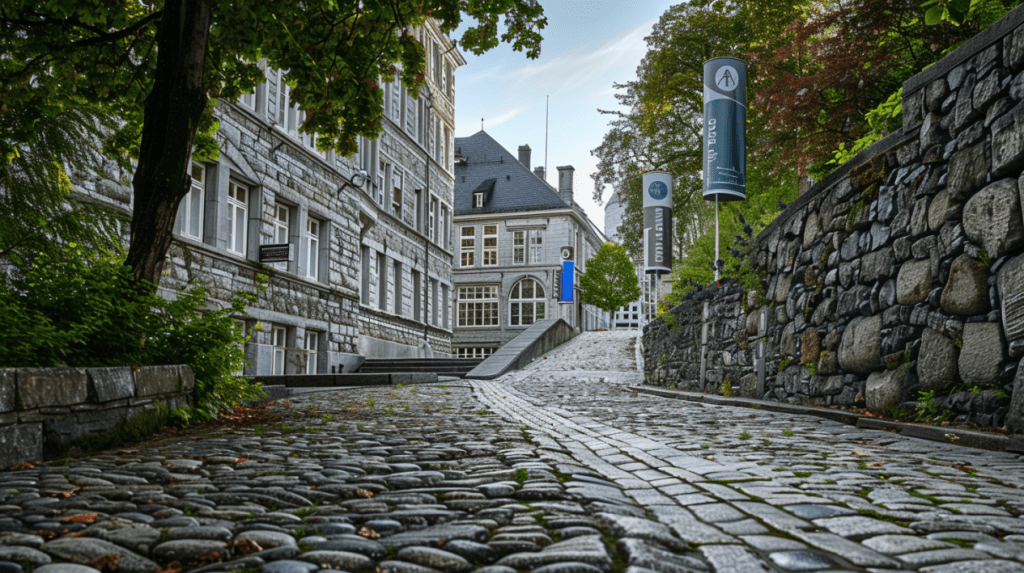
Julia adjusted the strap of her bag as she and Emma climbed the cobblestone path toward the main hall, both struck by the clarity of the northern light that made even the simplest buildings seem sculpted from the air.
抵達大學
卑爾根的清晨帶著港口的鹹味,遠方還傳來海鷗盤旋的鳴叫。
這座城市夾在翠綠的山丘與海灣之間,老舊的木造倉庫依舊矗立,訴說著漢薩同盟時期的歷史。
市中心之外,卑爾根大學靜靜佇立,淡色外牆與庭院映照著山海交會的景致。

國際研討會的布條在海風中飄動,宣告著涵蓋地質、水文、歷史研究與統計方法的各場議程。
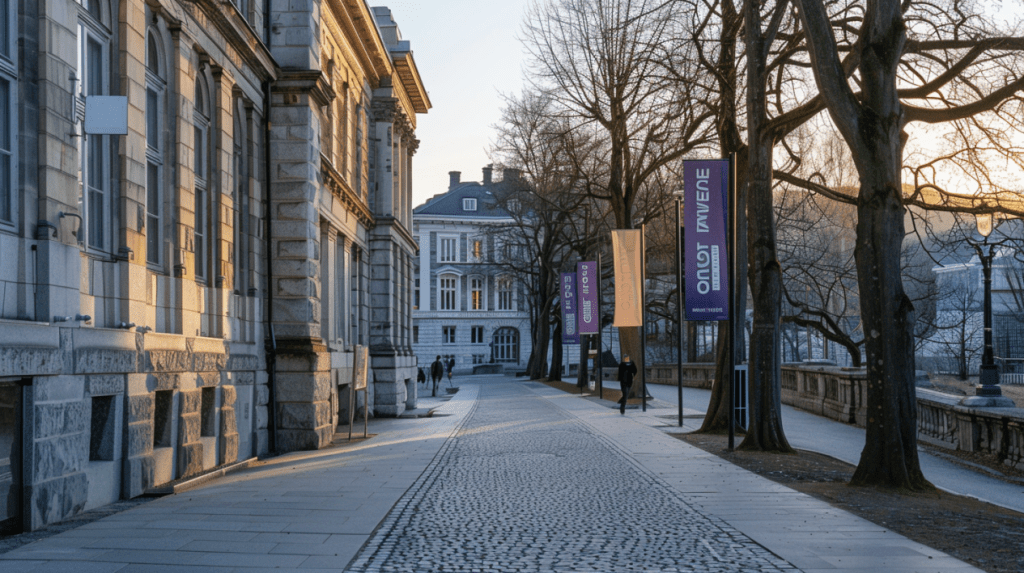
Julia 揹著包,與 Emma 一同沿著鵝卵石小徑走向大會堂,兩人都被這裡澄澈的北歐光線吸引,彷彿連最樸素的建築也被雕琢得格外鮮明。
Inside the Lecture Hall
The first talks focused on Norway’s fractured coastlines. A geologist explained how shifting rock layers and glacial erosion shaped the fjords, tracing timelines that stretched back thousands of years.
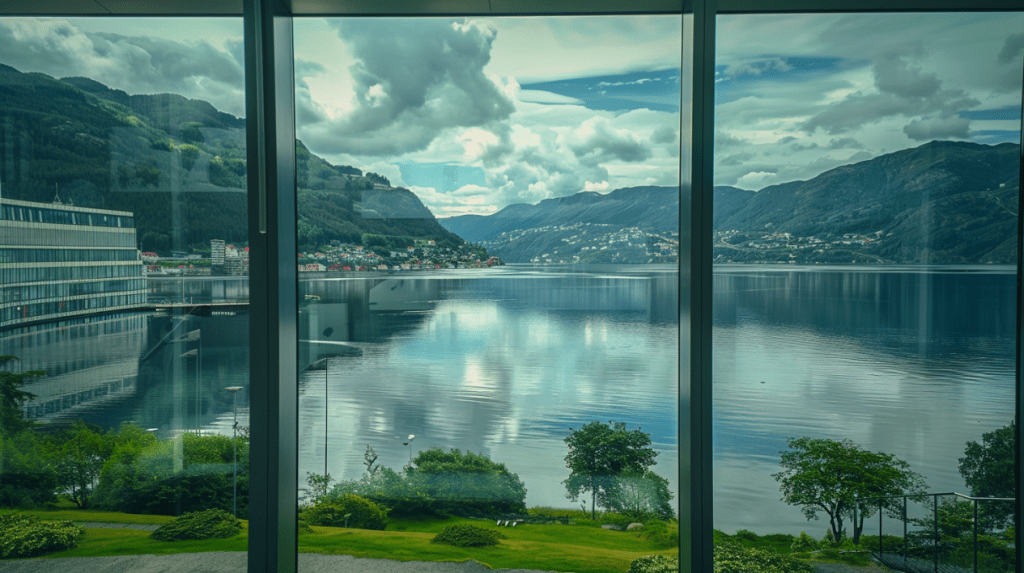
Julia listened closely, noting how the ridges echoed patterns she had studied before.
Then, unexpectedly, the next speaker came from hydrology, presenting river flow records and flood probabilities that connected rainfall, snowmelt, and the fragile geology beneath.
Julia leaned toward Emma. “See how they overlap? Rock layers tell us where rivers can carve their paths, but it’s the water that decides when and how violently it happens.”
Emma smiled, replying, “It’s not unlike history. The foundations are there, but chance events—wars, plagues—decide when things collapse.”
They both scribbled notes, Julia sketching ridges and waterlines, Emma comparing them to centuries where archives overflowed and others where silence remained. The sessions felt less like separate disciplines and more like pieces of one long conversation—about what survives, and what disappears.
在演講廳內
最初的演講聚焦於挪威斷裂的海岸線。一位地質學者解釋岩層的變動與冰川的侵蝕如何塑造峽灣,時間軸一拉就是上千年。
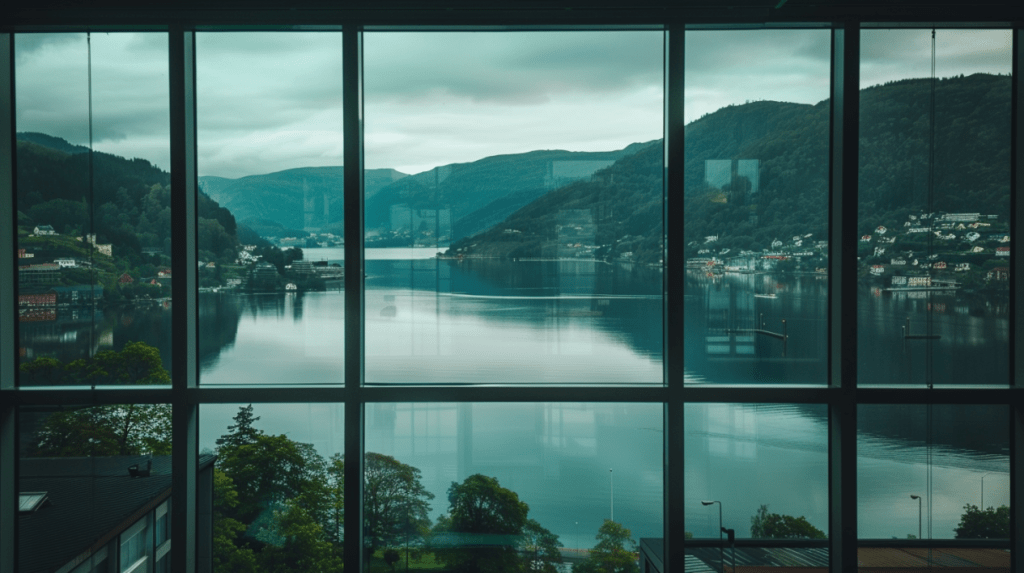
Julia 聚精會神,看到圖中的山脊與自己研究過的地形互相呼應。隨後,下一位講者來自水文領域,他展示了河川流量的紀錄與洪水發生的機率,說明降雨與融雪如何與脆弱的地層交織在一起。
Julia 靠近 Emma,小聲說:「你看,這兩個其實是重疊的。岩層告訴我們河流可能走的方向,但水決定了什麼時候,以及會多猛烈地改變它。」
Emma 笑著回應:「其實很像歷史。基礎架構一直在,但戰爭或瘟疫才決定何時崩塌。」
她們同時低頭做筆記——Julia 繪下山脊與水線,Emma 則記錄下檔案盛衰的比喻。有時紀錄像洪水般湧出,有時卻一片空白。這些演講不再只是分屬不同領域,而像是一場延續千年的對話:關於什麼能留存,什麼終將消逝。
Coffee Break Conversations
During the break, the lobby filled with the scent of strong black coffee and small pastries dusted with sugar.

Scholars gathered in clusters, some continuing debates, others simply enjoying the rare sunshine that streamed through the tall windows.
Julia and Emma found a quiet corner by a window where the fjord’s surface shimmered in the distance.

Emma sipped her coffee thoughtfully. “I liked what the hydrologist said about floods. It reminded me of how some centuries are just… washed away in history. No records, no voices left.”
Julia nodded. “Exactly. And geology has the same silence. Entire layers vanish, carried off by erosion. You never get the whole story, just fragments.”
Emma smiled. “So both our fields deal with absences—yours in stone, mine in paper.”
Julia laughed softly. “And both need us to guess what might have filled the gaps.”
Their conversation drifted easily between floods and archives, erosion and wars, until the bell rang for the next session. Both knew that these side exchanges—half academic, half personal—were as valuable as the formal talks themselves.
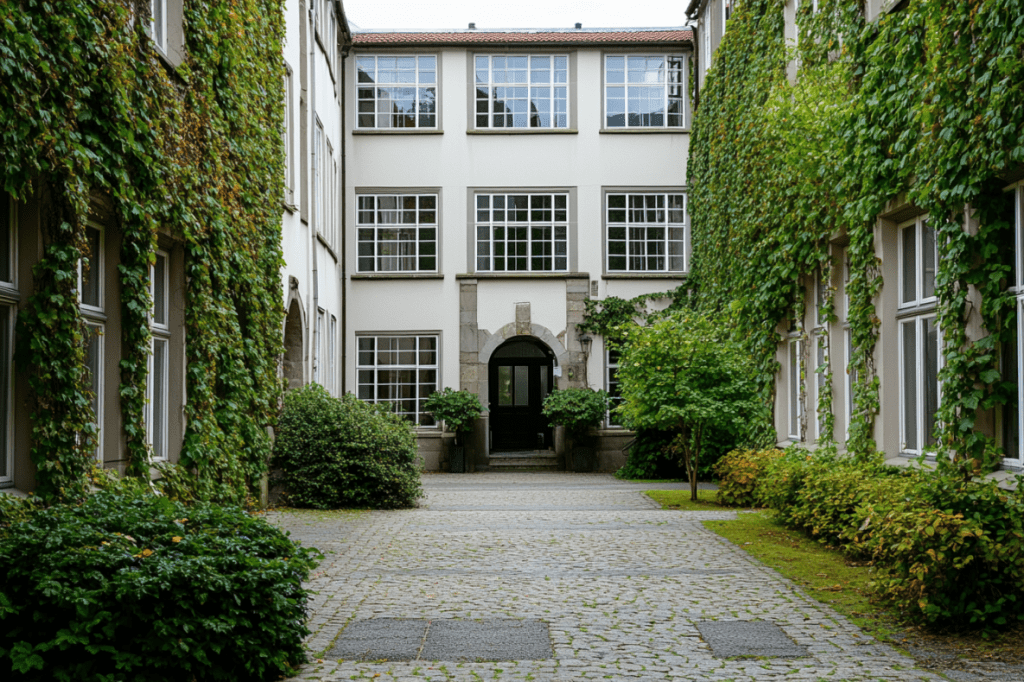
中場咖啡時間的對話
休息時間,大廳瀰漫著濃黑咖啡與撒著糖粉的糕點香氣。

學者們三三兩兩聚在一起,有人繼續討論,有人則趁著難得的陽光站在窗邊閒聊。

Julia 和 Emma 找到靠窗的角落,遠方峽灣的水面在光線下閃爍。
Emma 啜了一口咖啡,若有所思地說:「我很喜歡那位水文學者談洪水的比喻,讓我想到某些世紀就像被洪水沖走一樣,歷史裡什麼也沒留下。」
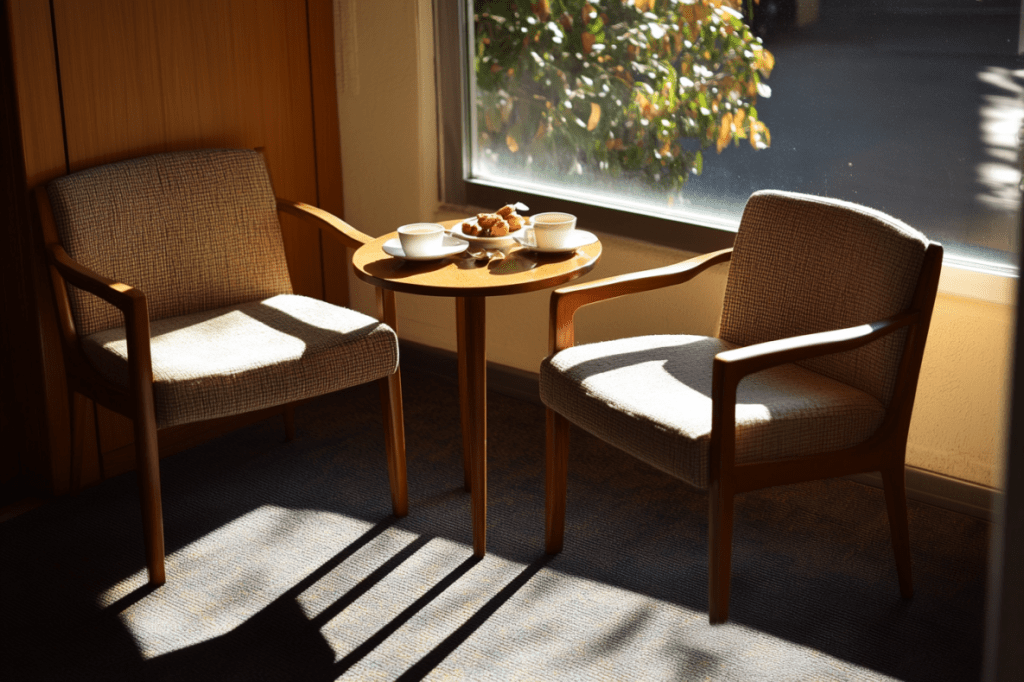
Julia 點頭回應:「沒錯,地質也有同樣的空白。整層岩層可能被侵蝕帶走,只剩下零碎痕跡。我們永遠得不到完整的故事,只能拼湊片段。」
Emma 微笑說:「所以我們的領域都在處理『缺失』——你的缺在石頭裡,我的缺在紙本裡。」
Julia 輕輕笑了:「而我們的工作,就是去推測那些空白曾經承載過什麼。」
她們的談話在洪水與檔案、侵蝕與戰爭之間自然流動。等到鐘聲響起,準備下一場會議時,兩人都明白,這些半學術、半個人化的交流,與正式的演講同樣珍貴。
The Conference Banquet
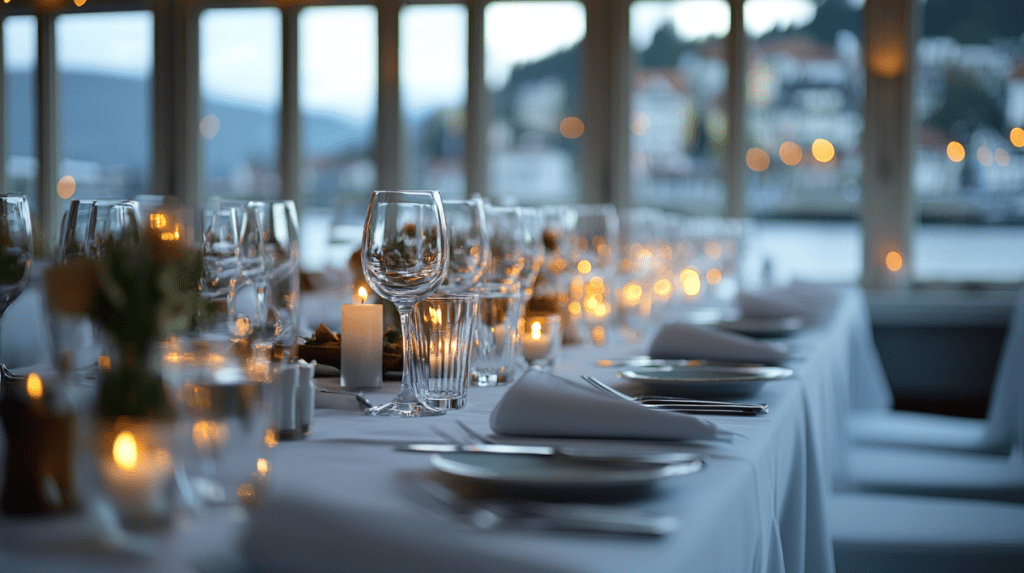
That evening, the conference organizers hosted a banquet in a hall overlooking the harbor. The long tables were laid with linen cloths and candles that flickered against the tall windows.

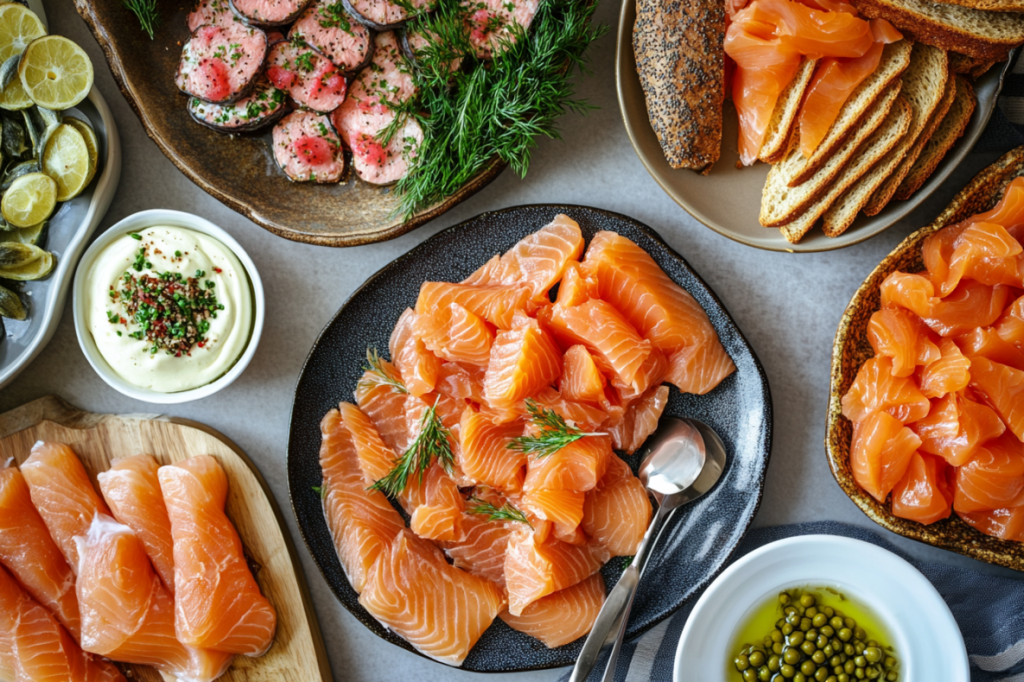
Platters of smoked salmon, herring in mustard sauce, reindeer stew, and thin slices of brunost—Norway’s famous brown cheese—circulated among the guests.
Glasses of aquavit clinked with wine as scholars from different countries mingled, some exchanging research ideas, others simply savoring the flavors.

Julia and Emma sat with a group of Scandinavian colleagues. Between bites of salmon and rye bread, they spoke about fjord landscapes and university traditions.
Emma noticed how easily the conversations slipped between academic rigor and personal stories—fieldwork hardships, travel anecdotes, even jokes about long winters.
Midway through the evening, a small ensemble entered with fiddles and a Hardanger fiddle, filling the hall with the resonant, slightly haunting strains of Norwegian folk music.
A pair of dancers in traditional bunad costumes spun across the floor, their movements both precise and celebratory. For a moment, the scholars put aside their notebooks and applauded with genuine delight.
會議晚宴
當晚,大會主辦方在一座臨港的廳堂舉辦晚宴。長桌覆上白色桌布與燭台,火光映照在高窗上搖曳。
宴席上端上了煙燻鮭魚、芥末醬醃鯡魚、馴鹿燉肉,還有薄切的棕色乳酪——挪威著名的甜鹹兼具的乳酪。

學者們邊舉杯邊交流,有人談研究構想,有人則單純享受這些獨特的滋味。

Julia 和 Emma 坐在一群斯堪地那維亞學者之間,邊吃黑麥麵包配鮭魚,邊聊著峽灣地貌與各地大學的傳統。
Emma 發現,這裡的對話總能在嚴謹的學術與輕鬆的生活故事之間自然轉換——從野外調查的艱辛,到旅行的趣事,甚至還有人打趣說起北歐冗長的冬季。
宴席進行到一半時,一組音樂人帶著提琴與哈當格琴走進場,悠揚又帶點神秘的挪威民謠旋律瀰漫全廳。一對身著傳統民族服裝(bunad)的舞者在燭光下旋轉,舞步既精準又喜悅。學者們暫時放下專業的身份,報以熱烈的掌聲與真心的讚嘆。
The Raffle Surprise

As the dessert plates of cloudberries and cream were cleared away, one of the organizers returned to the stage with a glass bowl of raffle tickets.

“Before we close this evening,” he said, “we have one last prize: a seven-day cruise along the Norwegian coast, in a deluxe two-person cabin. The winner may choose any sailing within the next six months—though I should mention, the very first departure is tomorrow.”
Laughter and murmurs filled the room as he drew the final slip. “And the winner is… Emma Clarke, University of Toronto.”
Emma sat stunned while the hall applauded. Julia clapped enthusiastically, then leaned closer.
“Well, Professor Clarke, what will you do with your fortune?”
Emma shook her head, laughing in disbelief. “It’s for two people, and I already know who I’d bring. Julia, you’re not escaping this. Besides,” she added, lowering her voice, “don’t we both have a free week after the conference?”
Julia’s eyes widened, realizing Emma was right. “So we could actually sail tomorrow?”
Emma raised her glass with a grin. “From lecture halls to the open sea—it seems Norway has planned our holiday for us.”
抽獎與中獎

當甜點「雲莓鮮奶油」被收走時,一位主辦人再次走上舞台,手裡拿著裝滿抽獎券的玻璃碗。

「在今晚結束之前,還有最後一個大獎要公布:挪威海岸七日郵輪,豪華雙人艙。得獎者可在未來六個月內任選航程——不過我要提醒大家,最早的一班就是明天啟航。」
現場響起一陣笑聲與竊竊私語。
主持人抽出最後一張紙條:「得獎者是……來自多倫多大學的 Emma Clarke。」
Emma 愣了一下,全場響起掌聲。Julia 熱烈地鼓掌,然後湊近打趣:「恭喜啦,Clarke 教授,你打算怎麼運用這份好運?」
Emma 還是有點不敢相信,笑著搖頭:「這是雙人艙,我早就知道會帶誰了。Julia,你逃不掉。更何況——」她壓低聲音補充,「我們不是正好在會議後有一個星期的假期嗎?」
Julia 的眼睛瞪大了,意識到她說得沒錯:「所以……我們真的可以明天就出發?」
Emma 舉起酒杯,笑意藏不住:「從會議廳到大海,看來這次假期,挪威已經替我們安排好了。」


 Virtual Travel | 虛擬旅行沉浸式英語學習
回覆給The Virtual World Explorer 取消回覆