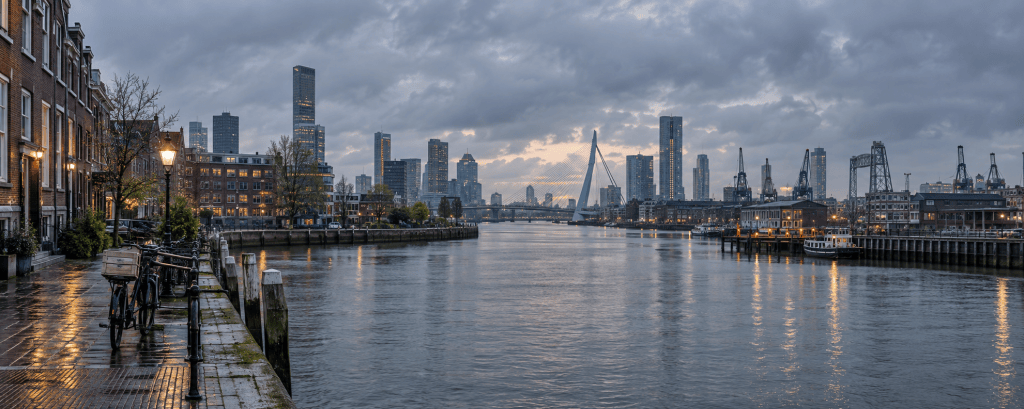
Arrival at Rotterdam Centraal
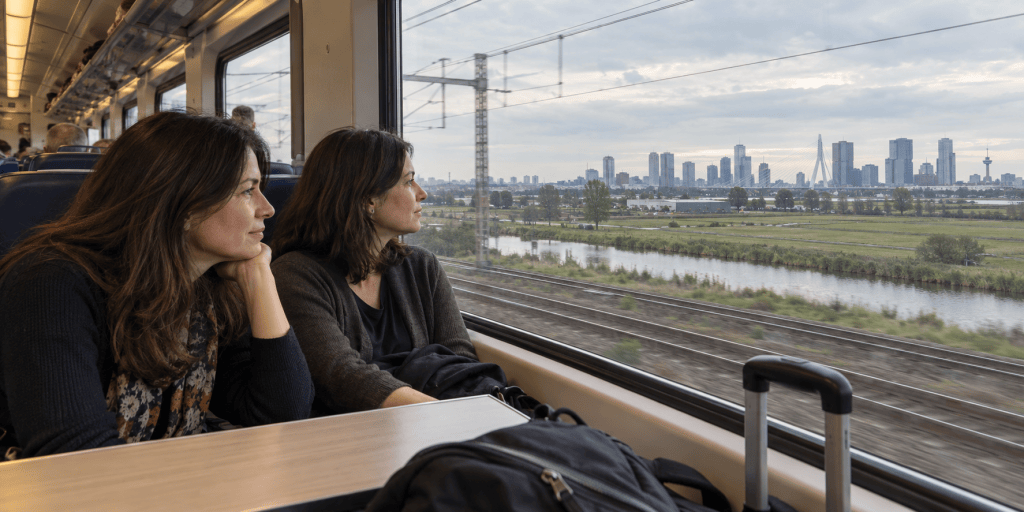
The train from Amsterdam entered Rotterdam in the late afternoon, moving first through open fields and narrow waterways, then past warehouses, apartment blocks, and long stretches of railway track. From the window, the landscape seemed unusually low and wide. Water appeared beside the train without warning, reflecting the pale summer sky before slipping behind another embankment.
Emma had been watching quietly for several minutes. When the first towers of Rotterdam appeared, she leaned closer to the glass. “This doesn’t look quite like the Netherlands I had imagined.”
Julia closed the article she had been reading. “You mean there are no narrow canal houses leaning politely toward the water?”
“Not one so far.”
“Give the country a little time,” Julia said. “We have only just arrived.”
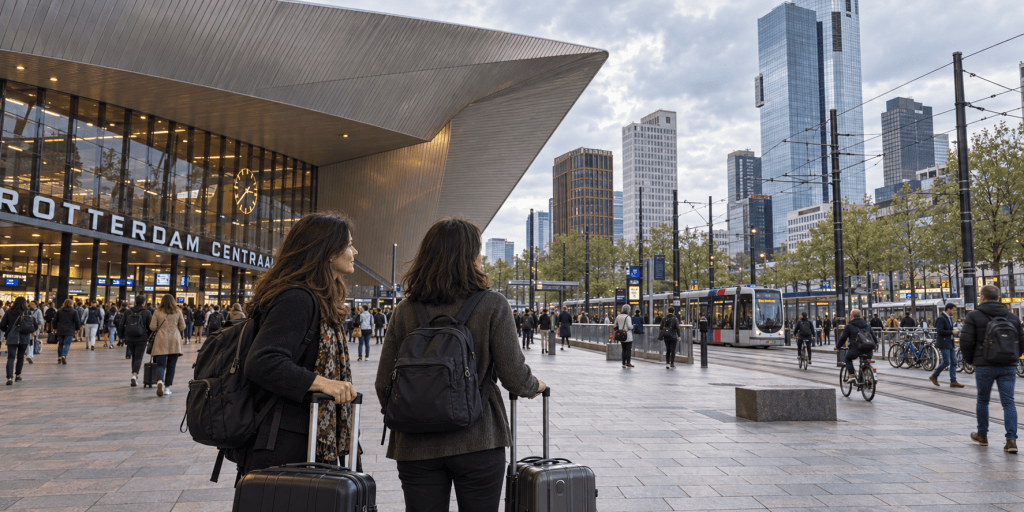
A few minutes later, the train slowed beneath the broad roof of Rotterdam Centraal. The platform was busy with conference visitors, commuters, students, and families pulling suitcases. Julia and Emma stepped into the flow, following the signs toward the main hall. Beyond the glass façade, the station’s angular metal roof pointed toward the city like the prow of a ship.
抵達鹿特丹中央車站
從阿姆斯特丹出發的火車在午後駛進鹿特丹。起初,窗外是開闊的田野與一道道狹長水道;接著,倉庫、公寓與綿延的鐵路逐漸出現。這裡的地勢顯得格外低平而遼闊,水面常在毫無預警的地方貼近列車,映著夏末淡白的天空,隨後又消失在下一段堤岸後方。
Emma 已經安靜地望著窗外好一會兒。當鹿特丹最早的幾棟高樓出現在遠方,她稍微靠近車窗說:「這裡和我想像中的荷蘭不太一樣。」
Julia 合上剛才正在看的文章:「妳的意思是,還沒有看到那些微微傾向運河、看起來很有禮貌的窄房子?」
「目前一棟也沒有。」
「再給這個國家一點時間吧,」Julia 說,「我們才剛到。」
幾分鐘後,列車在鹿特丹中央車站寬廣的屋頂下緩緩停住。
月台上有前來參加會議的人、通勤族、學生,以及拉著行李的家庭。Julia 和 Emma 隨著人流走進車站大廳。
玻璃外牆之外,車站銳利的金屬屋頂朝城市伸展,像一艘船的船首。
First Impressions of the City
Outside the station, the city opened around them in glass, steel, tram wires, bicycles, and broad spaces of sky. Nothing seemed arranged to imitate an older European city. One building rose in a clean vertical line; another leaned at an angle; a third reflected fragments of clouds and passing trams.
Emma turned slowly, taking in the square. “It looks as though every building was invited separately.”
Julia adjusted the strap of her bag. “And none of them was told what the others would be wearing.”
Emma laughed. “You say that as if you disapprove.”
“I haven’t decided yet.” Julia looked back at the station. “But the city does make its intentions clear.”
They both knew the outline of Rotterdam’s history. Much of the old centre had been destroyed during the Second World War, and the city that followed had chosen reconstruction rather than imitation. Still, knowing this from books was different from standing in a place where the absence of an older city could be felt in the width of the streets and the openness of the skyline.
對城市的第一印象
走出車站後,玻璃、鋼鐵、電車纜線、自行車,以及大片天空在她們周圍展開。這裡似乎沒有任何一棟建築試圖模仿傳統歐洲古城。一棟筆直向上,另一棟斜向一側,還有一棟把雲層與經過的電車切成一片片倒影。
Emma 在廣場上慢慢轉了一圈:「看起來好像每一棟建築都是分開收到邀請的。」
Julia 調整了一下肩上的背帶:「而且沒有人告訴它們,其他建築準備穿什麼。」
Emma 笑了:「妳這樣說,好像不太贊成。」
「我還沒有決定。」Julia 回頭看著車站,「不過這座城市至少很清楚自己要做什麼。」
兩人當然都知道鹿特丹歷史的大致輪廓。老市中心的大部分在第二次世界大戰期間遭到摧毀,後來的城市選擇重新建造,而不是模仿原來的樣子。然而,從書本上知道這件事,和真正站在這裡仍然不同。街道的寬度與天空的開闊,都讓人感覺到:曾經存在於此的另一座城市,如今已經不在了。
The University Guesthouse
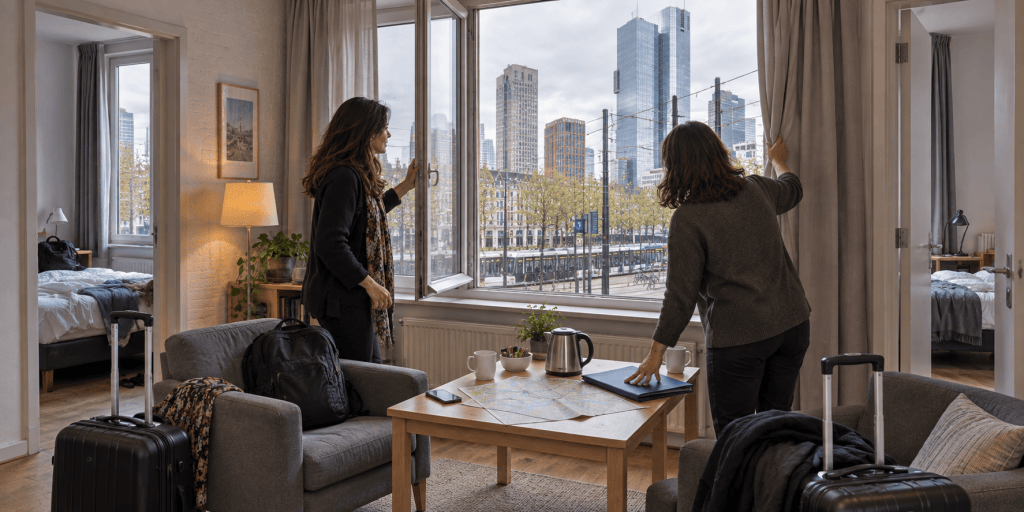
The university guesthouse was on a quieter street not far from Museumpark. It was simpler than the surrounding buildings: pale brick, tall windows, and a narrow courtyard planted with grasses and two young trees. Their rooms were small but comfortable, connected by a shared sitting area with a table, two armchairs, and a kettle beside a row of white cups.
Emma placed the conference folder on the table and opened the curtains. From the window, she could see the upper floors of several modern buildings and, between them, a thin strip of moving sky.
Julia opened the window a little. The sound of a tram bell drifted in, followed by bicycles passing over the street below.
“It is quieter than I expected,” Emma said.
“Wait until everyone discovers the coffee machine tomorrow morning.”
They unpacked without hurry. Julia arranged her notebooks beside the bed; Emma set her camera and a small sketchbook on the desk. After travelling together through so many northern cities, the routine had become familiar: charge the devices, check the weather, find the breakfast hours, and decide which papers in the conference programme they genuinely intended to hear.
大學招待所
大學招待所位在 Museumpark 不遠處一條較安靜的街道上。和周圍的建築相比,它顯得樸素許多:淺色磚牆、高窗,以及一座種著草本植物與兩棵小樹的狹長庭院。兩人的房間不大,卻很舒適,中間連著一個共用的小起居空間,裡面有桌子、兩張扶手椅,還有一只放在整排白色杯子旁的熱水壺。
Emma 把會議資料夾放在桌上,拉開窗簾。從窗戶望出去,可以看見幾棟現代建築的上層,建築之間則露出一道不斷移動的天空。
Julia 把窗戶稍微打開。電車鈴聲從外面傳進來,接著是自行車經過樓下街道的聲音。
「比我想像中安靜。」Emma 說。
「等到明天早上每個人都發現那台咖啡機再說吧。」
她們不慌不忙地整理行李。Julia 把筆記本放在床邊;Emma 則把相機與一本小素描簿擺到書桌上。兩人已經一起走過許多北方城市,這套程序早已十分熟悉:替所有設備充電、查看天氣、確認早餐時間,再決定會議手冊裡哪些演講是她們真正打算去聽的。
Conference Registration at De Doelen
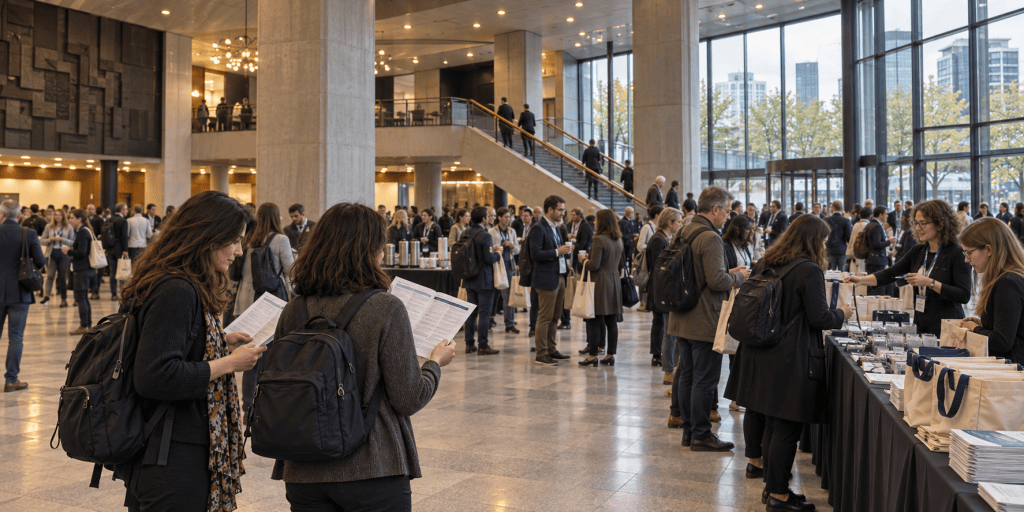
By four o’clock, they were walking back toward the centre for conference registration at De Doelen. The route was easy, and the concert and conference building stood only a short distance from the station they had just left. Inside, the foyer was bright and busy. Volunteers handed out name badges, canvas bags, folded programmes, and city maps while old colleagues greeted one another across the registration tables.
The conference theme was printed across the front of the programme: Land, Water, and the Making of Northern Cities.
Julia immediately marked sessions on river landscapes, coastal change, and the geology beneath expanding ports. Emma circled talks on urban memory, household archives, migration, and the everyday life of trading cities.
“We have already created two different conferences,” Emma said, comparing their programmes.
“That is why they give us two copies.”
A local volunteer pointed out Friday’s optional visit to the Maritime Museum. “The museum harbour is where the old port and the modern city meet,” she explained. “If you want to understand Rotterdam, it is a good place to begin.”
Emma added a small star beside the excursion. Julia, who had already marked it twice, said nothing.
在 De Doelen 辦理會議報到
下午四點左右,她們再次往市中心走,到 De Doelen 辦理會議報到。路線很簡單,這座兼具音樂廳與會議功能的建築,距離她們剛才離開的中央車站並不遠。大廳明亮而熱鬧,工作人員在報到桌後發放名牌、帆布袋、折疊式議程與城市地圖;多年不見的學者則隔著人群相互招呼。
會議手冊封面印著這次的主題:〈土地、水與北方城市的形成〉。
Julia 立刻在河流地形、海岸變遷與港口下方地質的場次旁做了記號。Emma 則圈起城市記憶、家庭檔案、人口移動,以及貿易城市日常生活的演講。
「我們已經把同一個會議變成兩個完全不同的會議了。」Emma 對照兩人的手冊說。
「所以他們才給我們兩份。」
一位當地工作人員特別介紹了星期五前往鹿特丹海事博物館的自由參加行程。「博物館港口正是老港口與現代城市交會的地方,」她說,「如果想了解鹿特丹,那裡很適合作為起點。」
Emma 在行程旁畫了一顆小星星。Julia 早已在同一處做了兩次記號,卻什麼也沒說。
Walking toward the Old Centre
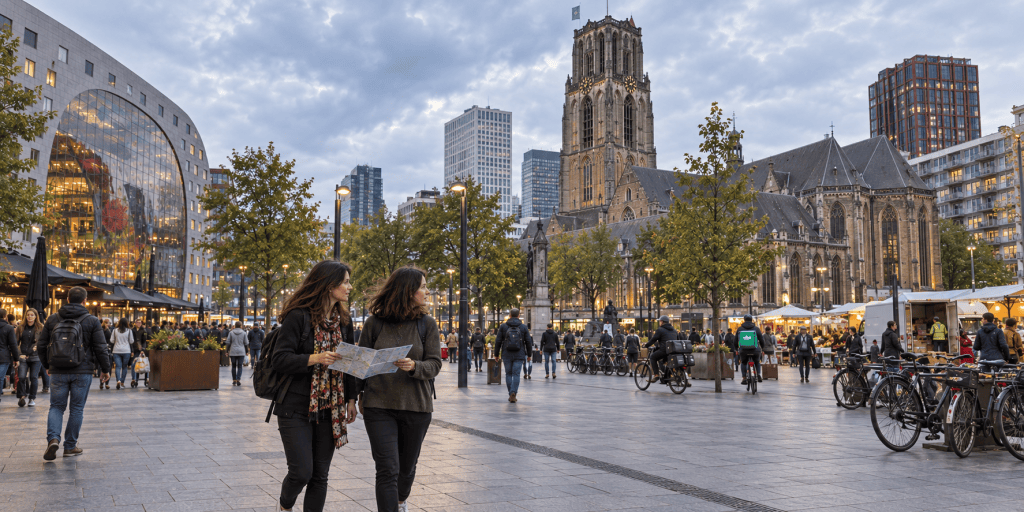
They did not return directly to the guesthouse. The evening was still light, and the air carried the mild coolness that often follows a warm day near the water. With the city map folded in Emma’s hand, they walked toward the old centre.
The streets shifted quickly from offices and shops to open squares and unexpected architectural shapes. Then, beyond the market buildings, the tower of the Laurenskerk rose above the surrounding roofs. Its stone walls seemed almost reserved beside the brighter surfaces of the modern city.
Emma stopped. “At last, something that looks older than we are.”
“Considerably older, I hope,” Julia said.
They crossed the broad space of the Binnenrotte, where a river had once run through the city. The name remained even though the water was no longer visible there. Emma looked down at the paving stones, then back at the church tower.
“That may be what makes Rotterdam difficult at first,” she said. “So much of its history is still here, but not always in the form we expect.”
Julia glanced at the map. “Then perhaps we should stop looking only for old buildings.”
走向老城區
她們沒有立刻回招待所。天色仍亮,靠近水域的城市在溫暖的一天之後,空氣裡帶著一點柔和的涼意。Emma 手中拿著折起來的城市地圖,兩人慢慢往老城區方向走。
街景很快從辦公大樓與商店,轉變成開闊的廣場與出人意料的建築形狀。接著,在市場建築後方,Laurenskerk 的高塔從周圍屋頂上升起。它的石牆立在現代城市明亮的建材之間,顯得格外沉靜。
Emma 停下腳步:「終於看到一個比我們年紀大的東西了。」
「最好是大很多。」Julia 說。
她們走過寬廣的 Binnenrotte。過去曾有一條河流經這裡,如今水面已經看不見,名字卻仍保留下來。Emma 低頭看著腳下的鋪面,又抬頭望向教堂高塔。
「也許這就是鹿特丹一開始比較難理解的原因,」她說,「許多歷史其實還在這裡,只是不一定以我們預期的形狀出現。」
Julia 看了一眼地圖:「那麼,也許我們不應該只尋找老建築。」
Dinner beside the Old Harbour
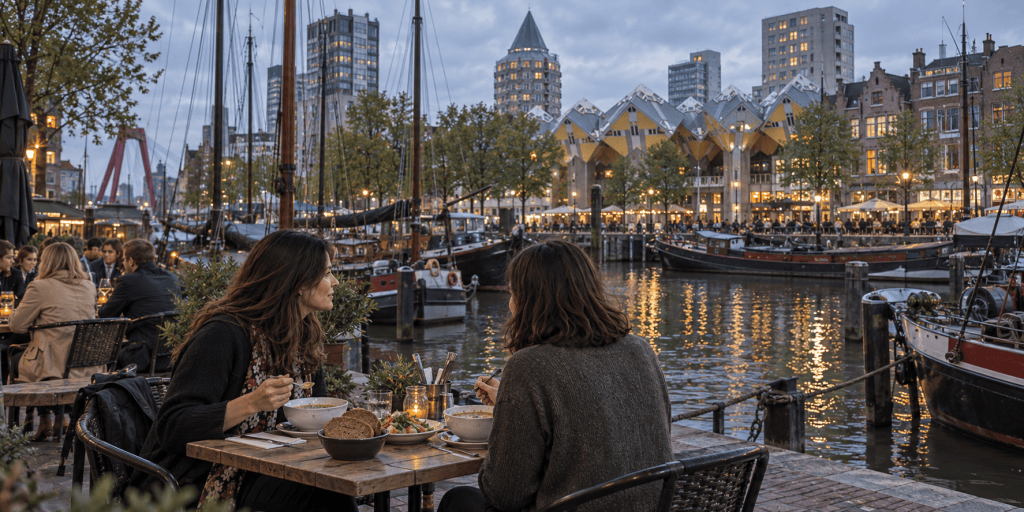
By the time they reached the Oude Haven, the light had softened over the water. Historic vessels rested beside the quay, while the Cube Houses tilted above the trees and cafés. The scene was neither entirely old nor entirely modern. It looked as though several versions of Rotterdam had agreed, for one evening, to share the same harbour.
They found a small table near the water and ordered fish soup, brown bread, and a plate of vegetables to share. A light wind moved across the harbour, carrying the smell of the water and the occasional sound of metal rigging against a mast.
Emma tore off a piece of bread. “It isn’t beautiful in the way Delft is beautiful.”
“Perhaps it isn’t trying to be.”
Emma looked at her. “That sounds suspiciously like a sentence from tomorrow’s keynote.”
“Then please don’t write it down.”
They ate slowly, watching bicycles pass over the bridge and small groups gather along the quay. The longer they sat there, the less abrupt the city seemed. Its contrasts had begun to feel less like disagreement and more like conversation.
在舊港旁吃晚餐
她們抵達 Oude Haven 時,水面上的光線已經變得柔和。歷史船隻停泊在碼頭旁,方塊屋則斜斜地懸在樹木與咖啡館上方。眼前的景色既不完全古老,也不完全現代,彷彿好幾個不同版本的鹿特丹,暫時同意在這個晚上共用同一座港口。
兩人在水邊找到一張小桌子,點了魚湯、黑麵包和一盤一起吃的蔬菜。微風從港口水面吹來,帶著淡淡水氣,偶爾還能聽見桅杆上的金屬索具輕輕碰撞。
Emma 撕下一小塊麵包:「這裡的美,不像 Delft 那種美。」
「也許它根本沒有打算變成那樣。」
Emma 看著她:「這句話聽起來很像明天主題演講會出現的句子。」
「那就請妳不要記下來。」
她們慢慢吃著晚餐,看著自行車經過橋面,三三兩兩的人在碼頭邊聚集。坐得越久,這座城市就越不顯得突兀。它的對比逐漸不再像彼此衝突,反而像一場尚未結束的談話。
The Map on the Table
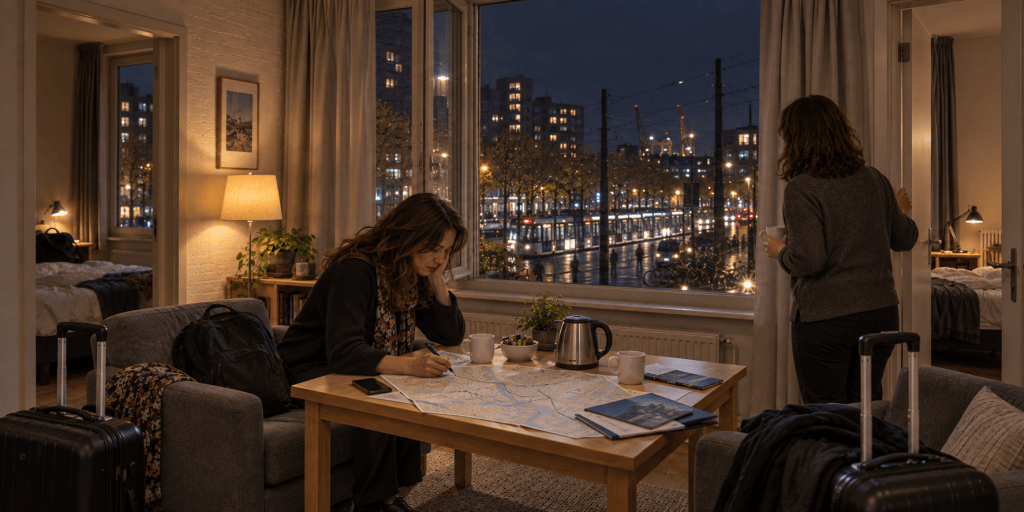
It was nearly ten when they returned to the guesthouse. Emma filled the kettle while Julia spread the conference map across the table. On one side was the modern city, marked with tram lines, museums, bridges, and walking routes. On the reverse was a much older plan of Rotterdam: a compact town enclosed by water, its streets gathered close around the Rotte and the Maas.
Julia traced the lines with one finger. “The modern city looks open, but the older one was held together by water.”
Emma placed two cups of tea beside the map. “And tomorrow we begin by sitting indoors all day, listening to people explain it.”
“Only until the afternoon.”
Outside, the last trams moved through the street. Farther away, beyond the buildings, a ship sounded its horn on the river. Emma folded the map carefully, but one corner refused to lie flat. She placed her empty cup on it and switched off the table lamp.
“We came for three days,” she said as they returned to their rooms.
Julia looked once more at the folded map. “That may not be enough.”
Neither of them noticed the faint line of blue ink that had appeared beside the old course of the Rotte, extending just beyond the printed edge of the page.
桌上的地圖
她們回到招待所時已經接近晚上十點。Emma 替熱水壺裝水,Julia 則把會議提供的城市地圖攤在桌上。一面是現代鹿特丹,標示著電車路線、博物館、橋梁與步行路線;翻到背面,卻是一幅古老得多的城市圖:一座由水環繞的緊密小城,街道沿著 Rotte 河與 Maas 河聚集。
Julia 用手指沿著圖上的線慢慢移動:「現代城市看起來很開放,過去那座城卻是被水連在一起的。」
Emma 把兩杯茶放在地圖旁:「而我們明天的第一件事,是整天坐在室內,聽別人解釋這座城市。」
「只到下午而已。」
窗外,最後幾班電車仍在街上行駛。更遠的地方,在建築物後方,一艘船從河面傳來低沉的鳴笛。Emma 仔細把地圖摺好,但其中一角始終無法平貼桌面。她用喝空的杯子壓住地圖,關掉桌燈。
「我們原本只打算來三天。」她走回房間前說。
Julia 又看了一眼摺好的地圖:「恐怕不太夠。」
兩人都沒有注意到,古老 Rotte 河道旁已經浮現一道極淡的藍色墨線,悄悄延伸到印刷頁面的邊緣之外。


發表留言